


Stainless Screen Filter
In industrial fluid processing, the selection of filtration media directly impacts system efficiency, product purity, and equipment longevity. A stainless screen filter serves as a critical barrier against particulate contamination, utilizing the inherent strength and chemical resistance of stainless steel alloys to provide reliable separation in demanding environments. Unlike disposable polymer-based filters, stainless steel screen solutions offer durability, high-temperature tolerance, and the ability to be cleaned and reused, making them a preferred choice for engineers in the chemical, food and beverage, and pharmaceutical sectors.
As a professional manufacturer specializing in custom filtration solutions, Kaifil provides a range of stainless steel wire mesh filters and cartridges designed to meet specific industrial requirements. Understanding the technical nuances of these components—from weave patterns to material grades—is essential for technical professionals tasked with optimizing filtration performance.
Engineering Fundamentals of Stainless Screen Filters
The performance of a stainless screen filter is primarily determined by its weave construction and the resulting aperture size. Industrial wire mesh is produced by weaving individual wires of stainless steel on high-precision looms. The geometry of the weave dictates the filtration accuracy, flow resistance, and mechanical stability of the screen.
Weave Patterns and Their Applications
1. Plain Weave: This is the most common weave where each warp wire crosses alternately over and under each shute wire. It provides high flow rates and is typically used for coarse filtration and screening where low pressure drop is a priority.
2. Twilled Weave: In this configuration, each shute wire passes alternately over and under two warp wires. This allows for the use of heavier wires, resulting in a more robust mesh suitable for higher pressure applications while maintaining specific micron ratings.
3. Dutch Weave (Plain and Twilled): Dutch weaves utilize a higher density of shute wires than warp wires. This creates a "zero-aperture" structure where the fluid must pass through a tortuous path. Dutch weaves are ideal for fine filtration (down to 5-10 microns) and provide superior mechanical strength compared to square mesh.
Micron Rating and Filtration Efficiency
When selecting a stainless screen filter, engineers must distinguish between nominal and absolute micron ratings. A nominal rating indicates the ability of the filter to retain a majority of particles of a certain size, whereas an absolute rating refers to the diameter of the largest spherical particle that can pass through the mesh under specific test conditions. For critical applications, such as pharmaceutical processing or high-precision hydraulic systems, absolute-rated mesh is required to ensure consistent output quality.
Material Selection and Chemical Compatibility
The choice of alloy is a primary factor in the service life of a stainless screen filter. While several grades of stainless steel are available, 304 and 316L are the industry standards due to their balance of cost and performance.
Type 304 Stainless Steel
Type 304 is a versatile, general-purpose stainless steel with good resistance to atmospheric corrosion and many organic and inorganic chemicals. It is frequently used in food processing and water treatment where the environment is not excessively corrosive. However, it is susceptible to pitting in high-chloride environments.
Type 316L Stainless Steel
Type 316L contains molybdenum, which significantly enhances its resistance to pitting and crevice corrosion, particularly in chloride-rich environments. The "L" stands for low carbon, which minimizes carbide precipitation during welding, ensuring that the filter maintains its corrosion resistance at the joints. This grade is the standard for chemical processing, marine applications, and pharmaceutical manufacturing where rigorous cleaning protocols (such as CIP or SIP) are employed.
For extreme environments involving highly acidic or alkaline fluids, specialized alloys like 904L, Hastelloy, or Monel may be utilized in the construction of the stainless screen filter to prevent premature failure. For more detailed technical specifications on material availability, you can visit the Main Page of our product catalog.
Performance Evaluation Criteria for Industrial Applications
To ensure a stainless screen filter performs reliably within a system, engineers must evaluate several key performance indicators (KPIs) during the design phase.
Pressure Drop (Delta P)
The pressure drop across a filter is the difference between the upstream and downstream pressure. A high initial pressure drop indicates that the filter may be undersized or the mesh is too fine for the required flow rate. Engineers must calculate the clean pressure drop to ensure the pump system can handle the resistance and to establish a baseline for identifying when the filter requires cleaning.
Dirt Holding Capacity
Dirt holding capacity refers to the amount of contaminant a filter can retain before reaching its terminal pressure drop. In surface filtration, such as that provided by a standard stainless screen filter, the capacity is limited by the total surface area of the mesh. To increase this capacity without increasing the filter's footprint, pleated designs are often used, which can increase the effective filtration area by 3 to 5 times compared to a cylindrical screen.
Mechanical Strength and Structural Integrity
In high-pressure or high-viscosity applications, the wire mesh alone may not be sufficient to withstand the differential pressure. Industrial filters often incorporate internal support cores (perforated metal tubes) and external cages. For the most demanding applications, sintered wire mesh—where multiple layers of mesh are bonded together through heat and pressure—provides a rigid, porous structure that cannot be easily deformed or displaced.
Customization and OEM Considerations
Standard off-the-shelf filters rarely meet the precise needs of specialized industrial machinery. Customization is often necessary to ensure a perfect fit and optimal performance. Kaifil works closely with engineering teams to develop bespoke filtration components tailored to specific operational parameters.
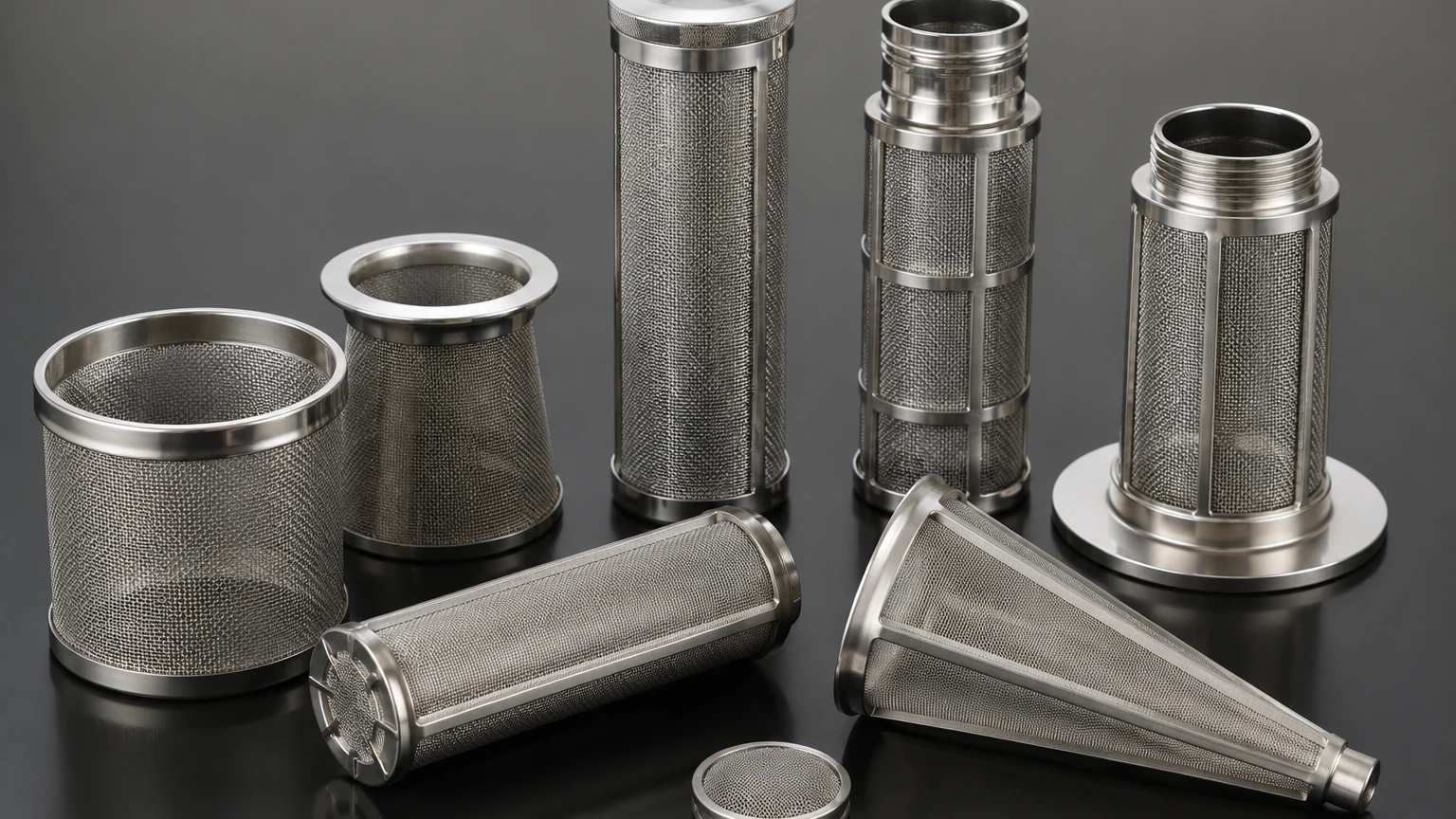
Structural Design and End Fittings
The mechanical interface of the filter is as important as the mesh itself. Common end cap configurations include:
* Double Open End (DOE): Used in housings that utilize tie rods and gaskets for sealing.
* Single Open End (SOE): Often featuring 222 or 226 O-ring configurations to ensure a bypass-free seal in high-purity applications.
* Threaded Connections: NPT or BSP threads for direct integration into piping systems.
Multi-Layer Configurations
For applications requiring both fine filtration and high strength, a multi-layer stainless screen filter can be engineered. This typically involves a fine filtration layer protected by coarser mesh layers on both sides, providing mechanical support and protecting the delicate fine mesh from physical damage during handling or cleaning.
Common Risks and Mitigation in Filtration Systems
Implementing a stainless screen filter involves more than just selecting a micron rating; it requires anticipating potential failure modes and system risks.
Media Migration and Bypass
One of the primary risks in filtration is bypass, where fluid avoids the filter media due to poor sealing or structural failure. In stainless steel filters, this can occur if the welding of the longitudinal seam or the end caps is sub-par. Quality manufacturers use TIG or plasma welding to ensure a continuous, leak-proof bond. Media migration—where parts of the filter itself break off into the filtrate—is virtually non-existent with stainless steel compared to fiber-based filters, provided the mesh is properly annealed and supported.
Corrosion and Stress Cracking
Even stainless steel can fail if the wrong grade is chosen for the chemical environment. Stress corrosion cracking (SCC) can occur in certain alloys when exposed to specific chemicals under tension. Engineering teams should confirm the chemical composition and concentration of the process fluid to ensure the selected stainless screen filter grade is compatible for long-term immersion.
Cleaning and Regeneration Risks
While the cleanability of stainless steel is a major advantage, improper cleaning can damage the mesh. High-pressure backwashing, ultrasonic cleaning, or chemical baths must be performed according to manufacturer guidelines. Excessive pressure during backwashing can cause "ballooning" of the mesh if it is not properly supported by an outer cage.
Maintenance and Total Cost of Ownership (TCO)
When comparing a stainless screen filter to disposable alternatives, the Total Cost of Ownership (TCO) is a more accurate metric than the initial purchase price. While a stainless steel cartridge has a higher upfront cost, its ability to be cleaned and returned to service multiple times significantly reduces the long-term expenditure on replacement parts and waste disposal.
Determining Replacement Cycles
The lifespan of a stainless steel filter is determined by the number of cleaning cycles it can undergo before the mesh integrity is compromised or the pores become permanently blinded. Regular inspection for signs of mechanical wear, such as fraying or thinning of the wires, is essential. In many industrial applications, a stainless screen filter can last several years with proper maintenance.
Operational Efficiency
By maintaining a lower average pressure drop through regular cleaning, stainless steel filters can also contribute to energy savings. Pumps do not have to work as hard to push fluid through a cleanable metal screen as they might through a partially clogged, high-resistance disposable depth filter.
Conclusion
Selecting the right stainless screen filter requires a comprehensive understanding of the fluid dynamics, chemical environment, and mechanical stresses of the application. By focusing on high-quality materials like 316L, choosing the appropriate weave pattern, and ensuring robust structural support, engineers can achieve reliable and cost-effective filtration. Kaifil remains committed to providing the technical expertise and manufacturing precision necessary to support these critical industrial processes. For further assistance with filter selection or to explore customized OEM options, technical teams are encouraged to Review product options and application support to find the optimal solution for their specific filtration challenges.
