


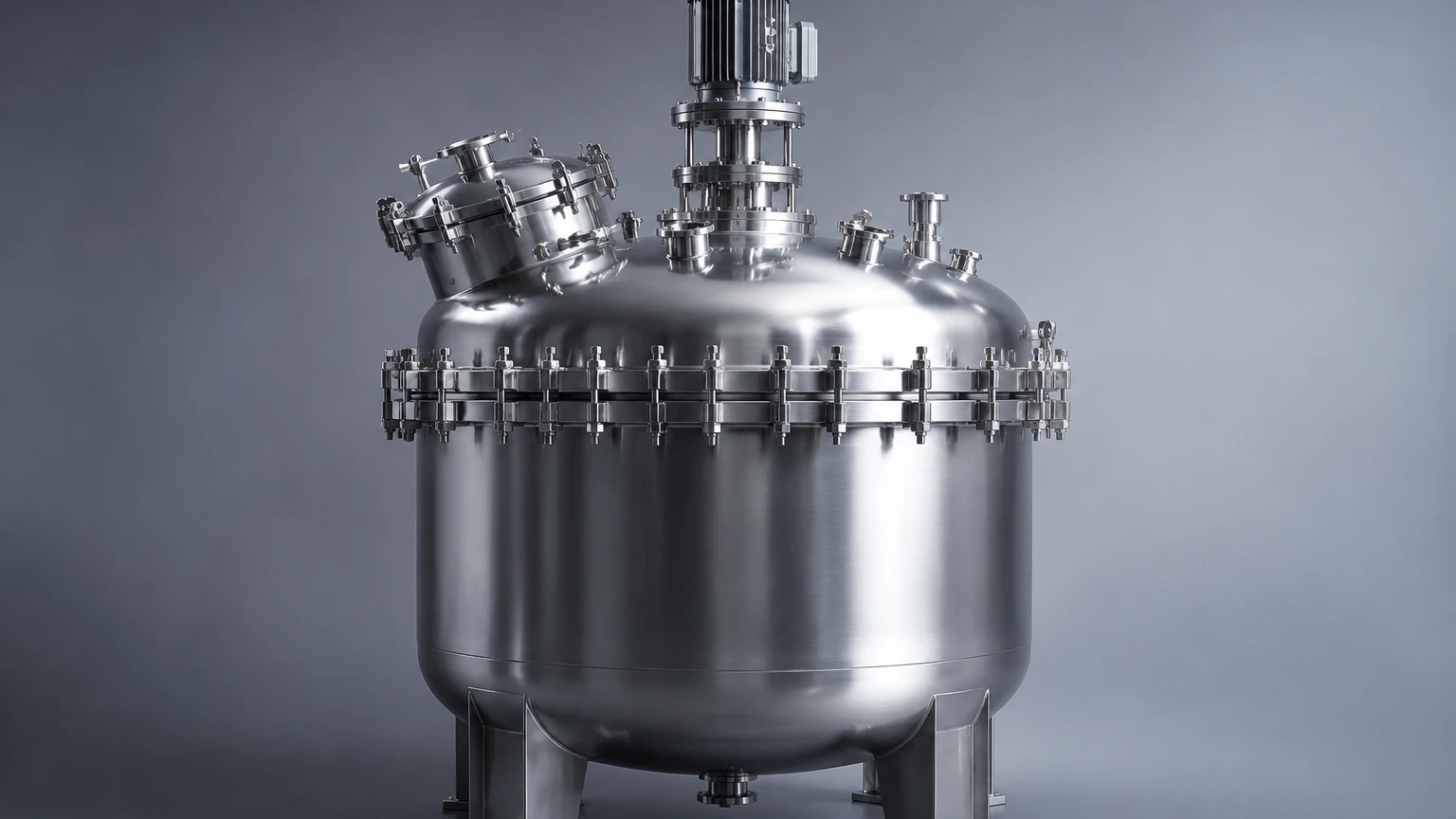
Stainless Steel Chemical Reactor
In the landscape of industrial processing, the stainless steel chemical reactor stands as a fundamental component for facilitating controlled chemical reactions under specific pressure and temperature conditions. For engineers and procurement specialists in sectors such as pharmaceutical manufacturing, specialty chemical production, and food processing, the selection of a reactor system involves more than just choosing a vessel. It requires a comprehensive understanding of metallurgy, heat transfer dynamics, and, crucially, the integration of precision filtration components to ensure product purity and process efficiency.
As a specialized manufacturer of stainless steel filtration solutions, Kaifil recognizes that the performance of a stainless steel chemical reactor is often limited by the quality of its internal and peripheral filtration systems. Whether the objective is catalyst recovery, particulate removal, or gas sparging, the engineering of these components must align with the rigorous demands of the reactor's operating environment.
Engineering Fundamentals of Stainless Steel Chemical Reactors
A stainless steel chemical reactor is engineered to manage complex variables including exothermic or endothermic reactions, high-viscosity mixing, and volatile chemical environments. The design typically incorporates a pressure vessel, an agitation system, and a thermal jacket for temperature regulation. However, from a technical perspective, the success of the operation depends on the vessel's ability to maintain a sterile and controlled environment while resisting the corrosive nature of the reactants.
When specifying a reactor, engineers must prioritize the mechanical integrity of the structure. This includes evaluating the wall thickness required to withstand specific pressure ratings and the design of the seals to prevent leakage or contamination. In many modern applications, the reactor is not a standalone unit but part of a continuous or batch process where the filtration of the output is critical. This is where high-performance wire mesh filters and stainless steel filter cartridges become indispensable, acting as the primary barrier against contaminants that could compromise the final product.
Material Selection and Corrosion Resistance
The choice of material for a stainless steel chemical reactor is dictated by the chemical compatibility of the substances being processed. While several grades of stainless steel exist, the most common in high-end industrial applications are AISI 304 and AISI 316L.
* AISI 304 Stainless Steel: Suitable for less aggressive environments, 304 provides excellent formability and weldability. It is often used in food and beverage applications where high-level corrosion resistance to acids is not the primary concern.
* AISI 316L Stainless Steel: The "L" denotes low carbon content, which is essential for preventing carbide precipitation during welding. 316L contains molybdenum, significantly enhancing its resistance to chlorides and pitting. This makes it the standard choice for pharmaceutical and chemical reactors where harsh cleaning agents or acidic reactants are present.
* Duplex and High-Nickel Alloys: For extreme environments involving high concentrations of brine or sulfuric acid, duplex stainless steels or Hastelloy components may be integrated into the reactor's filtration assembly to ensure longevity.
Beyond the alloy itself, the surface finish of the reactor's interior and its filtration components is a critical engineering consideration. Electropolishing is often employed to achieve a specific Ra (Roughness Average) value, reducing the likelihood of bacterial growth and making the cleaning process more effective during CIP (Clean-in-Place) cycles.
Integrating Filtration Systems within Reactor Workflows
Filtration is rarely an afterthought in the design of a stainless steel chemical reactor; it is often integrated directly into the process flow. There are several key areas where precision metal filtration is required:
Catalyst Recovery and Retention
Many chemical reactions rely on expensive catalysts. If these catalysts are not recovered efficiently, the total cost of production increases significantly. Sintered wire mesh filters or custom-designed filter cartridges are often installed at the reactor's discharge point to capture catalyst particles, allowing them to be recycled back into the process.
Gas Sparging and Aeration
In aerobic fermentations or gas-liquid reactions, gases must be introduced into the reactor in a controlled manner. Stainless steel spargers, constructed from porous metal or fine wire mesh, create small, uniform bubbles that maximize the surface area for gas-to-liquid mass transfer, improving reaction kinetics.
Venting and Pressure Relief
As reactions occur, pressure can build up or gases may need to be vented. High-strength stainless steel mesh filters are used in vent lines to prevent the escape of particulates while allowing for the safe passage of gases, protecting both the environment and the integrity of the reactor system.
Evaluating Filtration Performance and Component Selection
When selecting filtration components for a stainless steel chemical reactor, engineers must look beyond basic dimensions. The performance of a filter is defined by its filtration accuracy, flow rate, and differential pressure limits.
1. Filtration Accuracy (Micron Rating): It is essential to determine whether the application requires absolute or nominal filtration. For pharmaceutical applications, absolute filtration is often mandatory to ensure that 100% of particles above a certain size are removed.
2. Structural Strength: Filtration components inside a reactor are subject to high-velocity agitation and pressure fluctuations. Kaifil’s custom stainless steel filter cartridges are designed with reinforced internal cores and outer protective layers to withstand these mechanical stresses without deforming.
3. Flow Characteristics: A filter should provide minimal resistance to flow to maintain process efficiency. Engineers must calculate the effective filtration area (EFA) to ensure that the filter can handle the reactor's throughput without causing excessive pressure drops.
For more detailed technical specifications and to explore how specific filtration designs can be adapted to your reactor setup, you can Review product options and application support on our Main Page.
Maintenance, Cleaning, and Replacement Cycles
One of the primary advantages of utilizing stainless steel filtration in a chemical reactor is the ability to clean and reuse the components. Unlike disposable polymer filters, stainless steel elements can withstand aggressive chemical cleaning, high-temperature sterilization, and ultrasonic cleaning.
Monitoring Differential Pressure
The most reliable indicator for filter maintenance is the differential pressure (ΔP). As the filter captures particulates, the pressure drop across the element increases. Automated systems should be calibrated to alert operators when the ΔP reaches a predetermined threshold, indicating that the filter requires cleaning or replacement.
Cleaning Methods
* Backwashing: Reversing the flow of fluid through the filter to dislodge accumulated debris.
* Chemical Cleaning: Using solvents or acids to dissolve organic or inorganic scaling, provided the chemicals are compatible with the stainless steel grade.
* Ultrasonic Cleaning: Using high-frequency sound waves in a liquid bath to remove fine particles trapped deep within the wire mesh layers.
Properly maintained stainless steel filters can last for years, significantly reducing the total cost of ownership compared to frequent replacements of consumable filters.
Customization and Technical Support for Reactor Filtration
Every industrial process has unique requirements, and a "one-size-fits-all" approach to filtration is rarely optimal for a stainless steel chemical reactor. Customization is often necessary to account for specific vessel geometries, unique connection types (such as Flange, NPT, or Tri-clamp), and specific flow patterns.
At Kaifil, we provide OEM services that allow engineers to specify the exact parameters of their filtration components. This includes selecting the number of mesh layers in a sintered laminate, choosing the weave type (plain, twill, or dutch weave), and designing custom end caps for seamless integration into existing reactor hardware. By working closely with a manufacturer that understands the nuances of metal fabrication and filtration science, purchasing teams can ensure that they are investing in components that are purpose-built for their specific application.
Total Cost of Ownership (TCO) and Purchasing Decisions
When evaluating the procurement of a stainless steel chemical reactor and its associated filtration systems, the initial purchase price is only one part of the equation. Technical professionals must consider the Total Cost of Ownership (TCO), which includes:
* Operational Downtime: High-quality, durable filters reduce the frequency of unplanned shutdowns caused by filter failure or clogging.
* Product Yield: Improved filtration accuracy leads to higher product purity and less waste, directly impacting the bottom line.
* Longevity: A robustly engineered stainless steel filter may cost more upfront than a lower-grade alternative, but its extended service life provides better value over the long term.
Before finalizing a purchase, it is recommended that engineers confirm the material certifications (MTRs), pressure test results, and the manufacturer's quality control processes. Ensuring that the filtration components meet international standards such as ISO or ASME is vital for maintaining compliance in regulated industries like pharmaceuticals and food processing.
Conclusion
The integration of a stainless steel chemical reactor into an industrial process is a significant investment that requires careful consideration of both the vessel and its internal filtration components. By focusing on material compatibility, precision engineering, and the long-term benefits of reusable stainless steel filters, facilities can achieve higher efficiency and superior product quality. Kaifil remains committed to supporting these complex industrial needs through the production of high-performance, customized filtration solutions that stand up to the most demanding chemical environments. For further technical guidance or to discuss specific project requirements, visiting the Main Page provides access to comprehensive product data and engineering support.
