


Stainless Steel Filter Housings
In industrial filtration systems, the filter housing serves as the critical pressure vessel that contains and protects the filter media while directing the flow of the process fluid. For demanding applications in chemical processing, pharmaceuticals, and food production, stainless steel filter housings are the industry standard due to their structural integrity, corrosion resistance, and ability to withstand high temperatures and pressures. Selecting the correct housing requires a detailed understanding of fluid dynamics, material science, and mechanical engineering to ensure the filtration system operates efficiently and safely.
As a specialized manufacturer, Kaifil provides precision-engineered filtration components designed to integrate seamlessly into these housings. Understanding the technical specifications of stainless steel filter housings is essential for engineers and purchasing teams looking to optimize their filtration processes. For more information on specific filtration components, you can visit our Main Page.
Material Selection: 304 vs. 316L Stainless Steel
The choice of material is the most fundamental decision when specifying a filter housing. While several alloys are available, the two most common are Grade 304 and Grade 316L stainless steel.
Grade 304 Stainless Steel
Grade 304 is a versatile, general-purpose stainless steel with excellent resistance to atmospheric corrosion and many organic and inorganic chemicals. It is frequently used in water treatment, hydraulic systems, and general industrial applications where the environment is not excessively corrosive. It offers a cost-effective solution for systems where high-level chemical resistance to chlorides is not required.
Grade 316L Stainless Steel
Grade 316L contains molybdenum, which significantly enhances its resistance to pitting and crevice corrosion in chloride-rich environments. The "L" denotes low carbon content, which minimizes carbide precipitation during welding, ensuring the housing maintains its corrosion resistance at the weld joints. This material is the standard for pharmaceutical, chemical processing, and marine applications. In these sectors, the purity of the fluid and the longevity of the vessel are paramount.
Beyond the alloy type, the surface finish of the housing is critical. For sanitary applications, housings often undergo electropolishing to achieve a specific Ra (Roughness Average) value, typically less than 0.8 µm. This smooth surface prevents bacterial growth and facilitates easier cleaning (CIP/SIP processes).
Engineering Considerations for Pressure and Flow
Stainless steel filter housings must be engineered to handle the maximum operating pressure and flow rate of the system without compromising safety or filtration efficiency.
Pressure Ratings
Industrial housings are typically designed to meet specific pressure standards, such as ASME Section VIII or CE PED. Standard industrial housings often carry ratings of 10 bar (150 psi) or 20 bar (300 psi), but custom designs can accommodate much higher pressures. It is vital to consider both the operating pressure and the design pressure, which includes a safety margin for pressure surges or water hammer effects.
Flow Rate and Pressure Drop ($ΔP$)
The flow rate determines the size of the housing and the number of filter elements required. A common engineering mistake is undersizing the housing, which leads to high initial pressure drops and shortened filter life. The total pressure drop across a filtration system is the sum of the pressure drop across the housing (clean) and the pressure drop across the filter media. To maintain efficiency, the housing should be sized so that the initial pressure drop remains below 0.1 to 0.2 bar (2-3 psi).
Types of Stainless Steel Filter Housings
Housings are categorized based on the type of filter element they contain and the volume of fluid they process.
Cartridge Filter Housings
These are designed to hold cylindrical filter cartridges, such as pleated mesh or depth filters. They are available in single-round configurations for low-flow applications or multi-round configurations that can hold dozens of cartridges for high-volume industrial lines. Cartridge housings offer high precision and are used when fine filtration (down to sub-micron levels) is required.
Bag Filter Housings
Bag housings are used for high-flow, high-dirt-loading applications. They utilize a fabric or mesh filter bag supported by a stainless steel perforated basket. These are common in wastewater treatment and pre-filtration stages where large volumes of solids must be removed economically.
High-Pressure and Custom Housings
For specialized hydraulic or chemical applications, housings may feature thicker walls, reinforced flanges, and specialized inlet/outlet configurations (such as NPT, BSP, or ANSI flanges). Customization allows for the integration of sensors, such as differential pressure gauges, which are essential for monitoring the condition of the internal filter elements.
Sealing Mechanisms and Chemical Compatibility
The integrity of a filter housing depends heavily on its sealing mechanism. If the seal fails, unfiltered fluid can bypass the filter media, leading to downstream contamination.
Closure Types
* V-Clamp Closures: These are lightweight and allow for quick access to the filter elements. They are typically used in low-to-medium pressure applications.
* Swing Bolt Closures: These are robust and designed for high-pressure or high-safety environments. They provide a more secure seal and are more durable over repeated opening and closing cycles.
Gasket and O-Ring Materials
The choice of elastomer for seals must be compatible with the process fluid and the operating temperature. Common materials include:
* EPDM: Excellent for water and steam but poor for oils.
* Viton (FKM): High resistance to chemicals and heat; suitable for oils and fuels.
* PTFE/Teflon: Nearly universal chemical resistance but less resilient than elastomers, often requiring encapsulated designs.
* Silicone: Preferred for food and beverage applications due to its inert nature.
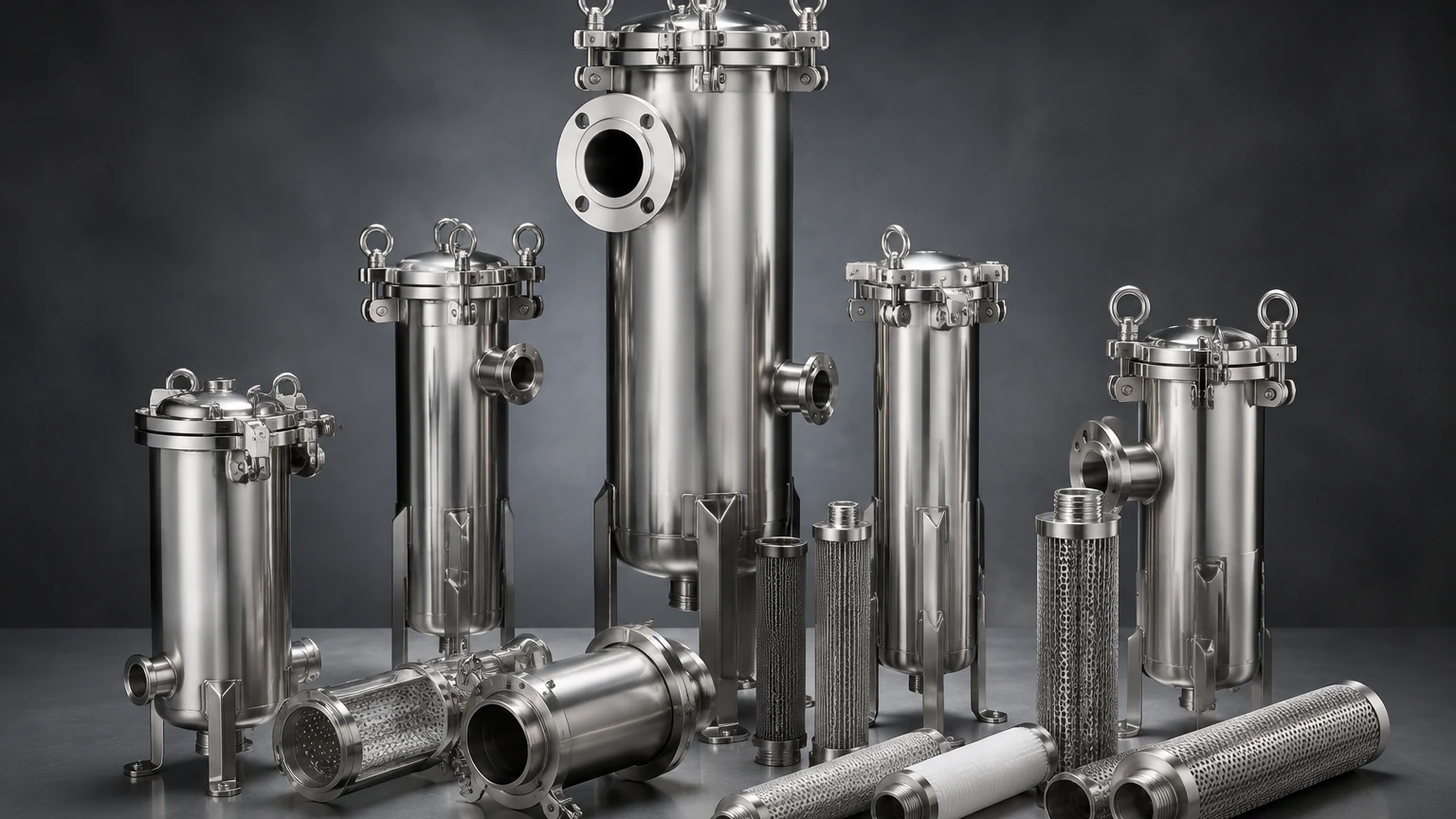
Customization and OEM Integration
In many industrial settings, a standard off-the-shelf housing may not meet the specific spatial or functional requirements of the system. Customization is a core part of the manufacturing process at Kaifil. Engineers often require specific port sizes, unique mounting brackets, or specialized internal support structures to accommodate custom wire mesh filters or stainless steel cartridges.
OEM (Original Equipment Manufacturer) services allow companies to integrate filtration housings directly into larger machines or skid-mounted systems. This requires close collaboration between the filter manufacturer and the system designer to ensure that the housing's dimensions, weight, and flow characteristics align with the overall project specifications. From material selection to the final pressure test, customized solutions ensure that the filtration component is a perfect fit for the intended environment.
Maintenance and Operational Longevity
To ensure the long-term reliability of stainless steel filter housings, a proactive maintenance schedule is necessary. While the housing itself is a durable piece of equipment, its performance is tied to the operational environment.
Differential Pressure Monitoring
The most effective way to manage a filter housing is by monitoring the differential pressure ($ΔP$). As the internal filter element traps contaminants, the resistance to flow increases. Housings should be equipped with gauges to track this change. Most industrial systems recommend a filter change-out when the differential pressure reaches 1.5 to 2.0 bar (22-30 psi), depending on the element type.
Cleaning and Inspection
During filter replacement, the internal surfaces of the housing should be inspected for signs of corrosion, erosion, or seal wear. In sanitary applications, the housing must undergo validated cleaning procedures. For industrial applications, periodic passivation of the stainless steel can help restore the protective chrome-oxide layer, extending the life of the vessel in corrosive environments.
Air Venting and Draining
Properly designed housings include vent ports at the highest point and drain ports at the lowest point. Venting is critical during startup to remove trapped air, which can cause pressure spikes and reduce the effective filtration area. Draining is essential for safe filter replacement, especially when handling hazardous chemicals or high-temperature fluids.
Conclusion
Stainless steel filter housings are more than just containers; they are engineered components that must balance pressure containment, fluid dynamics, and chemical compatibility. By selecting the appropriate grade of stainless steel, ensuring correct pressure ratings, and choosing the right sealing materials, engineers can build a filtration system that is both reliable and cost-effective.
Whether you are designing a new system or upgrading an existing one, understanding these technical boundaries is the first step toward optimized performance. For high-quality filtration components and custom-manufactured solutions, explore the options available on our Main Page. By focusing on precision manufacturing and engineering expertise, Kaifil supports global industries in achieving superior filtration results in even the most demanding environments.
