


Stainless Steel Filter Screen
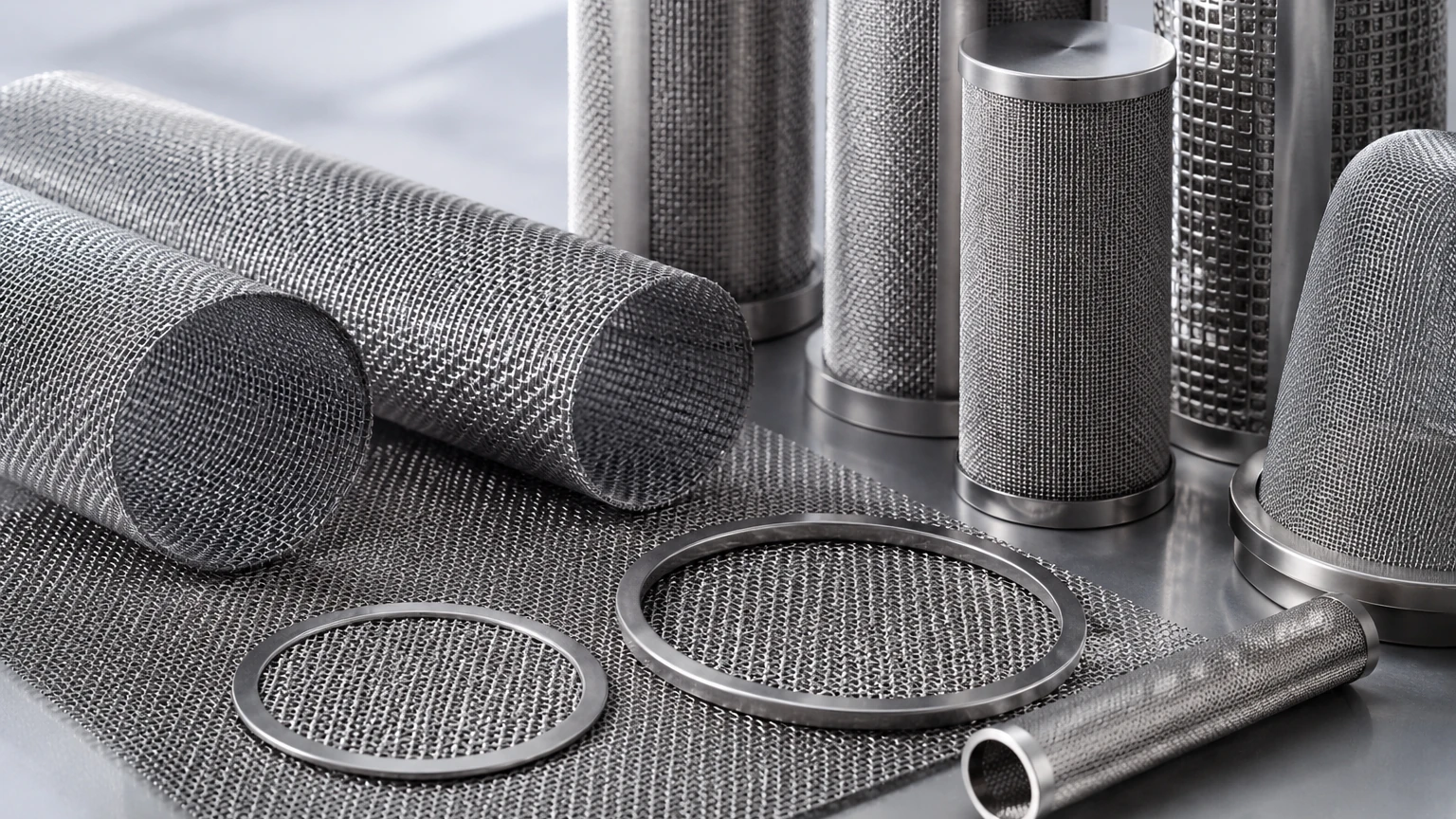
In industrial filtration, the stainless steel filter screen serves as a fundamental component for separating solids from liquids or gases. Engineered for durability and precision, these screens are utilized across a broad spectrum of high-demand sectors, including chemical processing, pharmaceuticals, food and beverage production, and hydraulic systems. Unlike synthetic alternatives, stainless steel offers a unique combination of mechanical strength, thermal stability, and chemical resistance, making it the preferred choice for critical applications where failure is not an option.
Selecting the appropriate stainless steel filter screen requires a deep understanding of metallurgy, weave patterns, and fluid dynamics. For engineers and procurement professionals, the goal is to balance filtration efficiency with structural longevity while minimizing the total cost of ownership. This guide provides a technical overview of the factors that influence performance and the criteria essential for selecting a reliable filtration solution.
Material Selection: Balancing Corrosion Resistance and Mechanical Strength
The performance of a stainless steel filter screen begins with the alloy composition. The choice of material determines how the screen will react to corrosive agents, extreme temperatures, and mechanical stress. While there are dozens of stainless steel variants, three grades dominate the industrial filtration landscape:
AISI 304 Stainless Steel
Grade 304 is the most common material used in filtration. It contains approximately 18% chromium and 8% nickel, providing excellent resistance to atmospheric corrosion and many organic and inorganic chemicals. It is suitable for food-grade applications and general industrial water treatment where high concentrations of chlorides are not present.
AISI 316 and 316L Stainless Steel
For more aggressive environments, particularly those involving marine conditions or chemical processing, Grade 316 is the standard. The addition of 2% to 3% molybdenum significantly enhances its resistance to pitting and crevice corrosion in chloride-rich environments. Grade 316L (low carbon) is preferred when the filter screen must be welded, as it minimizes the risk of carbide precipitation and subsequent intergranular corrosion at the weld sites.
Specialized Alloys
In extreme cases involving highly acidic or alkaline fluids, or temperatures exceeding 800°C, specialized alloys such as 904L, Duplex stainless steel, or Hastelloy may be required. These materials provide the necessary oxidation resistance and mechanical integrity for specialized petrochemical or aerospace applications.
Weave Patterns and Their Impact on Filtration Accuracy
The method by which the stainless steel wires are interlaced—the weave pattern—directly dictates the aperture size, the stability of the mesh, and the flow characteristics. Understanding these patterns is essential for matching a filter screen to specific particle size requirements.
Plain Weave
This is the simplest and most common weave, where each warp wire crosses over and under each shute wire. It produces a square opening and is generally used for coarse to medium filtration. Plain weave screens offer high flow rates but may lack the structural rigidity required for high-pressure applications.
Twill Weave
In a twill weave, each shute wire passes over and under two warp wires. This allows for a heavier wire diameter to be used for a given mesh count, resulting in a stronger and more durable screen. Twill weaves are often used when a high degree of filtration is required with a heavier load-bearing capacity.
Dutch Weave (Plain and Twilled)
Dutch weaves utilize different diameters for warp and shute wires. The shute wires are driven close together, creating a "tortuous path" for the fluid. This results in a very dense, strong mesh with much smaller openings than plain or twill weaves. Dutch weaves are characterized by their high pressure resistance and are the industry standard for fine filtration in hydraulic systems and fuel filters.
Critical Specifications for Engineering and Procurement
When specifying a stainless steel filter screen, engineers must move beyond simple descriptions and focus on quantifiable metrics. These specifications ensure that the component will perform as expected within the larger filtration system.
1. Mesh Count: The number of openings per linear inch. A higher mesh count indicates finer filtration but also results in a smaller open area.
2. Aperture (Opening Size): The clear distance between two adjacent wires. This is the most critical factor in determining the largest particle that can pass through the screen.
3. Wire Diameter: The thickness of the wire before weaving. Heavier wire increases the screen's lifespan and pressure rating but reduces the percentage of open area.
4. Percentage of Open Area: Calculated as (Aperture² / (Aperture + Wire Diameter)²) × 100. This percentage determines the flow capacity and the initial pressure drop across the screen. A higher open area reduces energy costs by allowing fluid to pass more easily, though it may compromise the screen's strength.
Structural Integrity and Custom Fabrication Options
A stainless steel filter screen is rarely used as a standalone piece of mesh. In industrial environments, it is typically part of a larger assembly, such as a filter cartridge, basket, or strainer. To withstand high differential pressures, the screen often requires secondary processing and reinforcement.
Pleating for Increased Surface Area
To extend the service life between cleaning cycles, filter screens can be pleated. Pleating significantly increases the effective filtration area (EFA) within the same footprint. This reduces the flux (flow per unit area), which in turn lowers the pressure drop and allows for higher contaminant loading capacity.
Support Structures
Fine mesh screens are often delicate. To prevent deformation under high pressure, they are frequently sintered to or supported by a coarser perforated metal core or a heavy-duty backup mesh. This multi-layer construction ensures that the fine filtration layer remains intact even during pressure surges or backwashing cycles.
Custom OEM Solutions
Many industrial applications require unique geometries or specialized end-fittings. Professional manufacturers like Kaifil specialize in providing customized filtration components that integrate seamlessly into existing machinery. Whether it involves specific welding techniques like TIG or plasma welding, or custom-shaped frames, OEM capabilities ensure that the filter screen meets the exact tolerances required by the application. Engineers can explore these capabilities on the Main Page to understand how custom designs can solve specific process challenges.
Evaluating Performance: Flow Rates and Pressure Drop
The primary performance indicator for any stainless steel filter screen is the relationship between flow rate and pressure drop (ΔP). As fluid passes through the mesh, resistance causes a drop in pressure. As the screen captures contaminants, the apertures become restricted, and the pressure drop increases.
Engineers must calculate the "clean pressure drop" to ensure the system's pump or gravity feed can maintain the required flow rate. If the initial pressure drop is too high, the system will reach its terminal pressure (the point at which the filter must be cleaned or replaced) too quickly, leading to excessive downtime and maintenance costs. Factors such as fluid viscosity, temperature, and particle concentration must all be factored into these calculations during the design phase.
Risk Mitigation: Addressing Premature Failure and Maintenance
While stainless steel is exceptionally durable, it is not indestructible. Understanding common failure modes can help in developing a robust maintenance schedule and selecting the right specifications.
* Fatigue Failure: In systems with pulsating flow (such as those powered by reciprocating pumps), the filter screen may undergo cyclic loading. This can lead to wire fatigue and eventual cracking. Selecting a screen with adequate support or a heavier wire diameter can mitigate this risk.
* Blinding and Clogging: Blinding occurs when particles that are nearly the same size as the aperture become wedged in the mesh. This is common with spherical particles. Using a Dutch weave or a different aperture shape can often solve this issue.
* Chemical Incompatibility: Even 316L can fail if exposed to chemicals outside its resistance range, such as highly concentrated hot acids. Always verify the chemical compatibility of the alloy with the specific process fluid at its maximum operating temperature.
Strategic Procurement and Total Cost of Ownership
When purchasing a stainless steel filter screen, the initial purchase price is only one component of the total cost. Procurement teams should evaluate the following to ensure long-term value:
* Cleaning and Reusability: One of the greatest advantages of stainless steel is that it can often be cleaned and reused. Methods such as ultrasonic cleaning, backflushing, or chemical cleaning can restore the screen to near-original performance, significantly reducing the cost per gallon filtered compared to disposable filters.
* Operational Downtime: A filter that lasts 20% longer between cleanings can save thousands of dollars in labor and lost production time. Investing in a higher-quality mesh or a pleated design often pays for itself within the first few months of operation.
* Supplier Expertise: Partnering with a manufacturer that understands the technical nuances of filtration is vital. A supplier should be able to provide material certifications, pressure drop curves, and engineering support to ensure the selected screen is optimized for the intended environment.
By focusing on these technical and economic factors, organizations can ensure that their filtration systems operate at peak efficiency. For more detailed product specifications and application-specific support, visiting the Main Page provides access to a wealth of engineering resources and custom manufacturing options tailored to industrial needs.
