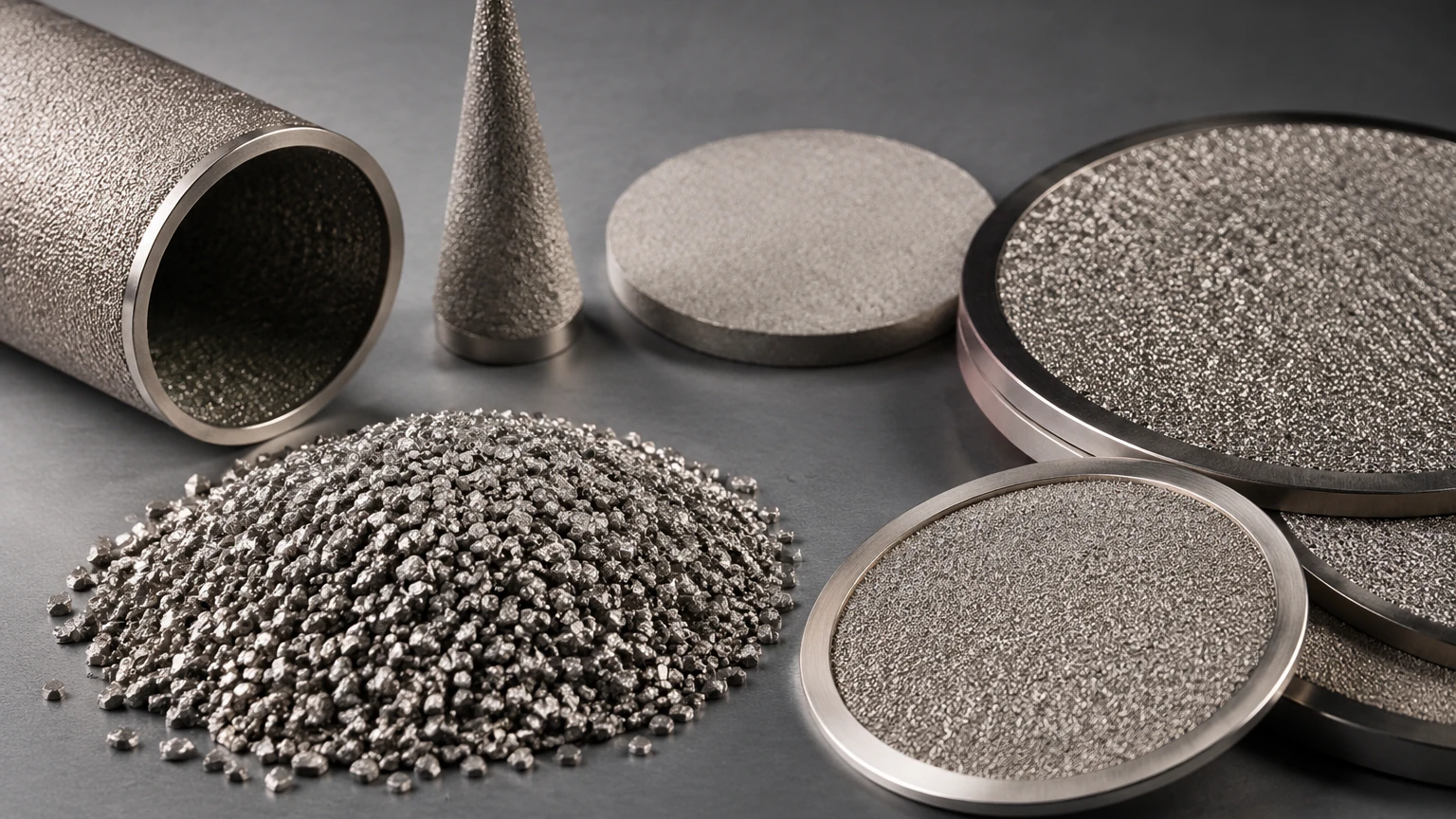
Stainless Steel Frit
In the realm of industrial filtration and fluid control, the stainless steel frit stands as a critical component for applications requiring high precision, thermal stability, and chemical resistance. Unlike traditional fabric or polymer filters, a stainless steel frit is a porous metal structure typically manufactured through a process called sintering. This engineering approach transforms stainless steel powder into a solid yet permeable medium, providing a robust solution for demanding environments where pressure, temperature, and corrosive agents would compromise other materials. For engineers and procurement specialists, understanding the technical nuances of these components is essential for optimizing system performance and ensuring long-term operational reliability.
Understanding the Sintering Process and Material Composition
The performance of a stainless steel frit is fundamentally rooted in its manufacturing process. Sintering involves taking high-purity stainless steel powder—most commonly Grade 316L—and subjecting it to high temperatures below its melting point within a controlled atmosphere. This process causes the metal particles to bond at their contact points through a diffusion mechanism, creating a rigid, interconnected pore network.
Grade 316L is the preferred material for most industrial frits due to its low carbon content and the addition of molybdenum, which significantly enhances resistance to pitting and crevice corrosion in chloride-rich environments. The resulting structure is not merely a screen but a depth filtration medium. The tortuous path created by the interconnected pores ensures that particles are trapped not just on the surface, but within the thickness of the frit itself. This structural integrity allows the frit to withstand high differential pressures without deforming or experiencing media migration, a common failure point in fibrous filter media.
Key Performance Characteristics of Sintered Metal Frits
When evaluating a stainless steel frit for industrial use, several physical and mechanical properties must be considered to ensure compatibility with the intended application. These characteristics define how the fluid interacts with the porous metal and how the filter will behave under stress.
1. Porosity and Permeability: Porosity refers to the percentage of void space within the total volume of the frit, while permeability measures the ability of fluids to pass through that space. In sintered metal, porosity is typically controlled between 30% and 50%. Higher porosity reduces pressure drop but may sacrifice mechanical strength. Engineers must balance these factors to achieve the desired flow rate at a manageable energy cost.
2. Mechanical Strength: Because the metal particles are fused together, the frit possesses inherent structural rigidity. This allows it to function as a self-supporting component in high-pressure systems, such as HPLC (High-Performance Liquid Chromatography) columns or high-pressure gas manifolds, where pressures can exceed several thousand PSI.
3. Thermal Stability: Stainless steel frits can operate at temperatures that would melt or degrade polymer filters. Depending on the specific alloy and atmospheric conditions, these components can maintain their structural integrity at temperatures up to 450°C (842°F) in oxidizing environments and even higher in reducing environments.
4. Chemical Compatibility: The use of 316L or other high-performance alloys ensures that the frit remains inert when exposed to a wide range of solvents, acids, and bases. This is particularly vital in analytical chemistry and pharmaceutical manufacturing, where any leaching of material could contaminate the process stream.
Filtration Efficiency and Micron Ratings Explained
One of the most frequent points of confusion in filter selection is the distinction between nominal and absolute micron ratings. A stainless steel frit is characterized by its pore size distribution, which determines its filtration efficiency.
* Nominal Rating: This indicates the ability of the frit to retain a majority percentage (usually 60% to 90%) of particles of a specific size. It is a general guide but does not guarantee total removal.
* Absolute Rating: This refers to the diameter of the largest hard spherical particle that will pass through the filter under specified test conditions. In high-precision applications like protecting sensitive analytical sensors or fuel injectors, absolute ratings are often required to prevent system damage.
In a sintered stainless steel frit, the pore size is determined by the size of the original metal powder and the compression force applied during the molding process. Manufacturers can produce frits with ratings as fine as 0.2 microns up to 100 microns or more. Because the pores are fixed in a rigid matrix, the micron rating does not change even when the frit is subjected to pressure surges, providing consistent filtration performance throughout its service life.
Critical Engineering Considerations for System Integration
Integrating a stainless steel frit into an industrial system requires more than just selecting a micron rating. Engineers must consider the fluid dynamics and the physical housing of the component. To explore specific product configurations, technical professionals can visit the Main Page for detailed specifications.
Pressure Drop ($ΔP$)
Every filter introduces a resistance to flow. The pressure drop across a frit is influenced by the fluid's viscosity, the flow velocity, and the frit's thickness and pore size. Using Darcy’s Law for flow through porous media, engineers can calculate the expected $ΔP$. It is crucial to size the frit surface area appropriately; a frit that is too small for the required flow rate will result in excessive backpressure, potentially leading to pump strain or system failure.
Edge Sealing and Housing
To prevent fluid from bypassing the filtration medium, the frit must be properly sealed within its housing. This is often achieved through interference fits, welding, or the use of specialized gaskets. In many precision applications, the frit is "pressed-in" to a machined cavity. The tolerances of both the frit diameter and the housing must be tightly controlled to ensure a leak-proof seal without crushing the porous structure.
Media Migration
One of the primary advantages of a sintered stainless steel frit over wire mesh or fiber filters is the virtual elimination of media migration. In lower-quality filters, individual wires or fibers can break off and enter the downstream flow, which is unacceptable in pharmaceutical or semiconductor applications. The fused nature of the sintered powder ensures that the filter itself does not become a source of contamination.
Industrial Applications: From Chromatography to Chemical Processing
The versatility of the stainless steel frit makes it indispensable across various high-tech industries. Its role often shifts from simple filtration to fluid distribution or flame arrestment.
* Analytical Instrumentation: In HPLC and UHPLC, frits are used at the inlet and outlet of the chromatography column. They serve a dual purpose: retaining the expensive packing material (stationary phase) while ensuring a uniform flow of the mobile phase across the column diameter. Any irregularity in the frit's porosity can lead to band broadening and poor analytical results.
* Pharmaceutical and Biotech: Sintered frits are used for sparging—introducing gases into liquids in the form of very fine bubbles. The controlled pore size of a stainless steel frit allows for the creation of consistent, micro-sized bubbles, which maximizes the surface area for gas-liquid mass transfer in bioreactors.
* Chemical Processing: In catalyst recovery, frits are used to capture expensive catalyst particles from a reaction stream. Their ability to be cleaned and reused makes them a cost-effective alternative to disposable filter cartridges in continuous processing environments.
* Aerospace and Defense: Frits are employed in hydraulic systems and fuel lines to protect sensitive valves from particulate matter. Their high strength-to-weight ratio and resistance to extreme vibrations make them ideal for flight hardware.
Maintenance, Cleaning, and Life Cycle Management
While a stainless steel frit is a durable component, its lifespan is determined by how it is maintained. Unlike disposable filters, sintered metal components are often designed to be cleaned and returned to service, which significantly reduces the total cost of ownership over time.
Clogging and Fouling: Over time, particles will accumulate within the depth of the frit. This is signaled by a gradual increase in differential pressure. If the pressure exceeds a certain threshold, the frit must be cleaned or replaced.
Cleaning Methods:
1. Ultrasonic Cleaning: This is the most common method for removing fine particulates. The frit is submerged in a cleaning solvent, and high-frequency sound waves create cavitation bubbles that dislodge trapped debris from the pore network.
2. Backflushing: Reversing the flow of fluid through the frit can push out surface-loaded contaminants. This is most effective when performed regularly before the particles become deeply embedded.
3. Chemical Cleaning: For organic fouling, caustic or acidic washes may be used, provided the chemicals are compatible with Grade 316L stainless steel.
4. Thermal Burn-off: In cases where the contaminant is a polymer or organic resin, the frit can be heated in a vacuum furnace to carbonize and remove the material, effectively regenerating the porous structure.
Customization and OEM Capabilities
In many industrial designs, a standard off-the-shelf frit may not meet the specific geometric or performance requirements. Customization is a hallmark of high-quality manufacturing in this sector. Engineers can specify the exact diameter, thickness, and micron rating required for their unique assembly. Furthermore, the frit can be integrated into larger assemblies, such as threaded fittings or specialized caps, to simplify the final assembly process for the OEM.
When sourcing a stainless steel frit, it is vital to work with a manufacturer that understands the complexities of powder metallurgy and fluid dynamics. Precise control over the powder grain size and the sintering temperature is what separates a high-performance frit from a substandard one. Inconsistent sintering can lead to "soft spots" in the frit where the pores are larger than specified, leading to filtration failure.
Conclusion
The stainless steel frit is a masterclass in functional materials engineering. By leveraging the principles of powder metallurgy, it provides a level of durability and precision that is unattainable with other filtration media. Whether it is protecting a multi-million dollar chromatography system, ensuring the purity of a life-saving pharmaceutical, or managing the flow of corrosive chemicals, these sintered components are the silent workhorses of modern industry.
For technical teams looking to optimize their filtration processes or develop new equipment, selecting the right frit involves a deep dive into micron ratings, flow dynamics, and material compatibility. By focusing on high-quality sintered 316L and considering the long-term benefits of cleanability and structural integrity, organizations can achieve superior performance and reduced operational downtime. To learn more about customized filtration solutions and technical specifications, visit the Main Page for comprehensive support and product details.