


Coalesce Filter
In industrial fluid processing, the presence of entrained liquids or aerosols in gas streams, or immiscible liquid droplets in liquid streams, can lead to significant operational inefficiencies, equipment damage, and product contamination. A coalesce filter is a specialized engineering solution designed to address these challenges by merging small droplets into larger ones, which can then be easily separated from the continuous phase. Unlike standard particulate filters that primarily capture solid contaminants, a coalesce filter utilizes specific physical principles to manage phase separation in demanding environments such as chemical processing, compressed air systems, and oil-and-gas refining.
For engineers and procurement professionals, selecting the appropriate filtration technology requires a deep understanding of fluid dynamics, material compatibility, and the specific requirements of the application. As a professional manufacturer, Kaifil provides customized filtration solutions that integrate high-performance materials with precision engineering to ensure long-term reliability. To explore the full range of custom stainless steel filtration components, visit the Main Page for detailed technical specifications.
The Engineering Principles of Coalescence
The operation of a coalesce filter is governed by three primary physical mechanisms: diffusion, interception, and inertial impaction. These mechanisms work in concert to capture sub-micron droplets and facilitate their growth into larger masses.
1. Diffusion (Brownian Motion): This mechanism is most effective for extremely small droplets, typically those smaller than 0.1 microns. These particles move erratically due to molecular collisions, increasing the likelihood that they will come into contact with the filter fibers.
2. Interception: This occurs when a droplet follows a gas or liquid streamline but comes within one-half of its diameter of a fiber. The droplet then attaches to the fiber due to surface tension or molecular forces.
3. Inertial Impaction: For larger, heavier droplets, their momentum prevents them from following the fluid streamlines as they curve around the filter fibers. Instead, the droplets continue in a straight path and strike the fibers directly.
Once captured, these droplets migrate through the filter media, typically from the inside to the outside of the element. As they move, they collide with other captured droplets, merging into larger drops. Once these drops reach the outer surface of the filter media, they become heavy enough to overcome the fluid velocity and gravity pulls them down to a collection sump, where they can be drained.
Structural Design and Material Considerations
A high-quality coalesce filter must be constructed to withstand the mechanical stresses of high-pressure systems while maintaining chemical resistance to the fluids being processed. The choice of media is critical to the efficiency of the coalescence process.
Media Selection
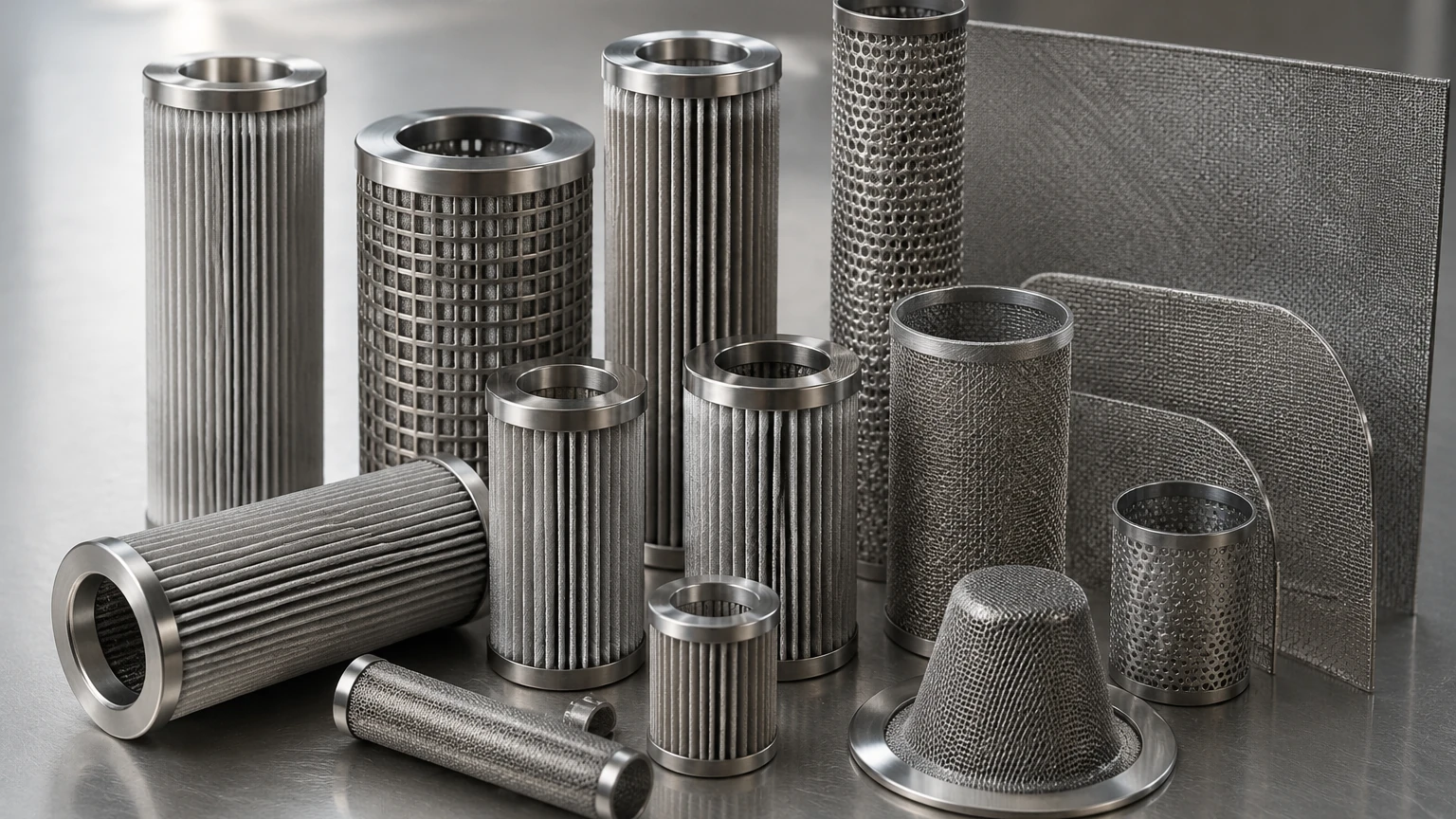
In many industrial applications, borosilicate glass fibers are used for their high surface area and ability to facilitate droplet growth. However, in environments involving corrosive chemicals, high temperatures, or high-pressure differentials, stainless steel wire mesh or sintered metal media are often preferred. Stainless steel offers superior durability and can be engineered with specific pore structures to optimize the separation of oil-water emulsions or aerosolized contaminants.
Housing and Support
The internal structure of the filter element often includes a support core and an outer cage, usually made of stainless steel. These components prevent the media from collapsing or migrating under high differential pressures. Furthermore, an outer drainage layer, often made of a porous foam or specialized mesh, is employed to prevent the coalesced droplets from being re-entrained into the clean fluid stream.
Liquid-Liquid vs. Gas-Liquid Coalescence
Understanding the distinction between liquid-liquid and gas-liquid separation is vital for correct system design. Although the fundamental goal—separating two phases—remains the same, the engineering requirements differ significantly.
Gas-Liquid Coalescence
Commonly found in compressed air and natural gas processing, gas-liquid coalesce filters remove oil and water aerosols. In these systems, the primary concern is preventing "carryover," where liquid droplets are swept into downstream equipment like turbines, pneumatic tools, or sensitive analytical instruments. High-efficiency gas coalescers can achieve removal rates of 99.9% for droplets as small as 0.3 microns.
Liquid-Liquid Coalescence
This process is used to separate two immiscible liquids, such as removing water from jet fuel or separating oil from process water. The efficiency of a liquid-liquid coalesce filter depends heavily on the interfacial tension between the two liquids. If the interfacial tension is too low (often due to the presence of surfactants), the droplets will not merge easily, requiring specialized media coatings or multi-stage separation systems.
Key Evaluation Criteria for Industrial Selection
When specifying a coalesce filter for an industrial project, engineers must evaluate several performance metrics to ensure the system meets the required purity standards without excessive operational costs.
* Filtration Efficiency: This is typically expressed as a percentage of droplets removed at a specific micron rating. For critical applications, such as protecting gas turbines, a high-efficiency rating is non-negotiable.
* Differential Pressure (Delta P): Every filter creates a pressure drop. A coalesce filter must be sized correctly to ensure that the initial pressure drop is low, providing sufficient "headroom" for the filter to operate as it gradually accumulates solid contaminants.
* Flow Rate Capacity: The velocity of the fluid through the media must be carefully controlled. If the velocity is too high, the coalesced droplets may be sheared back into smaller particles or blown through the media before they can drain, a phenomenon known as re-entrainment.
* Chemical Compatibility: The filter media, seals, and housing must be compatible with the process fluid. For example, in pharmaceutical or food-grade applications, 316L stainless steel is often the standard due to its corrosion resistance and ease of sterilization.
Common Risks and Operational Challenges
Failure to properly maintain or specify a coalesce filter can lead to several industrial risks. One of the most common issues is solid particulate loading. While coalesce filters can capture some solids, they are primarily designed for liquid separation. If a gas or liquid stream is heavily contaminated with solids, a pre-filter (particulate filter) should be installed upstream. Excessive solids will plug the coalescing media, leading to a rapid increase in differential pressure and potential media rupture.
Another risk is surfactant interference. In liquid-liquid separation, surfactants (surface-active agents) can coat the filter fibers, reducing the surface tension and preventing droplets from merging. This "disarms" the coalescer, allowing the emulsion to pass through untreated. Identifying the presence of surfactants during the design phase is essential for selecting the correct media treatment.
Maintenance Protocols and Replacement Cycles
To ensure the longevity of a coalesce filter system, a proactive maintenance schedule is required. The primary indicator of filter health is the differential pressure across the element. Most industrial systems include DP gauges or transmitters to monitor this in real-time.
* Scheduled Replacement: Filter elements should be replaced when the differential pressure reaches a pre-determined limit (often 10-15 psi above the clean pressure drop) or after a specific period of service, regardless of the DP reading, to prevent media degradation.
* Drainage Management: In gas-liquid systems, the collection sump must be drained regularly. Automated float drains or timed solenoid valves are often used to ensure that the collected liquid does not build up and reach the filter element, which would cause immediate re-entrainment.
* Integrity Testing: In high-stakes environments like pharmaceutical manufacturing, periodic integrity testing may be required to ensure that the filter media has not developed bypass paths or structural failures.
Customization and Engineering Support
Standard off-the-shelf filters often fall short in specialized industrial environments. Factors such as extreme temperatures, fluctuating flow rates, and unique chemical compositions necessitate a customized approach to filter design. Kaifil specializes in the development of custom stainless steel filtration components that are tailored to these specific variables.
By working closely with engineering teams, Kaifil can adjust parameters such as the density of the wire mesh, the layering of the media, and the structural reinforcement of the cartridge to provide a coalesce filter that optimizes both performance and total cost of ownership. Whether the goal is to protect high-value downstream assets or to ensure compliance with environmental discharge regulations, a custom-engineered solution provides the reliability that standard components cannot match.
For more information on how custom-manufactured filtration components can improve your process efficiency, visit the Kaifil Main Page to review available product options and application support. Understanding the nuances of fluid separation is the first step toward achieving a more stable and efficient industrial operation.
