


Stainless Steel Mesh Filter
In the landscape of industrial processing, the stainless steel mesh filter serves as a critical component for ensuring product purity, protecting downstream equipment, and maintaining system efficiency. Unlike polymer-based or disposable media, stainless steel filtration solutions offer a unique combination of mechanical strength, thermal stability, and chemical resistance. For engineers and procurement professionals, selecting the right filtration component requires a deep understanding of material properties, weave geometries, and the specific demands of the operating environment.
Industrial filtration is rarely a one-size-fits-all application. Whether managing high-pressure hydraulic fluids, corrosive chemical solvents, or sensitive food and beverage ingredients, the performance of a stainless steel mesh filter is defined by its engineering precision. As a professional manufacturer, Kaifil specializes in developing these high-performance components, providing the technical expertise necessary to bridge the gap between standard specifications and specialized industrial requirements. To explore the full range of available solutions, technical teams can visit the Main Page for detailed product specifications.
Engineering Fundamentals of Stainless Steel Mesh Filters
The performance of a mesh filter is dictated by three primary geometric variables: wire diameter, aperture (pore size), and open area. These factors are interdependent and determine both the filtration accuracy and the flow characteristics of the medium.
1. Aperture Size: This refers to the clear distance between two adjacent warp or weft wires. In industrial applications, this is often measured in microns. The aperture size determines the largest particle that can pass through the mesh under ideal conditions.
2. Wire Diameter: The thickness of the wire used in the weaving process. A larger wire diameter increases the mechanical strength and durability of the filter but reduces the total open area.
3. Open Area Percentage: This is the ratio of the area of the apertures to the total area of the mesh. A higher open area results in lower initial pressure drops and higher flow rates, which is essential for systems where energy efficiency and throughput are priorities.
For technical professionals, balancing these variables is key. A mesh with a very fine aperture but thin wires may fail under high-pressure pulses, while a robust mesh with thick wires may restrict flow excessively, leading to increased pump wear and energy costs.
Material Selection and Chemical Compatibility
Stainless steel is the material of choice for industrial filtration due to its inherent resistance to oxidation and corrosion. However, the specific grade of stainless steel must be matched to the chemical profile of the process fluid. The two most common grades utilized in the manufacturing of a stainless steel mesh filter are 304 and 316L.
* Grade 304: This is the standard industrial grade, providing excellent strength and good corrosion resistance for most water treatment and general industrial applications. It is cost-effective but may be susceptible to chloride-induced pitting in highly saline environments.
* Grade 316L: Containing molybdenum, 316L offers superior resistance to corrosion, particularly against chlorides and acids. The "L" denotes low carbon content, which improves weldability and prevents sensitization—a common issue where chromium carbides precipitate at grain boundaries during welding, leading to intergranular corrosion.
In specialized sectors such as pharmaceutical and food processing, 316L is often the mandatory standard to ensure that the filter medium does not leach metallic ions into the product stream. Furthermore, stainless steel's ability to withstand temperatures ranging from cryogenic levels to over 500°C (depending on the alloy and structural design) makes it indispensable for high-heat applications where synthetic fibers would melt or degrade.
Understanding Weave Patterns and Filtration Precision
The method by which the stainless steel wires are interwoven significantly impacts the filter's performance characteristics. Different weave patterns are employed to achieve specific filtration goals, from coarse straining to fine particulate removal.
Plain Weave
This is the most common and straightforward weave, where each weft wire passes over and under one warp wire. It provides a consistent aperture size and is ideal for high-flow applications where the primary goal is the removal of relatively large particles.
Twill Weave
In a twill weave, each weft wire passes over and under two warp wires. This allows for the use of heavier wires for a given mesh count, resulting in a stronger mesh that can support higher loads. It is frequently used in heavy-duty industrial sieving.
Dutch Weave (Plain and Twilled)
Dutch weaves utilize different diameters for the warp and weft wires. The wires are driven closely together, creating a "zero-aperture" appearance. The filtration actually occurs through the tortuous paths created by the overlapping wires. Dutch weaves offer superior mechanical strength and can achieve much finer filtration levels (down to 5-10 microns) compared to standard square mesh, making them the preferred choice for high-pressure hydraulic and fuel systems.
Performance Metrics: Flow Rate and Pressure Drop
From an engineering perspective, the efficiency of a stainless steel mesh filter is measured by its pressure drop ($ΔP$) relative to the flow rate. Every filter medium introduces resistance to the fluid stream.
* Clean Pressure Drop: This is the initial resistance of the filter when it is first installed and free of contaminants. A well-designed filter should have a low clean pressure drop to maximize the available energy for the process.
* Dirt Holding Capacity: As particles are captured, the available open area decreases, and the pressure drop increases. The dirt holding capacity is the amount of contaminant the filter can retain before reaching a pre-defined terminal pressure drop.
Engineers must ensure that the filter housing and the mesh element are sized correctly to accommodate the maximum expected flow rate without exceeding the structural limits of the mesh. Excessive pressure drop can lead to "media migration" or structural collapse if the mesh is not properly supported by a perforated core or outer shroud.
Customization and OEM Integration for Industrial Systems
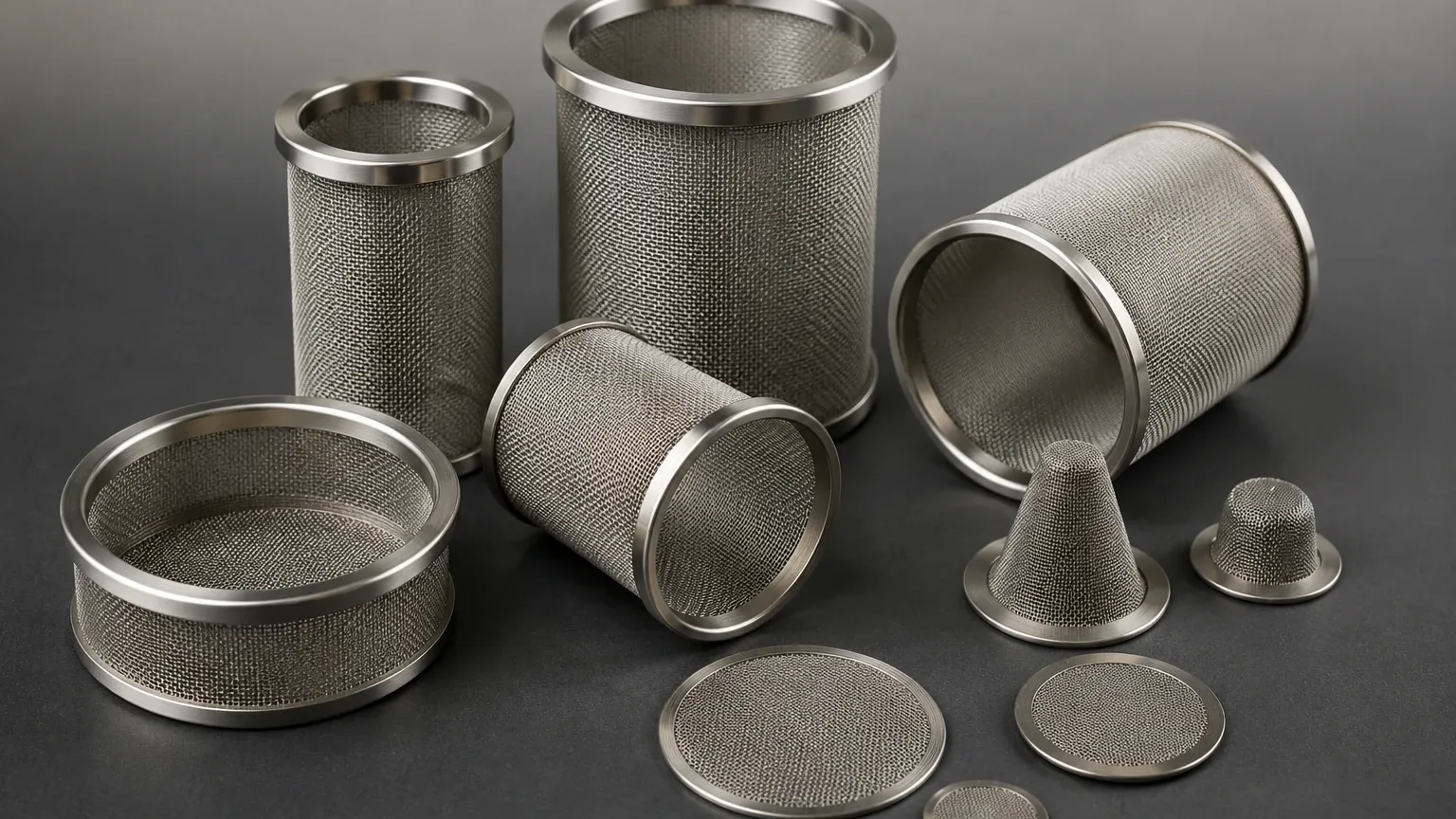
Standard off-the-shelf filters often fail to meet the rigorous demands of specialized industrial machinery. This is where customized filtration solutions become essential. Customization involves more than just changing the dimensions of a filter cartridge; it includes the selection of specific weave types, the integration of reinforced support structures, and the use of specialized end-fittings (such as NPT threads, flanges, or O-ring seals).
Kaifil provides comprehensive OEM services, working closely with system designers to develop filtration components that fit seamlessly into existing hardware. This collaborative approach ensures that the stainless steel mesh filter is optimized for the specific viscosity, temperature, and particle load of the application. Custom designs can also incorporate pleated mesh structures, which significantly increase the effective filtration surface area within a compact footprint, thereby extending the service interval and reducing downtime.
Maintenance, Cleaning, and Service Life Optimization
One of the primary advantages of a stainless steel mesh filter over disposable alternatives is its cleanability. In many industrial processes, the ability to regenerate the filter medium in situ or through external cleaning processes provides a significant reduction in the total cost of ownership (TCO).
Cleaning Methods
1. Backwashing: Reversing the flow of the fluid to dislodge particles trapped on the surface of the mesh. This is common in automated water treatment systems.
2. Ultrasonic Cleaning: Using high-frequency sound waves in a cleaning solvent to create cavitation bubbles that remove fine particles from deep within the weave, especially in Dutch weave patterns.
3. Chemical Cleaning: Using acids or alkalis to dissolve organic or mineral scale that has accumulated on the stainless steel surface.
Proper maintenance protocols extend the service life of the filter, often allowing a single stainless steel element to last for several years. This not only reduces the cost of replacement parts but also minimizes the environmental impact associated with the disposal of used filter cartridges.
Key Considerations for Procurement and Engineering Teams
Before finalizing a specification for a stainless steel mesh filter, technical teams should confirm several critical parameters to ensure long-term reliability:
* Filtration Rating: Distinguish between "absolute" and "nominal" ratings. An absolute rating implies that 99.9% of particles above a certain size will be captured, whereas a nominal rating is an average figure.
* Operating Pressure and Differential Pressure: Ensure the mesh and its support structure can withstand the maximum system pressure and the maximum allowable pressure drop before cleaning.
* Fluid Chemistry: Verify that the chosen grade (304, 316L, or others) is compatible with the process fluid and any cleaning agents used.
* Seal Compatibility: Ensure that O-rings or gaskets (Viton, EPDM, PTFE) are compatible with the operating temperature and chemical environment.
By addressing these factors during the design phase, companies can avoid costly system failures and ensure consistent product quality. For organizations seeking reliable, high-precision filtration components, Kaifil offers the manufacturing capability and engineering support required to meet these stringent industrial standards. Detailed information regarding custom configurations and material certifications can be found on the Main Page.
Conclusion
The stainless steel mesh filter is a fundamental tool in modern industry, providing the durability and precision required for complex filtration tasks. By understanding the technical nuances of weave patterns, material grades, and flow dynamics, engineers can select filtration solutions that optimize performance and minimize operational costs. Whether for OEM integration or process optimization, high-quality stainless steel filtration remains a cornerstone of efficient industrial production.
