


Stirred Tank Bioreactor
In the field of industrial biotechnology and pharmaceutical manufacturing, the stirred tank bioreactor (STR) remains the most widely utilized vessel for aerobic fermentation and cell culture. Its dominance is attributed to its proven scalability, efficient mass transfer capabilities, and the ability to maintain a controlled environment for biological processes. For engineers and procurement specialists, understanding the technical nuances of these systems—specifically the integration of precision filtration components—is essential for ensuring batch consistency, sterility, and optimal yield.
At its core, a stirred tank bioreactor is a vessel designed to provide a controlled environment for the growth of microorganisms or mammalian cells. This control is achieved through mechanical agitation, precise temperature regulation, and the continuous supply of nutrients and gases. However, the performance of an STR is heavily dependent on the quality of its auxiliary components, particularly the filtration systems used for gas sparging, venting, and media sterilization.
Fundamental Principles of Stirred Tank Bioreactors
The primary function of a stirred tank bioreactor is to provide a homogeneous environment. This is achieved through an agitation system, typically consisting of one or more impellers mounted on a central shaft. The choice of impeller—whether radial flow (like the Rushton turbine) or axial flow (like hydrofoil impellers)—determines the shear stress and mixing efficiency within the vessel.
Beyond mixing, the bioreactor must manage oxygen transfer. Since many industrial bioprocesses are aerobic, oxygen must be dissolved into the liquid medium at a rate that meets the biological demand. This is where gas sparging systems become critical. These systems introduce air or pure oxygen into the bottom of the tank, where the bubbles are broken down by the impeller to increase the surface area for gas exchange.
For high-performance applications, the structural integrity of the vessel and its internal components is paramount. Most industrial STRs are constructed from high-grade stainless steel, such as 316L, to withstand the rigorous Clean-in-Place (CIP) and Steam-in-Place (SIP) cycles required to maintain sterility between batches.
The Role of Stainless Steel Filtration in Bioprocessing
Filtration is not merely a peripheral concern in bioreactor design; it is a fundamental requirement for process security. In a stirred tank bioreactor, stainless steel filtration components serve several critical functions that directly impact the success of the bioprocess.
Gas Sparging and Aeration
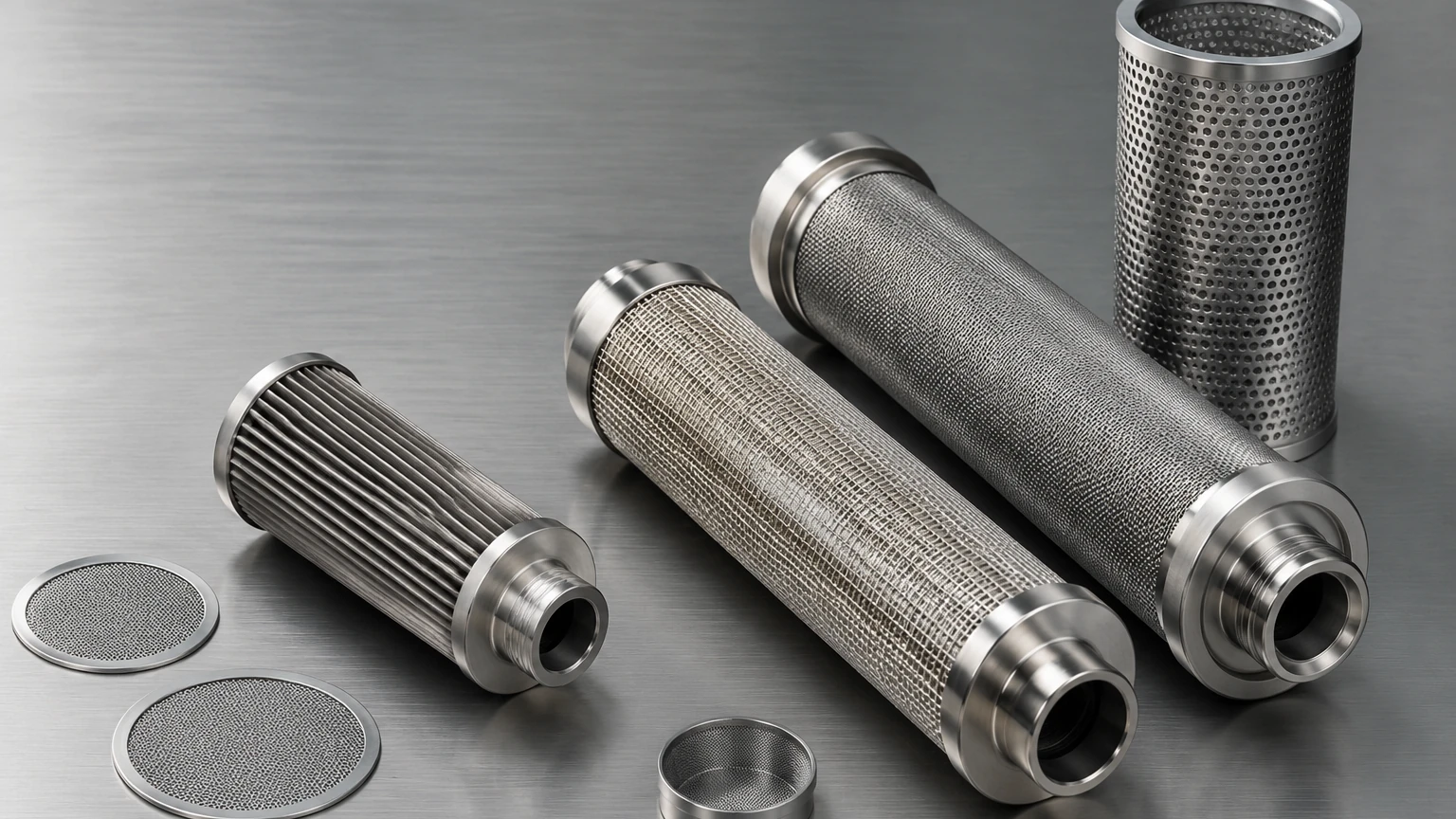
Precision-engineered spargers are used to introduce gases into the bioreactor. Unlike simple pipe spargers, micro-porous stainless steel spargers provide a much higher surface area by creating smaller, more uniform bubbles. This enhances the Oxygen Transfer Rate (OTR) without requiring excessive agitation speeds that could damage shear-sensitive cells. Sintered metal filters are often preferred for this application due to their uniform pore distribution and mechanical strength.
Sterile Venting
As gas is pumped into the bioreactor, an equal volume of exhaust gas must be removed. This exhaust gas often carries moisture and aerosols. Sterile vent filters, often constructed with stainless steel housings and high-efficiency hydrophobic media, prevent external contaminants from entering the vessel while ensuring that no biological material escapes into the environment. These filters must handle high flow rates with minimal pressure drop to prevent vessel over-pressurization.
Media and Buffer Sterilization
Before a batch begins, the liquid growth media must be sterilized. While heat sterilization is common, many heat-sensitive components (such as vitamins and proteins) must be filter-sterilized. Stainless steel filter cartridges and housings provide the pressure resistance and durability needed for large-scale liquid filtration, ensuring that the input media is free of microbial life.
Engineering Considerations for Bioreactor Filtration
When specifying filtration components for a stirred tank bioreactor, engineers must evaluate several technical parameters to ensure long-term reliability and performance.
Material Compatibility and Corrosion Resistance
Bioprocesses often involve complex media containing salts, acids, and bases. Furthermore, the cleaning agents used in CIP cycles can be chemically aggressive. Using 316L stainless steel ensures that the filtration components do not leach metal ions into the culture or succumb to pitting corrosion. For highly specialized applications, exotic alloys may be considered, but 316L remains the industry standard for its balance of performance and cost.
Filtration Precision and Pore Size
The selection of pore size is determined by the specific requirement of the process step. For gas sparging, pore sizes typically range from 0.5 to 20 microns to optimize bubble size. For sterile filtration of liquids or gases, absolute-rated filters (usually at the 0.2-micron level) are required to ensure the removal of bacteria and mycoplasma.
Thermal and Mechanical Stability
Unlike polymer-based filters, stainless steel filtration elements can withstand repeated SIP cycles at temperatures exceeding 121°C without losing structural integrity or filtration efficiency. This thermal stability is crucial for maintaining a closed, sterile system over multiple production runs. Additionally, the mechanical strength of wire mesh or sintered metal filters allows them to withstand high differential pressures that might occur during sudden flow fluctuations.
Optimizing Oxygen Transfer and Shear Stress
In a stirred tank bioreactor, there is a constant trade-off between maximizing oxygen transfer and minimizing shear stress. High agitation speeds improve OTR but can cause mechanical damage to cells, especially mammalian cell lines.
By utilizing advanced stainless steel sparging elements, engineers can achieve high OTR at lower agitation speeds. The fine bubbles produced by sintered metal spargers have a slower rise velocity and a higher surface-area-to-volume ratio, allowing more time for oxygen to dissolve into the medium. This optimization is a key factor in scaling up processes from laboratory to industrial volumes, where maintaining the same OTR becomes increasingly difficult.
Maintenance, Cleaning, and Replacement Cycles
The total cost of ownership for a stirred tank bioreactor is significantly influenced by the maintenance requirements of its filtration systems. One of the primary advantages of stainless steel filters is their cleanability.
Clean-in-Place (CIP) Protocols
Stainless steel filters are designed to be cleaned in situ. Using a combination of alkaline and acidic washes, organic and inorganic fouling can be removed from the filter surface. Engineers should verify that the filter design eliminates "dead zones" where bacteria could hide, ensuring that the CIP fluid reaches all surfaces.
Integrity Testing
To ensure process security, filtration components must undergo regular integrity testing. For sterile filters, this often involves the bubble point test or pressure hold test. Stainless steel components are particularly well-suited for these tests because they do not deform under the pressures required for verification.
Replacement Considerations
While stainless steel filters are durable, they are not infinite. Over time, repeated cleaning and sterilization can lead to fatigue or permanent clogging (blinding) of the pores. Establishing a clear replacement cycle based on pressure drop (delta P) monitoring is essential for preventing batch failure. If the pressure drop across a filter increases significantly even after a CIP cycle, it is an indication that the filter has reached the end of its functional life.
Selecting a Filtration Partner for Bioreactor Projects
When sourcing components for a stirred tank bioreactor, it is important to work with a manufacturer that understands the specific demands of the biopharmaceutical industry. Customization is often necessary, as every bioreactor design has unique geometry and flow requirements.
Key questions to ask a potential supplier include:
* Customization Capabilities: Can they manufacture spargers or filter cartridges to specific dimensions and pore sizes?
* Material Certification: Can they provide full traceability for the stainless steel used, including mill test reports?
* Quality Standards: Do their manufacturing processes align with ISO standards and cGMP requirements?
* Technical Support: Can they assist in calculating the required filtration area or gas flow rates for a specific vessel size?
For those looking to explore high-performance filtration options, visiting the Main Page of a dedicated manufacturer can provide insights into the range of available stainless steel wire mesh and sintered metal solutions.
Conclusion
The stirred tank bioreactor remains a cornerstone of modern biotechnology, and its success is inextricably linked to the performance of its internal and peripheral filtration systems. From the precise introduction of gases via stainless steel spargers to the protection of the sterile boundary through vent filtration, these components ensure that the biological process can proceed without interruption. By focusing on material quality, filtration precision, and cleanability, engineering teams can optimize their bioreactor performance, reduce downtime, and ensure the consistent production of high-quality biological products. As the industry moves toward more complex cell lines and higher density cultures, the role of specialized, durable stainless steel filtration will only become more critical in achieving process efficiency and reliability.
