


Strainer Screen Mesh Size
In industrial filtration and fluid handling, selecting the correct strainer screen mesh size is a critical engineering decision that directly impacts the efficiency, safety, and longevity of a processing system. Whether protecting high-precision pumps, nozzles, or heat exchangers, the strainer serves as the first line of defense against particulate contamination. However, choosing a mesh size is not merely about selecting the smallest possible opening; it requires a nuanced understanding of fluid dynamics, particle distribution, and mechanical constraints.
As a professional manufacturer specializing in custom stainless steel filtration solutions, Kaifil provides the technical expertise necessary to navigate these variables. This guide explores the engineering principles behind strainer screen mesh size selection, the relationship between mesh and microns, and the operational factors that dictate the success of an industrial filtration installation.
Understanding the Fundamentals of Mesh and Micron Ratings
To specify a strainer screen effectively, one must first understand the terminology used to measure filtration fineness. The term "mesh" refers to the number of openings per linear inch of the screen. For example, a 20-mesh screen has 20 openings across one inch. As the mesh count increases, the size of the openings decreases, and the wire diameter typically becomes finer.
While mesh count is a standard industry term, engineers often prefer the "micron" rating for higher precision. A micron (micrometer) is one-millionth of a meter. The relationship between mesh and microns is inverse: a higher mesh count corresponds to a lower (finer) micron rating. However, this relationship is not fixed because it depends on the wire diameter used in the weaving process. Two screens with the same mesh count but different wire diameters will have different opening sizes and different percentages of open area.
When evaluating a Main Page for filtration components, it is essential to consider the "Open Area" percentage. This is the ratio of the total area of the holes to the total area of the screen. A higher open area reduces the pressure drop across the strainer but may compromise the mechanical strength of the mesh. Balancing these factors is a core component of Kaifil’s customized filtration design process.
Engineering Considerations for Selecting Mesh Size
The selection of a strainer screen mesh size is dictated by the specific requirements of the application. Engineers must evaluate several variables to ensure the strainer performs its intended function without becoming a bottleneck in the system.
1. Target Particle Size
The primary goal of a strainer is to remove particles that could damage downstream equipment. As a general rule of thumb, the strainer screen mesh size should be approximately one-half the diameter of the largest allowable particle. For example, if a downstream nozzle has an orifice of 0.040 inches, the strainer should ideally be sized to 0.020 inches (approximately 30 to 40 mesh) to provide a safety margin and prevent clogging of the critical component.
2. Flow Rate and Allowable Pressure Drop
Every strainer introduces a degree of resistance to the fluid flow, resulting in a pressure drop (delta P). As the mesh size becomes finer, the resistance increases. If the mesh is too fine for the required flow rate, the pressure drop may exceed the system’s design limits, leading to cavitation in pumps or reduced throughput. Engineers must calculate the clean pressure drop and account for the inevitable increase in pressure as the screen begins to capture debris.
3. Fluid Viscosity
Viscosity plays a significant role in how easily a fluid passes through a mesh screen. High-viscosity fluids, such as heavy oils or syrups, experience much higher friction when passing through fine mesh. In these applications, a coarser mesh or a significantly larger filtration surface area is required to maintain acceptable flow rates. Attempting to use a very fine strainer screen mesh size with a viscous fluid often leads to rapid "blinding" (clogging) of the screen.
4. Solids Loading and Cleaning Frequency
If the fluid contains a high concentration of solids, a fine mesh screen will clog quickly, requiring frequent maintenance or backwashing. In such cases, a multi-stage filtration approach is often more cost-effective. A coarse "trash" strainer can be used upstream to remove large debris, followed by a finer strainer or filter cartridge to achieve the final required clarity. This protects the finer mesh and extends the service interval.
Material Integrity and Stainless Steel Advantages
In demanding industrial environments, the material of the strainer screen is as important as the mesh size itself. Kaifil specializes in stainless steel filtration solutions, primarily utilizing Grade 304 and Grade 316L. Stainless steel is the preferred material for several technical reasons:
* Corrosion Resistance: Grade 316L, with its molybdenum content, offers superior resistance to chlorides and acidic environments, making it ideal for chemical processing and marine applications.
* Mechanical Strength: Unlike synthetic fibers or softer metals, stainless steel wire mesh maintains its structural integrity under high-pressure differentials. This prevents the mesh from deforming or "bursting," which could allow unfiltered fluid to bypass the screen.
* Temperature Stability: Stainless steel can withstand extreme temperature fluctuations without losing its physical properties, which is essential in steam applications or cryogenic processing.
* Hygienic Properties: For food, beverage, and pharmaceutical industries, stainless steel provides a non-leaching, easy-to-clean surface that meets strict sanitary standards.
Common Risks of Improper Mesh Selection
Choosing the wrong strainer screen mesh size can lead to significant operational failures. If the mesh is too coarse, harmful contaminants pass through, leading to the erosion of valve seats, the clogging of spray nozzles, or the catastrophic failure of high-speed pump impellers. The cost of replacing a damaged pump far outweighs the investment in a correctly specified strainer.
Conversely, if the mesh is too fine, the system may suffer from:
* Frequent Downtime: Constant cleaning cycles disrupt production.
* Pump Damage: High pressure drops on the suction side of a pump can lead to cavitation, causing internal pitting and vibration.
* Mesh Failure: Excessive pressure across a clogged fine mesh can cause the wires to shift or tear, rendering the strainer useless.
To mitigate these risks, Kaifil works closely with engineering teams to analyze the specific particle distribution and flow characteristics of their media before recommending a specific mesh configuration.
Customization and OEM Solutions
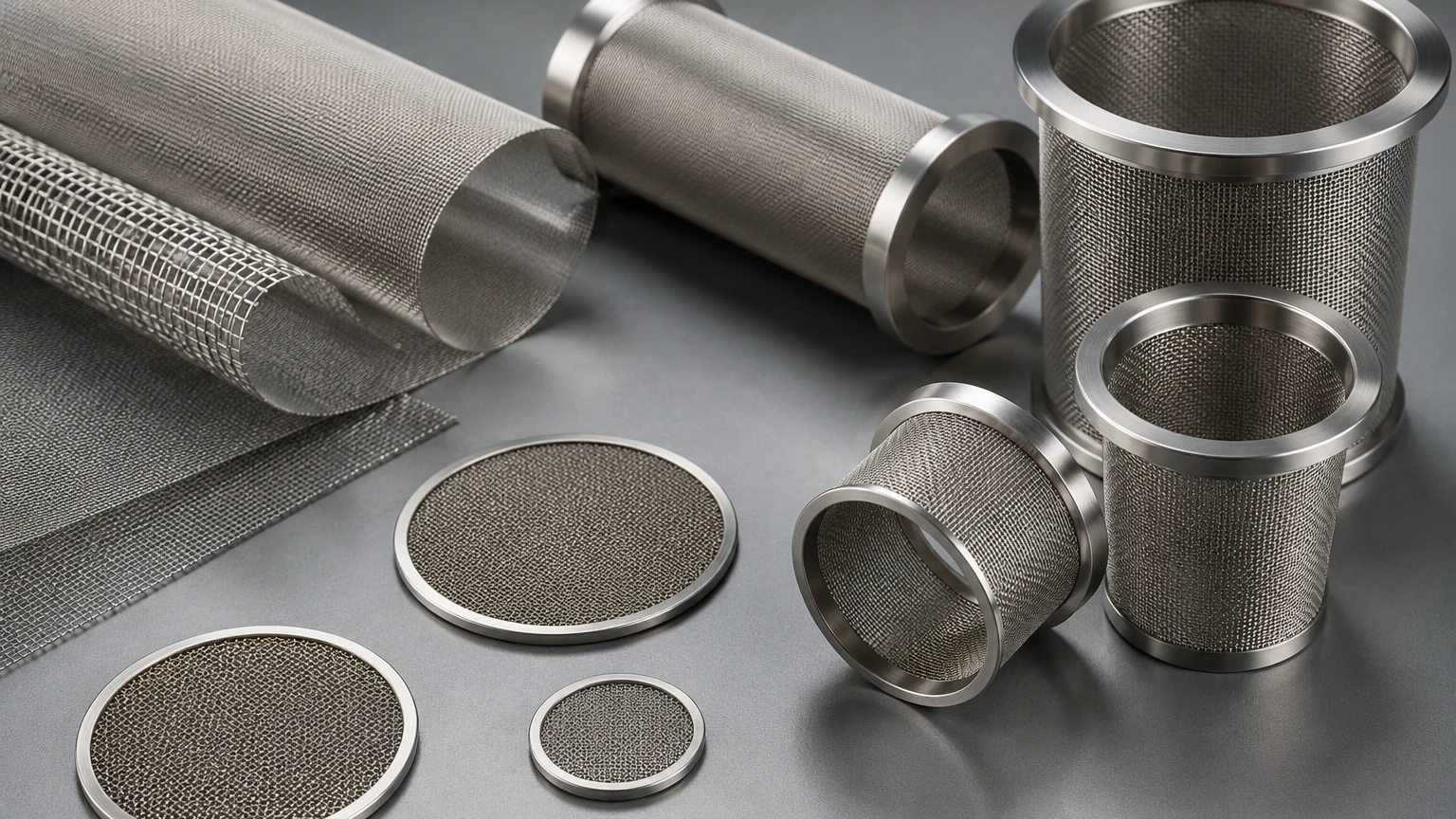
Standard off-the-shelf strainers often fail to meet the precise needs of specialized industrial equipment. This is where custom manufacturing becomes invaluable. Kaifil’s capabilities extend beyond simple mesh weaving; we provide precision-engineered components such as pleated mesh cartridges, reinforced basket strainers, and multi-layered sintered wire cloth.
Customization allows for the optimization of the "Effective Filtration Area" (EFA). By pleating the mesh or designing custom conical shapes, it is possible to increase the surface area within the same footprint. This allows for a finer strainer screen mesh size without the typical penalty of a high pressure drop. For OEM manufacturers, these custom solutions ensure that their equipment is protected by a filtration component specifically designed for its unique flow path and performance parameters.
Maintenance and Total Cost of Ownership
When specifying a strainer, purchasing teams should look beyond the initial acquisition cost and consider the total cost of ownership (TCO). A high-quality stainless steel screen from a reliable manufacturer like Kaifil may have a higher upfront cost than a generic alternative, but it offers a longer service life and better cleanability.
Proper maintenance involves monitoring the differential pressure across the strainer. Once the pressure reaches a predetermined limit, the screen must be cleaned. Stainless steel mesh is highly amenable to ultrasonic cleaning, backflushing, or chemical soaking, allowing it to be reused multiple times. Selecting a durable mesh construction ensures that the screen can withstand these cleaning processes without losing its filtration accuracy.
Technical Support and Selection Verification
Before finalizing a purchase or design specification, engineers should confirm several key details with their filtration partner:
1. Exact Micron/Mesh Requirement: Based on the most sensitive downstream component.
2. Maximum Differential Pressure: The point at which the mesh or the housing might fail.
3. Chemical Compatibility: Ensuring the wire and any soldering or welding materials are compatible with the process fluid.
4. Flow Velocity: To ensure the mesh can handle the kinetic energy of the fluid without vibrating or fatigue.
By addressing these technical questions early in the procurement process, companies can avoid costly retrofits and ensure system reliability. Kaifil’s experience in delivering dependable filtration components for chemical processing, water treatment, and hydraulic applications makes us a trusted partner for demanding industrial environments.
For more information on material selection, filtration accuracy, and customized designs, please visit our Main Page to review our full range of stainless steel filtration solutions and application support.
