


Sintered Wire Mesh
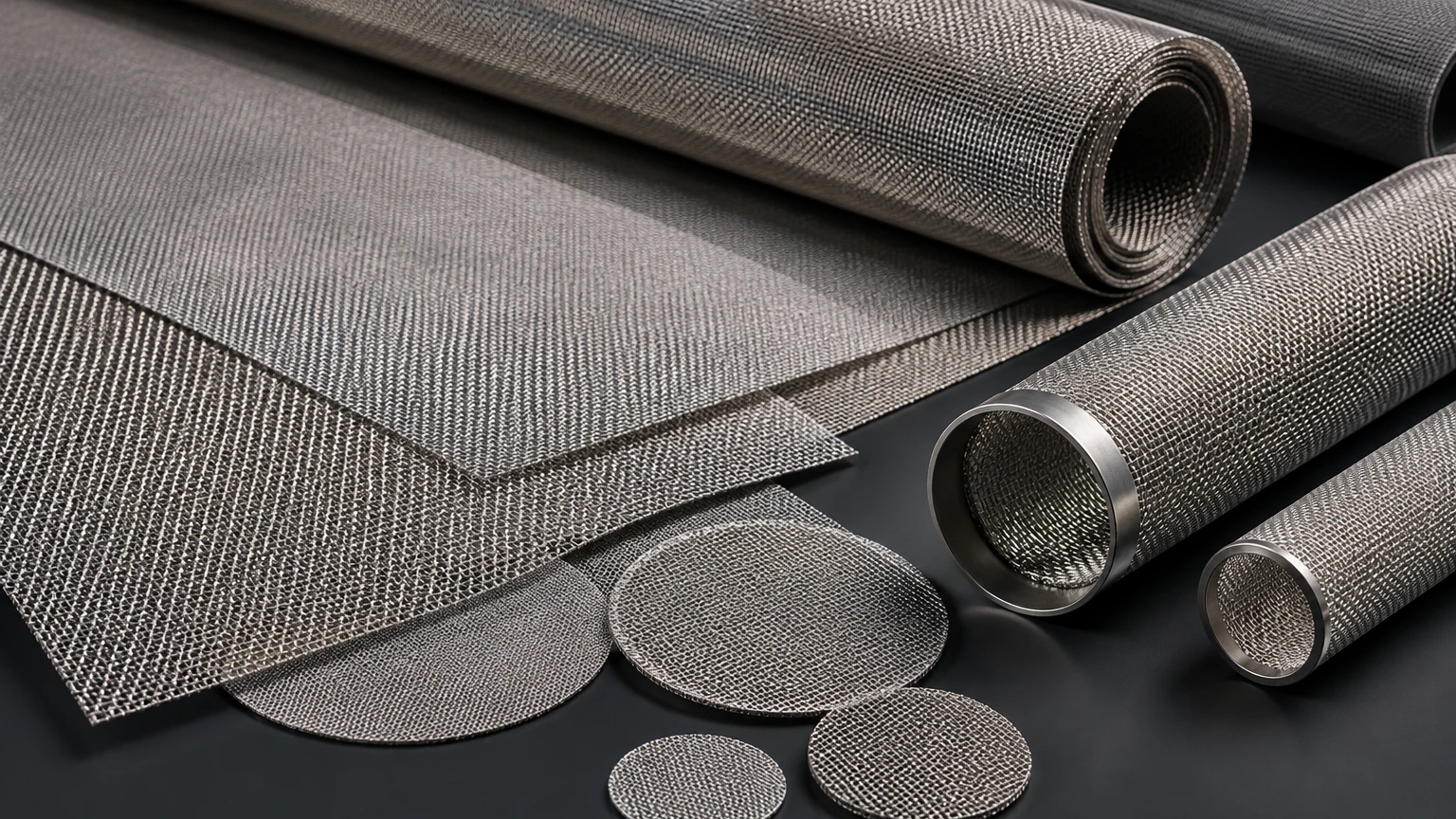
In industrial filtration, the structural integrity and precision of the filter medium directly impact process efficiency and equipment longevity. Sintered wire mesh represents an advanced evolution of traditional woven wire cloth, engineered to overcome the mechanical limitations of single-layer meshes while maintaining high permeability. By utilizing a process known as diffusion bonding, multiple layers of stainless steel wire mesh are fused into a monolithic structure, creating a porous material that is significantly more durable and stable than its individual components.
For engineers and procurement teams evaluating filtration solutions, understanding the technical nuances of sintered wire mesh is essential for optimizing performance in demanding environments such as chemical processing, pharmaceutical manufacturing, and high-pressure hydraulic systems. This guide examines the engineering principles, selection criteria, and practical considerations involved in implementing sintered mesh solutions.
The Engineering of Diffusion Bonding
The primary distinction of sintered wire mesh lies in its manufacturing process. Unlike standard woven mesh, where wires are simply interlaced and can shift under pressure, sintered mesh undergoes a vacuum sintering process. In this environment, the mesh layers are subjected to high temperatures and controlled pressure, causing the metal atoms at the contact points of the wires to migrate and bond.
This diffusion bonding occurs without the use of binders or filler metals, ensuring that the chemical purity of the stainless steel is maintained. The result is a rigid, stable structure where the pore sizes are fixed. This stability is critical for applications requiring absolute filtration ratings, as it prevents the "pore enlargement" that often occurs in non-sintered media when subjected to high differential pressures or mechanical vibration.
Structural Configurations: The 5-Layer Standard
While sintered wire mesh can be customized with varying numbers of layers, the 5-layer configuration is the industry standard for most industrial filtration tasks. Each layer serves a specific engineering purpose to balance filtration precision with mechanical strength:
1. Protective Layer: The outermost layer, usually a coarse mesh, protects the finer internal filter layer from physical damage during handling and operation.
2. Filter Layer: This is the functional core of the medium. It consists of a precision-woven wire mesh that dictates the micron rating of the entire composite. Because it is supported on both sides, it can maintain its aperture size even under significant stress.
3. Dispersion Layer: Positioned behind the filter layer, this mesh helps distribute the flow of the fluid or gas evenly across the filter surface, preventing localized high-velocity zones that could lead to premature wear.
4. Reinforcement Layers (Two Layers): The final two layers are typically heavy-duty, coarse meshes that provide the structural rigidity required for the filter to withstand high differential pressures without collapsing or deforming.
Beyond this standard, specialized configurations such as 2-layer, 3-layer, or even 7-layer sintered meshes are utilized for specific OEM requirements, such as fluidization plates or acoustic attenuation.
Key Performance Advantages in Industrial Settings
When comparing sintered wire mesh to other media like ceramic, sintered powder, or disposable polymer filters, several technical advantages become apparent:
Mechanical Strength and Stability
The fusion of multiple layers creates a self-supporting structure. In many applications, this eliminates the need for additional perforated metal cores or external cages, reducing the overall weight and complexity of the filter assembly. This strength is particularly valuable in high-pressure hydraulic systems where pressure spikes are common.
Thermal and Corrosion Resistance
Typically manufactured from 304 or 316L stainless steel, sintered wire mesh retains the inherent properties of these alloys. It can operate effectively in temperatures ranging from cryogenic levels up to 600°C (depending on the alloy and atmospheric conditions). This makes it an ideal choice for filtering hot gases or aggressive chemical solvents that would degrade synthetic media.
High Permeability and Low Pressure Drop
Despite its multiple layers, the open area of sintered wire mesh is engineered to minimize resistance to flow. The precise alignment of the mesh layers during the sintering process ensures that the pore paths remain clear, resulting in a lower initial pressure drop compared to sintered metal powders of the same micron rating.
Ease of Cleaning and Reusability
One of the most significant factors in the total cost of ownership is the ability to clean and reuse the filter. Sintered wire mesh is highly responsive to backwashing, back-pulsing, and ultrasonic cleaning. Because the particles are trapped on the surface (surface filtration) rather than deep within a tortuous path (depth filtration), they are more easily dislodged during cleaning cycles.
Critical Selection Criteria for Engineers
Selecting the correct sintered wire mesh requires a detailed analysis of the process fluid and the operating conditions. Engineers should focus on the following parameters:
Micron Rating: Absolute vs. Nominal
It is vital to distinguish between absolute and nominal filtration. Sintered wire mesh is typically rated for absolute filtration, meaning it will stop 99.9% of particles at the specified micron size. When reviewing specifications on the Main Page, ensure that the rating provided aligns with the sensitivity of downstream equipment, such as precision nozzles or high-speed pumps.
Material Grade Selection
While 316L is the most common choice due to its superior corrosion resistance and low carbon content (which prevents intergranular corrosion after welding), other alloys like Hastelloy, Monel, or Inconel may be necessary for highly acidic or high-temperature environments. Material traceability is essential for pharmaceutical and food-grade applications.
Flow Rate and Differential Pressure
The permeability of the mesh must be matched to the system's pump capacity. A filter that is too restrictive will cause a high pressure drop, leading to increased energy consumption and potential cavitation. Conversely, a mesh that is too coarse will fail to protect downstream components.
Common Risks and Quality Evaluation
Not all sintered wire mesh is manufactured to the same standard. Poor manufacturing processes can lead to several failure modes that compromise industrial safety and efficiency:
* Delamination: If the sintering temperature or pressure is insufficient, the layers may not bond correctly. Over time, the layers can separate (delaminate), leading to structural failure and the release of metal fragments into the process stream.
* Inconsistent Pore Distribution: In lower-quality mesh, the aperture sizes may vary across the sheet. This leads to "channeling," where the fluid bypasses the intended filtration path through larger openings, rendering the micron rating inaccurate.
* Contamination: The sintering must occur in a high-vacuum or hydrogen-protected furnace. Any oxygen or contaminants in the furnace can cause oxidation on the wire surfaces, weakening the bonds and potentially leaching impurities into the filtered product.
To mitigate these risks, it is important to work with manufacturers who provide material certifications and perform bubble point tests to verify the integrity and pore size of the finished product.
Applications Across Key Industries
Sintered wire mesh is utilized in sectors where failure is not an option and filtration precision is paramount:
* Pharmaceutical Industry: Used in Nutsche filters and dryers for API (Active Pharmaceutical Ingredient) recovery. The smooth surface and high cleanability are essential for preventing cross-contamination between batches.
* Chemical Processing: Employed for catalyst recovery and the filtration of aggressive polymers. Its ability to withstand high temperatures and corrosive environments ensures continuous operation.
* Food and Beverage: Used for steam filtration to ensure the purity of culinary-grade steam and for filtering viscous liquids like syrups and oils.
* Oil and Gas: Found in sand control screens and hydraulic fluid filtration for subsea equipment, where high mechanical strength is required to resist the crushing pressures of the deep sea.
Maintenance and Life Cycle Management
To maximize the lifespan of a sintered wire mesh filter, a proactive maintenance schedule is required. Unlike disposable filters that are replaced based on a set timeframe, sintered filters should be monitored via differential pressure (DP) sensors. When the DP reaches a predetermined limit, the cleaning cycle should be initiated.
Common cleaning methods include:
* Backwashing: Reversing the flow of the fluid to push particles off the surface.
* Ultrasonic Cleaning: Using high-frequency sound waves in a cleaning solution to dislodge fine particles from the mesh intersections.
* Chemical Cleaning: Using compatible solvents or acids to dissolve organic or inorganic scaling.
When properly maintained, a sintered wire mesh filter can last for several years, significantly reducing the long-term waste and procurement costs associated with disposable alternatives.
Technical Confirmation Before Procurement
Before finalizing a purchase or custom design, technical teams should confirm several factors with their supplier to ensure the component meets the application's demands. This includes verifying the specific alloy grade, confirming the required dimensions and tolerances for housing compatibility, and requesting data on the maximum allowable differential pressure. For custom OEM projects, discussing the specific layering sequence is often necessary to achieve the desired balance of flow and strength.
For more detailed technical specifications on various filtration components and custom manufacturing capabilities, you may review product options and application support on the Main Page. Selecting the right sintered wire mesh is a balance of engineering precision and material science, ensuring that industrial processes remain efficient, clean, and reliable.
