


Teflon Cartridge Filter
In industrial filtration, the selection of filter media is a critical engineering decision that directly impacts process efficiency, product purity, and operational safety. Among the various materials available, the Teflon cartridge filter—properly referred to as a Polytetrafluoroethylene (PTFE) filter—stands out for its exceptional chemical resistance and thermal stability. These filters are indispensable in environments where aggressive solvents, highly corrosive chemicals, or high-purity gases are processed.
For technical professionals and procurement teams, understanding the nuances of PTFE membrane technology is essential for optimizing filtration systems. While Kaifil specializes in custom stainless steel filtration solutions, the integration of specialized materials like Teflon into industrial processes often requires a comparative understanding of how different media perform under mechanical and chemical stress. This guide examines the technical properties, selection criteria, and engineering considerations associated with Teflon cartridge filters in high-demand industrial applications.
Understanding the Role of PTFE in Industrial Filtration
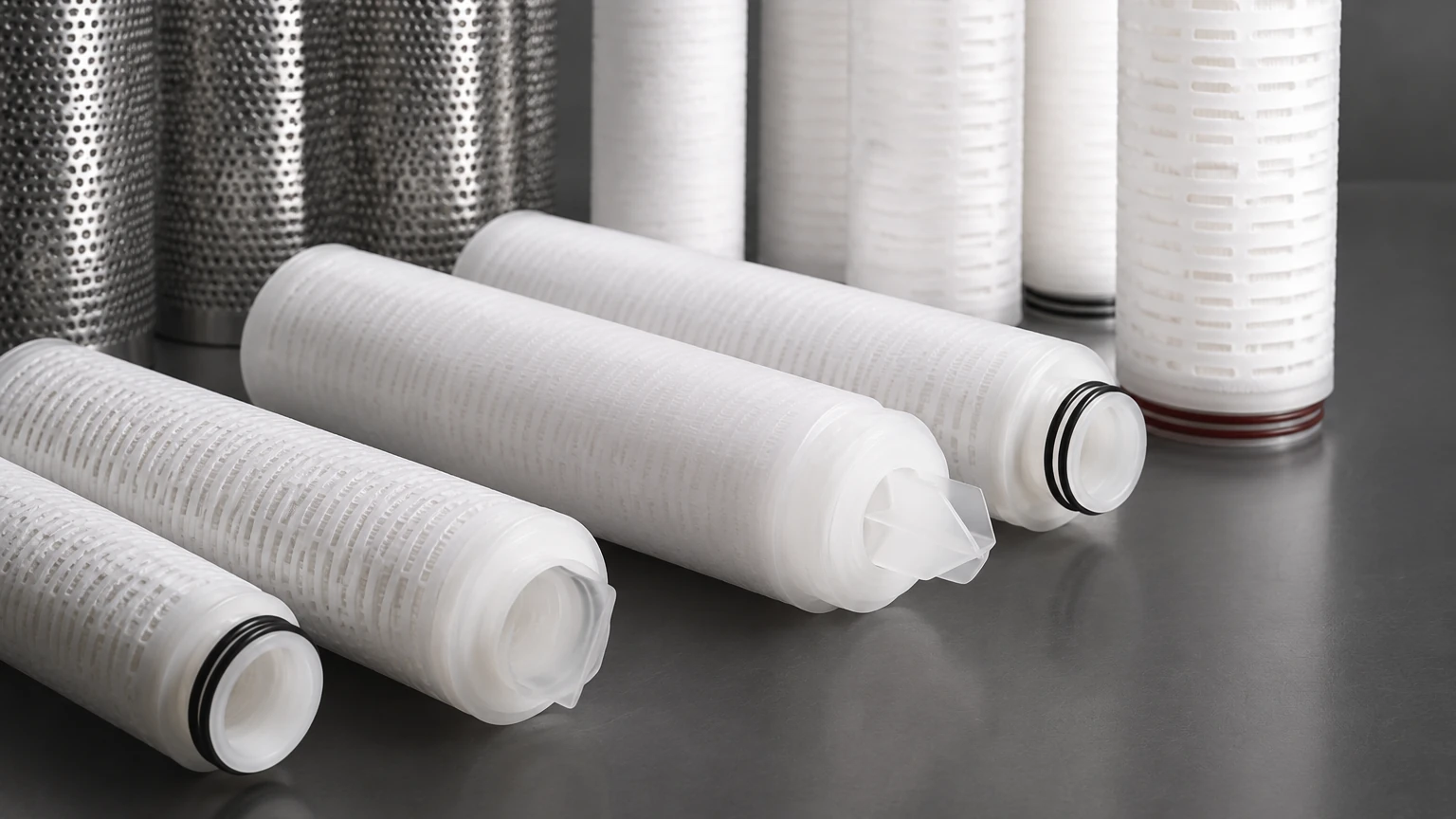
A Teflon cartridge filter is typically constructed with a microporous PTFE membrane supported by polypropylene or fluoropolymer hardware. The primary reason for selecting PTFE over other polymers like polyethersulfone (PES) or nylon is its unique molecular structure. The carbon-fluorine bond in PTFE is one of the strongest in organic chemistry, providing a level of inertness that is unmatched by most synthetic materials.
In industrial settings, these cartridges are categorized based on their interaction with water. Hydrophobic PTFE membranes naturally repel water, making them ideal for gas filtration, tank venting, and the filtration of non-aqueous solvents. Conversely, hydrophilic PTFE membranes are chemically modified to allow the passage of aqueous solutions without the need for pre-wetting, which is vital in pharmaceutical and semiconductor manufacturing where solvent introduction must be minimized.
Technical Specifications and Material Properties
When evaluating a teflon cartridge filter, engineers must look beyond the basic micron rating. The performance of the filter is governed by its physical and chemical properties, which dictate how it will behave under specific operating conditions.
Chemical Compatibility
PTFE is compatible with almost all chemicals, including strong acids (such as hydrofluoric and sulfuric acid), aggressive bases, and organic solvents. This makes it the default choice for chemical processing plants where standard elastomers or lower-grade plastics would degrade rapidly. Unlike stainless steel, which may be susceptible to specific types of corrosion in the presence of certain halides, PTFE remains stable across nearly the entire pH scale.
Thermal Stability
One of the defining characteristics of Teflon is its ability to maintain structural integrity at elevated temperatures. Most Teflon cartridge filters can operate continuously at temperatures up to 150°C (302°F), and specialized versions with all-fluoropolymer construction (PFA/PTFE) can handle even higher thermal loads. This is a significant advantage over standard plastic filters that typically fail above 80°C.
Filtration Efficiency and Pore Structure
PTFE membranes are manufactured through a controlled stretching process that creates a complex, multi-directional fibrous structure. This structure provides high porosity (often exceeding 80%), which translates to low pressure drops and high flow rates. Common micron ratings for these filters range from 0.05 μm for sterile gas filtration to 10 μm for coarse chemical clarification.
Comparing Teflon and Stainless Steel Filtration Media
For many industrial applications, the choice often comes down to a Teflon cartridge filter or a stainless steel filter. As a manufacturer of precision metal filtration components, Kaifil provides insights into when each material is most appropriate. Engineers can explore these differences further by visiting the Main Page to review technical specifications for metal alternatives.
| Feature | Teflon (PTFE) Cartridge | Stainless Steel (304/316L) |
| :— | :— | :— |
| Chemical Resistance | Exceptional (Inert to almost all) | High (Susceptible to some acids/halides) |
| Mechanical Strength | Moderate (Requires support) | Very High (Self-supporting) |
| Temperature Limit | Up to 150°C – 260°C | Up to 500°C+ |
| Cleanability | Limited (Often disposable) | Excellent (Ultrasonic/Backwashable) |
| Filtration Type | Surface/Membrane | Depth/Surface/Wire Mesh |
While Teflon offers superior inertness for aggressive chemistry, stainless steel filters are often preferred for high-pressure hydraulic systems, high-temperature steam filtration, and applications where the filter must be cleaned and reused multiple times to reduce the total cost of ownership. In many complex systems, a stainless steel housing is used to contain a Teflon cartridge, combining the mechanical robustness of metal with the chemical resistance of the polymer.
Key Engineering Considerations for Filter Selection
Selecting the right teflon cartridge filter involves more than matching a part number. Engineers must perform a thorough analysis of the process parameters to ensure the filter does not become a point of failure.
1. Differential Pressure (ΔP)
The differential pressure across the filter is a primary indicator of its lifespan. A high initial ΔP suggests that the filter area may be undersized for the required flow rate. For PTFE membranes, it is critical to stay within the manufacturer’s recommended pressure limits, especially at elevated temperatures, to prevent the membrane from rupturing or "unloading" trapped contaminants.
2. Effective Filtration Area (EFA)
The EFA determines the dirt-holding capacity and the flow velocity through the pores. Pleated Teflon filters maximize the surface area within a standard 10-inch or 20-inch cartridge format. A larger EFA generally leads to longer service intervals and more stable filtration performance, which is a key factor in reducing operational downtime.
3. Extractables and Purity
In semiconductor and pharmaceutical applications, the level of extractables—substances that leach from the filter material into the process fluid—must be near zero. High-quality Teflon cartridge filters are often pre-flushed with ultrapure water (UPW) to ensure they meet stringent cleanliness standards. Engineers should request extractable testing data if the application involves high-purity chemicals.
Applications in High-Purity and Corrosive Environments
The versatility of the teflon cartridge filter allows it to serve various specialized industries. Its application is usually found in the "critical path" of a production line where contamination or material failure is not an option.
* Chemical Manufacturing: Filtration of photoresists, etchants, and high-purity solvents used in microelectronics. The inert nature of PTFE ensures that the filter does not react with or contaminate the sensitive chemical formulations.
* Pharmaceutical Industry: Sterile venting of fermentation tanks and the filtration of aggressive solvents used in Active Pharmaceutical Ingredient (API) synthesis. PTFE’s hydrophobicity prevents moisture from blocking gas flow in vent applications.
* Food and Beverage: While less common than stainless steel for bulk processing, Teflon filters are used for sterile air injection and the filtration of highly acidic cleaning agents (CIP chemicals) that might stress standard polymers.
* Power Generation: Filtration of boiler feed water and specialized chemicals used in cooling towers where high temperatures and chemical additives are present.
Maintenance, Integrity Testing, and Operational Longevity
To ensure the continued performance of a teflon cartridge filter, a structured maintenance and testing protocol is required. Unlike metal filters, which are often cleaned, PTFE cartridges are typically treated as consumables, though their service life can be extended through proper system design.
Integrity Testing
In critical applications, the integrity of the filter must be verified before and after use. Common methods include the Bubble Point Test and the Diffusion Flow Test. These tests use the surface tension and pressure characteristics of the membrane to confirm that no pores have been enlarged and that the membrane is free of defects. For hydrophobic PTFE filters used in gas service, the Water Intrusion Test (WIT) is often employed as it does not require the use of flammable solvents for wetting.
Replacement Cycles
The replacement cycle of a cartridge is usually determined by the terminal pressure drop. However, in some industries, filters are replaced on a time-based schedule to prevent the risk of bacterial breakthrough or material fatigue. Documenting the pressure trends over time allows maintenance teams to predict failure and order replacements in advance, avoiding emergency shutdowns.
Total Cost Considerations
While the unit cost of a Teflon cartridge is higher than that of a standard polypropylene filter, the total cost of ownership is often lower when factoring in the reduced frequency of changes and the protection of downstream equipment. In highly corrosive environments, using a cheaper material that fails prematurely leads to significant costs in labor, lost product, and potential safety hazards.
Conclusion
The Teflon cartridge filter is a cornerstone of modern industrial filtration, providing a level of chemical and thermal resilience that few other materials can match. For engineers, the challenge lies in balancing the superior properties of PTFE with the mechanical requirements of the system. By understanding the interaction between the filter media and the process fluid, and by comparing these polymer solutions with robust metal alternatives like those found at Kaifil, technical teams can design filtration systems that are both efficient and reliable. Whether the goal is protecting a high-pressure pump or ensuring the sterility of a pharmaceutical batch, the correct application of PTFE technology is a vital component of industrial success.
