


Temporary Strainer
In the commissioning and startup phases of industrial piping systems, the integrity of downstream equipment—such as pumps, valves, meters, and heat exchangers—is at its most vulnerable. During construction and assembly, debris such as welding slag, pipe scale, rust, and even discarded tools can inadvertently remain within the pipeline. A temporary strainer serves as the primary line of defense, designed to capture these solids before they can cause catastrophic mechanical failure or process contamination.
As a specialized manufacturer of stainless steel filtration solutions, Kaifil provides precision-engineered components that balance flow efficiency with robust particulate retention. Understanding the technical nuances of temporary filtration is essential for engineers and procurement teams to ensure system longevity and operational safety.
The Role of Temporary Strainers in Industrial Systems
Unlike permanent filtration housings that are designed for long-term service and easy maintenance access, a temporary strainer is typically installed for a specific, short-term purpose. Its primary application is during the "flush-out" or "startup" period of a new or modified piping system.
Once the system has been circulated and the pressure differential across the strainer remains stable—indicating that the bulk of construction debris has been removed—the temporary unit is usually removed. In some cases, it may be replaced by a permanent duplex or simplex strainer, or the piping may be closed with a spacer ring. The temporary nature of these components necessitates a design that is low-profile, easy to install between existing flanges, and cost-effective while maintaining high structural integrity.
Common Configurations: Conical, Basket, and Plate Designs
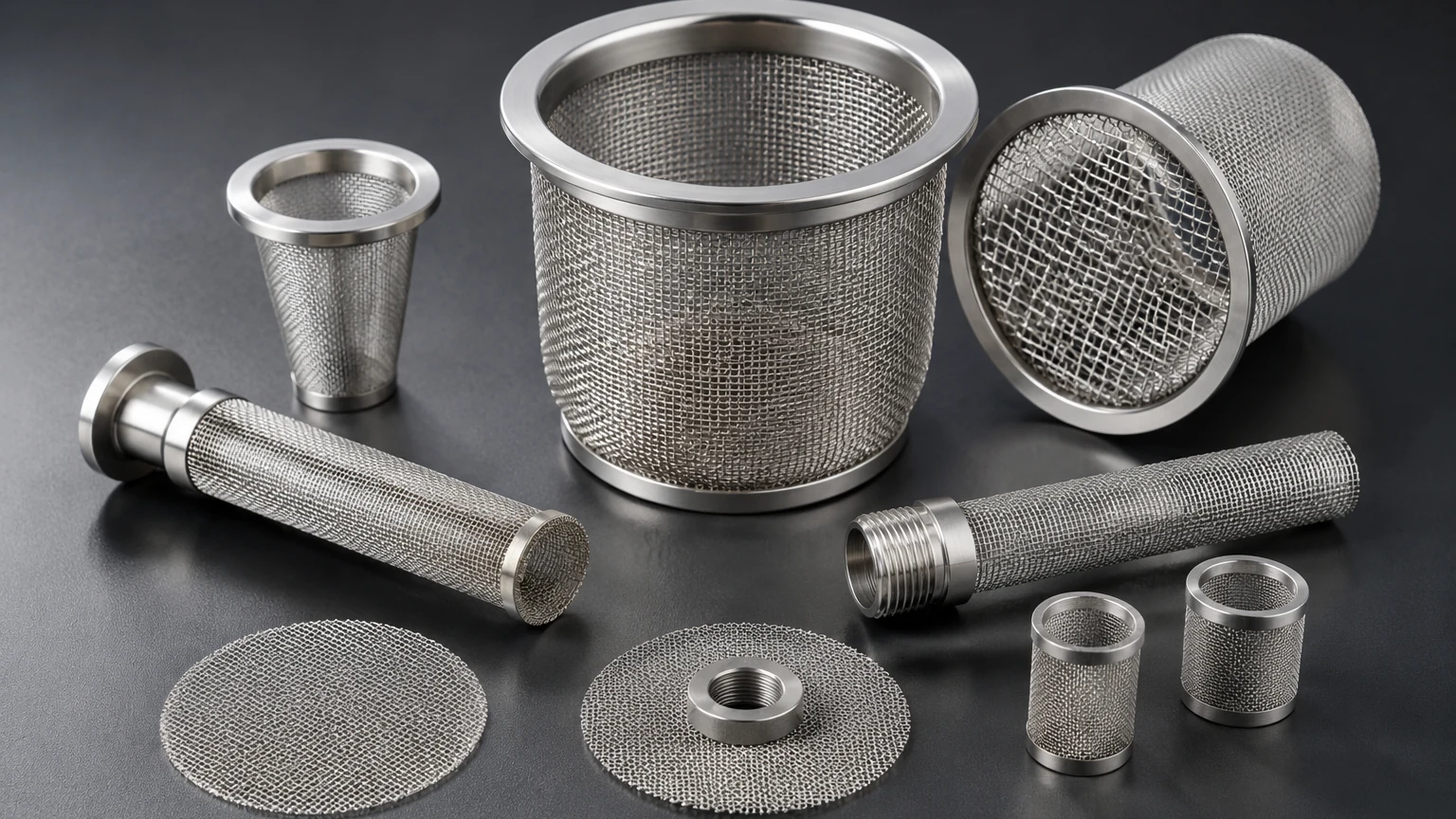
Temporary strainers are generally categorized by their geometric shape, which dictates their surface area, pressure drop characteristics, and suitability for specific piping layouts.
1. Conical Strainers (Witch’s Hat)
Often referred to as "witch’s hats" due to their pointed shape, conical strainers are the most common variety. They are installed between two flanges, with the cone pointing either upstream or downstream depending on the application.
* Flow Direction: When the cone points upstream, debris is collected around the outer perimeter of the cone, which can help maintain flow through the center for a longer period. When pointing downstream, debris collects at the tip of the cone.
* Advantages: They offer a high open-area-to-pipe-area ratio, which minimizes initial pressure drop.
2. Basket Strainers (Truncated Cone)
Basket or truncated temporary strainers feature a flat or rounded end rather than a sharp point. These are often used when the available straight-run piping is limited, as they are shorter than full conical strainers. While they have slightly less surface area than a full cone, they are highly effective for capturing larger volumes of heavy debris.
3. Plate (Bathtub) Strainers
Plate strainers are flat or slightly recessed discs that fit within the bolt circle of a flange. These are used in applications with extremely limited space where a protruding cone or basket is not feasible. However, because their surface area is limited to the cross-section of the pipe, they experience a much faster increase in pressure drop as they become loaded with solids.
Material Selection and Engineering Specifications
For industrial applications, material compatibility is critical to prevent galvanic corrosion or process contamination. Kaifil specializes in manufacturing these components from high-grade stainless steel to ensure durability under high-flow velocities.
Stainless Steel Grades
* Type 304: The standard for general industrial use, offering excellent strength and basic corrosion resistance for water and non-corrosive chemical service.
* Type 316/316L: Preferred for pharmaceutical, food and beverage, and marine applications. The addition of molybdenum provides superior resistance to chlorides and pitting, ensuring that the strainer does not introduce metallic contaminants into sensitive process fluids.
Structural Reinforcement
A critical engineering consideration is the "collapse pressure." A temporary strainer made only of fine wire mesh would likely fail under the force of a high-pressure pump if it becomes clogged. Therefore, these strainers are typically constructed using a heavy-duty perforated metal backing (the support) lined with a finer wire mesh (the filtration media). The gauge of the perforated metal and the wire diameter of the mesh must be calculated based on the maximum expected differential pressure ($ΔP$).
Calculating Open Area Ratio (OAR)
One of the most important metrics for selecting a temporary strainer is the Open Area Ratio. This is the ratio of the total open area of the strainer holes to the internal cross-sectional area of the pipe.
* 100% OAR: The open area of the strainer equals the area of the pipe. This is generally considered insufficient because as soon as any debris is caught, the pressure drop will spike.
* 150% to 300% OAR: This is the industry standard for temporary startup strainers. A 200% OAR means the strainer has twice the flow area of the pipe, allowing for significant debris accumulation before the system's flow rate is negatively impacted.
Engineers must specify the required OAR based on the expected cleanliness of the upstream piping. In systems with extensive new welding, a higher OAR (300% or more) is recommended to extend the time between cleaning cycles during the initial flush.
Installation and Operational Best Practices
Proper installation is vital to ensure the strainer performs its protective function without becoming a point of failure itself.
Flange Alignment and Gaskets
Temporary strainers are designed to be sandwiched between two standard flanges (such as ANSI/ASME B16.5). It is essential to use gaskets on both sides of the strainer ring to ensure a leak-proof seal. The ring thickness must be accounted for in the piping layout, as it will slightly increase the distance between flange faces.
Monitoring Differential Pressure
During the startup phase, the pressure differential across the strainer must be monitored continuously using gauges installed upstream and downstream. A sudden or steady increase in $ΔP$ indicates that the strainer is doing its job and collecting debris.
Failure to monitor this can lead to the strainer mesh tearing or the entire structure collapsing into the downstream piping, which defeats the purpose of the installation. Most engineers set a "blowout" limit—a maximum allowable differential pressure at which the system must be shut down and the strainer cleaned.
Removal Timing
When is a temporary strainer no longer needed? The general rule of thumb is that once the system has operated at full flow for a predetermined period (e.g., 24 to 48 hours) without a significant increase in differential pressure, the piping is considered clean. At this stage, the strainer should be removed. Leaving a temporary strainer in the line indefinitely is discouraged, as they are not typically designed for the fatigue cycles of long-term industrial operation.
Customization and OEM Solutions
Every industrial facility has unique piping constraints and filtration requirements. Off-the-shelf solutions may not always meet the specific needs of a high-pressure hydraulic system or a corrosive chemical line. Kaifil provides extensive customization options, including:
* Custom Dimensions: Tailoring the length and diameter of conical strainers to fit specific pipe spools.
* Specific Micron Ratings: Utilizing precision wire mesh to capture particles as small as 5 microns or as large as 1/4 inch.
* Alloy Upgrades: Providing Monel, Hastelloy, or Duplex stainless steel for highly aggressive environments.
By working closely with a manufacturer that understands the mechanical stresses and chemical demands of filtration, engineering teams can ensure their startup phase is seamless. For more detailed technical specifications and to explore our full range of stainless steel filtration components, you can visit our Main Page to review product options and application support.
Conclusion: Protecting Capital Assets
The cost of a temporary strainer is negligible compared to the cost of repairing a damaged turbine or replacing a high-precision control valve. By selecting the correct geometry, material, and open area ratio, and by adhering to strict monitoring protocols during startup, industrial operators can significantly reduce the risk of early-life equipment failure.
Whether you are managing a large-scale chemical plant commissioning or a simple HVAC system startup, the technical integrity of your filtration components is paramount. Kaifil remains committed to delivering the high-performance stainless steel solutions required to keep modern industry running efficiently and safely.
