


Vacuum Drum Filters
In industrial process engineering, the efficient separation of solids from liquids is a fundamental requirement for maintaining product purity and operational throughput. Vacuum drum filters, specifically Rotary Vacuum Drum Filters (RVDF), have long served as a standard solution for continuous liquid-solid separation in high-volume applications. These systems are favored for their ability to handle large quantities of slurry while providing a consistent output of filtered liquid (filtrate) and a concentrated solid cake.
For engineers and procurement specialists, selecting the appropriate filtration components for these systems is critical. The efficiency of vacuum drum filters depends heavily on the structural integrity and precision of the filter media. As a specialized manufacturer of stainless steel filtration solutions, Kaifil provides the technical components necessary to optimize these systems for demanding industrial environments. To explore our comprehensive range of stainless steel filtration components, please visit our Main Page.
Understanding the Mechanics of Vacuum Drum Filtration
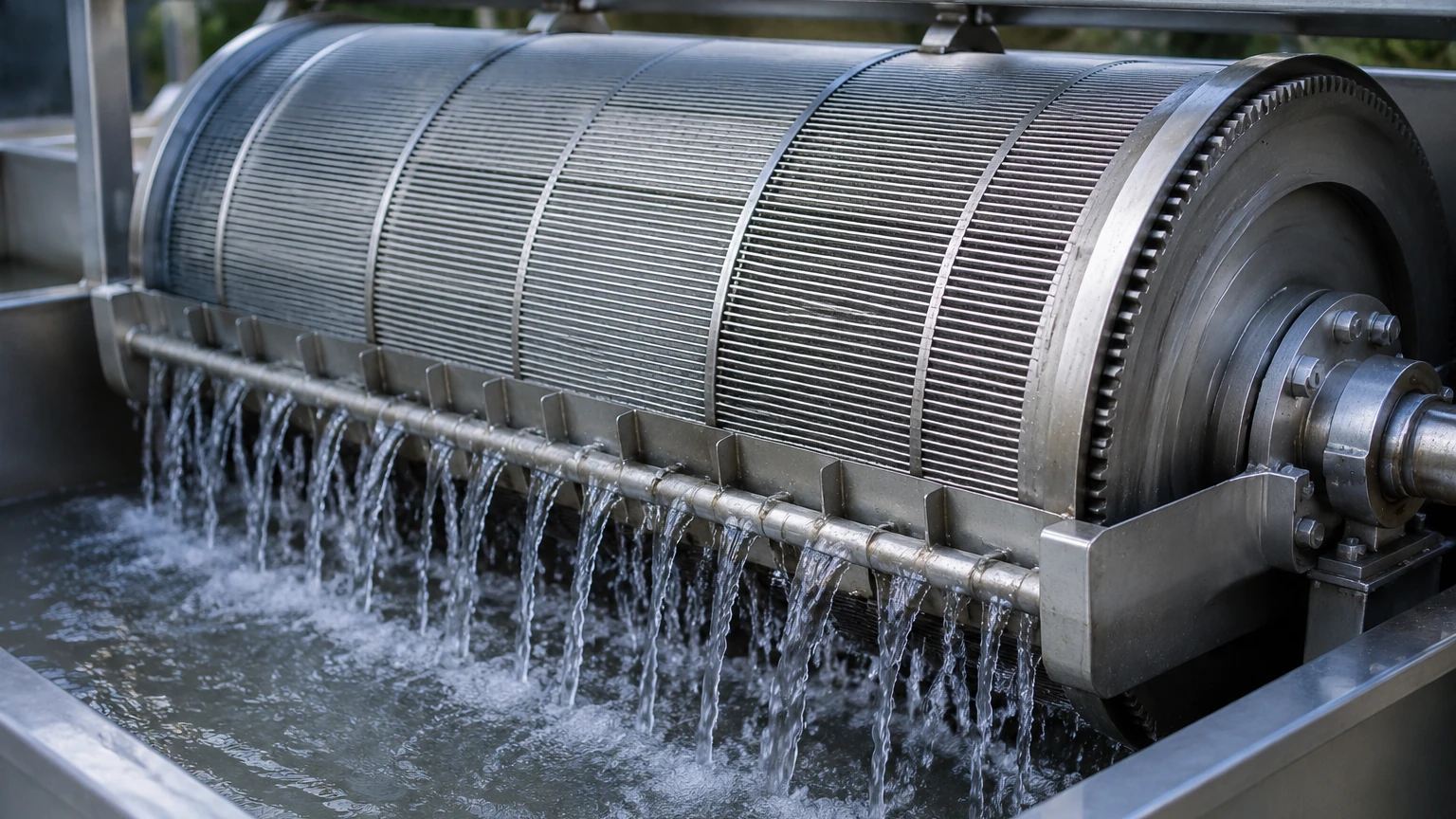
Vacuum drum filters operate on the principle of differential pressure. The system consists of a large rotating drum partially submerged in a vat containing the slurry. The drum's surface is divided into separate internal compartments, each connected to a central vacuum valve. As the drum rotates, it passes through several distinct functional zones:
1. Cake Formation (Pickup Zone): As a section of the drum enters the slurry vat, a vacuum is applied internally. This pulls the liquid through the filter media while solids accumulate on the outer surface, forming a uniform "cake."
2. Cake Washing: Once the drum section emerges from the vat, it may pass under spray nozzles. The vacuum continues to pull the wash liquid through the cake to remove impurities or recover valuable solutes.
3. Drying Zone: After washing, the vacuum remains active to pull air through the cake, reducing its moisture content to the desired level before discharge.
4. Discharge Zone: The vacuum is released, and a small amount of compressed air (blowback) may be applied to loosen the cake. A discharge mechanism, such as a scraper blade, roller, or string discharge, removes the cake from the drum surface.
This continuous cycle allows for high-capacity processing without the downtime associated with batch filtration methods. However, the performance of this cycle is entirely dependent on the permeability and durability of the filter media wrapped around the drum.
Critical Components and the Role of Precision Metal Filter Media
The heart of any vacuum drum filter is the filter media. While synthetic cloths are common in some applications, industrial processes involving high temperatures, corrosive chemicals, or abrasive slurries often require the superior performance of stainless steel wire mesh.
Stainless steel mesh offers several advantages in vacuum drum filters:
* Mechanical Strength: Unlike fabric, metal mesh does not stretch or sag under the constant tension and pressure of the vacuum. This ensures a consistent filtration surface and prevents bypass at the edges of the drum segments.
* Thermal Resistance: In applications involving hot slurries, such as those found in chemical processing or oil refining, stainless steel maintains its structural integrity at temperatures that would degrade synthetic materials.
* Chemical Compatibility: Using alloys like 304, 316L, or 904L allows the filter to withstand aggressive solvents, acids, and bases without corroding.
* Precision Apertures: Modern weaving techniques allow for highly controlled pore sizes. This is essential for achieving specific filtration accuracies (micron ratings) while maintaining high flow rates.
Kaifil specializes in manufacturing these precision metal components, ensuring that the filter media integrated into vacuum drum filters meets the exact requirements of the application.
Engineering Selection Criteria for Vacuum Drum Filters
When specifying or upgrading vacuum drum filters, engineers must evaluate several technical parameters to ensure the system meets production goals. The following criteria are essential for informed decision-making:
Particle Size Distribution and Slurry Concentration
The micron rating of the filter media must be balanced against the particle size of the solids. If the mesh is too coarse, solids will pass into the filtrate; if it is too fine, the filter may "blind" (clog) prematurely. Furthermore, the concentration of solids in the slurry dictates the required drum rotation speed and the thickness of the cake formation.
Filtration Throughput and Flux Rate
The flux rate—the volume of liquid passing through a unit area of filter media per unit of time—is influenced by the permeability of the mesh. Engineers must calculate the total surface area of the drum and the available vacuum pressure to ensure the system can handle the required flow rates without excessive energy consumption.
Cake Discharge Characteristics
Different solids behave differently during discharge. Some cakes are brittle and release easily with a scraper, while others are sticky and require a roller discharge or specialized mesh weaves with high release properties. The surface finish of the stainless steel wire mesh plays a significant role in how cleanly the cake is removed.
Material Compatibility and Environmental Factors
In the B2B industrial sector, the longevity of equipment is a primary driver of the total cost of ownership (TCO). For vacuum drum filters, the choice of material for the internal piping, the drum structure, and the filter media is paramount.
* Corrosion Resistance: In pharmaceutical and food-grade applications, 316L stainless steel is often the minimum standard due to its resistance to pitting and crevice corrosion. For highly acidic environments, specialized alloys may be required.
* Abrasion Resistance: If the slurry contains hard, sharp particles (such as mineral ores or sand), the filter media must be resistant to mechanical wear. Sintered wire mesh, which fuses multiple layers of mesh together, offers enhanced durability for these high-wear applications.
* Sanitary Standards: For food and beverage or pharmaceutical use, the filtration components must be easy to clean and free of dead zones where bacteria could proliferate. Stainless steel's smooth surface and compatibility with Clean-in-Place (CIP) systems make it the ideal choice.
Optimizing Filtration Performance and Throughput
To maximize the efficiency of vacuum drum filters, operators and engineers often need to fine-tune operational variables. These adjustments can significantly impact the quality of the final product and the speed of the process.
1. Drum Rotation Speed: Increasing the speed results in a thinner cake, which may dry faster but could also lead to lower solids recovery. Conversely, slower speeds produce thicker cakes that may require more vacuum power to dry.
2. Vacuum Level: Higher vacuum levels increase the driving force for filtration but can also compress the cake, potentially reducing its permeability. Finding the "sweet spot" is essential for maintaining a high flux rate.
3. Submergence Levels: The depth to which the drum is submerged in the slurry vat determines the length of the cake formation zone. Adjusting the vat level allows for control over the ratio of formation time to drying time.
By utilizing high-performance metal filter media from Kaifil, operators can push these variables to their limits, achieving higher throughput without risking the integrity of the filtration system. Detailed specifications on our manufacturing capabilities can be found on our Main Page.
Maintenance, Cleaning, and Replacement Cycles
Even the most robust vacuum drum filters require regular maintenance to prevent downtime. The filter media is the most frequently replaced component, and its lifespan is a major factor in operational costs.
Signs of Mesh Fatigue
Engineers should monitor for signs of blinding, where particles become lodged within the mesh pores. While backwashing can alleviate this, persistent blinding indicates that the mesh may need chemical cleaning or replacement. Physical damage, such as tears or localized thinning due to abrasion, should also be inspected during routine shutdowns.
Cleaning Protocols
Stainless steel mesh allows for aggressive cleaning methods that would destroy synthetic filters. This includes high-pressure water jets, steam sterilization, and the use of strong chemical detergents. Establishing a regular cleaning schedule prevents the buildup of "scale" and maintains the design flow rate of the system.
Replacement Strategy
Having a reliable OEM partner for replacement filter media is essential. Custom-sized mesh panels or pre-fabricated filter cartridges ensure that replacements can be installed quickly, minimizing the impact on production schedules.
Customization and OEM Solutions for Industrial Applications
No two industrial filtration processes are identical. Factors such as slurry viscosity, target moisture content, and chemical environment vary widely between a chemical plant and a wastewater treatment facility. This variability necessitates customized filtration solutions.
Kaifil works closely with engineering teams to develop bespoke filtration components for vacuum drum filters. Our capabilities include:
* Custom Weave Patterns: From plain and twill weaves to complex Dutch weaves, we provide the specific geometry needed for optimal particle retention and liquid flow.
* Multi-Layer Sintering: We can laminate multiple layers of wire mesh to create a composite material that combines fine filtration with extreme mechanical strength.
* Edge Treatments and Reinforcements: To ensure a secure fit on the drum, we provide customized edge treatments, including welding, binding, or specialized frames.
By focusing on precision engineering and high-quality materials, Kaifil helps industrial clients achieve reliable, long-term performance in their liquid-solid separation processes. Whether you are designing a new system or seeking to optimize an existing vacuum drum filter, our technical expertise is available to support your requirements. For more information on our products and services, please visit our Main Page.
