


V Bank Hepa Filter
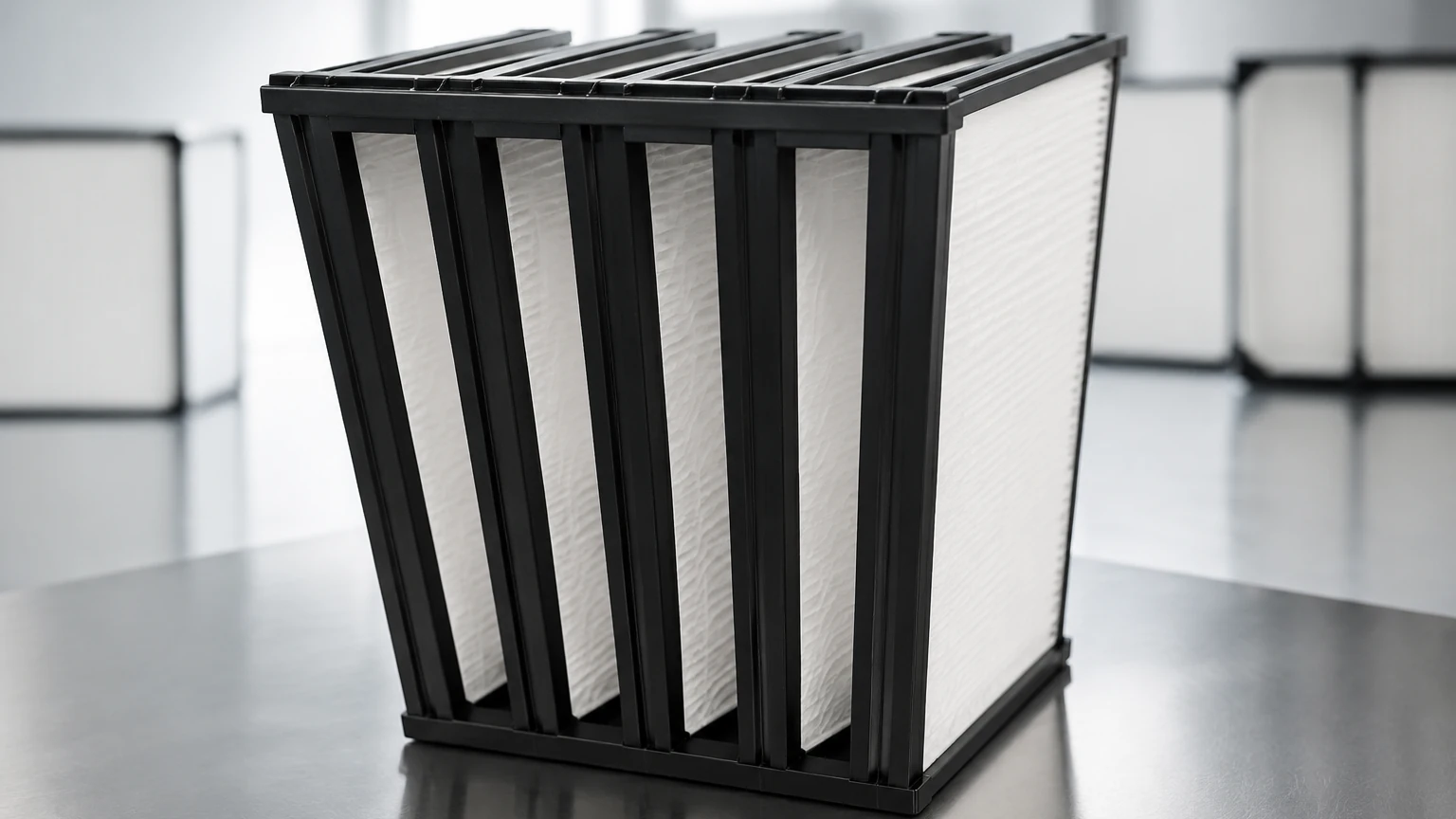
In the landscape of industrial air filtration, the V-bank HEPA filter represents a significant engineering evolution designed to handle high airflow volumes without compromising on particle capture efficiency. Unlike standard flat-panel or deep-pleat filters, the V-bank configuration—often referred to as a multi-V or rigid cell filter—arranges multiple mini-pleat media packs into a series of V-shaped geometries. This design maximizes the effective filtration surface area within a compact frame, making it a critical component for HVAC systems, cleanrooms, and industrial exhaust applications where space and energy efficiency are paramount.
For engineers and facility managers, selecting a v bank hepa filter involves understanding the intersection of fluid dynamics, media science, and structural integrity. As industrial processes in pharmaceutical manufacturing, electronics, and food processing become more stringent, the demand for filtration solutions that offer low resistance and high dust-holding capacity continues to grow. This guide explores the technical specifications, selection criteria, and operational advantages of V-bank HEPA filters in modern industrial environments.
Understanding the V-Bank Configuration in Industrial Filtration
The primary architectural advantage of a v bank hepa filter is its surface-area-to-footprint ratio. By mounting mini-pleat packs in a V-shape, manufacturers can fit significantly more filter media into a standard 24×24-inch frame than is possible with traditional deep-pleat designs. This increased surface area directly correlates to a lower face velocity across the media, which has several technical benefits:
1. Reduced Pressure Drop: Because the air moves more slowly through a larger surface area, the initial resistance (pressure drop) is lower. This reduces the load on fan motors, leading to substantial energy savings over the life of the filter.
2. Extended Service Life: With more media available to trap particulates, the filter takes longer to reach its final pressure drop, effectively extending the replacement cycle.
3. High Airflow Capacity: V-bank filters are typically rated for airflows up to 2,000 or 2,400 CFM (Cubic Feet per Minute), whereas standard HEPA filters of the same dimensions might only handle 1,000 to 1,200 CFM.
For specialized industrial applications where durability and precision are required, engineers often look to manufacturers who understand the nuances of material science. While V-bank filters often utilize glass fiber or synthetic media, the surrounding housing and pre-filtration stages frequently involve robust metal components. For those seeking comprehensive filtration solutions, including custom metal components that support high-performance systems, visiting the Main Page of a specialist manufacturer like Kaifil provides insight into the integration of stainless steel and precision-engineered filtration hardware.
Technical Performance Metrics: Efficiency and Airflow
When specifying a v bank hepa filter, the two most critical metrics are its efficiency rating and its rated airflow capacity. In the global market, these are typically governed by standards such as EN 1822 or ISO 29463.
Efficiency Ratings
HEPA filters are categorized by their ability to capture the Most Penetrating Particle Size (MPPS), which is typically around 0.3 microns.
- H13 Filters: Minimum 99.95% efficiency at MPPS.
- H14 Filters: Minimum 99.995% efficiency at MPPS.
In many industrial settings, H13 is the standard for general cleanroom supply air, while H14 is reserved for high-sensitivity environments like pharmaceutical fill-finish lines or biosafety labs. The V-bank design ensures that even at high velocities, the air passing through the media remains within the laminar flow regime necessary for these efficiency levels.
Airflow and Resistance
Engineers must evaluate the "Resistance vs. Airflow" curve provided by the manufacturer. A high-quality v bank hepa filter will maintain a relatively flat curve, meaning that as the airflow increases, the pressure drop does not spike exponentially. This stability is achieved through precise pleat spacing and the use of thermoplastic separators (mini-pleats) that prevent media bunching or "blinding" under high pressure.
Engineering Considerations for V-Bank HEPA Selection
Selecting the right filter involves more than just matching dimensions. Engineers must consider the specific environmental conditions of the installation site.
Frame Materials and Construction
While many commercial V-bank filters use plastic (ABS) frames to reduce weight and cost, industrial versions often require galvanized steel or stainless steel frames. Metal frames offer superior rigidity and are less prone to outgassing or structural failure in high-temperature or high-humidity environments. In chemical processing or corrosive atmospheres, stainless steel is the preferred choice for its resistance to oxidation and chemical degradation.
Gasket and Seal Integrity
A HEPA filter is only as effective as its seal. V-bank filters usually come with either a dry gasket (EPDM or Neoprene) or a fluid seal (gel seal). Gel seals are increasingly popular in cleanroom ceiling grids because they provide a leak-proof connection that is easier to validate during DOP (Dispersed Oil Particulate) testing.
Chemical Compatibility
In industries like pharmaceutical manufacturing or semiconductor fabrication, the filter media must be compatible with cleaning agents and process chemicals. While glass fiber is the standard for HEPA media, some applications may require PTFE (Polytetrafluoroethylene) media, which offers lower pressure drop and higher resistance to alkaline or acidic environments.
Comparative Analysis: V-Bank vs. Traditional Deep-Pleat Filters
To make an informed purchasing decision, it is helpful to compare the v bank hepa filter with the traditional deep-pleat (aluminum separator) filter.
| Feature | V-Bank HEPA Filter | Deep-Pleat HEPA Filter |
| :— | :— | :— |
| Media Area | Very High (up to 400 sq. ft.) | Moderate (up to 250 sq. ft.) |
| Airflow Capacity | High (2000+ CFM) | Standard (1000-1200 CFM) |
| Initial Resistance | Low | Moderate to High |
| Weight | Lighter (if plastic frame) | Heavier |
| Depth | Typically 12 inches | 6 to 12 inches |
| Cost | Higher Initial Investment | Lower Initial Investment |
While the V-bank filter has a higher upfront cost, the total cost of ownership (TCO) is often lower due to reduced energy consumption and fewer filter changes. For facilities looking to upgrade their air handling units (AHUs) without increasing the physical footprint of the filter bank, the V-bank is the logical choice to increase total system CFM.
Integration within Industrial Cleanroom and Process Systems
The v bank hepa filter does not operate in isolation. It is part of a multi-stage filtration strategy. Effective pre-filtration is essential to protect the expensive HEPA stage from premature loading with large particles. This is where the synergy between different filtration technologies becomes apparent.
In many industrial systems, stainless steel mesh pre-filters or custom metal cartridges are used to capture coarse dust, oil mist, or moisture before the air reaches the HEPA bank. Manufacturers like Kaifil specialize in these durable, cleanable metal filtration components that serve as the first line of defense in harsh environments. By utilizing robust pre-filtration, the operational life of the v bank hepa filter can be doubled or even tripled. To explore the range of custom metal filtration components that complement high-efficiency air systems, engineers can refer to the Main Page for technical specifications on wire mesh and stainless steel solutions.
Furthermore, the structural integration of the filter bank must account for vibration and pressure surges. In hydraulic or pneumatic exhaust systems, the sudden release of air can create pressure spikes that might damage fragile glass fiber media. In such cases, reinforced V-bank designs with additional support struts or protective faceguards are required.
Maintenance, Longevity, and Total Cost of Ownership
For a technical purchasing team, the decision to implement V-bank technology is usually driven by a TCO analysis. The maintenance cycle of a v bank hepa filter is determined by the "terminal pressure drop," which is the point at which the energy cost of pushing air through the filter exceeds the cost of replacing the filter itself. Usually, this is set at 2x the initial pressure drop or a maximum of 500 Pa (2.0 inches w.g.).
Monitoring and Validation
Regular monitoring via differential pressure gauges (like Magnehelic gauges) is standard practice. In regulated industries, annual or bi-annual integrity testing (leak testing) is mandatory. The V-bank design allows for easier scanning during these tests compared to some compact designs, as the pleat packs are accessible for probe sampling.
Energy Savings Calculation
The energy consumption of a fan is proportional to the pressure drop across the filter. A V-bank filter that operates at 150 Pa compared to a standard filter at 250 Pa can result in thousands of dollars in energy savings per year in a large-scale facility. When multiplied across dozens of AHUs, the ROI (Return on Investment) for V-bank technology is often realized within 12 to 18 months.
Disposal Considerations
Finally, engineers must consider the disposal of used filters. Because V-bank filters often use high-capacity media, they accumulate a significant mass of particulates, which may be hazardous depending on the industry (e.g., pharmaceutical dust or heavy metals). Choosing filters with incinerable frames (like high-impact polystyrene or ABS) can reduce disposal costs and environmental impact compared to metal-framed filters that must be disassembled.
In conclusion, the v bank hepa filter is a sophisticated solution for high-demand industrial air applications. By offering a superior balance of airflow, efficiency, and energy economy, it addresses the core challenges of modern facility management. When combined with high-quality pre-filtration and custom-engineered components from specialists like Kaifil, these filters ensure a clean, safe, and cost-effective operating environment. For more information on specialized industrial filtration hardware and custom manufacturing, visit the Main Page.
