


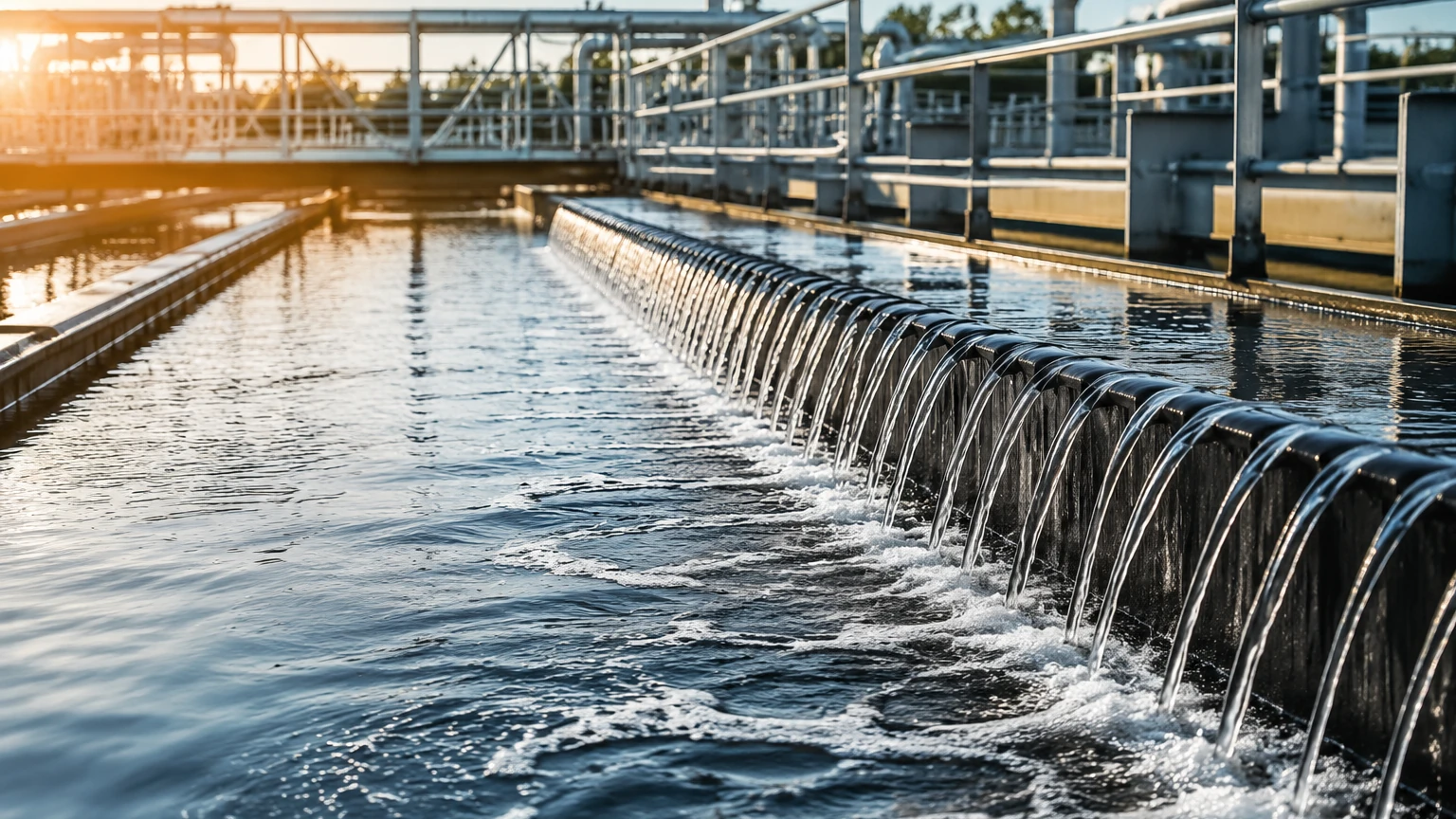
Waste Water Purification System
In the industrial landscape, the implementation of an efficient waste water purification system is not merely a regulatory requirement but a critical component of operational sustainability and resource management. Industrial effluents often contain a complex mixture of suspended solids, chemical residues, and organic matter that can damage downstream equipment or violate environmental discharge standards. High-performance mechanical filtration serves as the first line of defense in these systems, ensuring that subsequent treatment phases—whether biological or chemical—operate at peak efficiency.
For engineers and facility managers, the selection of filtration components is a high-stakes decision. The durability of the filter media, its resistance to corrosive agents, and its ability to maintain flow rates under high pressure are the primary factors that determine the total cost of ownership (TCO) and the reliability of the entire waste water purification system. Stainless steel filtration solutions, particularly those utilizing wire mesh and sintered metal technologies, have become the industry standard for demanding industrial applications.
Engineering Fundamentals of a Waste Water Purification System
A comprehensive waste water purification system typically follows a multi-stage architecture designed to progressively remove contaminants of varying sizes and types. Understanding where mechanical filtration fits into this hierarchy is essential for optimizing system performance.
Primary Treatment and Solid-Liquid Separation
Primary treatment focuses on the removal of large suspended solids. In this stage, coarse filters and strainers are employed to protect pumps and prevent the clogging of smaller-diameter piping. Industrial systems often utilize stainless steel wire mesh filters here because of their mechanical strength and ability to be cleaned and reused, unlike disposable polymer cartridges.
Secondary and Tertiary Polishing
While secondary treatment usually involves biological processes to break down organic matter, tertiary treatment requires precision filtration to achieve specific discharge or reuse qualities. This stage often utilizes fine stainless steel filter cartridges or sintered metal elements capable of capturing particles down to the sub-micron level. For systems designed for water reclamation, the consistency of the tertiary stage is paramount to protecting reverse osmosis (RO) membranes or UV sterilization units.
The Role of Differential Pressure
In any waste water purification system, monitoring differential pressure ($ΔP$) is the standard method for determining filter health. As solids accumulate on the surface of the filter media, the resistance to flow increases. Engineering a system with high-quality metal filters allows for higher $ΔP$ thresholds before structural failure, providing a wider operational window compared to synthetic alternatives.
The Role of Stainless Steel Wire Mesh in Industrial Pre-treatment
Stainless steel is the preferred material for industrial filtration due to its unique combination of thermal stability, chemical resistance, and mechanical robustness. When integrated into a waste water purification system, stainless steel wire mesh offers several technical advantages over other media.
Material Grades and Corrosion Resistance
The choice of alloy is critical. Type 304 stainless steel is suitable for general applications, but for industrial wastewater containing chlorides or acidic chemicals, Type 316L is the standard. The "L" denotes low carbon content, which minimizes carbide precipitation during welding, ensuring the structural integrity of the filter in corrosive environments. For extreme conditions involving high temperatures or highly aggressive chemicals, specialized alloys like Hastelloy or Monel may be integrated into the filter design.
Structural Integrity and Longevity
Unlike plastic or fabric filters that can deform or bypass under pressure surges, stainless steel wire mesh maintains a fixed pore size. This ensures consistent filtration accuracy throughout the life of the component. In high-volume waste water purification system operations, the ability of the filter to withstand hydraulic shock is a key factor in preventing downstream contamination.
Selecting the Right Filter Media for Wastewater Applications
Choosing the correct weave and micron rating is a balance between filtration efficiency and flow capacity. Engineers must evaluate the particle size distribution (PSD) of the effluent to select the optimal media.
Comparison of Weave Types
1. Plain Weave: The simplest structure where wires cross over and under each other. It provides high flow rates and is easy to clean, making it ideal for primary straining.
2. Dutch Weave: This weave uses larger diameter warp wires and smaller diameter shute wires, creating a dense, strong mesh. It is excellent for high-pressure applications where fine filtration is required.
3. Twill Weave: Allows for thicker wires in a given mesh count, providing increased durability for heavy-duty solid loading.
4. Sintered Mesh: Multiple layers of wire mesh are bonded together using heat and pressure. This creates a highly stable media that will not shift under high pressure, often used in the most demanding parts of a waste water purification system.
Micron Rating and Filtration Efficiency
Filtration accuracy is defined by the micron rating. Nominal ratings indicate the ability to retain a majority of particles of a certain size, while absolute ratings guarantee 99.9% retention. In wastewater treatment, selecting an overly fine filter can lead to frequent clogging and increased maintenance costs. Conversely, a filter that is too coarse will fail to protect downstream components. A detailed analysis of the influent is necessary to find the "sweet spot" for the specific waste water purification system.
Addressing Technical Challenges: Corrosion and Clogging
Two of the most significant challenges in maintaining a waste water purification system are chemical corrosion and mechanical clogging (fouling).
Managing Chemical Attack
Industrial wastewater often carries a fluctuating pH balance. Stainless steel filters are passivated to enhance their natural chromium oxide protective layer. However, engineers must still account for potential pitting or crevice corrosion. Regular inspection protocols and the use of high-grade alloys are the primary mitigation strategies.
Overcoming Fouling and Clogging
Fouling occurs when particles become wedged in the mesh openings or when a "filter cake" builds up on the surface. In a well-designed waste water purification system, this is managed through backwashing or back-pulsing. The rigid nature of stainless steel allows for high-pressure backwashing that would destroy synthetic filters. This cleanability significantly extends the service life of the filter element, often lasting years rather than weeks.
Customization and OEM Solutions for System Integration
No two industrial wastewater streams are identical, which is why customization is a core requirement for effective filtration. Standard off-the-shelf filters often fail to meet the specific flow rates or spatial constraints of a localized waste water purification system.
Engineering Tailored Components
Customization involves more than just changing the dimensions of a filter cartridge. It includes:
* Custom End Caps: Designing specific fittings (DOE, 222, 226, or threaded) to ensure a leak-proof seal within existing housings.
* Reinforced Cores: Adding internal support structures to prevent collapse in high-viscosity or high-pressure applications.
* Pleated Designs: Increasing the surface area within a standard footprint to lower the flux rate and extend the time between cleaning cycles.
By working with a specialized manufacturer, engineers can ensure that the filtration components are perfectly aligned with the hydraulic requirements of their specific system. For technical specifications and custom filter designs, visit our Main Page to explore our full range of stainless steel solutions.
Operational Considerations: Maintenance and TCO
While the initial cost of stainless steel filtration components is higher than disposable options, the Total Cost of Ownership (TCO) is significantly lower in industrial settings. A waste water purification system that relies on frequent cartridge replacements incurs not only the cost of the filters but also the labor costs of change-outs and the environmental cost of waste disposal.
Cleaning and Maintenance Protocols
To maintain the efficiency of a waste water purification system, a structured cleaning regimen is required. Common methods for cleaning stainless steel filters include:
* Ultrasonic Cleaning: Using high-frequency sound waves in a cleaning solution to dislodge fine particles from deep within the mesh.
* Chemical Soaking: Utilizing surfactants or mild acids to dissolve organic or mineral buildup.
* High-Pressure Water Jets: Effective for removing heavy surface cake.
Predicting Replacement Cycles
Even with regular cleaning, filter elements will eventually reach the end of their functional life due to mechanical wear or irreversible fouling. By tracking the time it takes for the differential pressure to rise after each cleaning cycle, maintenance teams can predict the optimal time for replacement, preventing unplanned downtime in the waste water purification system.
Conclusion
An effective waste water purification system is built on the foundation of reliable mechanical filtration. By selecting high-quality stainless steel wire mesh and custom-engineered filter cartridges, industrial facilities can achieve consistent water quality, protect expensive downstream equipment, and reduce long-term operational costs. The transition from disposable to permanent, cleanable metal filtration is a strategic move that aligns with modern engineering goals of efficiency and sustainability. Engineers looking for high-performance filtration components can visit the Main Page to review product options and application support.
