


Wastewater Filtration System
In industrial operations, the implementation of a robust wastewater filtration system is a critical requirement for regulatory compliance, environmental stewardship, and operational efficiency. Industrial wastewater often contains a complex mixture of suspended solids, oils, chemicals, and organic matter that must be effectively removed before discharge or reuse. Stainless steel filtration components play a pivotal role in these systems, offering the durability and precision necessary to withstand aggressive chemical environments and high-pressure conditions.
Selecting the appropriate filtration technology requires a deep understanding of the physical and chemical characteristics of the effluent. For engineers and facility managers, the goal is to design a system that balances high filtration accuracy with low maintenance requirements and a sustainable total cost of ownership. This guide examines the technical considerations and engineering principles behind high-performance wastewater filtration.
The Role of Mechanical Filtration in Wastewater Management
Mechanical filtration serves as the primary or secondary stage in a comprehensive wastewater filtration system. Its main objective is the removal of particulate matter through physical straining. Unlike chemical treatments, mechanical filtration does not introduce new substances into the water stream, making it a preferred choice for pre-filtration before sensitive processes like reverse osmosis (RO) or as a final polishing step.
Stainless steel filters, including wire mesh and sintered metal cartridges, are frequently utilized in industrial settings due to their structural integrity. In applications such as chemical processing or food and beverage production, the wastewater may be at elevated temperatures or contain corrosive agents. Traditional polymer-based filters often fail under these conditions, whereas stainless steel maintains its pore geometry and mechanical strength. By effectively removing solids, these filters protect downstream equipment from abrasion and fouling, ensuring the longevity of the entire treatment plant.
Key Components of an Industrial Wastewater Filtration System
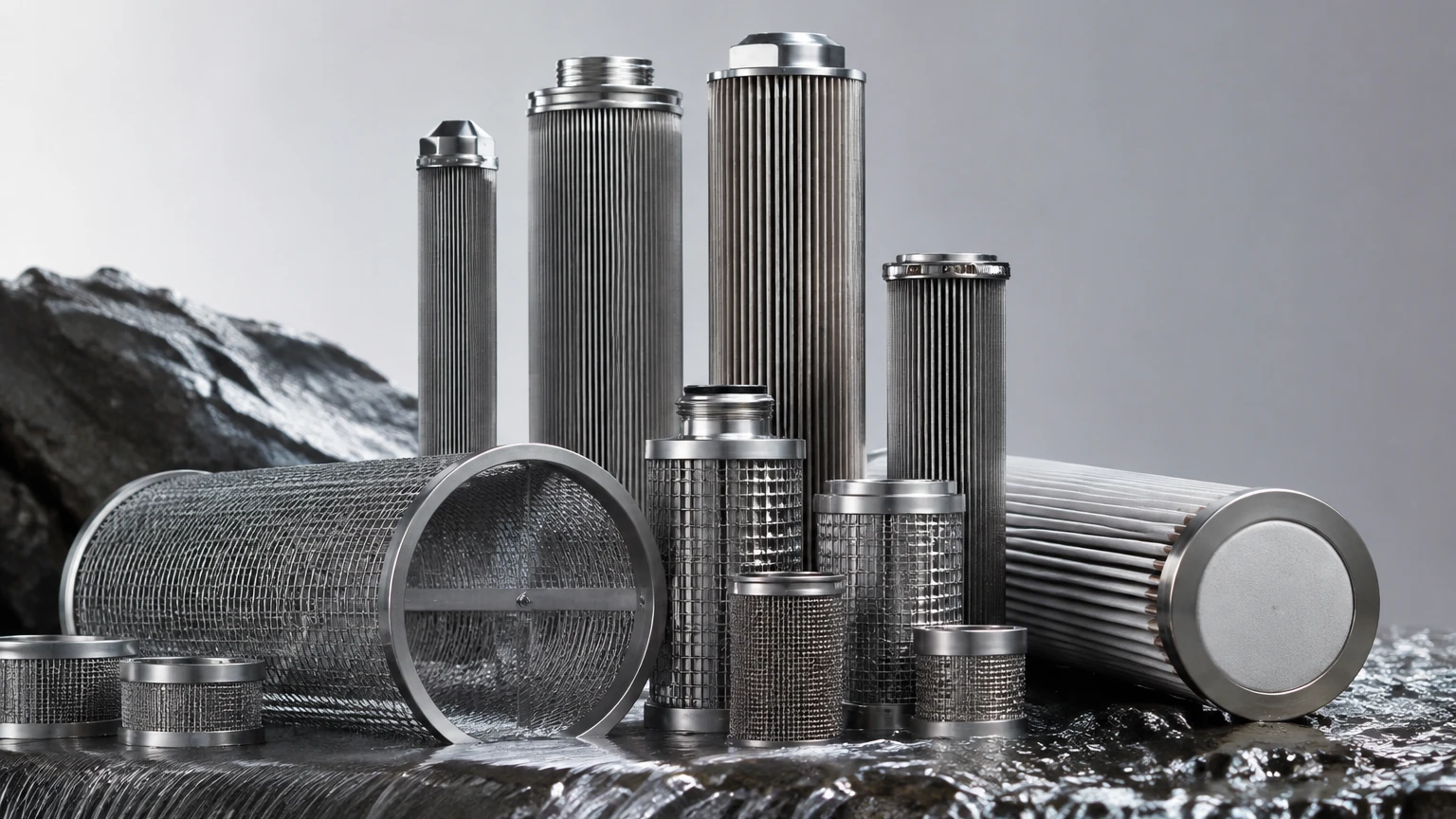
To achieve consistent results, a wastewater filtration system must utilize high-quality components tailored to the specific contaminant profile. The two most common types of metal filtration media used in these systems are stainless steel wire mesh and filter cartridges.
Stainless Steel Wire Mesh Filters
Wire mesh filters are engineered using precise weaving techniques. They provide a predictable and uniform pore size, which is essential for achieving specific micron ratings. In wastewater applications, Dutch weave or square weave patterns are often selected based on the required flow rate and particle retention capacity. These filters are highly effective for removing sand, scale, and larger organic debris.
Stainless Steel Filter Cartridges
For finer filtration requirements, stainless steel filter cartridges offer a high surface area within a compact footprint. These can be designed as pleated elements or cylindrical sintered structures. Pleated designs are particularly advantageous in a wastewater filtration system because they increase the effective filtration area, allowing for higher flow rates and longer service intervals between cleanings. Sintered metal cartridges, on the other hand, provide exceptional depth filtration and can handle high differential pressures without bypassing contaminants.
Engineering Considerations for Filter Selection
When specifying components for a wastewater filtration system, engineers must evaluate several technical parameters to ensure the system performs as intended. Miscalculation in these areas can lead to premature clogging, equipment failure, or insufficient water quality.
Micron Rating: Absolute vs. Nominal
It is vital to distinguish between nominal and absolute micron ratings. A nominal rating refers to the filter's ability to retain a major percentage of particles of a certain size, while an absolute rating indicates that the filter will retain 99.9% or more of particles at that size. In critical wastewater applications where downstream membranes must be protected, absolute-rated stainless steel filters are typically required.
Flow Rate and Pressure Drop
The flow rate through a wastewater filtration system is governed by the effective filtration area and the viscosity of the fluid. A common engineering challenge is the "clean pressure drop"—the initial resistance to flow. As the filter accumulates debris, the pressure drop increases. Designing a system with a larger filtration area than the theoretical minimum helps extend the time between cleaning cycles and reduces the energy required for pumping.
Particle Loading and Cake Formation
In many wastewater scenarios, the particles being filtered form a "filter cake" on the surface of the mesh. While this cake can actually improve filtration fineness, it also increases resistance. Understanding the nature of the solids—whether they are hard and granular or soft and gelatinous—is crucial for selecting a filter structure that can be easily cleaned via backwashing or ultrasonic methods.
Material Science: Selecting the Right Stainless Steel Grade
The chemical composition of industrial wastewater dictates the material selection for the filtration components. Standard 304 stainless steel is suitable for many general-purpose applications; however, it may be susceptible to pitting in environments with high chloride concentrations.
For more demanding wastewater filtration system requirements, Grade 316 or 316L stainless steel is the industry standard. The addition of molybdenum in 316L provides superior resistance to corrosion and acids, which is essential in chemical processing and pharmaceutical wastewater treatment. In cases of extreme salinity or highly acidic effluents, specialty alloys may be necessary to prevent material degradation and ensure the purity of the filtered water.
Maintenance and Cleaning Strategies
One of the primary advantages of utilizing stainless steel in a wastewater filtration system is its cleanability. Unlike disposable plastic cartridges, metal filters can be regenerated multiple times, significantly reducing waste and operational costs. Maintenance strategies typically include:
* Backwashing: Reversing the flow of water to dislodge accumulated solids from the filter surface. This is often automated in continuous-flow systems.
* Chemical Cleaning (CIP): Using specific detergents or acids to dissolve organic or mineral scaling that backwashing cannot remove.
* Ultrasonic Cleaning: For sintered or fine mesh filters, ultrasonic baths can remove deeply embedded particles from the pore structure, restoring the filter to near-original performance.
Establishing a regular maintenance schedule based on differential pressure readings is essential. If a filter is allowed to exceed its maximum rated differential pressure, the structural integrity of the mesh may be compromised, leading to "media migration" or bypass.
Customization and OEM Solutions
No two industrial wastewater streams are identical. Therefore, a one-size-fits-all approach rarely yields optimal results. Customization is often necessary to integrate filtration components into existing infrastructure or to meet unique flow requirements. This may involve custom end-cap configurations, reinforced internal cores for high-pressure applications, or specialized housing designs.
By working with a professional manufacturer, engineering teams can develop bespoke filtration solutions that address specific challenges, such as high-viscosity fluids or ultra-fine particulate removal. For those seeking to optimize their industrial processes, you can Review product options and application support to find tailored components that align with specific technical specifications.
Total Cost of Ownership (TCO) in Wastewater Filtration
While the initial capital expenditure for a stainless steel wastewater filtration system may be higher than for disposable systems, the Total Cost of Ownership is often lower. The durability of metal components means fewer replacements, less downtime for maintenance, and lower disposal costs. Furthermore, the ability to operate at higher temperatures and pressures can lead to process intensifications that improve overall plant efficiency.
When calculating TCO, engineers should consider:
1. Replacement Frequency: How often must the media be replaced?
2. Labor Costs: The time required for manual cleaning or cartridge changes.
3. Energy Consumption: The impact of pressure drop on pump energy usage.
4. Waste Disposal: The environmental and financial cost of disposing of used filter elements.
Conclusion
A high-performance wastewater filtration system is a cornerstone of modern industrial infrastructure. By leveraging the mechanical strength and chemical resistance of stainless steel filtration media, industries can achieve reliable, long-term performance even in the most challenging environments. Success depends on a rigorous engineering approach to selection, focusing on material compatibility, precise micron ratings, and efficient maintenance protocols. As industrial regulations become increasingly stringent, investing in high-quality, customizable filtration solutions remains the most effective strategy for ensuring operational continuity and environmental compliance.
