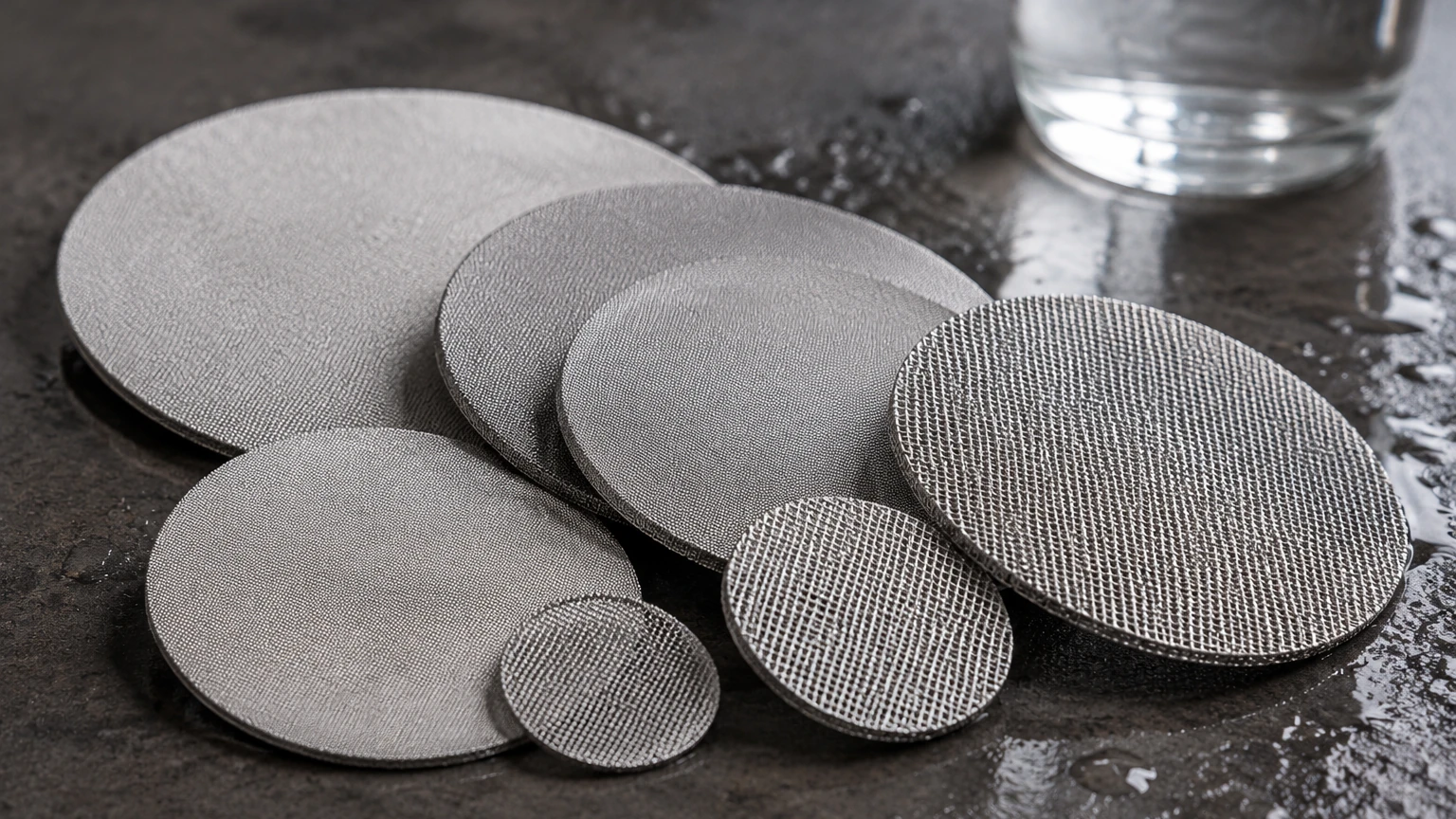
Water Filter Disc
In industrial fluid processing, the efficiency of a filtration system is often determined by the precision and durability of its smallest components. A water filter disc is a critical element used across various sectors to remove particulate matter, protect downstream equipment, and ensure the purity of process water. Unlike standard commercial filters, industrial-grade filter discs are engineered to withstand high pressures, extreme temperatures, and corrosive chemical environments. For engineers and procurement specialists, selecting the appropriate disc involves a deep understanding of material science, weave patterns, and structural integrity.
Understanding the Role of Water Filter Discs in Industrial Systems
A water filter disc serves as a primary or secondary barrier in filtration housings, strainers, and specialized machinery. Its primary function is to intercept solid contaminants while allowing the fluid to pass with minimal resistance. In industrial contexts, these discs are rarely made of plastics or low-grade polymers; instead, they are predominantly fabricated from stainless steel wire mesh or sintered metal fibers.
The choice of a water filter disc affects the entire system's performance. An incorrectly specified disc can lead to excessive pressure drops, frequent clogging, or, in the worst-case scenario, structural failure that allows contaminants to bypass the filter and damage sensitive components like high-pressure pumps or spray nozzles. Therefore, technical precision in specifying the micron rating, material grade, and edge construction is paramount.
Material Selection and Chemical Compatibility
The performance of a water filter disc is fundamentally tied to its material composition. Industrial water treatment often involves fluids with varying pH levels, temperatures, and chemical additives.
1. AISI 304 Stainless Steel: This is the standard material for many industrial water applications. It offers excellent strength and good corrosion resistance for general process water, cooling water, and mildly acidic environments.
2. AISI 316 and 316L Stainless Steel: For more demanding applications, such as those involving saline water, brackish water, or highly corrosive chemicals, 316L is preferred. The addition of molybdenum enhances resistance to pitting and crevice corrosion, which is essential for long-term durability in pharmaceutical and chemical processing.
3. Specialty Alloys: In extreme cases involving high-salinity seawater or concentrated acids, alloys like Monel or Hastelloy may be utilized, though stainless steel remains the industry standard due to its balance of cost and performance.
When evaluating materials, engineers must consider the "Total Cost of Ownership." While a 316L water filter disc may have a higher initial purchase price than 304, its extended service life in corrosive environments often results in lower long-term costs due to reduced replacement frequency.
Filtration Media and Weave Patterns
The filtration performance of a water filter disc is determined by the weave pattern of the wire mesh. Each weave offers distinct advantages regarding flow rate, strength, and filtration accuracy.
* Plain Weave: This is the most common pattern where the warp and shute wires cross over and under each other. It provides a consistent pore size and is ideal for general-purpose filtration where high flow rates are required.
* Twill Weave: In this pattern, each wire passes over two and under two wires. This allows for the use of heavier wires in a given mesh count, resulting in a stronger disc capable of handling higher mechanical loads.
* Dutch Weave (Plain and Twill): Dutch weaves utilize a larger diameter warp wire and a smaller diameter shute wire. This creates a dense, strong mesh with very fine openings. Plain Dutch weaves are excellent for high-pressure filtration, while Twill Dutch weaves allow for the finest filtration ratings, often down to the sub-10-micron range.
Selecting the right weave for a water filter disc requires balancing the need for fine filtration (micron rating) with the need for structural stability and low pressure drop.
Structural Variations: Single-Layer vs. Multi-Layer Sintered Discs
Industrial applications often dictate the physical structure of the water filter disc. Depending on the pressure and the nature of the contaminants, engineers can choose between different layering techniques.
Single-Layer Discs
Single-layer discs are cost-effective and suitable for low-pressure applications or as pre-filters. They are easy to clean but may lack the mechanical strength required for high-differential pressure environments.
Multi-Layer Mesh Discs
To increase strength without sacrificing filtration fineness, multiple layers of wire mesh can be stacked. These layers are often spot-welded together. A typical configuration might include a fine filtration layer protected by coarser support layers on both sides.
Sintered Metal Discs
Sintering is a process where multiple layers of wire mesh are bonded together using heat and pressure in a vacuum furnace. This creates a monolithic structure where the wires are fused at every contact point. A sintered water filter disc offers unparalleled mechanical strength, precise pore size distribution, and the ability to withstand extreme backwashing pressures. This is the gold standard for critical applications in the hydraulic and pharmaceutical industries.
Engineering Specifications for Customization
No two industrial filtration systems are identical, which makes customization a necessity. When sourcing a water filter disc, several physical specifications must be confirmed:
* Diameter and Tolerance: Precise measurements of the outer diameter (OD) and, if applicable, the inner diameter (ID) are required to ensure a snug fit in the filter housing. Tight tolerances prevent fluid bypass.
* Edge Treatment: The edges of a water filter disc can be left raw (cut), spot-welded, or rimmed with a metal frame. Rimming, often using aluminum or stainless steel, provides additional structural support and creates a better sealing surface against gaskets.
* Shape: While circular discs are standard, custom shapes such as oval, rectangular, or ring-shaped discs are often required for specific machinery designs.
Performance Evaluation: Pressure Drop and Flow Rates
A critical factor in the design of any filtration system is the pressure drop (ΔP). Every water filter disc introduces some resistance to flow. As the disc captures contaminants, the resistance increases.
Engineers must calculate the initial pressure drop to ensure the pump system can maintain the required flow rate. Factors influencing ΔP include the open area percentage of the mesh, the fluid viscosity, and the flow velocity. A high-quality water filter disc is designed to maximize the open area while maintaining the required micron rating, thereby extending the time between cleaning or replacement cycles.
Application-Specific Requirements
The industrial application dictates the standards the water filter disc must meet:
* Food and Beverage: Discs must be made from FDA-compliant materials and be easy to sterilize. Smooth surface finishes are required to prevent bacterial growth.
* Chemical Processing: High resistance to chemical degradation and the ability to operate at elevated temperatures are the primary concerns.
* Water Treatment: In large-scale desalination or municipal water treatment, the focus is on high-volume throughput and resistance to biofouling.
* Hydraulic Systems: These applications require discs that can handle high-pressure pulses without deforming or shedding metallic fibers.
Maintenance, Cleaning, and Replacement Cycles
One of the primary advantages of using stainless steel for a water filter disc is its cleanability. Unlike disposable cartridges, metal discs can be cleaned and reused multiple times, significantly reducing waste and operational costs.
Cleaning methods include:
* Backwashing: Reversing the flow of water to dislodge particles from the mesh surface.
* Ultrasonic Cleaning: Using high-frequency sound waves in a cleaning solution to remove fine particles trapped deep within the mesh pores.
* Chemical Cleaning: Using mild acids or bases to dissolve organic or inorganic scaling, provided the material (e.g., 316L) is compatible with the cleaning agent.
Determining the replacement cycle depends on the "terminal pressure drop"—the point at which cleaning no longer restores the disc to an acceptable performance level. Monitoring this allows for scheduled maintenance, preventing unscheduled downtime.
Strategic Procurement and Total Cost of Ownership
When purchasing a water filter disc, the focus should extend beyond the unit price. A low-quality disc may suffer from wire migration, inconsistent pore sizes, or premature corrosion, leading to frequent replacements and potential damage to the entire system.
Partnering with a manufacturer that understands the nuances of industrial filtration ensures that the components provided are fit for purpose. For technical teams and procurement managers, it is essential to verify the manufacturer's quality control processes, material certifications, and capability to provide customized solutions that align with specific engineering drawings.
For more information on customized filtration solutions and technical support, you can Review product options and application support at our Main Page.
Conclusion
The water filter disc is a small but vital component in the landscape of industrial filtration. By selecting the right material, weave pattern, and structural design, engineers can optimize system performance, protect expensive equipment, and achieve a lower total cost of ownership. Whether the application involves simple water straining or complex chemical separation, a high-performance stainless steel disc provides the reliability and precision necessary for modern industrial operations. Understanding these technical variables allows for more informed decision-making and ensures the long-term success of filtration processes.