


Slotted Corrugated Pipe for Drainage and Dispersion
In the realm of industrial fluid management, the efficiency of drainage and the precision of fluid dispersion are critical to the longevity of infrastructure and the success of chemical processes. A specialized component often utilized to bridge these needs is the slotted corrugated pipe for drainage and dispersion. While corrugated piping is a common sight in civil engineering, its application in industrial filtration and high-demand fluid handling requires a sophisticated understanding of metallurgy, structural engineering, and fluid dynamics.
For engineers and procurement professionals, selecting the right drainage and dispersion solution involves more than just choosing a diameter. It requires an analysis of material compatibility, slot geometry, and the structural stresses the component will face in a specific environment. As a professional manufacturer, Kaifil specializes in translating these technical requirements into durable stainless steel filtration and fluid handling components. For a broader look at our technical capabilities and product range, you may visit our Main Page.
Understanding the Engineering Behind Slotted Corrugated Pipes
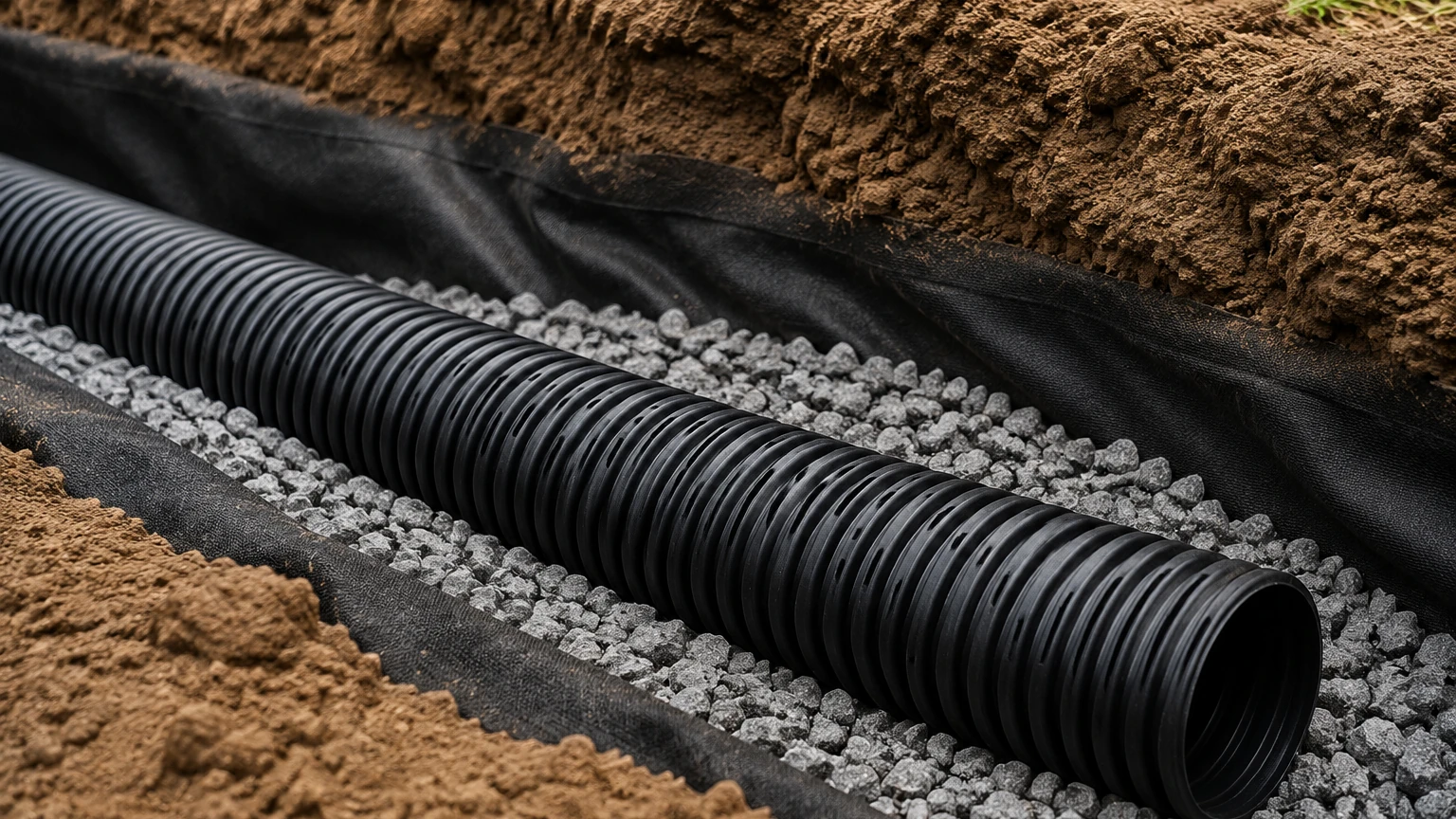
The design of a slotted corrugated pipe for drainage and dispersion is inherently dual-purpose. The "corrugated" aspect refers to the series of parallel ridges and furrows on the pipe's surface. This geometry serves a vital structural role: it significantly increases the pipe's ring stiffness and resistance to external crushing loads without requiring a massive increase in wall thickness. In industrial settings where pipes may be buried under heavy equipment or subjected to fluctuating external pressures, this strength-to-weight ratio is indispensable.
The "slotted" aspect refers to the precision-cut openings along the valleys or ridges of the corrugations. These slots are engineered to allow fluids to enter the pipe (drainage) or exit the pipe (dispersion) while preventing the passage of larger solids or media. Unlike standard perforated pipes, slots provide a higher degree of control over flow velocity and particle exclusion, which is essential when the pipe is used as a core component in a filtration system or a chemical reactor bed.
Material Selection: The Case for Stainless Steel in Industrial Filtration
While high-density polyethylene (HDPE) is frequently used for municipal drainage, industrial applications usually demand the resilience of metal. Slotted corrugated pipes manufactured from stainless steel (such as 304 or 316L grades) offer several advantages that plastic cannot match:
1. Thermal Stability: Industrial processes often involve high-temperature fluids that would cause plastic pipes to deform or lose structural integrity. Stainless steel maintains its mechanical properties across a wide temperature range.
2. Chemical Resistance: In chemical processing and water treatment, the fluids being handled may be acidic, alkaline, or contain volatile organic compounds. Stainless steel provides superior corrosion resistance, ensuring the slots do not widen or clog due to chemical degradation.
3. Precision Machining: Achieving tight tolerances in slot width is critical for effective dispersion and filtration. Metal allows for laser cutting or precision mechanical slotting that maintains consistency across the entire length of the pipe.
4. Longevity and Total Cost of Ownership: Although the initial investment in a stainless steel slotted corrugated pipe for drainage and dispersion is higher than plastic, the extended service life and reduced maintenance requirements often result in a lower total cost of ownership over the project's lifecycle.
Dispersion Mechanics: Beyond Simple Drainage
While drainage is about removing fluid from a specific area, dispersion is the controlled release of fluid into a surrounding medium. In industrial contexts, this is often seen in ion exchange columns, sand filters, or gas injection systems.
A slotted corrugated pipe for drainage and dispersion acts as a distributor. The corrugations help to break up the flow and prevent "channeling"—a phenomenon where fluid takes the path of least resistance, leading to uneven treatment or localized wear. By strategically placing slots along the corrugations, engineers can ensure that fluid is released uniformly along the entire length of the pipe. This uniformity is crucial for maximizing the efficiency of the media bed and ensuring that the entire volume of the vessel is utilized effectively.
Technical Specifications: Slots, Perforations, and Open Area
When specifying a slotted corrugated pipe for drainage and dispersion, several technical parameters must be confirmed to ensure performance:
Slot Width and Length
The width of the slot determines the size of the particles that will be excluded. In filtration applications, the slot width is typically chosen to be slightly smaller than the smallest grain of the surrounding filter media. Precision is paramount here; if the slots are too wide, media loss occurs; if they are too narrow, the pipe may experience premature clogging.
Open Area Percentage
The "open area" is the ratio of the total area of the slots to the total surface area of the pipe. A higher open area reduces the pressure drop across the pipe, which can lower energy costs for pumping systems. However, increasing the open area can also reduce the structural integrity of the pipe. Balancing these two factors is a key engineering challenge.
Corrugation Profile
The height and pitch (distance between ridges) of the corrugations affect both the structural strength and the hydraulic performance. Deeper corrugations provide more surface area for slotting but may also create more turbulence within the pipe. Engineers must select a profile that aligns with the flow rate requirements of the system.
Industrial Applications and Environmental Challenges
The versatility of the slotted corrugated pipe for drainage and dispersion allows it to be used in diverse industrial environments:
* Chemical Processing: Used as internal distributors in reactors to ensure even contact between liquid reactants and solid catalysts.
* Water Treatment: Employed in underdrain systems for gravity filters and pressure filters, where they collect treated water while retaining the filter sand or anthracite.
* Mining and Leaching: Used in heap leaching operations to collect mineral-rich solutions from the base of ore piles.
* Hydraulic Systems: Acting as intake screens or return line diffusers to prevent aeration and manage fluid velocity.
Each of these environments presents unique challenges, such as high silt loads, abrasive particles, or extreme pH levels. Selecting a manufacturer like Kaifil, who understands these variables, ensures that the component is designed to withstand the specific stresses of the application.
Installation and Maintenance for Long-Term Performance
To ensure the continued efficiency of a slotted corrugated pipe for drainage and dispersion, proper installation and maintenance protocols are required. During installation, it is vital to ensure that the pipe is bedded correctly to avoid localized stress points that could lead to buckling. In dispersion applications, the orientation of the slots (facing up, down, or sideways) can significantly impact the flow pattern and should be specified in the engineering drawings.
Maintenance cycles depend heavily on the fluid being handled. In systems with high biological activity or mineral scaling, the slots may eventually become restricted. Stainless steel pipes offer the advantage of being compatible with various cleaning methods, including high-pressure water jetting or chemical descaling, which would damage less robust materials. Monitoring the pressure differential across the pipe is the most effective way to determine when maintenance is required.
Selecting a Manufacturing Partner for Custom Filtration Components
Because industrial systems vary widely, a "one size fits all" approach rarely works for drainage and dispersion components. Customization is often necessary to meet specific flow rates, pressure requirements, and space constraints. When evaluating a supplier for a slotted corrugated pipe for drainage and dispersion, engineers should confirm the following:
* OEM Capabilities: Can the manufacturer produce components based on proprietary designs or specific material grades?
* Quality Control: What measures are in place to ensure slot consistency and structural integrity?
* Technical Support: Does the supplier offer guidance on material selection and hydraulic performance?
At Kaifil, we combine manufacturing expertise with deep engineering knowledge to support demanding industrial applications. Our focus on quality and durability ensures that our filtration and drainage components perform reliably in the most challenging environments. Whether you are designing a new water treatment facility or upgrading a chemical processing line, our team is ready to provide the technical support needed to optimize your system's performance.
For more information on our custom stainless steel filtration solutions and to discuss your project requirements, please visit our Main Page. By focusing on precise engineering and high-quality materials, we help our clients achieve efficient, durable, and cost-effective filtration and drainage results.
Download Slotted Corrugated Pipe for Drainage and Dispersion as a PDF
