


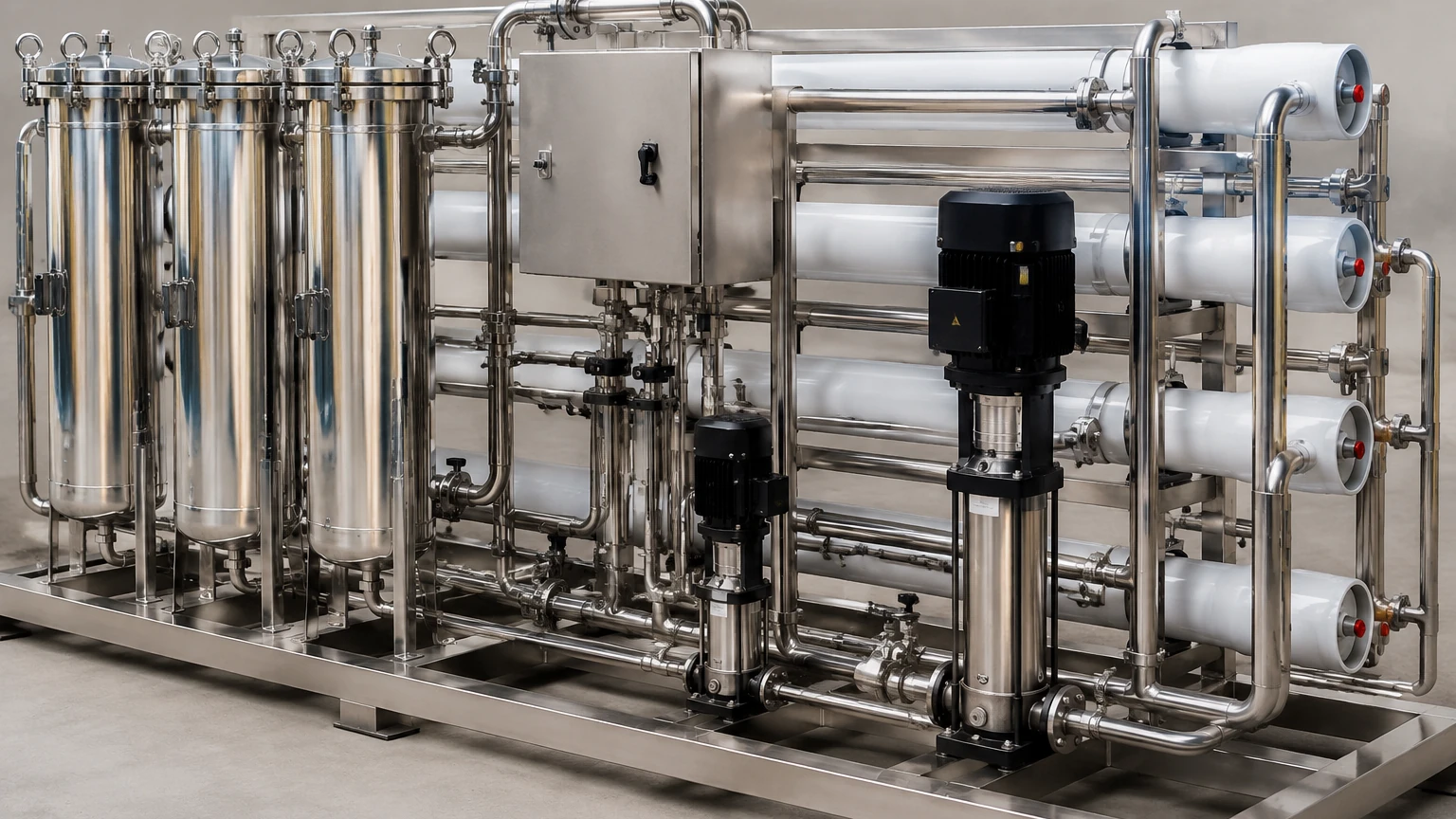
Water Treatment Skid
In modern industrial processing, the water treatment skid has become a cornerstone of efficient fluid management. These modular, frame-mounted systems integrate various components—including pumps, piping, valves, control systems, and, most critically, filtration units—into a single, portable assembly. By centralizing the treatment process, engineers can achieve consistent water quality while minimizing on-site installation time and footprint. For industries ranging from chemical processing to food and beverage production, the reliability of a water treatment skid depends heavily on the quality and precision of its internal filtration components.
As a manufacturer specializing in custom stainless steel filtration solutions, Kaifil provides the essential hardware that allows these skids to operate under demanding conditions. Understanding the technical nuances of skid design, material selection, and filtration efficiency is vital for engineering teams tasked with procuring or designing these systems. This guide explores the technical considerations and component requirements necessary for high-performance water treatment skids.
Engineering Considerations for Water Treatment Skid Design
The design of a water treatment skid begins with a comprehensive analysis of the process requirements. Engineers must balance flow rates, pressure constraints, and the specific contaminants that need to be removed. Unlike stick-built systems assembled entirely on-site, a skid-mounted system must be compact yet accessible for maintenance.
One of the primary engineering challenges is managing pressure drop across the filtration stages. As water passes through various media, resistance naturally occurs. If the filtration components are not sized correctly, the system may require excessive pumping power, leading to higher operational costs and potential equipment fatigue. Utilizing precision-engineered wire mesh filters or stainless steel cartridges allows for optimized surface area, which helps maintain high flow rates with minimal pressure loss.
Furthermore, the structural integrity of the skid frame and the interconnecting piping must withstand the vibrations and hydraulic shocks common in industrial environments. Stainless steel is often the preferred material for both the frame and the fluid-contact components due to its high strength-to-weight ratio and its ability to maintain tolerances over long service lives.
The Role of Stainless Steel Filtration in Skid Systems
Within a water treatment skid, the filtration stage is where the primary objective—water purification or solids separation—is achieved. While plastic or disposable filters are common in light-duty applications, industrial-grade skids frequently require the durability of stainless steel.
Stainless steel filtration media, such as sintered wire mesh or wedge wire, offer several technical advantages:
1. Corrosion Resistance: In chemical processing or desalination applications, the presence of corrosive agents requires materials like 316L stainless steel. This prevents leaching and ensures the purity of the treated water.
2. Thermal Stability: Many industrial water processes operate at elevated temperatures. Stainless steel components maintain their structural shape and filtration accuracy where polymers might soften or fail.
3. Mechanical Strength: High-pressure backwashing or high-differential pressure scenarios can collapse inferior filter elements. Stainless steel cartridges are designed to withstand significant mechanical stress without bypassing contaminants.
Selecting the right filtration media is a critical step in the procurement process. For those looking to integrate high-performance components into their systems, it is beneficial to Review product options and application support to ensure the media matches the specific chemical and physical demands of the project.
Key Components and Assembly of a Modular Skid
A functional water treatment skid is an ecosystem of interconnected parts. While the filter housing is the focal point for a filtration specialist, several other components must work in harmony to ensure system reliability.
* Pumps and Motors: These provide the necessary energy to move the fluid through the treatment stages. In many skids, Variable Frequency Drives (VFDs) are used to adjust flow rates based on real-time demand.
* Filter Housings: These vessels contain the filter cartridges or bags. For industrial skids, these are typically ASME-coded pressure vessels made of stainless steel, featuring quick-opening closures for rapid maintenance.
* Instrumentation and Controls: Sensors for pH, conductivity, turbidity, and differential pressure provide the data necessary for automated operation. Programmable Logic Controllers (PLCs) manage the sequencing of valves, especially during backwash or rinse cycles.
* Piping and Valvings: The manifold system directs the flow between different treatment stages. Using high-quality valves ensures leak-free operation and precise control over the treatment path.
By mounting these components on a single skid, manufacturers can perform rigorous factory acceptance testing (FAT) before the unit ever reaches the client’s site. This significantly reduces the risk of integration errors and ensures that the system meets performance specifications immediately upon startup.
Selecting Filtration Media for Specific Industrial Applications
The "one-size-fits-all" approach rarely works in industrial water treatment. The choice of filtration media within the water treatment skid must be dictated by the nature of the influent and the required effluent quality.
In the food and beverage industry, for example, filtration components must meet stringent sanitary standards. Stainless steel wire mesh filters are ideal here because they are easy to clean, can be sterilized with steam (SIP), and do not shed fibers into the product stream.
In pharmaceutical applications, the focus shifts to extreme precision and high-purity levels. Sintered metal felt or multi-layer wire mesh laminates provide the fine micron ratings necessary to remove bacteria or fine particulates while maintaining the integrity of the process fluid.
For produced water treatment in the oil and gas sector, the skid must handle high solids loading and oil-water separation. Here, robust stainless steel cartridges that can be chemically cleaned and reused are far more cost-effective than disposable alternatives, which would require frequent replacement and generate significant waste.
Maintenance and Operational Efficiency of Skid-Mounted Systems
One of the most significant advantages of a well-designed water treatment skid is its ease of maintenance. Because the system is modular, all components are typically arranged to be accessible from the perimeter of the frame.
To maintain operational efficiency, engineers must monitor the differential pressure (ΔP) across the filter elements. A rising ΔP indicates that the filter media is becoming loaded with contaminants. In many modern skids, this triggers an automated backwash cycle, where a portion of the clean water is forced backward through the filter to dislodge debris.
Stainless steel filters are particularly well-suited for this because they can withstand the reverse pressure without damage. This "permanent" nature of the filter media significantly reduces the total cost of ownership (TCO). While the initial investment in stainless steel components may be higher than plastic disposables, the elimination of recurring cartridge purchases and the reduction in downtime for filter changes provide a rapid return on investment.
Regular maintenance schedules should also include the inspection of seals and gaskets. In high-temperature or chemically aggressive environments, choosing the correct elastomer (such as Viton or EPDM) is just as important as the metal alloy of the filter itself.
Customization and OEM Integration
Every industrial facility has unique constraints, whether it is a restricted floor plan or a specific chemical compatibility requirement. This is where customization becomes a vital part of the water treatment skid procurement process.
As an OEM partner, Kaifil works closely with skid builders and system integrators to develop bespoke filtration components. This might involve designing a filter cartridge with unique dimensions to fit an existing housing, or developing a multi-stage filtration assembly that combines coarse and fine mesh in a single unit.
When specifying a custom filter for a water treatment skid, engineers should confirm:
* Micron Rating: The exact particle size that must be retained.
* Flow Rate per Element: To ensure the housing is sized correctly for the total system throughput.
* Cleaning Requirements: Whether the filter will be cleaned via ultrasonic bath, chemical soaking, or backwashing.
* Connection Types: Standard NPT, flange, or specialized sanitary fittings.
By addressing these technical details during the design phase, the resulting water treatment skid will be more reliable, easier to maintain, and perfectly aligned with the end-user's operational goals. For more information on specialized filtration components and engineering support, visit the Main Page to explore technical specifications and customization options.
