


25 Micron Mesh
In industrial filtration, the precision of a filter medium determines the efficiency of the entire process. A 25 micron mesh represents a critical threshold in fine filtration, bridging the gap between standard industrial straining and high-precision microfiltration. For engineers and procurement specialists, selecting a 25 micron stainless steel mesh requires a deep understanding of wire geometry, material properties, and the mechanical stresses inherent in pressurized fluid systems.
At this scale—where 25 microns equals 0.025 millimeters—the physical characteristics of the weave and the quality of the stainless steel alloy are paramount. Whether utilized in hydraulic systems, chemical processing, or pharmaceutical manufacturing, the performance of the mesh directly impacts product purity and equipment longevity. This guide explores the technical specifications, engineering considerations, and application-specific requirements for 25 micron filtration solutions.
Technical Specifications and Mesh Geometry
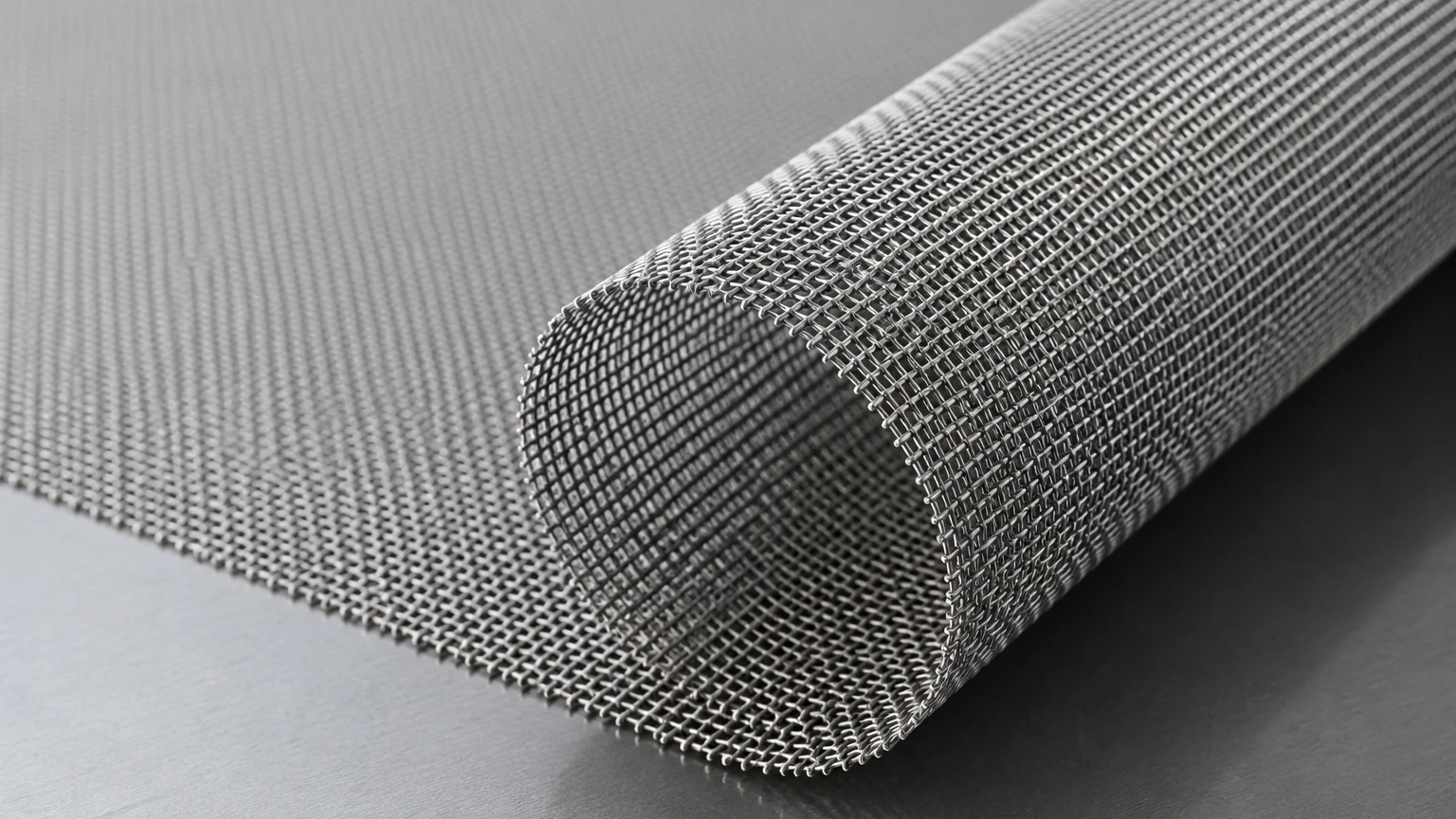
The term "25 micron mesh" refers to the pore size or the distance between adjacent wires in a woven structure. However, achieving a consistent 25-micron opening involves complex weaving patterns. In the imperial mesh count system, a 25-micron rating typically corresponds to very high mesh counts, often exceeding 500 wires per linear inch, depending on the wire diameter used.
Weave Types
For filtration at the 25-micron level, manufacturers generally employ specific weave patterns to ensure structural stability:
1. Plain Dutch Weave: This utilizes a larger diameter warp wire and a smaller diameter shute (weft) wire. The wires are driven close together, creating a dense, strong mesh with precise triangular openings. This is common for high-pressure applications.
2. Twill Dutch Weave: In this configuration, each shute wire passes over and under two warp wires. This allows for the use of even finer wires, enabling the production of mesh with extremely small pore sizes, such as 25 microns, while maintaining a thicker, more robust overall fabric.
3. Square Weave: While possible, a simple square weave (one over, one under) at 25 microns results in a very fragile mesh due to the extremely thin wires required. Consequently, square weaves at this level are usually reserved for low-pressure laboratory environments or are reinforced with a support layer.
Effective Filtration Area (EFA)
The EFA is a critical metric for engineers. It defines the total area available for fluid to pass through. A higher mesh count often reduces the open area percentage, which can increase the initial pressure drop across the filter. When specifying a 25 micron mesh, engineers must balance the need for fine particle retention with the requirement for adequate flow rates.
Material Selection: SS304 vs. SS316L
Stainless steel is the industry standard for 25 micron mesh due to its mechanical strength and resistance to corrosion. However, the choice of specific alloy grade is dictated by the chemical environment of the application.
* Stainless Steel 304: This is the most common grade, offering excellent strength and basic corrosion resistance. It is suitable for water treatment, food processing (where chloride levels are low), and general industrial hydraulics.
* Stainless Steel 316L: The "L" denotes low carbon, and the addition of molybdenum significantly enhances resistance to pitting and crevice corrosion in chloride-rich environments. For pharmaceutical production, marine applications, and aggressive chemical processing, 316L is the preferred material to prevent metallic contamination and ensure the integrity of the 25 micron openings over time.
In high-temperature environments, specialized alloys like Inconel or Monel may be used, though stainless steel remains the most cost-effective solution for the majority of B2B industrial filtration needs.
Engineering Considerations: Flow Rate and Pressure Drop
One of the primary challenges when implementing a 25 micron mesh is managing the differential pressure (ΔP). Because the openings are so small, the mesh presents significant resistance to fluid flow. Engineers must calculate the "clean pressure drop" to ensure the system’s pump capacity is sufficient.
Factors Influencing Pressure Drop
* Fluid Viscosity: Higher viscosity fluids require more pressure to pass through a 25 micron opening. In hydraulic applications, oil temperature significantly affects viscosity and, consequently, filter performance.
* Contaminant Loading: As particles accumulate on the surface of the mesh, the effective open area decreases, leading to a rapid rise in differential pressure. This is known as the "dirt-holding capacity."
* Flow Velocity: Higher velocities increase turbulence at the mesh surface, which can lead to premature clogging or even mechanical deformation of the wire weave.
To mitigate these issues, 25 micron mesh is often pleated. Pleating increases the surface area within the same footprint, effectively lowering the flux (flow per unit area) and extending the service life between cleaning cycles. For more information on how custom pleating can optimize your system, you can review product options and application support on the Kaifil Main Page.
Comparison of Mesh Structures: Woven vs. Sintered
When a single layer of 25 micron woven mesh is insufficient for the mechanical demands of an application, engineers often turn to sintered metal mesh.
Single Layer Woven Mesh
This is the most economical choice. It is lightweight and easy to fabricate into various shapes. However, it is susceptible to "pore migration," where the wires shift under high pressure, potentially allowing larger particles to pass through.
Multi-Layer Sintered Mesh
Sintering is a process where multiple layers of mesh (often including a 25 micron filtration layer, a distribution layer, and several support layers) are bonded together using heat and pressure without melting the wires. The result is a monolithic structure where the 25 micron pores are permanently fixed in place.
Sintered 25 micron mesh offers:
* High Mechanical Strength: It can withstand high backpressure and mechanical shock.
* Excellent Heat Resistance: The bonded structure remains stable at temperatures that would cause standard woven mesh to unravel.
* Fixed Pore Geometry: There is no risk of wire shifting, ensuring consistent filtration accuracy throughout the filter's life.
Key Applications for 25 Micron Filtration
The 25 micron rating is a "sweet spot" for many industrial processes that require the removal of visible and sub-visible particulates without the extreme costs associated with sub-micron membrane filtration.
1. Hydraulic and Lubrication Systems
Modern hydraulic components, such as servo-valves and high-pressure pumps, have extremely tight tolerances. Particles larger than 25 microns can cause catastrophic mechanical failure or accelerated wear. A 25 micron mesh filter serves as a reliable guard filter in these systems.
2. Chemical and Petrochemical Processing
In chemical manufacturing, 25 micron mesh is used for catalyst recovery and the removal of impurities from intermediate products. The mesh must withstand aggressive solvents and varying pH levels, making the material selection (SS316L) critical.
3. Food and Beverage Production
For liquids like syrups, oils, and beverages, 25 micron filtration ensures clarity and removes sediment. Stainless steel mesh is preferred here because it is easy to sterilize and does not shed fibers into the product stream, unlike paper or fabric filters.
4. Pharmaceutical Manufacturing
In the pharmaceutical industry, 25 micron filters often act as pre-filters for more expensive membrane filters. By removing the bulk of the particulate matter, the 25 micron mesh extends the life of the final sterilizing-grade filters, significantly reducing total operational costs.
Maintenance, Cleaning, and Replacement Cycles
Unlike disposable polymer filters, stainless steel 25 micron mesh is designed for reuse. However, the cleaning process must be handled carefully to avoid damaging the delicate wire structure.
Cleaning Methods
* Backwashing: This involves reversing the flow of clean fluid through the mesh to dislodge particles. It is effective for surface-loading contaminants but may not remove particles wedged deep within a Dutch weave.
* Ultrasonic Cleaning: This is the most effective method for 25 micron mesh. High-frequency sound waves create cavitation bubbles that implode on the mesh surface, stripping away even microscopic contaminants without mechanical abrasion.
* Chemical Cleaning: Soaking the mesh in specialized solvents or acids can dissolve organic or mineral scale. It is vital to ensure the cleaning agent is compatible with the stainless steel grade.
Determining Replacement
While cleanable, 25 micron mesh will eventually reach the end of its functional life. Signs that replacement is necessary include:
* Permanent Pressure Drop: If the differential pressure remains high even after thorough cleaning, the mesh pores are likely permanently fouled or "blinded."
* Mechanical Fatigue: Repeated pressure cycling can lead to work-hardening of the wires, eventually causing cracks or breaks in the weave.
* Pore Enlargement: In high-velocity systems, abrasive particles can erode the wires, gradually enlarging the 25-micron openings and compromising filtration integrity.
Customization and OEM Integration
For most industrial applications, a standard off-the-shelf mesh is rarely the optimal solution. Customization allows engineers to integrate 25 micron mesh into specific hardware configurations. Kaifil specializes in manufacturing custom stainless steel filtration components tailored to unique operational parameters.
When ordering custom 25 micron components, engineers should confirm the following details:
* Absolute vs. Nominal Rating: Ensure the manufacturer clarifies whether the 25-micron rating is "absolute" (100% retention of particles that size) or "nominal" (a percentage retention).
* End Fittings: Specify whether the filter requires NPT threads, flanges, or O-ring seals to ensure a bypass-free installation.
* Support Structures: For high-pressure environments, the 25 micron mesh should be supported by a perforated metal core or a coarser mesh shroud to prevent collapsing.
By focusing on these technical details, purchasing teams can ensure they receive a filtration solution that provides the best balance of performance, durability, and total cost of ownership. For detailed technical specifications and to explore custom manufacturing capabilities, visit the Kaifil Main Page.
