


What Is a Baghouse Filter
In industrial environments where air quality, particulate recovery, and emission control are critical, the baghouse filter stands as a cornerstone technology. Often referred to as a fabric filter or a baghouse dust collector, this system is a large-scale industrial filtration device designed to remove particulates from flue gases or process air. For engineers and facility managers, understanding the mechanics, selection criteria, and operational limits of these systems is essential for maintaining regulatory compliance and operational efficiency.
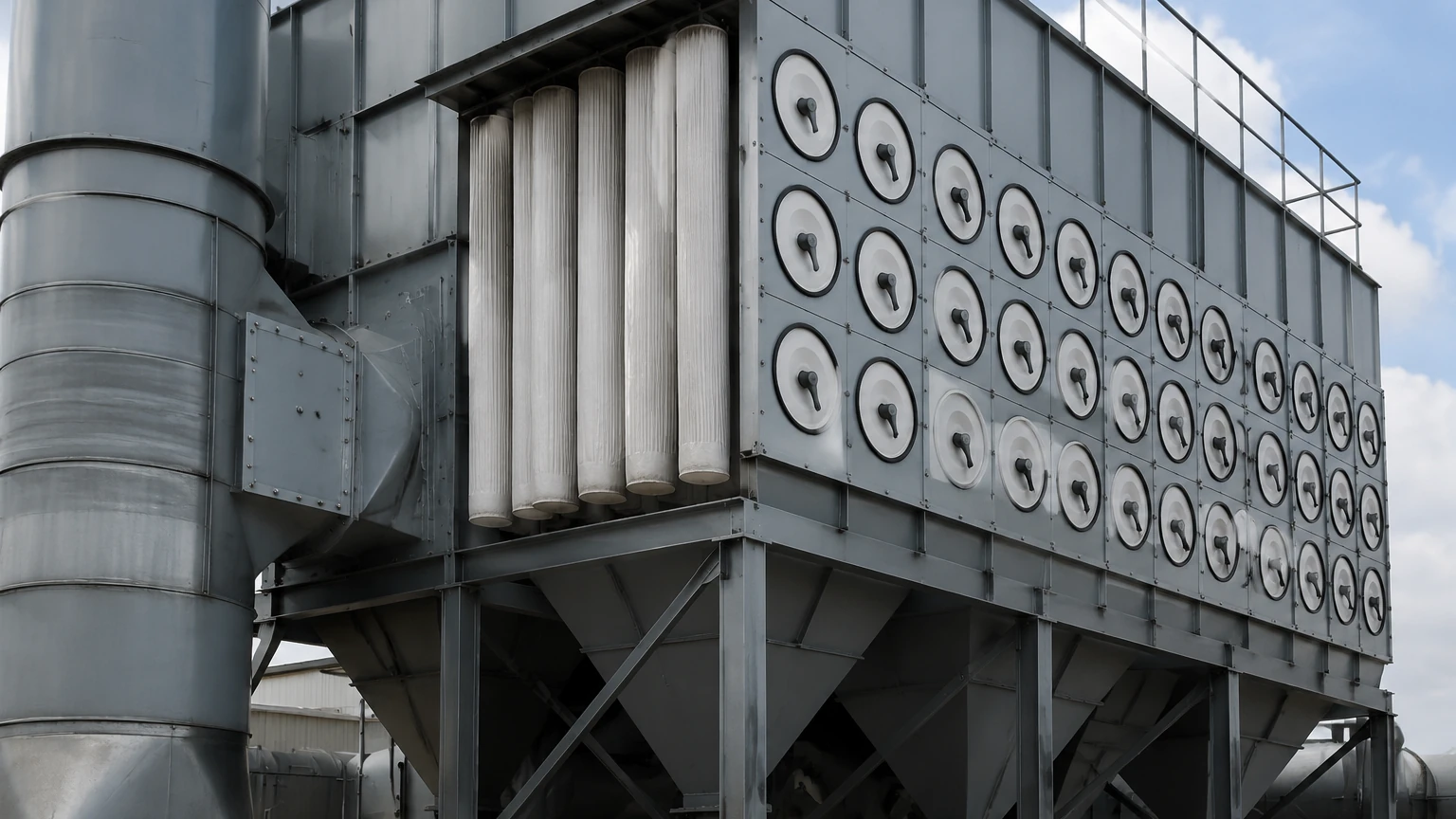
A baghouse filter operates by pulling contaminated air through a series of long, cylindrical bags made of woven or felted fabric. As the air passes through the media, dust and debris are trapped on the surface or within the matrix of the fabric, allowing clean air to be exhausted or recirculated. While the concept is straightforward, the engineering behind material selection, cleaning mechanisms, and structural design is complex, particularly when dealing with the high-temperature or corrosive environments common in chemical processing and power generation.
Fundamental Principles of Baghouse Filtration
The filtration process within a baghouse is governed by several physical mechanisms that occur simultaneously. Unlike simple sieving, where particles are blocked by holes smaller than themselves, baghouse filters utilize a combination of impingement, interception, and diffusion.
1. Inertial Impingement: Larger particles, possessing higher momentum, fail to follow the fluid streamlines as they curve around the filter fibers. Instead, they strike the fibers directly and become trapped.
2. Interception: Mid-sized particles follow the airflow but come close enough to a fiber that they make contact and adhere to it due to van der Waals forces.
3. Diffusion (Brownian Motion): Very fine particles (typically sub-micron) move erratically due to collisions with gas molecules. This increased path length increases the probability that they will contact a filter fiber.
One of the most critical aspects of baghouse operation is the formation of the "dust cake." During the initial stages of filtration, the fabric itself provides the primary barrier. However, as particles accumulate, they form a porous layer on the surface of the bag. This dust cake actually becomes the primary filtering medium, often achieving higher collection efficiencies than the clean fabric alone. Managing the thickness and permeability of this cake is the central challenge of baghouse maintenance.
Core Components of a Baghouse System
A standard industrial baghouse is comprised of several integrated components, each designed to withstand specific mechanical and thermal stresses.
The Housing and Hopper
The outer shell, or housing, is typically constructed from heavy-gauge carbon steel or stainless steel to handle pressure differentials. The lower section, known as the hopper, is a conical or pyramidal structure where collected dust accumulates before being discharged via a rotary valve or screw conveyor.
Filter Bags and Support Cages
The bags are the heart of the system. Depending on the cleaning method, they may be supported internally by metal cages. In pulse-jet systems, these cages are vital to prevent the bag from collapsing under the external pressure of the dirty gas stream. High-quality cages, often manufactured from stainless steel or galvanized wire, must be burr-free to prevent mechanical wear on the fabric.
The Tubesheet
This is a rigid plate that separates the "dirty" side of the baghouse from the "clean" plenum. The bags are suspended from the tubesheet, which must be perfectly sealed to prevent bypass—a condition where contaminated air leaks directly into the clean air stream, compromising filtration efficiency.
Common Types of Baghouse Cleaning Mechanisms
Baghouses are generally categorized by the method used to clean the filter media. Cleaning is necessary to prevent the pressure drop (Delta P) from becoming too high, which would restrict airflow and strain the system's fans.
Pulse-Jet Baghouses
Pulse-jet systems are the most common in modern industrial applications. In this design, the bags are supported by internal cages, and dirty air flows from the outside of the bag toward the inside. To clean the bags, a high-pressure blast of compressed air is shot down the length of the bag from the top. This creates a shockwave that causes the bag to expand rapidly and then snap back, dislodging the dust cake. This process can occur while the baghouse is "on-line," meaning filtration does not need to stop during the cleaning cycle.
Shaker Baghouses
In a shaker system, the bags are fastened at the bottom and suspended from a moving carriage at the top. Dirty air enters from the bottom and flows from the inside of the bag to the outside. When the pressure drop reaches a set point, the top carriage shakes the bags vigorously to loosen the dust. These systems usually require the compartment being cleaned to be taken "off-line" to allow the dust to settle into the hopper.
Reverse Air Baghouses
These systems use a low-pressure, high-volume fan to blow clean air in the opposite direction of the normal filtration flow. This causes the bags to partially collapse, cracking the dust cake so it falls into the hopper. Like shaker systems, reverse air baghouses typically operate in compartments to allow for off-line cleaning.
Engineering Considerations for Filter Media Selection
Selecting the correct filter media is a technical decision based on the chemical and thermal profile of the gas stream. While synthetic fabrics like polyester, polypropylene, and Nomex are common, they have distinct limitations.
* Temperature Limits: Standard polyester bags are limited to approximately 275°F (135°C). For higher temperatures, materials like P84 or PTFE (Teflon) are required.
* Chemical Resistance: In chemical processing, the presence of acids or alkalis can quickly degrade certain fabrics. PTFE is often the material of choice for extreme chemical resistance despite its higher cost.
* Moisture and Hydrolysis: If the gas stream contains moisture and is subjected to temperature fluctuations, hydrolysis can weaken the fibers of polyester and Nomex bags, leading to premature failure.
In applications involving extreme temperatures (above 500°F) or highly abrasive particulates, traditional fabric bags may fail regardless of the material. In these instances, engineers often turn to rigid metal filtration solutions. For those seeking specialized components for these demanding environments, reviewing the Main Page of a dedicated filtration manufacturer can provide insights into stainless steel mesh and sintered metal options that offer superior durability compared to standard fabrics.
Performance Metrics: Pressure Drop and Air-to-Cloth Ratio
To evaluate the health and efficiency of a baghouse filter, engineers monitor two primary metrics: Pressure Drop and the Air-to-Cloth (A/C) Ratio.
Pressure Drop (Differential Pressure)
Measured in inches of water column (in. w.c.) or Pascals, the pressure drop represents the resistance to airflow. A healthy baghouse typically operates between 2 and 6 inches w.c. A sudden drop in pressure might indicate a torn bag (leak), while a steady increase that cannot be reduced by cleaning indicates "blinding"—a condition where dust is deeply embedded in the fabric pores.
Air-to-Cloth Ratio (ACR)
The ACR is the ratio of the gas volume flow rate to the total active filtration area. It is expressed as:
ACR = Q / A
Where *Q* is the volumetric flow rate (CFM) and *A* is the total square footage of the filter bags. A higher ACR allows for a smaller, less expensive baghouse but increases the risk of high pressure drop and shortened bag life. Pulse-jet systems typically operate at higher ACRs (3:1 to 6:1) compared to shaker or reverse air systems (1.5:1 to 2.5:1).
Integrating Stainless Steel Filtration in Industrial Exhaust Systems
While baghouses are effective for general dust collection, certain industrial processes require a higher degree of precision or resistance than fabric can provide. Stainless steel filtration components, such as those produced by Kaifil, play a vital role in these specialized systems.
Stainless steel wire mesh filters and sintered metal cartridges are often used as pre-filters to protect baghouse systems from sparks or large, abrasive debris that could puncture fabric bags. In other cases, where the process involves high-pressure steam or volatile organic compounds (VOCs) at high temperatures, stainless steel filter cartridges may replace fabric bags entirely. These metal components offer:
* Thermal Stability: Capability to operate in environments exceeding 800°F.
* Mechanical Strength: Resistance to high differential pressures without the risk of tearing.
* Cleanability: Metal filters can often be ultrasonically cleaned or chemically backwashed, extending their service life far beyond that of disposable fabric bags.
Engineers must confirm the compatibility of their particulate size with the micron rating of the filter media. For precision applications in the pharmaceutical or food and beverage industries, the uniformity of stainless steel mesh provides a level of filtration accuracy that is difficult to achieve with traditional felted bags.
Maintenance and Troubleshooting
A baghouse filter is not a "set it and forget it" system. Regular maintenance is required to prevent catastrophic failure and ensure environmental compliance.
1. Leak Detection: Regular visual inspections of the clean air plenum or the use of fluorescent leak-detection powders can identify broken bags before they lead to emission violations.
2. Compressed Air Quality: For pulse-jet systems, the compressed air must be dry and oil-free. Moisture in the air lines can lead to the formation of mud on the bags, causing permanent blinding.
3. Diaphragm and Solenoid Valve Inspection: These components control the cleaning pulses. If they fail, the bags in that section will not be cleaned, leading to localized high pressure and potential bag failure.
4. Hopper Discharge: Dust must be removed from the hopper continuously. If dust levels reach the bottom of the bags, it can cause abrasion and restrict airflow, potentially leading to a fire hazard if the dust is combustible.
Conclusion
The baghouse filter remains one of the most versatile and efficient tools for industrial air pollution control. By understanding the relationship between cleaning mechanisms, media selection, and operational parameters like the air-to-cloth ratio, engineers can optimize their systems for both performance and longevity.
In demanding sectors like chemical processing and heavy manufacturing, the limitations of fabric media often necessitate the integration of more robust materials. Leveraging custom stainless steel filtration solutions ensures that even the most aggressive process streams are handled with precision. For more information on high-performance metal filtration components and custom OEM solutions, visit the Main Page to explore technical specifications and application support tailored to industrial requirements.
