


Witches Hat Drain
In industrial piping systems, the integrity of downstream equipment such as pumps, valves, and flow meters is paramount to operational efficiency and safety. One of the most effective, yet structurally simple, components used to ensure this protection is the conical strainer, frequently referred to in the field as a witches hat drain. These components serve as a critical line of defense against particulate matter, scale, and debris that can accumulate during construction or result from upstream process failures.
For engineers and procurement professionals, selecting the correct witches hat drain involves more than just matching a pipe diameter. It requires a deep understanding of fluid dynamics, material compatibility, and the specific mechanical stresses of the application. As a specialized manufacturer of stainless steel filtration solutions, Kaifil provides high-performance components designed to meet these rigorous industrial standards. You can Review product options and application support to better understand how customized filtration geometry impacts system longevity.
Understanding the Role of Witches Hat Drains in Industrial Piping
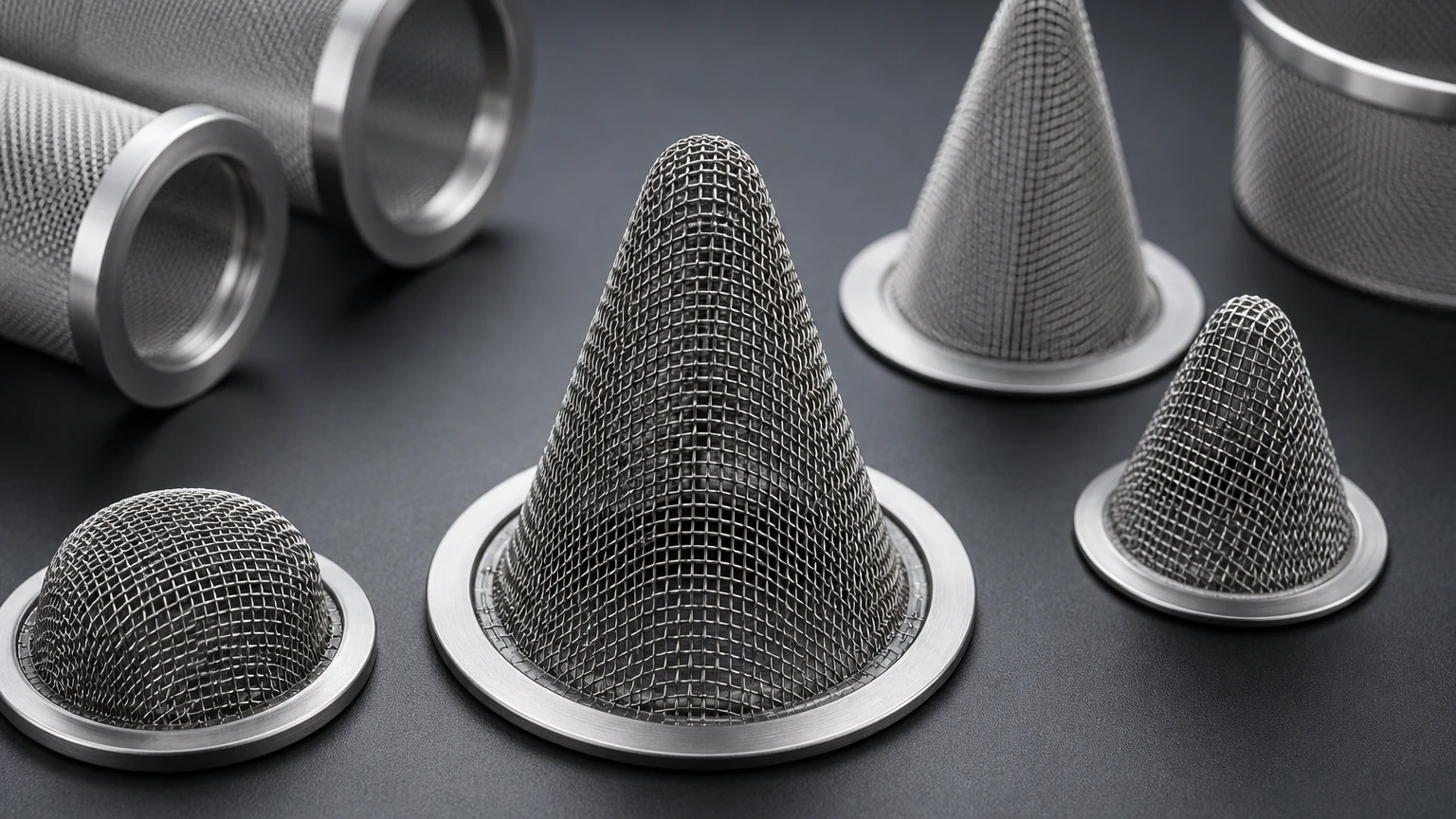
A witches hat drain is a cone-shaped filter element designed to be installed between two pipe flanges. Its distinctive conical shape provides a significantly larger surface area than a standard flat disc filter, which is essential for managing pressure drop and extending the time between cleaning cycles.
These strainers are categorized into two primary roles: temporary (startup) and permanent. During the commissioning of a new piping system, debris such as welding slag, gaskets, and metal shavings are often present. A temporary witches hat drain is installed to capture these large contaminants before they can damage sensitive downstream equipment. In other applications, these strainers are used permanently to provide continuous protection in systems where the particulate load is relatively low but the risk of equipment damage is high.
The engineering advantage of the "witches hat" geometry lies in its ability to distribute the particulate load across a gradient. As fluid flows through the cone, heavier particles are often pushed toward the tip or the base depending on the orientation, preventing the immediate blinding of the entire filter surface. This characteristic is vital for maintaining flow rates in high-velocity industrial environments.
Technical Specifications and Engineering Considerations
When specifying a witches hat drain, material selection and construction methods are the most critical factors. Most industrial applications require stainless steel due to its resistance to corrosion, temperature fluctuations, and mechanical wear.
Material Grades
* SS304: Suitable for general-purpose applications, including water treatment and less aggressive chemical processing. It offers excellent durability and cost-effectiveness.
* SS316/316L: Preferred for pharmaceutical, food and beverage, and marine environments. The addition of molybdenum provides superior resistance to chlorides and pitting corrosion.
* Specialty Alloys: For highly corrosive environments or extreme temperatures, materials like Monel, Hastelloy, or Duplex stainless steel may be required.
Construction Geometry
The construction of the strainer usually involves a perforated metal core that provides structural rigidity, often lined with a fine wire mesh to achieve the desired filtration accuracy. The "open area ratio" (OAR) is a key metric here. An OAR of 100% means the open area of the strainer is equal to the cross-sectional area of the pipe. However, to minimize pressure drop, engineers often specify an OAR of 150% to 200%. This is achieved by increasing the length of the cone, which is why witches hat drains are available in various lengths (short-pattern vs. long-pattern).
Sizing and Performance Evaluation
The performance of a witches hat drain is measured by its ability to remove particles of a specific size while maintaining an acceptable pressure drop (Delta P). Engineers must calculate the maximum allowable pressure drop for the system to ensure that the strainer does not cause cavitation in pumps or significant loss of flow efficiency.
Micron Ratings and Mesh Selection
The choice of mesh size depends on the smallest particle that must be removed to protect downstream equipment. For example, a pump with tight internal clearances might require a 40-mesh or 60-mesh liner, whereas a simple cooling water line might only need a perforated plate with 1/8-inch holes.
Flow Velocity and Structural Integrity
High-velocity flows exert significant mechanical force on the cone. If the strainer is not designed correctly, the cone can collapse or "blow out," sending both the debris and the filter media into the downstream equipment. Engineering teams must confirm that the support structure (the perforated metal) is thick enough to withstand the maximum potential differential pressure that could occur if the strainer becomes completely clogged.
Customization Options for Demanding Applications
Off-the-shelf solutions rarely meet the specific needs of complex industrial processes. Customization is often necessary to ensure the witches hat drain integrates seamlessly into the existing infrastructure. At Kaifil, the focus is on providing tailored solutions that address specific engineering challenges. For more information on tailored designs, visit the Main Page.
Flange Facing and Gasket Surfaces
The "ring" or flange of the witches hat drain must match the piping standard (e.g., ANSI, DIN, or JIS) and the flange facing (Raised Face, Flat Face, or Ring Type Joint). A mismatch here can lead to leaks or improper seating, which compromises the entire filtration process.
Reinforcement and Handling
In high-pressure systems, the tip of the cone is often reinforced with a solid metal cap or additional structural ribs. Furthermore, for ease of maintenance, handles or "tabs" can be welded to the flange ring. These tabs extend outside the pipe flanges, allowing operators to identify the presence of the strainer and providing a grip point for removal during maintenance shutdowns.
Installation Best Practices and Maintenance Cycles
The orientation of a witches hat drain is a common point of discussion among piping engineers. While they can be installed with the cone pointing either upstream or downstream, the application usually dictates the choice.
* Pointed Upstream: This orientation is often used when the goal is to collect debris at the outer edges of the cone, near the pipe wall. It can sometimes offer a slightly better flow profile in specific configurations.
* Pointed Downstream: This is the most common installation. Debris is collected inside the cone, making it easier to remove the contaminants when the strainer is pulled from the line, as the debris is contained within the "hat."
Maintenance Protocols
Because witches hat drains are often "blind" components (hidden between flanges), they require diligent monitoring. Differential pressure gauges should be installed upstream and downstream of the strainer location. A significant increase in Delta P indicates that the strainer is reaching its holding capacity and requires cleaning.
Failure to clean a clogged strainer can lead to structural failure of the mesh or a complete stoppage of process flow. In permanent installations, a bypass line is often recommended so that the strainer can be serviced without shutting down the entire process.
Industry-Specific Applications
Different sectors have unique requirements for their witches hat drain configurations, often dictated by regulatory standards or the nature of the fluid being processed.
Chemical and Petrochemical
In these environments, chemical compatibility is the primary concern. Witches hat drains must resist aggressive solvents and acids. They are frequently used in the suction side of transfer pumps to prevent catastrophic failure caused by stray bolts or scale from storage tanks.
Food, Beverage, and Pharmaceutical
Sanitary standards require that filtration components be made from high-grade stainless steel with specific surface finishes (Ra values) to prevent bacterial growth. Witches hat drains in these industries are often designed for easy sterilization and may use specialized mesh that resists fraying or metal shedding.
Water Treatment and Hydraulics
In large-scale water treatment, these strainers protect membranes and spray nozzles from clogging. In hydraulic systems, they serve as a last-defense mechanism to protect high-pressure valves from any particulate matter that may have bypassed primary filtration units.
Evaluating Total Cost of Ownership
When purchasing a witches hat drain, the initial price is only one component of the total cost. Engineers must also consider the cost of downtime, the ease of cleaning, and the durability of the component. A cheaper, poorly constructed strainer may save money upfront but can lead to thousands of dollars in losses if it collapses and damages a high-value pump.
High-quality manufacturing ensures that the mesh is securely bonded to the perforated support and that the flange ring is perfectly flat for a leak-free seal. By investing in precision-engineered filtration components, facilities can reduce the frequency of unplanned maintenance and extend the service life of their entire piping infrastructure. For a comprehensive look at how professional manufacturing supports these goals, you can explore the resources available on the Main Page.
In conclusion, the witches hat drain is an indispensable component in the industrial toolkit. Whether used as a temporary safeguard during system startup or as a permanent filtration solution, its design must be carefully matched to the flow conditions, particle size, and chemical environment of the application. By focusing on technical specifications such as the open area ratio, material grade, and structural reinforcement, engineers can ensure reliable performance and robust protection for their most critical assets.
