


Filtrazione Aria
In industrial environments, air filtration—or *filtrazione aria*—is a critical process that extends far beyond simple dust removal. It is a fundamental engineering requirement designed to protect sensitive machinery, ensure the purity of chemical reactions, maintain sterile conditions in pharmaceutical production, and safeguard the health of the workforce. For engineers and procurement specialists, selecting the right filtration media is a balance of efficiency, durability, and total cost of ownership.
While disposable filters made of paper or synthetic fibers are common in commercial HVAC systems, industrial applications often demand more robust solutions. Stainless steel wire mesh and sintered metal components have become the gold standard for demanding air filtration tasks where high temperatures, corrosive gases, or high-pressure differentials are present. As a professional manufacturer, Kaifil specializes in these high-performance stainless steel filtration solutions, providing the technical precision required for modern industrial standards.
Technical Principles of Industrial Air Filtration
To effectively implement a system for *filtrazione aria*, one must understand the physical mechanisms by which particles are captured. Industrial air filters do not act as simple sieves; rather, they employ several distinct physical phenomena to remove contaminants from the gas stream.
Interception
Interception occurs when a particle follows a line of flow in the air stream but comes within one particle radius of a filter fiber or wire. The particle then makes contact with the fiber and is captured. This mechanism is most effective for particles in the mid-size range (typically 0.1 to 1 micron).
Inertial Impaction
Larger, heavier particles often cannot adjust to the rapid changes in air direction as the stream moves through the dense mesh of a filter. Due to their inertia, these particles continue on a straight path, colliding with the filter media and becoming trapped. This is the primary mechanism for capturing particles larger than 1 micron at higher velocities.
Diffusion (Brownian Motion)
The smallest particles (typically less than 0.1 microns) do not follow the air stream lines. Instead, they move erratically due to collisions with gas molecules. This zig-zag motion increases the probability that the particle will contact the filter media. Diffusion is most effective at lower air velocities.
For those seeking specific technical data on how different mesh weaves influence these capture mechanisms, visiting the Main Page provides access to detailed product specifications and material performance charts.
The Advantages of Stainless Steel Media in Air Filtration
When evaluating materials for *filtrazione aria*, engineers must consider the environment in which the filter will operate. Stainless steel offers several distinct advantages over traditional media:
1. Thermal Stability: Many industrial processes involve high-temperature exhaust or hot gas filtration. Synthetic filters often fail or off-gas at temperatures exceeding 100°C. Stainless steel 304 or 316L can withstand temperatures upward of 400°C to 800°C, depending on the alloy and structural design.
2. Chemical Resistance: In chemical processing and petrochemical industries, the air or gas stream may contain corrosive vapors. Stainless steel provides excellent resistance to a wide range of acids, bases, and organic solvents, preventing premature filter degradation.
3. Structural Integrity: High-pressure air systems or high-velocity intake streams can cause flexible filter media to deform or tear. Stainless steel wire mesh, particularly when pleated or reinforced with a perforated metal core, maintains its shape and filtration accuracy under significant mechanical stress.
4. Cleanability and Reusability: Unlike disposable filters that contribute to industrial waste streams, stainless steel filter cartridges are washable. They can be cleaned via ultrasonic baths, backwashing, or chemical cleaning, significantly reducing long-term operational costs.
Engineering Considerations for Filter Selection
Selecting a solution for *filtrazione aria* requires a deep dive into the specific parameters of the application. An incorrectly specified filter can lead to excessive energy consumption, equipment failure, or contaminated end-products.
Micron Rating and Efficiency
The micron rating defines the size of particles the filter is intended to remove. It is important to distinguish between "nominal" and "absolute" ratings. A nominal rating indicates the filter can trap a large percentage of particles of a certain size, while an absolute rating (often achieved through precision-woven Dutch weave mesh) indicates that no particles larger than the specified size can pass through the media.
Pressure Drop (ΔP)
Every filter introduces resistance to airflow. The initial pressure drop is the resistance of a clean filter at a specific flow rate. As the filter captures contaminants, the pressure drop increases. Engineers must calculate the maximum allowable pressure drop before the system's fans or compressors can no longer maintain the required flow rate. Utilizing high-porosity stainless steel mesh allows for high flow rates with minimal initial resistance.
Face Velocity
Face velocity is the speed of the air as it approaches the filter surface. If the velocity is too high, it may strip captured particles from the media (re-entrainment) or cause premature clogging. Custom-designed filter housings and pleated elements increase the effective surface area, allowing for lower face velocities even in high-volume systems.
Applications of High-Precision Air Filtration
The necessity for specialized *filtrazione aria* is prevalent across various high-stakes industries where air purity is non-negotiable.
Chemical and Petrochemical Processing
In these sectors, air filtration is used for catalyst recovery, protecting compressors from abrasive dust, and cleaning vent gases before they are released into the atmosphere. The ability of stainless steel to resist corrosive chemicals makes it the preferred choice for these harsh environments.
Food and Beverage Production
Air used in the packaging, drying, or aeration of food products must be free of contaminants and microbial life. Stainless steel filters are ideal here because they are non-shedding (unlike fiberglass) and can be sterilized using steam-in-place (SIP) or clean-in-place (CIP) protocols, ensuring compliance with food safety regulations.
Pharmaceutical Manufacturing
Cleanroom environments and sterile air supply systems require absolute filtration. Sintered metal fiber felt and multi-layer wire mesh laminates provide the necessary efficiency to remove fine particulates while maintaining the durability needed for repeated sterilization cycles.
Hydraulic and Lubrication Systems
While often thought of as liquid filtration, many hydraulic reservoirs use "breather" filters to clean the air that enters the tank as fluid levels fluctuate. High-quality *filtrazione aria* at the breather prevents atmospheric moisture and dust from contaminating the hydraulic oil, extending the life of pumps and valves.
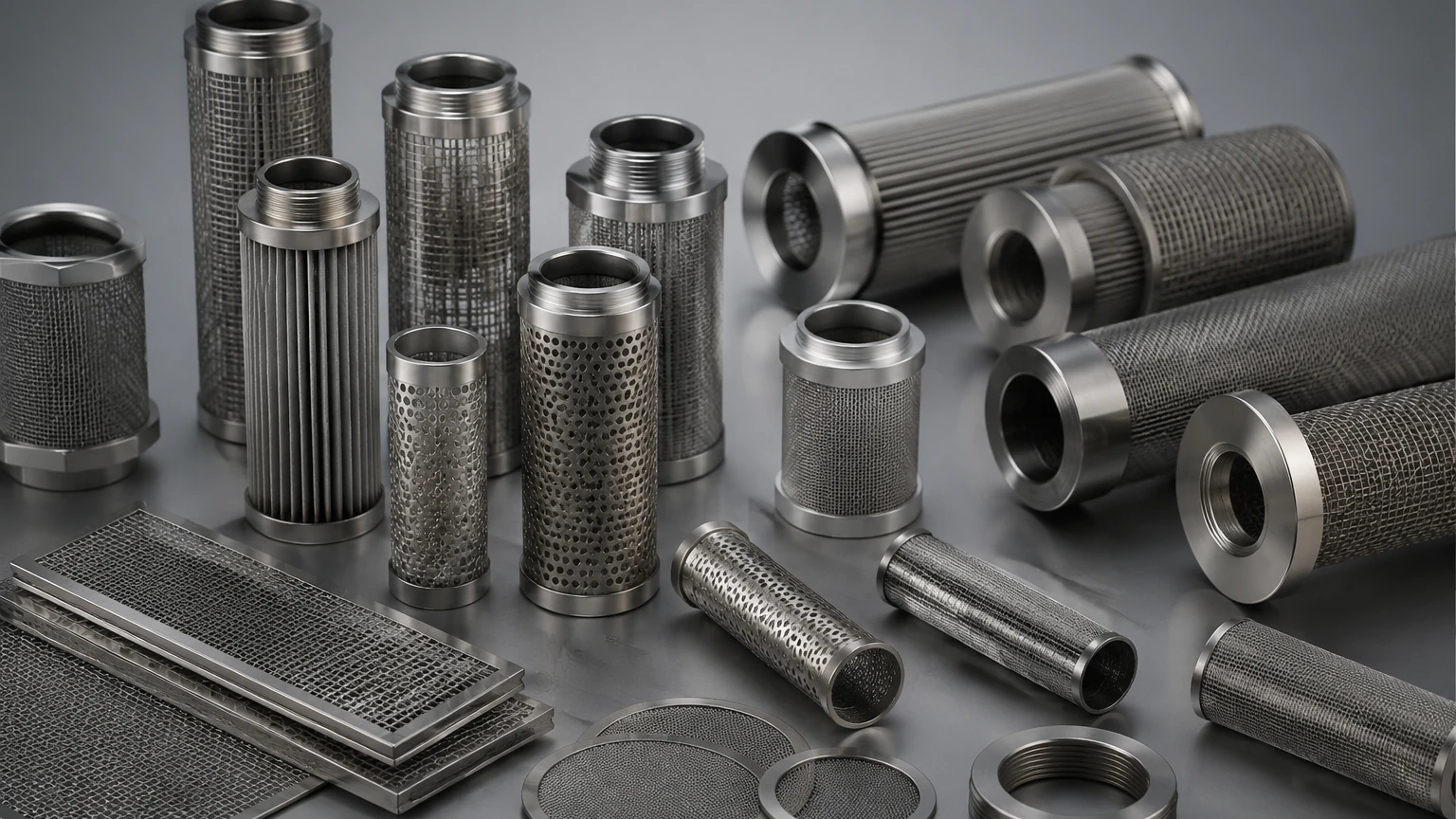
Customization and OEM Solutions
No two industrial processes are identical, which is why customization is a core component of effective *filtrazione aria*. Standard off-the-shelf filters often fall short when faced with unique space constraints, unusual flow rates, or specific mounting requirements.
Kaifil provides comprehensive OEM services, allowing engineers to specify every aspect of the filter component. This includes:
* Material Selection: Choosing between 304, 316L, 310S, or Monel depending on the temperature and chemical profile.
* Structural Design: Options for pleated elements to maximize surface area, or cylindrical cartridges for high-pressure durability.
* End Fittings: Custom flanges, threaded connections, or O-ring seals to ensure a bypass-free installation into existing machinery.
By working closely with a manufacturer that understands the nuances of metal filtration, purchasing teams can ensure they receive a component that is optimized for their specific equipment rather than a "best-fit" compromise.
Maintenance and Total Cost of Ownership (TCO)
When budgeting for *filtrazione aria*, it is a common mistake to focus solely on the initial purchase price. Disposable filters have a lower upfront cost but require frequent replacement, labor for change-outs, and disposal fees for contaminated media.
In contrast, a stainless steel filtration system represents a capital investment that pays dividends over time. The durability of the metal ensures a long service life, often lasting as long as the machinery itself. The ability to clean and reuse the elements eliminates the recurring cost of replacement filters and reduces the environmental impact of the facility.
To ensure the longevity of these components, a regular maintenance schedule should be established. Monitoring the pressure differential across the filter is the most effective way to determine when cleaning is required. Once the ΔP reaches a predetermined limit, the element can be removed, cleaned according to the manufacturer's guidelines, and returned to service with its original filtration efficiency restored.
Conclusion
Effective *filtrazione aria* is a pillar of industrial operational efficiency. Whether the goal is to protect high-value equipment, ensure product purity, or comply with environmental regulations, the choice of filtration media is paramount. Stainless steel wire mesh and custom metal filter components offer the resilience, precision, and cost-effectiveness that modern industry demands.
For engineering teams looking to optimize their filtration processes, understanding the technical requirements of their specific application is the first step. For more information on custom stainless steel filter cartridges and precision metal components, please visit the Main Page to review product options and application support.
