


Witches Hat Filter
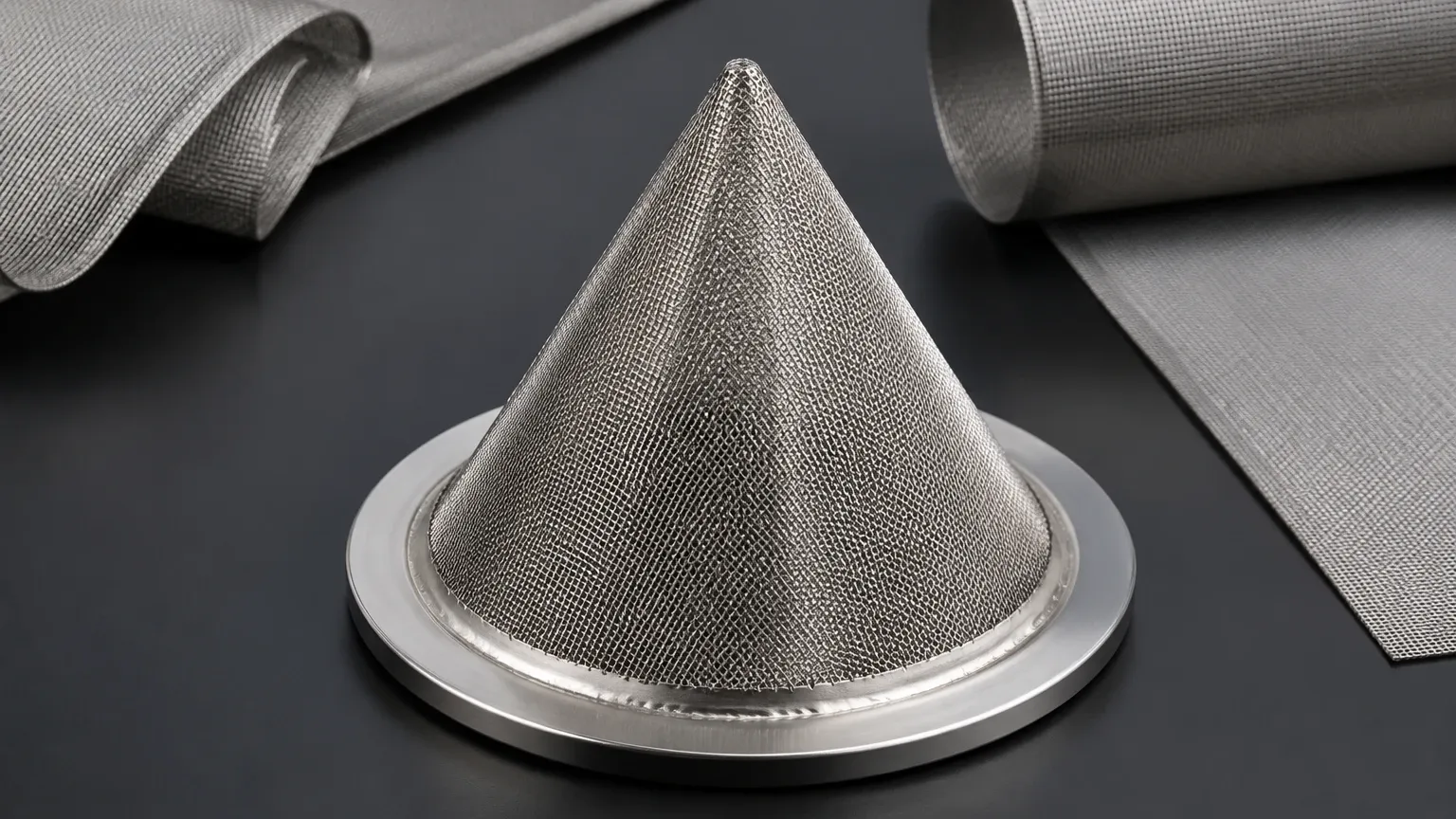
In the landscape of industrial fluid handling, the witches hat filter—technically referred to as a conical strainer—serves as a fundamental component for protecting sensitive downstream equipment. These temporary or permanent filtration devices are designed to be inserted between pipe flanges to capture solid contaminants that could otherwise damage pumps, valves, meters, and heat exchangers. Named for its distinctive conical shape, the witches hat filter provides a high surface area-to-flow ratio, making it an efficient solution for both startup commissioning and ongoing process protection.
For engineers and procurement specialists, selecting the right filtration component requires a deep understanding of material properties, structural design, and fluid dynamics. As a specialist in custom stainless steel filtration, Kaifil provides high-performance components tailored to these demanding industrial environments. For a comprehensive overview of available filtration technologies, technical professionals can refer to the Main Page of our product catalog.
Engineering Design and Geometric Considerations
The primary advantage of the witches hat filter lies in its geometry. The conical shape allows for a larger filtration surface area compared to a flat disc filter of the same diameter. This increased area is critical for managing pressure drop and extending the time between cleaning cycles.
Cone Angle and Length
When specifying a witches hat filter, the length-to-diameter (L:D) ratio is a vital engineering parameter. A longer cone provides more surface area, which results in a lower initial pressure drop and a higher dirt-holding capacity. Standard designs often feature a 100%, 150%, or 200% open area relative to the cross-sectional area of the pipe. In high-velocity systems, a longer cone (e.g., 300% open area) may be necessary to prevent excessive turbulence and mechanical stress on the mesh.
Construction Materials
Industrial filtration demands materials that can withstand corrosive environments and thermal fluctuations. Stainless steel is the industry standard for conical strainers due to its durability and resistance to oxidation.
- Grade 304 Stainless Steel: Suitable for general industrial applications, including water treatment and non-corrosive chemical processing.
- Grade 316/316L Stainless Steel: Preferred for pharmaceutical, food and beverage, and marine applications where superior resistance to pitting and chloride corrosion is required. 316L (low carbon) is specifically chosen when welding is involved to prevent intergranular corrosion.
- Specialty Alloys: For highly aggressive environments, materials like Monel or Hastelloy may be utilized, though stainless steel remains the most versatile choice for the majority of B2B applications.
Structural Integrity and Media Selection
A witches hat filter is rarely a single piece of mesh. Its structural integrity depends on a multi-layered construction that balances filtration fineness with mechanical strength.
Perforated Metal Support
Because the filter is subjected to significant differential pressure, the fine filtration mesh is typically supported by a perforated metal core or outer cage. This support layer prevents the mesh from collapsing or deforming under the force of the fluid flow. The hole pattern and bridge width of the perforated metal are engineered to maximize open area while maintaining the necessary hoop strength.
Filtration Media Options
Depending on the required micron rating, the filtration media can vary:
- Wire Mesh: Available in various weaves (plain, twilled, or Dutch weave), wire mesh offers precise filtration from 5 microns up to several millimeters. It is the preferred choice for removing fine particulates.
- Perforated Plate: For coarse filtration (typically above 1mm), a standalone perforated plate may be used. This is common in "startup strainers" where the goal is to catch large debris like welding slag, bolts, or scale left in the pipes after construction.
Performance Evaluation: Pressure Drop and Flow Dynamics
For any engineer, the impact of a filter on system hydraulics is a primary concern. Every witches hat filter introduces a degree of resistance to the flow, measured as pressure drop (ΔP).
Calculating Differential Pressure
The total pressure drop across a conical strainer is a function of the fluid's viscosity, density, and velocity, as well as the filter's open area. As the filter captures debris, the effective open area decreases, leading to an exponential increase in ΔP. It is standard practice to install pressure gauges upstream and downstream of the filter. A common rule of thumb is to clean or replace the filter when the differential pressure reaches 10-15 psi, although this varies by system design.
Flow Direction: Point Up vs. Point Down
The orientation of the witches hat filter significantly affects its performance and how it handles debris:
- Point Up (Facing the flow): In this configuration, debris tends to settle around the base of the cone (near the flange). This is often used in vertical piping to ensure that solids do not fall back down the pipe when flow stops.
- Point Down (Point with the flow): Debris is collected inside the cone. This is the more common orientation for horizontal runs, as it concentrates the captured material in the center of the cone, making it easier to remove during maintenance.
Industrial Applications: From Commissioning to Protection
The versatility of the witches hat filter makes it a staple across several critical sectors. Its role changes depending on whether the application is temporary or permanent.
Commissioning and Startup
During the construction of new industrial plants, piping systems inevitably accumulate debris. Before expensive equipment like turbines or high-pressure pumps are brought online, witches hat filters are installed as "startup strainers." Once the system has been flushed and the fluid is clear, these filters are often removed and replaced with permanent, low-pressure-drop spacers or finer permanent filtration units.
Chemical and Petrochemical Processing
In chemical manufacturing, maintaining the purity of catalysts and protecting sensitive instrumentation is paramount. Stainless steel conical strainers are used to filter out suspended solids in process streams, ensuring that downstream reactors operate efficiently. The ability to customize the mesh to specific chemical compatibilities is a key reason why engineers visit the Main Page to consult with manufacturing experts.
Food, Beverage, and Pharmaceuticals
These industries require high levels of hygiene. Witches hat filters used here must feature smooth welds and high-grade finishes (often electropolished) to prevent bacterial growth. They are frequently used to protect filling machines and heat exchangers from any particulate matter that might have entered the system during raw material handling.
Customization Parameters for Engineering Teams
Standard off-the-shelf strainers often fail to meet the unique requirements of specialized industrial processes. Customization is where manufacturers like Kaifil provide the most value.
Flange Specifications
The "hat" of the filter—the flange ring—must match the piping standards of the system. Whether the system uses ANSI, DIN, or JIS standards, the ring thickness and diameter must be precise to ensure a leak-proof seal between the pipe flanges. Options include flat face (FF), raised face (RF), or ring-type joint (RTJ) configurations.
Reinforced Construction
For high-pressure applications, the cone may require additional reinforcement rings or a heavier gauge perforated metal. Engineers must specify the maximum expected differential pressure to ensure the filter does not suffer mechanical failure, which could send both the debris and pieces of the filter into the downstream equipment.
Sizing for High Viscosity
When filtering high-viscosity fluids like heavy oils or resins, the standard open area calculations may not suffice. Increasing the length of the cone or utilizing a pleated mesh design can provide the necessary surface area to maintain flow rates without exceeding pressure limits.
Installation Best Practices and Maintenance Cycles
Proper installation is as important as the design of the filter itself. Incorrectly installed witches hat filters can lead to bypass (where fluid flows around the filter) or structural failure.
Gasket Selection and Sealing
The filter is sandwiched between two pipe flanges, usually requiring a gasket on both sides of the filter ring. The choice of gasket material (EPDM, PTFE, Viton, etc.) must match the process fluid and temperature. Ensuring even torque on the flange bolts is critical to preventing leaks.
Cleaning and Replacement
Unlike self-cleaning filters, a witches hat filter is a static device that requires manual intervention. In temporary applications, the filter is removed once the system is clean. In permanent applications, a scheduled maintenance cycle must be established. Because these filters are often located inside the piping, the system must be depressurized and drained before the filter can be accessed. This downtime should be factored into the total cost of ownership.
Inspection for Fatigue
Repeated cleaning and exposure to high-velocity flow can cause metal fatigue, especially at the weld points between the mesh and the flange ring. During every maintenance cycle, the filter should be inspected for broken wires or signs of bypass. For mission-critical applications, having a spare filter on hand is a standard engineering recommendation.
Conclusion: Selecting a Reliable Filtration Partner
The witches hat filter is a deceptively simple component that requires precise engineering to function effectively in industrial environments. From the selection of 316L stainless steel for corrosion resistance to the calculation of open area ratios for hydraulic efficiency, every detail matters. Choosing a manufacturer that understands these technical nuances is essential for ensuring the longevity of your equipment and the purity of your process.
Kaifil specializes in the production of high-quality, custom-engineered stainless steel filtration solutions. Whether you require a standard startup strainer or a complex, multi-layered conical filter for a high-pressure application, our team provides the technical expertise needed to meet your specifications. To explore our full range of capabilities and technical resources, please visit the Main Page and connect with our engineering team for a detailed consultation on your next project.
