


Wound Filter Cartridges
In the landscape of industrial liquid filtration, wound filter cartridges—often referred to as string-wound filters—represent one of the most established and versatile technologies for depth filtration. These components are engineered to remove suspended solids from a process stream by trapping particles throughout the entire thickness of the filter media. For engineers and procurement professionals, understanding the technical nuances of winding patterns, material compatibility, and structural integrity is essential for optimizing filtration efficiency and minimizing the total cost of ownership.
As a manufacturer specializing in precision filtration, Kaifil provides high-performance solutions designed for demanding industrial environments. While many applications rely on the robust nature of stainless steel mesh, wound filter cartridges serve as a critical primary or pre-filtration stage in many systems. Navigating the selection process requires a deep dive into the mechanical properties and application-specific requirements that define these filters.
The Engineering Behind Wound Filter Cartridges
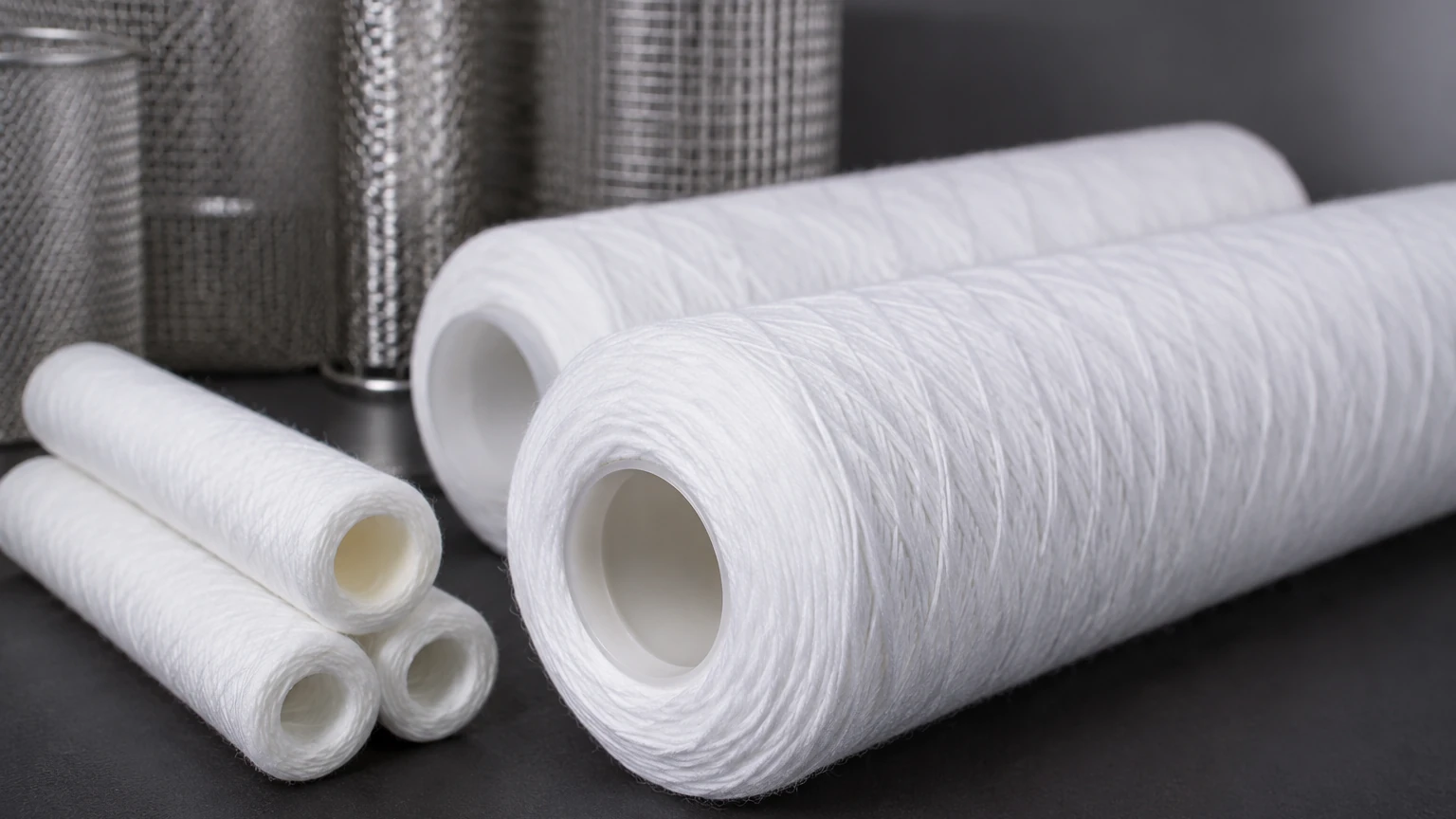
Wound filter cartridges are manufactured by winding layers of textile yarn onto a perforated central core. The winding process is not random; it follows a precise geometric pattern that creates diamond-shaped openings. These openings are designed to be larger at the outer surface and progressively smaller toward the core. This gradient density is the hallmark of effective depth filtration, allowing larger particles to be captured on the outer layers while finer particles are trapped deeper within the media.
The Role of the Central Core
The central core provides the structural backbone of the cartridge, preventing it from collapsing under the differential pressure (ΔP) generated during the filtration cycle. In standard industrial applications, cores are often made of polypropylene. However, for high-temperature processes or applications involving aggressive solvents, stainless steel cores (typically Grade 304 or 316) are required. A metallic core ensures that the cartridge maintains its cylindrical geometry even as the filter cake builds up and the pressure increases.
Winding Precision and Micron Ratings
The filtration accuracy, or micron rating, of wound filter cartridges is determined by the tension of the yarn during the winding process and the specific pattern used. Tighter winding results in a lower micron rating (finer filtration), while a looser wrap allows for higher flow rates and the capture of larger particles. It is important to note that most wound cartridges are rated "nominally," meaning they are designed to intercept a high percentage of particles at their rated size, though they may not provide the 99.9% efficiency associated with absolute-rated pleated membranes.
Material Selection and Chemical Compatibility
One of the primary advantages of wound filter cartridges is the ability to customize the material composition to suit the chemical and thermal profile of the fluid being processed. Selecting the wrong material can lead to media degradation, fiber migration, or chemical leaching, all of which compromise the purity of the filtrate.
Polypropylene (PP)
Polypropylene is the most common material for both the yarn and the core in general-purpose applications. It offers excellent chemical resistance to most acids, alkalis, and salts. It is widely used in water treatment, food and beverage processing, and plating solutions. However, PP has a temperature limit typically around 60°C to 80°C (140°F to 176°F), beyond which the fibers may soften and lose their structural integrity.
Cotton
Bleached or unbleached cotton is frequently used for filtering oils, fuels, and solvents where polypropylene might not be chemically compatible. Cotton is also preferred in applications involving higher temperatures (up to 120°C/250°F) when paired with a tin-plated or stainless steel core. In the food industry, FDA-compliant bleached cotton ensures that no natural oils or impurities from the cotton plant migrate into the process stream.
Fiberglass and High-Temperature Synthetics
For extreme environments, such as high-temperature chemical processing or steam filtration, fiberglass yarn is utilized. Fiberglass can withstand temperatures exceeding 400°C (750°F). Other synthetic materials like polyester or polyphenylene sulfide (PPS) are selected when specific resistance to oxidation or specific chemical solvents is required. For more information on specialized material configurations, engineers can visit our Main Page to explore custom manufacturing options.
Key Performance Metrics for Industrial Selection
When evaluating wound filter cartridges for a specific system, engineers must look beyond the initial purchase price and focus on performance metrics that impact operational uptime.
1. Dirt-Holding Capacity: This refers to the total mass of contaminants the filter can retain before reaching its terminal differential pressure. A high dirt-holding capacity reduces the frequency of filter changes, lowering labor costs and process downtime.
2. Flow Rate vs. Pressure Drop: Every filter introduces resistance to the flow. A well-designed wound cartridge should offer a low initial pressure drop to maximize the available energy for the process. If the initial ΔP is too high, the effective life of the filter is significantly shortened.
3. Fiber Migration: A common concern with lower-quality wound filters is "unloading" or fiber migration, where fragments of the yarn break off and enter the downstream fluid. High-quality manufacturing processes use continuous-filament yarns or specialized singeing techniques to minimize this risk.
4. Structural Stability: Under high pressure, some wound filters may experience "channeling," where the fluid bypasses the media through gaps created by shifting yarns. Precision winding patterns are essential to prevent this failure mode.
Common Applications in Industrial Filtration
Wound filter cartridges are utilized across a broad spectrum of industries due to their cost-effectiveness and ability to handle high sediment loads.
* Pre-Filtration for Reverse Osmosis (RO): In water desalination and purification plants, wound filters are used to remove silt, sand, and scale before the water reaches the expensive RO membranes. This extends the life of the membranes and ensures system efficiency.
* Chemical Processing: From bulk chemical production to fine specialty chemicals, these cartridges are used to clarify reagents and remove precipitates. The ability to use stainless steel cores makes them suitable for aggressive chemical environments.
* Food and Beverage: They are used for the clarification of edible oils, syrups, and beverages. In these applications, the use of FDA-compliant materials is a non-negotiable requirement.
* Oil and Gas: Wound filters play a role in filtering completion fluids, produced water, and amine loops in refineries, where they must handle high flow rates and heavy particulate loads.
* Metal Finishing and Plating: The removal of metallic fines and impurities from plating baths is essential for maintaining the quality of the finished product. Polypropylene wound filters are the standard choice here due to their resistance to corrosive acids.
Evaluating Total Cost of Ownership (TCO)
While wound filter cartridges are often viewed as a commodity, the total cost of ownership is heavily influenced by the quality of the filter and its alignment with the application. A cheaper, poorly wound cartridge may require replacement twice as often as a precision-engineered alternative.
Engineers should consider the following when calculating TCO:
* Frequency of Change-outs: How much production time is lost during a filter swap?
* Disposal Costs: In industries dealing with hazardous materials, the volume of spent filters can lead to significant disposal fees. High dirt-holding capacity reduces the volume of waste.
* Downstream Protection: If a primary filter fails to capture particles or sheds fibers, it can damage expensive downstream equipment like high-pressure pumps or precision spray nozzles.
For organizations looking to optimize their filtration processes, Kaifil offers technical support to ensure that the selected filtration media—whether it be wound cartridges or custom stainless steel components—meets the exact demands of the environment. You can find detailed technical specifications and support on our Main Page.
Best Practices for Installation and Maintenance
To ensure the longevity and effectiveness of wound filter cartridges, certain operational protocols should be followed:
Monitoring Differential Pressure
The most reliable indicator of a filter’s status is the differential pressure across the housing. Most industrial systems are designed for a filter change-out when the ΔP reaches 1.5 to 2.0 bar (20–30 psi). Operating beyond this point risks media collapse or "breakthrough," where the pressure forces contaminants through the filter media and into the clean side of the system.
Proper Seating and Sealing
When installing new cartridges, ensuring a proper seal is vital. Most wound filters are "Double Open End" (DOE) and rely on the compression of the cartridge ends against the housing seats. If the cartridge is not centered or the compression nut is not tightened correctly, fluid will bypass the filter entirely. Some high-performance versions include integrated gaskets (such as EPDM or Viton) to provide a more positive seal.
Storage and Handling
Filter cartridges should be stored in a clean, dry environment in their original packaging to prevent contamination before use. For applications in the pharmaceutical or food sectors, handling should be done with clean gloves to prevent the transfer of skin oils or bacteria to the filter surface.
Conclusion
Wound filter cartridges remain a cornerstone of industrial depth filtration because of their adaptability, simplicity, and cost-effectiveness. By carefully selecting the yarn material, core type, and micron rating, engineers can solve complex filtration challenges across a variety of fluid types.
As a professional manufacturer, Kaifil understands that filtration is rarely a one-size-fits-all solution. Whether your application requires the high-dirt capacity of a string-wound cartridge or the extreme durability of a custom-designed stainless steel filter, we provide the engineering expertise to support your goals. For a comprehensive look at our filtration solutions and to discuss your specific project requirements, please visit our Main Page.
