


Zelfreinigende Filters
In modern industrial processing, the demand for continuous operation and minimal manual intervention has driven the adoption of advanced filtration technologies. Among these, zelfreinigende filters (self-cleaning filters) stand out as a critical component for maintaining fluid purity without the downtime associated with traditional bag or cartridge changes. For engineers and facility managers, understanding the technical nuances, material requirements, and operational mechanics of these systems is essential for optimizing production efficiency and protecting downstream equipment.
Industrial filtration is rarely a static process. Fluid characteristics, particle loads, and flow rates fluctuate, necessitating a filtration solution that can adapt in real-time. Zelfreinigende filters utilize automated mechanisms to remove accumulated debris from the filter element while the system remains online, ensuring a steady flow and consistent pressure levels. This article examines the engineering principles, selection criteria, and technical advantages of these systems, specifically focusing on the role of high-quality stainless steel components in demanding environments.
Engineering Principles of Self-Cleaning Filtration
The core functionality of a self-cleaning filter lies in its ability to detect a rise in differential pressure—the difference between the inlet and outlet pressure—and trigger a cleaning cycle. As contaminants accumulate on the surface of the filter element, the flow path narrows, causing pressure to build. Once a pre-set threshold is reached, the cleaning mechanism is activated.
There are several primary methods used to achieve this self-cleaning action:
1. Backwashing (Reverse Flow)
In backwashing systems, a portion of the filtered fluid (or an external clean fluid source) is directed backward through the filter element. This reverse flow dislodges particles trapped in the mesh or wedge wire, flushing them out through a dedicated drain valve. This method is highly effective for removing non-deformable solids and is commonly used in water treatment and cooling tower applications.
2. Mechanical Scraping
For fluids with high viscosity or sticky contaminants, mechanical scraping is often the preferred method. A scraper blade, constructed from reinforced polymers or metal, moves across the interior or exterior surface of the filter element. This physical action shears away the accumulated "filter cake," which then settles into a collection chamber at the bottom of the housing for periodic purging. This approach is widely utilized in the food and beverage industry for syrups, chocolate, and oils, as well as in the chemical industry for resins and adhesives.
3. Suction Scanning
Suction scanning combines the principles of backwashing with localized high-velocity cleaning. A small scanning nozzle moves in a spiral pattern across the filter screen. As the nozzle passes over the mesh, it creates a localized vacuum that sucks contaminants off the screen and into the waste line. This method uses significantly less flush water than traditional backwashing, making it an efficient choice for large-scale operations.
Material Selection and the Role of Stainless Steel
The performance of zelfreinigende filters is fundamentally tied to the integrity of the filter element. In industrial settings where corrosion, high temperatures, and high-pressure differentials are common, stainless steel is the material of choice. As a specialized manufacturer, Kaifil emphasizes the use of high-grade alloys to ensure longevity and precision.
Stainless Steel Wire Mesh and Sintered Components
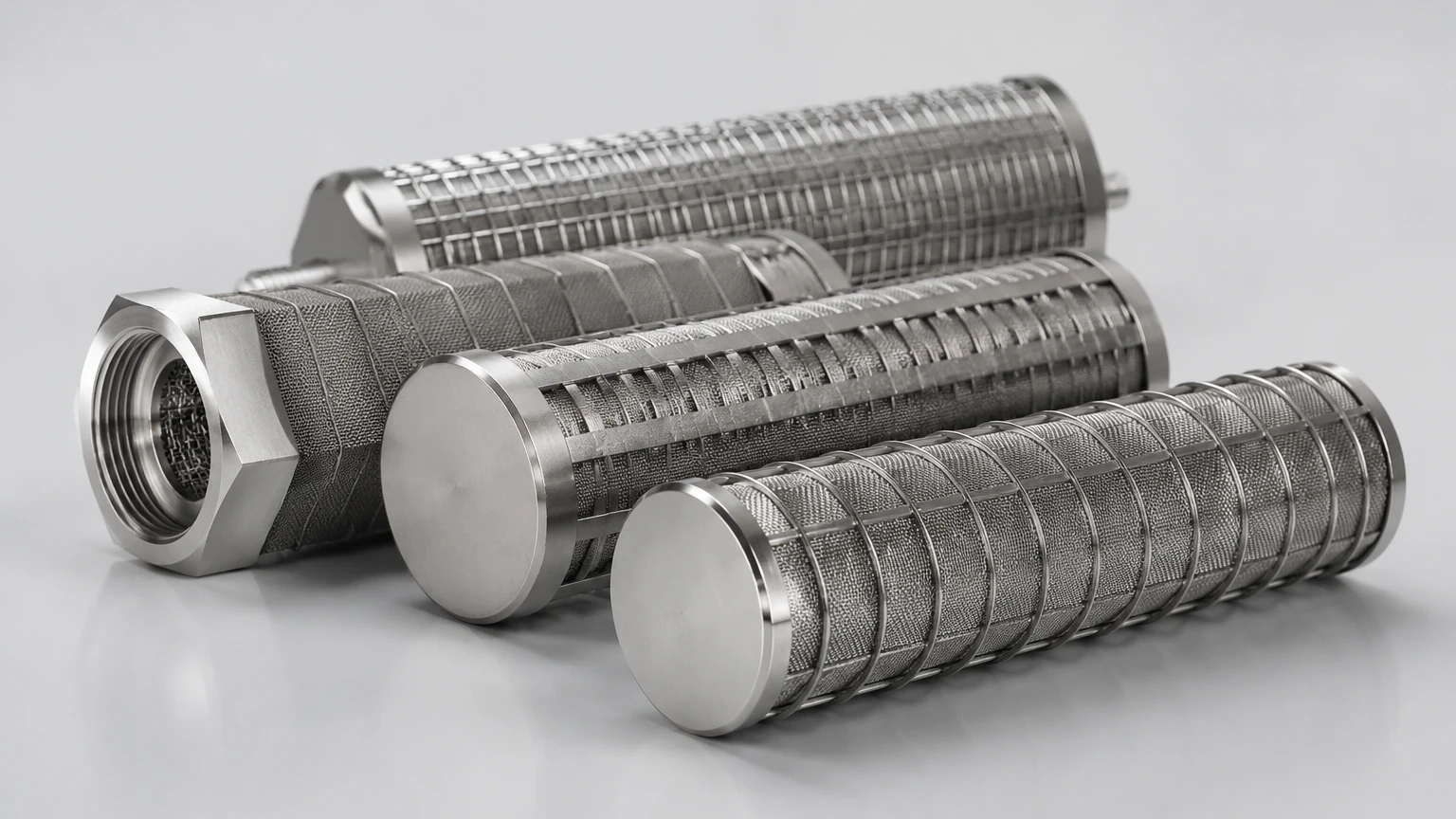
Most self-cleaning systems employ either wedge wire (V-wire) or multi-layer sintered wire mesh.
* Wedge Wire: This provides a robust, non-clogging surface. The V-shaped profile of the wire ensures that particles only make contact at two points, reducing the likelihood of permanent entrapment and making the cleaning cycle more effective.
* Sintered Mesh: For applications requiring finer filtration (down to 1 micron), multi-layer sintered mesh offers exceptional mechanical strength. By diffusion-bonding multiple layers of stainless steel wire cloth, manufacturers create a medium that can withstand the repetitive stresses of backwashing and high-pressure pulses without deforming.
Selecting the correct grade of stainless steel—typically 304, 316L, or specialty alloys like Duplex—is vital for chemical compatibility. For instance, in pharmaceutical or food-grade applications, 316L is preferred for its superior resistance to pitting and its ability to withstand rigorous Clean-in-Place (CIP) protocols.
Key Selection Criteria for Industrial Applications
When specifying a self-cleaning filter system, engineers must look beyond the initial flow rate. A comprehensive evaluation of the process fluid and the operational environment is necessary to prevent premature failure or inefficient cleaning cycles.
Particle Characteristics and Loading
The nature of the solids being removed is the most significant factor. Are the particles hard, soft, fibrous, or gelatinous? High concentrations of fibrous material can sometimes "intertwine" with certain types of mesh, requiring specific scraper designs. Additionally, the Total Suspended Solids (TSS) count will determine how frequently the filter must clean itself. If the loading is too high for the filter's surface area, the system may enter a continuous cleaning loop, leading to excessive waste and wear.
Viscosity and Temperature
Fluid viscosity directly impacts the pressure drop across the filter. High-viscosity fluids require larger surface areas and more robust mechanical cleaning components. Temperature also plays a role in material expansion and seal selection. Ensuring that the internal components of the filter can maintain their tolerances at operating temperatures is a critical engineering consideration.
Micron Rating and Efficiency
Defining the required filtration fineness is a balance between protection and performance. While a finer micron rating provides better protection for downstream equipment, it also increases the frequency of cleaning cycles. Engineers must determine the "absolute" versus "nominal" rating required for their specific process to ensure the Main Page of their filtration strategy aligns with their production goals.
Operational Benefits and Total Cost of Ownership (TCO)
While the initial capital expenditure for zelfreinigende filters may be higher than for manual systems, the Total Cost of Ownership is significantly lower in the long term. The transition to automated filtration offers several quantifiable advantages:
* Reduced Labor Costs: Manual filter cleaning is labor-intensive and often requires the system to be shut down. Self-cleaning systems eliminate the need for operators to open housings, handle contaminated elements, or perform manual wash-downs.
* Elimination of Consumables: Traditional bag and cartridge filters create a continuous stream of waste and recurring purchasing costs. Stainless steel self-cleaning elements are designed for years of service, drastically reducing the environmental footprint and operational overhead.
* Increased Safety: In industries handling hazardous chemicals or high-temperature fluids, minimizing operator exposure is paramount. Automated systems allow for a "closed-loop" process, where contaminants are removed and discharged without exposing personnel to the process stream.
* Process Consistency: Because the filter cleans itself based on pressure or time, the flow remains constant. This prevents the fluctuations in pressure that can negatively affect the performance of spray nozzles, heat exchangers, and other sensitive downstream components.
Customization and Integration in Industrial Systems
No two industrial processes are identical, which is why customization is a hallmark of high-performance filtration. Standard off-the-shelf units may not account for specific spatial constraints or unique chemical interactions. Manufacturers like Kaifil specialize in providing tailored solutions that integrate seamlessly into existing infrastructure.
Customization options often include:
* Housing Geometry: Modifying inlet and outlet orientations to fit into tight piping configurations.
* Control Systems: Integrating the filter's PLC (Programmable Logic Controller) with the facility's central SCADA system for remote monitoring and data logging.
* Specialized Coatings: Applying surface treatments to stainless steel components to further reduce friction for scraper-based systems or to enhance corrosion resistance in highly acidic environments.
* Seal Selection: Choosing between EPDM, Viton, or PTFE seals based on the chemical profile of the fluid.
For engineers, the ability to collaborate with a manufacturer on the design phase ensures that the final product is optimized for the specific challenges of their industry, whether it be the high-hygiene requirements of the dairy industry or the rugged demands of oil and gas processing.
Maintenance and Performance Optimization
Although zelfreinigende filters are designed for automation, they are not "set and forget" systems. A proactive maintenance schedule is necessary to ensure long-term reliability. Key areas for inspection include:
1. Seal Integrity: Dynamic seals in scraper systems and valve seals in backwash systems are wear parts. Regular inspection prevents bypass and external leaks.
2. Mechanism Calibration: Ensuring the differential pressure sensors are calibrated correctly is vital. If the sensor drifts, the filter may clean too often (wasting fluid) or not often enough (risking element damage).
3. Element Inspection: While stainless steel elements are durable, they should be periodically inspected for signs of fatigue or mechanical damage, especially in systems handling abrasive particles at high velocities.
By monitoring the frequency and duration of cleaning cycles, operators can also gain insights into the health of the overall process. An unexpected increase in cleaning frequency may indicate an upstream process upset or a change in raw material quality.
Conclusion
The implementation of zelfreinigende filters represents a strategic investment in process reliability and operational efficiency. By automating the removal of contaminants and utilizing the durability of stainless steel filtration media, industrial facilities can achieve a level of continuity that manual systems simply cannot match.
Whether the goal is to protect high-pressure pumps, ensure the clarity of a final food product, or manage wastewater discharge, the technical advantages of self-cleaning technology are clear. Through careful consideration of material science, mechanical design, and application-specific requirements, engineers can select a filtration solution that delivers consistent performance and a rapid return on investment. For those seeking to optimize their industrial filtration systems, exploring the customized options available at the Main Page provides a foundation for achieving superior fluid purity and system longevity.
