


1mm Perforated Metal Sheet
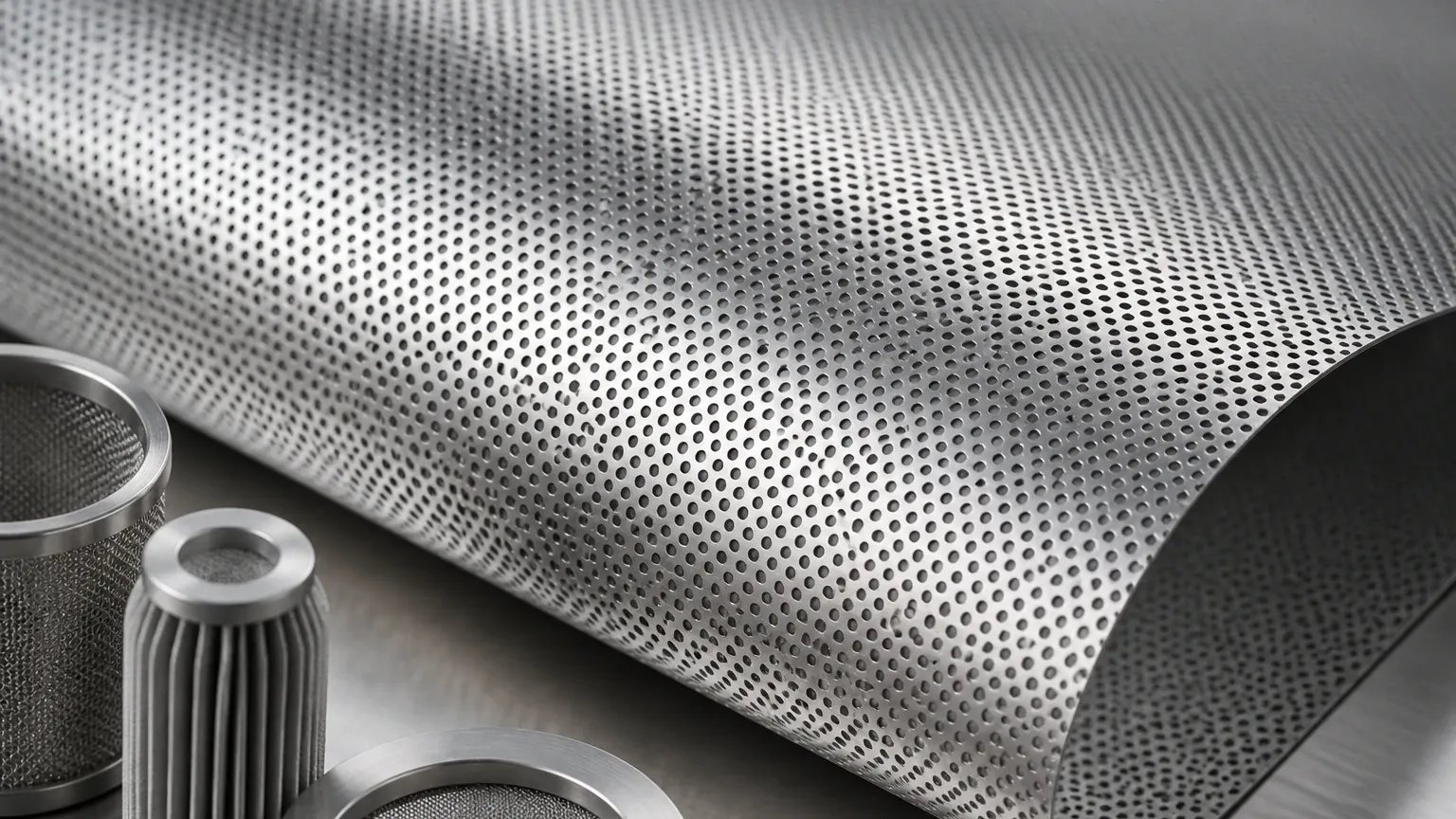
In the landscape of industrial filtration and precision engineering, the 1mm perforated metal sheet represents a critical balance between structural durability and fine-aperture performance. As a specialized component, these sheets are frequently utilized in environments where precise particle retention is required without sacrificing the mechanical strength of the filtration medium. For engineers and procurement professionals, selecting the correct specification of a 1mm perforated sheet involves a deep understanding of material science, hole geometry, and the fluid dynamics associated with industrial processing.
At Kaifil, our focus on high-performance Perforated & Expanded Metal solutions ensures that these components meet the rigorous demands of the chemical, pharmaceutical, and food processing sectors. This guide provides a technical overview of the considerations necessary for integrating 1mm perforated metal into industrial systems.
Technical Specifications and Material Selection
The performance of a 1mm perforated metal sheet is fundamentally dictated by the material from which it is fabricated. In most industrial B2B applications, stainless steel is the preferred choice due to its inherent resistance to corrosion, oxidation, and mechanical wear.
Stainless Steel Grades
* Grade 304: The most common industrial grade, offering excellent formability and standard corrosion resistance. It is suitable for general-purpose filtration and architectural applications where exposure to highly corrosive chemicals is limited.
* Grade 316L: Containing molybdenum, this grade provides superior resistance to chlorides and pitting. It is the industry standard for marine environments, pharmaceutical manufacturing, and chemical processing where the 1mm perforated metal sheet will encounter aggressive cleaning agents or acidic process fluids.
* Specialty Alloys: For high-temperature applications or extreme chemical exposure, alloys such as 310S or Duplex stainless steels may be utilized to maintain the integrity of the 1mm apertures under thermal stress.
Thickness and the 1:1 Rule
An essential engineering constraint in the production of perforated metal is the relationship between the hole diameter and the sheet thickness. For a 1mm hole, the material thickness typically should not exceed 1mm. Attempting to punch a 1mm hole through thicker material (e.g., 1.5mm or 2mm) significantly increases the risk of tool breakage and can lead to "burring" or distorted hole geometries. Maintaining a 1:1 ratio or thinner ensures clean, precise apertures that provide consistent flow characteristics.
Engineering Considerations: Hole Patterns and Open Area
The efficiency of a 1mm perforated metal sheet is largely defined by its open area percentage, which is determined by the hole pattern and the "pitch" (the distance between the centers of adjacent holes).
Common Hole Patterns
1. 60-Degree Staggered: This is the most popular configuration for industrial filtration. It provides the highest strength-to-open-area ratio and ensures uniform stress distribution across the sheet. For a 1mm hole, a staggered pattern allows for a higher density of apertures, optimizing the throughput of the filter.
2. Straight Row: In this configuration, holes are aligned both horizontally and vertically. While easier to manufacture for certain custom designs, it generally offers lower structural integrity compared to staggered patterns and is often reserved for aesthetic or specific mechanical sorting applications.
3. Slotted or Oblong: While the primary focus is often on round 1mm holes, slotted perforations (e.g., 1mm x 20mm) are used in applications requiring the separation of elongated particles or in drainage systems where high flow rates are prioritized over precision spherical retention.
Calculating Open Area
For a 60-degree staggered pattern, the open area percentage (OA%) is calculated using the formula:
`OA% = (d² × 90.69) / p²`
Where `d` is the hole diameter (1mm) and `p` is the pitch.
For example, a 1mm hole with a 2mm pitch results in an open area of approximately 22.6%. Engineers must balance the need for a high open area (to reduce pressure drop) with the need for structural stiffness (to resist deformation under hydraulic load).
Industrial Applications for 1mm Perforated Sheets
The 1mm aperture size is a versatile threshold in industrial filtration, acting as either a primary filter or a support layer for finer wire mesh media.
Food and Beverage Processing
In the food industry, 1mm perforated sheets are used in centrifugal screens, grain drying, and juice extraction. The smooth surface of the perforated metal, combined with precise 1mm holes, allows for efficient solids-liquid separation while remaining easy to clean (CIP – Clean-in-Place compatible). This prevents bacterial growth and ensures compliance with hygiene standards.
Chemical and Petrochemical Filtration
In chemical reactors and processing lines, these sheets serve as strainers to protect downstream equipment like pumps and valves from particulate contamination. Because 1mm holes are relatively resistant to clogging compared to finer meshes, they are ideal for pre-filtration stages. When fabricated from 316L stainless steel, they withstand the corrosive nature of many industrial solvents.
Pharmaceutical Manufacturing
Precision is paramount in pharmaceutical applications. 1mm perforated metal is often used in fluid bed dryers and granulation equipment. The uniformity of the hole size ensures consistent airflow and heat distribution, which is critical for maintaining the quality of the active pharmaceutical ingredients (APIs).
Hydraulic and Water Treatment
In hydraulic systems, perforated cylinders with 1mm holes act as suction strainers. In water treatment, they are used in intake screens to prevent debris from entering sensitive membrane filtration systems. The durability of the metal sheet allows it to withstand the high differential pressures often found in these industrial environments.
Manufacturing Excellence and Quality Control
Producing a high-quality 1mm perforated metal sheet requires advanced CNC punching technology and rigorous post-production processing. At Kaifil, we emphasize the following quality benchmarks to ensure our Perforated & Expanded Metal products meet global engineering standards.
Precision Punching and Flatness
The punching process can introduce internal stresses into the metal, causing the sheet to curl or warp. Industrial-grade sheets must undergo a leveling process to ensure they remain perfectly flat for subsequent fabrication steps, such as rolling into filter cartridges or welding into frames.
Deburring and Surface Finishing
Small-diameter holes like 1mm can often retain sharp edges or "slugs" from the punching process. For B2B applications, especially in the food and pharma sectors, deburring is mandatory. Techniques such as brush deburring, electropolishing, or pickling are used to ensure the holes are smooth and free of contaminants. Electropolishing, in particular, enhances the corrosion resistance of stainless steel by enriching the chromium layer on the surface.
Dimensional Tolerances
Engineers must specify the required tolerances for both the hole diameter and the pitch. Standard industrial tolerances usually fall within +/- 0.05mm for 1mm apertures. Furthermore, specifying the "margins" (the unperforated areas around the edges of the sheet) is crucial for ensuring the sheet can be properly welded or clamped into its final assembly.
Procurement and Customization: What Engineers Need to Confirm
When sourcing 1mm perforated metal sheets for a project, providing a comprehensive technical data sheet to the manufacturer is essential to avoid performance failures. Before proceeding with an order, engineers should confirm the following parameters:
1. Material Grade and Certification: Ensure the material meets ASTM or ISO standards. Request Mill Test Reports (MTRs) for traceability, especially in regulated industries.
2. Environmental Compatibility: Will the sheet be exposed to high temperatures, cryogenic conditions, or specific chemical concentrations? This determines the necessary alloy and surface treatment.
3. Mechanical Load Requirements: Calculate the expected differential pressure across the sheet. If the 1mm holes are intended for a high-pressure application, the thickness and pitch must be engineered to prevent "dishing" or rupture.
4. Secondary Fabrication Needs: Does the sheet need to be cut to size, notched, folded, or rolled? Kaifil provides comprehensive OEM services to transform raw perforated sheets into finished filtration components, ensuring that the integrity of the 1mm holes is maintained throughout the fabrication process.
5. Total Cost of Ownership: While initial costs are important, consider the replacement cycle. A high-quality stainless steel 1mm perforated sheet may have a higher upfront cost than galvanized or plastic alternatives but offers significantly lower long-term costs through durability and cleanability.
Conclusion
The 1mm perforated metal sheet is a foundational component in modern industrial filtration. Its ability to provide precise separation while maintaining the ruggedness of stainless steel makes it indispensable across diverse sectors. By focusing on technical accuracy—from open area calculations to material grade selection—engineers can optimize their filtration systems for maximum efficiency and longevity.
For organizations seeking customized filtration solutions, Kaifil offers the engineering expertise and manufacturing precision required to deliver high-performance metal components. Whether your application requires standard sheets or complex, custom-designed filter cartridges, our commitment to quality ensures that your operational requirements are met with exactness.
