


Expanded Metal Grating
In industrial engineering and facility management, the selection of structural flooring and screening materials is a critical decision that impacts safety, durability, and operational efficiency. Expanded metal grating stands as a primary solution for heavy-duty applications where high strength-to-weight ratios and slip resistance are paramount. Unlike perforated materials that are created by punching holes and generating scrap, expanded metal is manufactured through a process of slitting and stretching, resulting in a continuous, jointless structure that maintains the inherent strength of the original metal sheet.
For technical professionals and purchasing teams, understanding the nuances of expanded metal grating—from its metallurgical properties to its load-bearing characteristics—is essential for optimizing industrial infrastructure. This guide examines the technical specifications, engineering advantages, and selection criteria for integrating expanded metal grating into demanding industrial environments.
The Manufacturing Process and Structural Integrity
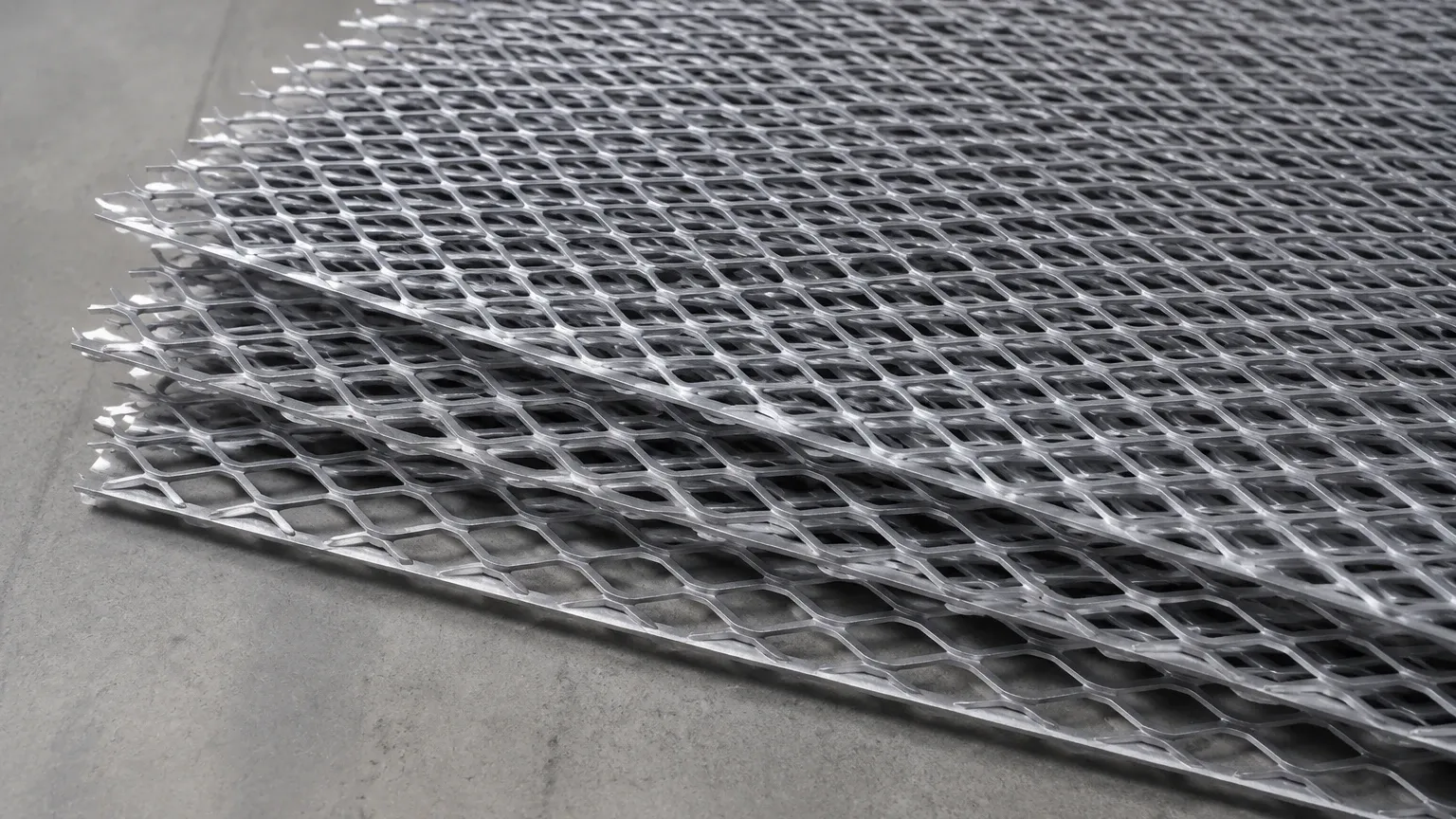
The production of expanded metal grating involves a specialized "cold-forming" process. A solid metal plate or sheet is simultaneously slit and stretched by a set of reciprocating blades. This process expands the metal into a diamond-shaped pattern, where the intersections are known as "bonds." Because the metal is expanded rather than punched, there is zero material waste, making it a highly cost-effective alternative to other Perforated & Expanded Metal products.
The resulting structure is composed of strands and bonds situated at an angle to the original plane of the sheet. This angular orientation provides several mechanical advantages:
1. Continuous Strength: Since the grating is formed from a single piece of metal, there are no welds or joints that can fail under stress or vibrate loose over time.
2. Directional Rigidity: The diamond truss pattern naturally distributes loads across the surface, providing exceptional rigidity relative to the weight of the material.
3. Anti-Slip Surface: The raised edges of the strands provide natural traction, which is critical for industrial walkways and stair treads, especially in environments prone to oil, water, or chemical spills.
Technical Specifications: LWD, SWD, and Strand Geometry
When specifying expanded metal grating for a project, engineers must use standardized terminology to ensure the material meets the application's physical requirements. The geometry of the diamond opening is defined by two primary measurements:
* LWD (Long Way of Design): The distance from the center of one bond to the center of the next bond across the long axis of the diamond.
* SWD (Short Way of Design): The distance from the center of one bond to the center of the next bond across the short axis of the diamond.
* Strand Thickness: The thickness of the base metal used to produce the grating.
* Strand Width: The amount of metal fed into the machine for each slit, which determines the width of the individual strands.
For grating applications, the SWD usually runs parallel to the span of the support structure to maximize load-bearing capacity. It is vital for engineers to confirm these dimensions during the design phase, as variations in strand width and thickness significantly alter the deflection rates and ultimate load capacity of the panel.
Material Selection for Industrial Environments
While expanded metal grating can be produced from carbon steel or aluminum, stainless steel remains the preferred choice for high-performance industrial applications. Kaifil specializes in stainless steel filtration and structural components, focusing on grades that withstand aggressive chemical and thermal conditions.
Grade 304 Stainless Steel
This is the standard industrial grade, offering excellent corrosion resistance and mechanical properties. It is suitable for most food processing, pharmaceutical, and general manufacturing environments where regular wash-downs occur.
Grade 316 and 316L Stainless Steel
For environments involving high chloride concentrations, marine exposure, or aggressive chemical processing, Grade 316 is the technical benchmark. The addition of molybdenum enhances resistance to pitting and crevice corrosion. The "L" (low carbon) variant is specifically used when welding is required, as it prevents carbide precipitation that can lead to intergranular corrosion.
Engineering Advantages of Expanded Metal Grating
Beyond its structural integrity, expanded metal grating offers several functional benefits that make it superior to solid flooring or traditional bar grating in specific contexts.
Ventilation and Light Passage
The open area of the diamond pattern allows for the free passage of air, light, and sound. In multi-level industrial facilities, this ensures that HVAC systems operate efficiently and that natural or artificial light reaches lower levels. Furthermore, it prevents the accumulation of hazardous gases in chemical processing zones.
Drainage and Self-Cleaning Properties
The angular strands of the grating facilitate the immediate drainage of fluids and debris. Unlike solid plates, expanded metal does not allow for the pooling of liquids, which reduces the risk of hydroplaning and bacterial growth in food-grade environments. Debris often falls through the openings rather than accumulating on the surface, simplifying maintenance cycles.
High Strength-to-Weight Ratio
Expanded metal grating is significantly lighter than solid steel plate of the same thickness, yet it retains a high percentage of the original material's strength. This reduction in weight lowers the dead load on the building's primary structure and simplifies installation, often removing the need for heavy lifting equipment during assembly.
Applications in Filtration and Support Systems
While often used for walkways, expanded metal grating plays a critical role in industrial filtration systems. As a manufacturer of custom stainless steel filtration solutions, Kaifil utilizes expanded metal as a robust support medium for finer wire mesh layers.
In high-pressure hydraulic or chemical filtration, the fine filter media (such as sintered mesh or woven wire cloth) lacks the structural rigidity to withstand significant pressure differentials. Expanded metal grating provides a rigid skeleton that supports the media without significantly impeding flow. This hybrid construction ensures that the filter maintains its shape and performance even under turbulent flow conditions or high-viscosity fluid processing.
Common industrial applications include:
* Machine Guarding: Protecting personnel from moving parts while allowing visual inspection.
* Catalyst Support Grids: Holding catalyst beds in chemical reactors.
* Stair Treads and Catwalks: Providing safe passage in oil rigs, refineries, and power plants.
* Debris Screens: Preventing large particulates from entering intake valves or cooling systems.
Selection Criteria: What Engineers Must Confirm
To ensure the successful implementation of expanded metal grating, the following technical factors must be evaluated before procurement:
1. Load Requirements
Engineers must define whether the grating will be subjected to static loads (equipment placement) or dynamic loads (pedestrian or vehicle traffic). Deflection limits must be calculated based on the span between supports. Standard load tables for stainless steel expanded grating should be consulted to determine the appropriate strand thickness and width.
2. Surface Finish
In B2B industrial procurement, the finish is not merely aesthetic. For stainless steel, processes such as pickling and passivation are essential to remove surface contaminants and restore the protective oxide layer. In food and beverage applications, an electropolished finish may be required to achieve a specific Ra (roughness average) value, ensuring the surface is easy to sanitize.
3. Direction of the Diamond
The orientation of the LWD and SWD relative to the support beams is critical. If the grating is installed with the wrong orientation, its load-bearing capacity can be reduced by more than 50%. Always specify the direction of the "span" in relation to the diamond pattern.
4. Environmental Exposure
Consider the presence of corrosive agents, temperature extremes, and mechanical wear. This will dictate the choice between 304 and 316L stainless steel and whether additional protective coatings are necessary.
Maintenance and Long-Term Durability
One of the primary reasons for choosing stainless steel expanded metal grating is its low maintenance requirement. Unlike painted carbon steel, which requires periodic recoating to prevent rust, stainless steel remains inherently resistant to oxidation. However, regular inspections should be conducted to check for:
* Mechanical Damage: Impact from heavy machinery can deform the strands, potentially compromising the load capacity of a specific panel.
* Attachment Integrity: Ensure that clips, welds, or bolts securing the grating to the sub-frame remain tight and free from galvanic corrosion.
* Contaminant Buildup: In filtration or drainage applications, ensure the diamond openings remain clear of calcified deposits or industrial waste that could restrict flow.
Customization and OEM Solutions
Industrial projects often require non-standard dimensions or specific material properties that off-the-shelf products cannot provide. Customization options for expanded metal grating include specialized diamond sizes for unique filtration requirements, custom panel shapes to fit around complex piping, and specific alloy selections for extreme environments.
Kaifil provides comprehensive OEM services, working closely with engineering teams to develop Perforated & Expanded Metal components that meet exact tolerances. From initial material selection to final precision cutting and finishing, custom solutions ensure that the filtration or structural component integrates seamlessly into the larger industrial system.
Conclusion
Expanded metal grating is a versatile and indispensable component in modern industrial design. Its unique combination of strength, transparency, and slip resistance makes it an ideal choice for everything from heavy-duty walkways to precision filtration supports. By understanding the technical parameters—such as LWD/SWD dimensions, material grades, and load-bearing orientations—engineers and purchasing professionals can select grating solutions that offer the lowest total cost of ownership through durability and reduced maintenance. When performance in demanding environments is non-negotiable, stainless steel expanded metal provides the structural reliability required for safe and efficient operations.
