


3 4 #9 Expanded Metal
In the landscape of industrial materials, few components offer the specific balance of structural integrity and open area required by heavy-duty filtration and security applications as effectively as 3 4 #9 expanded metal. For engineers and procurement professionals, understanding the technical nuances of this specification is critical for ensuring the longevity of filtration systems, machine guards, and structural partitions.
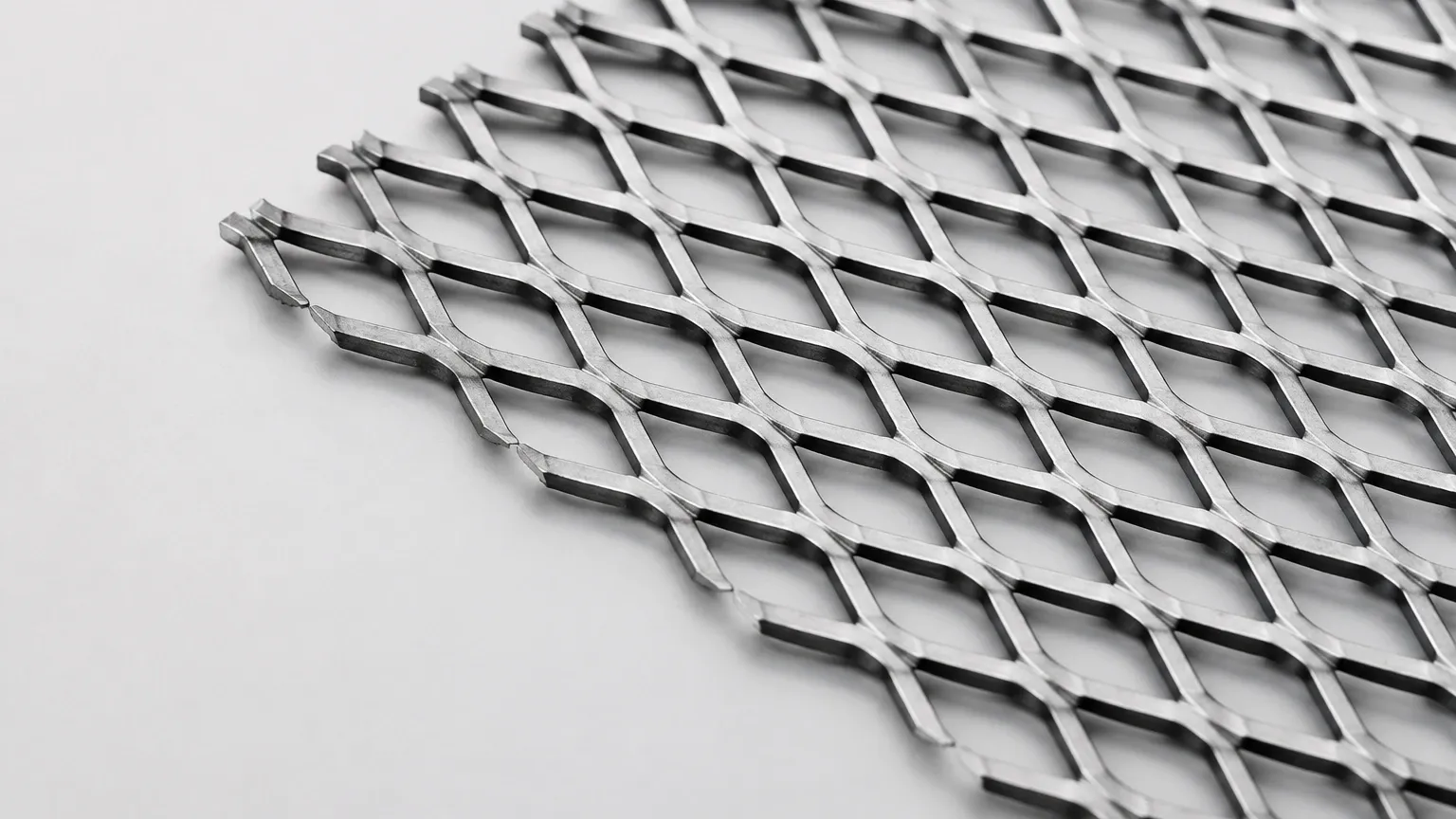
Expanded metal is manufactured by simultaneously slitting and stretching a solid metal sheet, creating a continuous mesh without welds or joints. The "3 4 #9" designation refers to a specific set of dimensions and material thicknesses that have become a standard in industrial environments due to their versatility. This article examines the technical specifications, engineering considerations, and application-specific benefits of utilizing 3 4 #9 expanded metal in professional B2B contexts.
Understanding the 3 4 #9 Specification
The nomenclature "3 4 #9" is shorthand used by manufacturers and engineers to define the diamond size and the gauge of the starting material. Breaking down these figures is the first step in technical procurement:
* 3/4": This refers to the nominal width of the diamond opening, measured from the center of one bridge to the center of the next bridge across the Short Way of the Diamond (SWD). While the nominal size is 3/4", the actual clear opening will vary depending on whether the metal is raised or flattened.
* #9: This indicates the thickness or gauge of the metal before it is expanded. In the context of carbon steel, #9 gauge is approximately 0.134 inches thick. When applied to stainless steel—the preferred material for Kaifil’s high-performance filtration solutions—this gauge provides significant rigidity and resistance to mechanical deformation.
In addition to these two primary numbers, engineers must consider the Long Way of the Diamond (LWD), which typically measures around 2.0 inches for this specification, and the strand width, which dictates the total open area and the overall weight of the panel.
Material Selection and Corrosion Resistance
While 3 4 #9 expanded metal can be produced from various alloys, the choice of material is the primary factor in determining the component’s service life, especially in the demanding sectors served by Kaifil, such as chemical processing and pharmaceutical manufacturing.
Stainless Steel 304 and 316
For most industrial filtration and support applications, Stainless Steel 304 is the standard choice due to its excellent balance of strength and corrosion resistance. However, in environments involving high chloride concentrations or acidic processing, Stainless Steel 316 or 316L is required. The molybdenum content in 316 stainless steel provides superior resistance to pitting and crevice corrosion, which is essential when the expanded metal serves as a support structure for fine wire mesh in liquid filtration.
Specialty Alloys
In high-temperature or highly corrosive environments, such as petrochemical refining, specialized alloys may be necessary. The expansion process does not alter the fundamental chemical properties of the base metal, but it does increase the surface area exposed to the environment. Therefore, selecting the correct alloy is paramount to prevent premature failure due to oxidation or chemical degradation.
Raised vs. Flattened Expanded Metal
One of the most critical decisions an engineer must make when specifying 3 4 #9 expanded metal is whether to use the "Raised" (Standard) or "Flattened" variety. Each serves distinct functional purposes.
Raised Expanded Metal (Standard)
Raised expanded metal is the immediate product of the expanding machine. The strands and bonds are set at a uniform angle to the plane of the sheet. This creates a three-dimensional surface that offers:
* Maximum Rigidity: The angled strands act as structural trusses, providing a high strength-to-weight ratio.
* Enhanced Grip: In non-filtration applications, such as industrial walkways or ramps, the raised edges provide slip resistance.
* Deflection Characteristics: The angled strands can be used to control the flow of air or light, making it useful for specialized diffusers.
Flattened Expanded Metal
Flattened expanded metal is produced by passing the raised expanded sheet through a cold-roll reducing mill. This process flattens the strands and bonds into a single plane, resulting in a smooth, level surface. For the filtration industry, flattened Perforated & Expanded Metal is often preferred because:
* Media Protection: The smooth surface prevents abrasion or tearing of delicate secondary filter media, such as synthetic cloths or fine stainless steel wire mesh.
* Uniform Thickness: Flattening ensures a consistent thickness across the entire sheet, which is vital for maintaining tight tolerances in filter cartridge assembly.
* Ease of Cleaning: Without the recessed pockets found in raised metal, flattened sheets are easier to sanitize, a requirement in food and beverage or pharmaceutical applications.
Role in Industrial Filtration Systems
In the context of Kaifil’s expertise in custom filtration, 3 4 #9 expanded metal often serves as the "backbone" of a filtration assembly. While it rarely acts as the primary filtration medium for fine particles, its structural role is indispensable.
Structural Support Cores
In high-pressure hydraulic or water treatment systems, filter cartridges are subjected to significant differential pressure. A core made from 3 4 #9 expanded metal provides the necessary hoop strength to prevent the collapse of the internal filter elements. The large open area (typically ranging from 60% to 80% depending on strand width) ensures that the support structure does not contribute significantly to the overall pressure drop of the system.
Outer Protective Shrouds
For filters used in harsh environments, an outer shroud of expanded metal protects the inner pleats from mechanical damage during installation, maintenance, or from large debris in the fluid stream. The 3/4" diamond size is particularly effective at intercepting large contaminants while allowing high-volume flow.
Pre-Filtration and Trash Racks
In water intake systems, 3 4 #9 expanded metal is frequently used as a pre-filter or trash rack. It prevents large objects—such as branches, plastic waste, or aquatic life—from entering the pumps or reaching the finer filtration stages, thereby extending the maintenance cycles of the entire system.
Engineering Evaluation: Open Area and Flow Dynamics
When integrating 3 4 #9 expanded metal into a design, engineers must calculate the percentage of open area to ensure it meets the flow requirements of the application. The open area is determined by the relationship between the diamond size and the strand width.
For a standard 3 4 #9 specification, the open area is generally high, which is advantageous for minimizing energy consumption in pumping systems. However, if the strand width is increased to provide higher load-bearing capacity, the open area decreases. Engineers must balance these two factors:
1. Pressure Drop: A lower open area increases the velocity of the fluid passing through the mesh, which can lead to higher turbulence and pressure loss.
2. Structural Load: If the expanded metal is used as a floor or a heavy-duty partition, the strand width must be sufficient to support the anticipated weight without excessive deflection.
Quality Assurance and Procurement Risks
Procuring 3 4 #9 expanded metal for industrial use requires attention to quality standards that go beyond basic dimensions. Substandard manufacturing can lead to several risks:
* Burrs and Sharp Edges: Incomplete or poor-quality slitting can leave sharp burrs. In a filtration context, these burrs can break off and become downstream contaminants (migratory debris) or damage the primary filter media.
* Inconsistent Expansion: If the stretching process is not precisely controlled, the diamond shapes may be irregular. This affects both the aesthetic quality and the structural uniformity of the panel.
* Material Fatigue: The expansion process involves significant cold-working of the metal. If the base material is of low quality or the expansion is too aggressive, micro-cracks can form at the bonds, leading to premature failure under vibration or pressure cycling.
To mitigate these risks, technical buyers should confirm that their supplier adheres to rigorous quality control protocols, including material traceability and post-expansion inspections.
Customization and Finishing Options
While 3 4 #9 is a standard size, it can be customized to meet specific project requirements. Kaifil provides various secondary operations to ensure the expanded metal is ready for immediate integration into industrial systems:
* Shearing to Size: Precision shearing ensures that the panels fit perfectly into filter housings or frames without the need for on-site adjustment.
* Forming and Rolling: Expanded metal can be rolled into cylinders for use as filter cores or formed into custom shapes for machine guards.
* Surface Treatments: For stainless steel, passivation is often recommended to remove surface iron and enhance the protective oxide layer. Electropolishing can also be performed to achieve a high-luster, ultra-clean finish suitable for sterile environments.
Conclusion: Making an Informed Selection
3 4 #9 expanded metal is a foundational material for many B2B industrial applications, offering a unique combination of strength, high open area, and cost-effectiveness. Whether it is used as a structural support in a Kaifil stainless steel filter cartridge or as a protective barrier in a chemical processing plant, its performance depends on the correct specification of material grade, finish, and type (raised or flattened).
Engineers should evaluate the total cost of ownership by considering not just the initial purchase price, but also the durability and maintenance requirements of the material. By selecting high-quality stainless steel options and ensuring precise manufacturing tolerances, facilities can achieve optimized filtration performance and long-term structural reliability.
