


3 4 #13 Expanded Metal Dimensions
In industrial manufacturing and filtration engineering, precise specifications are the foundation of performance. Among the various patterns available in metal processing, the "3/4 #13" designation is one of the most widely utilized configurations for expanded metal. Understanding the exact 3 4 #13 expanded metal dimensions is critical for engineers and procurement professionals who must ensure structural integrity, specific flow rates, or effective particle retention in demanding environments.
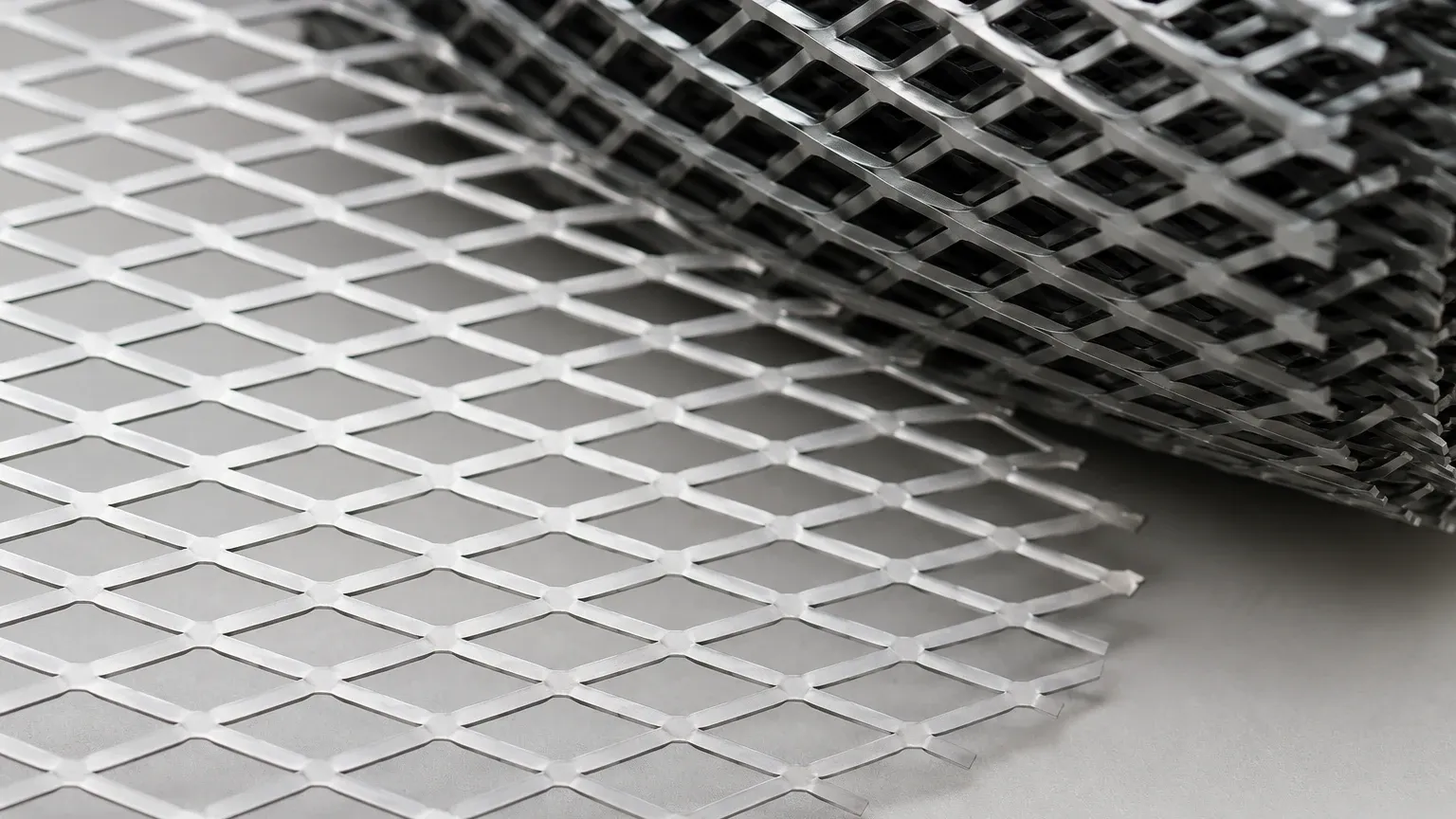
Expanded metal is produced by simultaneously slitting and stretching a solid metal sheet, creating a diamond-shaped pattern without the waste associated with traditional perforation. For Kaifil, a specialist in stainless steel filtration solutions, these dimensions are not merely catalog entries but functional parameters that dictate the efficiency of filter cartridges and industrial support structures.
Decoding the 3/4 #13 Specification
The nomenclature "3/4 #13" follows a standardized industry shorthand that describes the geometry and the material thickness of the expanded metal. To accurately interpret these dimensions, one must break the term into its two primary components.
The "3/4" Designation
The first part of the specification, 3/4", refers to the nominal width of the diamond opening. Specifically, this represents the Short Way of Diamond (SWD), measured from the center of one bond to the center of the next bond. While the nominal size is 3/4", the actual opening size can vary slightly depending on whether the metal is in its "Standard" (raised) or "Flattened" state.
The "#13" Designation
The second part of the specification, #13, refers to the gauge of the metal sheet before it undergoes the expanding process. In the context of steel and stainless steel, #13 gauge is approximately 0.090 inches thick. It is important to note that the expanding process can slightly alter the perceived thickness of the strands, but the base gauge remains the primary indicator of the material's structural mass and weight.
Technical Dimensions and Geometric Profiles
When specifying Perforated & Expanded Metal for industrial applications, engineers must look beyond the nominal name to the specific geometric measurements. These dimensions determine the open area percentage, which is a vital metric for filtration and ventilation.
Standard (Raised) 3/4 #13 Dimensions
In its standard form, expanded metal is not pressed flat after the expansion process. The strands are set at an angle to the plane of the sheet, providing a slip-resistant surface and high rigidity.
* Short Way of Diamond (SWD): Nominally 0.923 inches (center to center).
* Long Way of Diamond (LWD): Nominally 2.100 inches (center to center).
* Short Way of Opening (SWO): Approximately 0.688 inches.
* Long Way of Opening (LWO): Approximately 1.562 inches.
* Strand Width: Approximately 0.096 inches.
* Strand Thickness: Approximately 0.090 inches.
* Overall Thickness: Approximately 0.290 inches (due to the raised angle of the strands).
* Open Area: Approximately 75% to 80%.
Flattened 3/4 #13 Dimensions
Flattened expanded metal is processed through a cold-rolling reducing mill. This flattens the strands and bonds into a single plane, resulting in a smooth surface. This is often preferred for filter outer guards or decorative panels where a flush surface is required.
* Short Way of Diamond (SWD): Increases slightly to approximately 1.000 inch.
* Long Way of Diamond (LWD): Increases slightly to approximately 2.100 inches.
* Strand Thickness: Decreases to approximately 0.070 to 0.080 inches due to the rolling process.
* Overall Thickness: Matches the strand thickness (0.070" – 0.080").
* Open Area: Remains similar to standard, typically around 70% to 75%.
Material Selection: The Stainless Steel Advantage
While 3/4 #13 expanded metal can be produced from carbon steel or aluminum, industrial filtration and chemical processing applications often mandate the use of stainless steel. As a manufacturer focused on high-performance filtration, Kaifil emphasizes the selection of 304 or 316L stainless steel for these dimensions.
Corrosion Resistance and Longevity
In hydraulic systems, water treatment plants, and chemical processing units, the expanded metal is frequently exposed to corrosive fluids or high humidity. Stainless steel 3/4 #13 provides the necessary resistance to oxidation and chemical degradation, ensuring that the dimensions of the openings remain constant over the lifecycle of the component. If the metal were to corrode, the strand width would decrease, potentially compromising the structural integrity of a filter cartridge.
Temperature Stability
Industrial filtration often occurs at elevated temperatures. Stainless steel maintains its mechanical properties and dimensional stability under thermal stress far better than aluminum or standard carbon steel. This prevents the diamond openings from warping, which could otherwise lead to bypass or mechanical failure in a pressurized system.
Engineering Applications in Filtration and Industry
The 3 4 #13 expanded metal dimensions offer a unique balance of high open area and structural strength. This makes it a versatile choice for several critical industrial functions.
Support Cores for Filter Cartridges
In large-scale industrial filter cartridges, the expanded metal serves as the internal support core or the external protective shroud. The 3/4" diamond size is large enough to allow for high flow rates with minimal pressure drop, yet the #13 gauge provides the rigidity required to prevent the filter media from collapsing under high differential pressure. For engineers, calculating the "collapse pressure" of a filter often begins with the tensile strength and thickness of the expanded metal support.
Strainers and Coarse Filtration
For applications requiring the removal of larger debris from liquid or gas streams, 3/4 #13 expanded metal can function as a primary strainer. In these cases, the SWO (Short Way of Opening) of approximately 0.688" defines the maximum particle size that can pass through the mesh. This is commonly used in intake screens for water treatment or as a protective barrier for industrial fans and blowers.
Safety Guarding and Walkways
Beyond filtration, the raised version of 3/4 #13 is frequently used for machine guards and small-scale walkways. The dimensions provide enough visibility for operators to inspect machinery while ensuring that hands or large tools cannot pass through the openings. The #13 gauge is heavy enough to withstand moderate impacts without significant deformation.
Quality Evaluation and Specification Verification
When sourcing 3/4 #13 expanded metal, it is essential to confirm that the manufacturer adheres to strict dimensional tolerances. Variations in strand width or diamond size can lead to inconsistencies in the final product, especially when the metal is being formed into cylinders for filter components.
Key Evaluation Criteria
1. Camber: This is the bow in the sheet. For high-precision filtration components, the camber must be minimal to ensure the sheet can be accurately welded or seamed.
2. Squareness: The diamonds should be uniform across the entire sheet. Out-of-square diamonds can cause uneven stress distribution when the metal is under pressure.
3. Surface Finish: Particularly in the food, beverage, and pharmaceutical industries, the expanded metal must be free of burrs, oil, and scale. Kaifil’s manufacturing process ensures that stainless steel components are cleaned and deburred to meet stringent hygienic standards.
Common Risks of Substandard Dimensions
If the 3 4 #13 expanded metal dimensions are not held to tolerance, several risks emerge:
* Reduced Flow Efficiency: If the strand width is larger than specified, the open area decreases, leading to higher energy consumption in pumping systems.
* Mechanical Failure: If the gauge is thinner than #13 (e.g., #16 or #18 substituted), the support core may buckle under hydraulic surges.
* Assembly Issues: Inconsistent LWD/SWD measurements make automated welding and rolling difficult, leading to increased labor costs and higher scrap rates.
Customization and OEM Capabilities
While 3/4 #13 is a standard size, many industrial projects require specific modifications to suit unique filtration needs. Customization options often include:
* Alternative Materials: Utilizing exotic alloys like Monel or Inconel for extreme chemical environments.
* Varying Strand Widths: Adjusting the strand width while maintaining the 3/4" diamond size to fine-tune the open area and strength.
* Secondary Processing: Providing the expanded metal in pre-cut circles, rolled cylinders, or welded components to simplify the customer's assembly line.
Engineers looking to integrate these components into their designs should consult with a manufacturer that understands the intersection of metal expansion and filtration science. By verifying the exact 3 4 #13 expanded metal dimensions and selecting the appropriate material grade, purchasing teams can ensure long-term reliability and optimized total cost of ownership.
For those requiring detailed technical drawings or material certifications for their specific application, it is advisable to Review product options and application support to align the material specifications with the project's performance requirements. Whether used as a robust support structure or a precision filtration layer, 3/4 #13 expanded metal remains a cornerstone of industrial design.
