


3 4 Expanded Metal
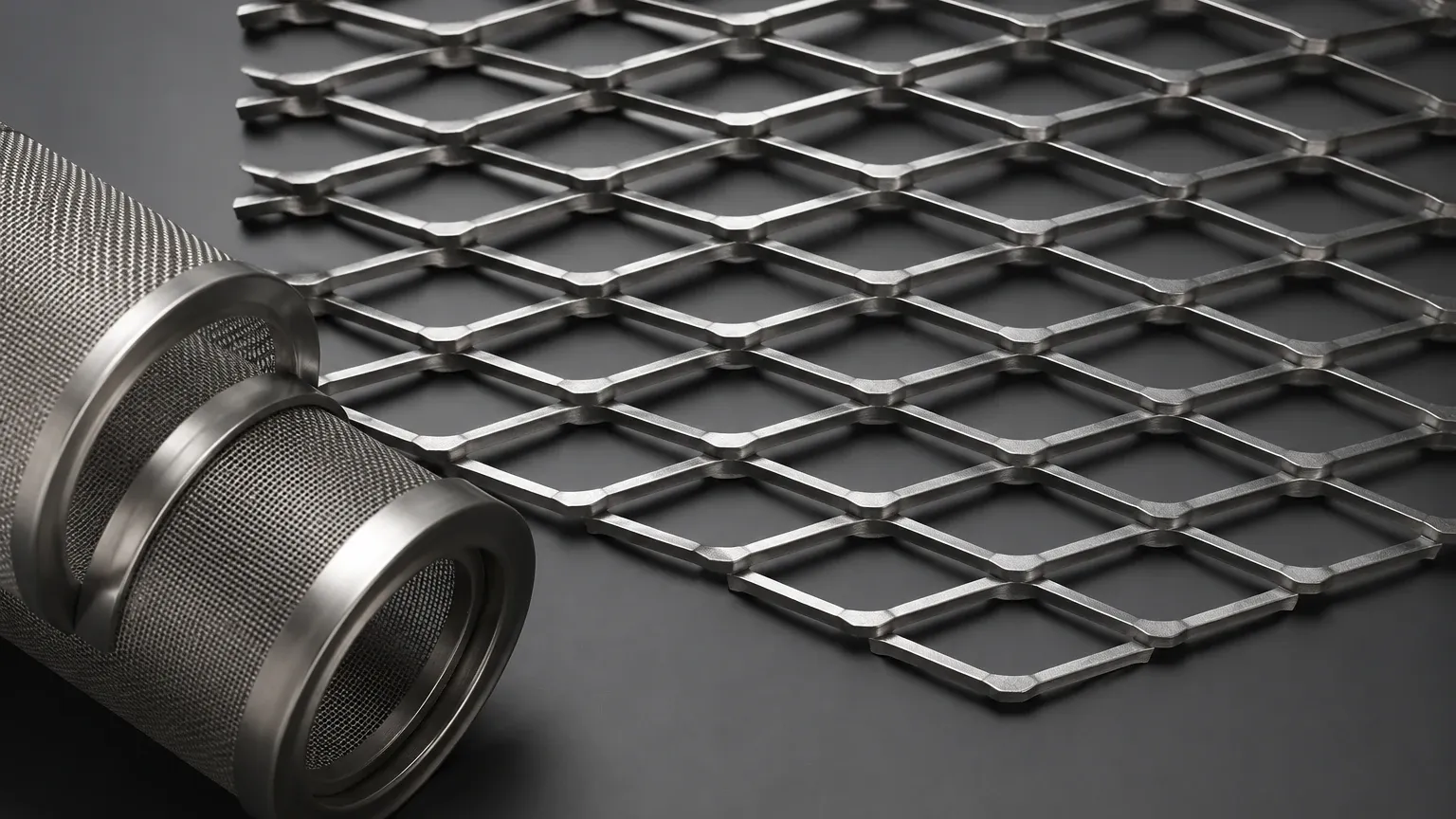
In the realm of industrial filtration and structural support, 3/4" expanded metal stands as one of the most versatile and widely utilized specifications. This material is defined by its manufacturing process, where a solid sheet of metal—typically stainless steel, carbon steel, or aluminum—is simultaneously slit and stretched. This process creates a diamond-shaped pattern of openings that provide an exceptional strength-to-weight ratio. For engineers and procurement specialists, understanding the nuances of 3 4 expanded metal is essential for optimizing filtration efficiency, ensuring structural integrity, and managing long-term maintenance costs in demanding environments.
At Kaifil, we specialize in high-performance Perforated & Expanded Metal solutions tailored for industrial applications. Whether used as a support medium for fine wire mesh or as a standalone filtration component, the 3/4" designation represents a critical balance between open area and mechanical rigidity.
Understanding the Specifications of 3/4" Expanded Metal
When specifying 3 4 expanded metal, it is important to look beyond the nominal size. The "3/4" refers to the nominal dimension of the Short Way of the Diamond (SWD). However, a complete technical specification requires several other parameters to ensure the material meets the application's requirements.
SWD and LWD Dimensions
* Short Way of Diamond (SWD): This is the distance from the center of a bond to the center of the next bond across the short axis. In 3 4 expanded metal, this is nominally 0.75 inches, though actual dimensions can vary slightly based on the thickness of the material and the expansion ratio.
* Long Way of Diamond (LWD): This is the distance across the long axis of the diamond. For standard 3/4" patterns, the LWD typically ranges from 1.75 inches to 2.1 inches. The ratio between SWD and LWD determines the shape of the diamond and influences the flow characteristics of the medium.
Strand Width and Thickness
The strands are the individual metal strips that form the sides of the diamond. The strand thickness refers to the gauge of the original base metal, while the strand width is the amount of metal fed into the machine between each shearing stroke. These two factors combined determine the weight per square foot and the overall durability of the mesh. In filtration applications, thicker strands provide better resistance to high-pressure differentials but reduce the total open area.
Material Selection for Industrial Environments
The performance of 3 4 expanded metal is heavily dependent on the alloy selected. As a manufacturer focused on stainless steel filtration, Kaifil emphasizes the use of high-grade alloys to withstand corrosive and high-temperature environments.
Stainless Steel (304 and 316L)
Stainless steel is the preferred choice for chemical processing, food and beverage, and pharmaceutical applications.
* Grade 304: Offers excellent corrosion resistance and strength for general industrial use. It is commonly used in water treatment and hydraulic filtration support.
* Grade 316L: Contains molybdenum, providing superior resistance to chlorides and pitting. This is the standard for marine environments and pharmaceutical processing where hygiene and chemical stability are paramount.
Carbon Steel and Aluminum
While carbon steel is cost-effective for dry industrial environments, it requires coating (such as galvanization or powder coating) to prevent oxidation. Aluminum is utilized when weight reduction is a primary concern, though it lacks the mechanical strength and temperature resistance of stainless steel in heavy-duty filtration cycles.
Standard vs. Flattened 3/4" Expanded Metal
One of the most frequent decisions engineers must make is whether to use standard (raised) or flattened expanded metal. The choice significantly impacts the physical profile and functionality of the component.
Standard (Raised) Expanded Metal
In its standard form, the strands and bonds are set at a uniform angle to the plane of the sheet. This creates a three-dimensional surface that provides excellent grip and high structural rigidity. In filtration, the raised profile can help create turbulence, which may be beneficial in certain fluid dynamics scenarios, or it can act as a robust outer cage for filter cartridges to protect delicate inner media from mechanical impact.
Flattened Expanded Metal
Flattened 3 4 expanded metal is produced by passing the standard expanded sheet through a cold-roll reducing mill. This process flattens the strands and bonds into a single plane, resulting in a smooth, level surface. Flattened metal is often preferred when the expanded mesh needs to be bonded to other layers of wire mesh or when a smooth outer surface is required to prevent snagging during installation and cleaning. It also provides a more consistent thickness, which is critical for precision-engineered filtration housings.
Key Engineering Considerations for Filtration Applications
Integrating 3 4 expanded metal into a filtration system requires a deep dive into performance metrics. Engineers must evaluate how the mesh interacts with the fluid or gas being processed.
Open Area and Flow Rates
The percentage of open area determines the pressure drop across the filter. For 3/4" patterns, the open area typically ranges from 60% to 80%, depending on the strand width. A higher open area allows for higher flow rates and lower energy consumption by the pump or compressor. However, if the open area is too high, the mesh may lose the structural integrity required to support the primary filter media under high-pressure loads.
Mechanical Strength and Support
In many high-pressure hydraulic or chemical systems, the primary filtration media (such as fine stainless steel wire mesh or non-woven fibers) lacks the strength to withstand the force of the flow. 3 4 expanded metal serves as a "backing" or "support core." It must be rigid enough to prevent the primary media from collapsing or deforming, which would lead to bypass or system failure.
Edge Conditions and Fabrication
When ordering custom components, the edge condition is a vital detail. "Random sheared" edges may leave open diamonds and sharp points, whereas "bond sheared" edges provide a finished, safer perimeter. For OEM manufacturers, receiving 3 4 expanded metal that is precisely cut to size and deburred is essential for streamlining the assembly of finished filter cartridges.
Customization and OEM Solutions
Kaifil provides comprehensive customization for Perforated & Expanded Metal to meet specific industrial requirements. Standard off-the-shelf products often fail to meet the tight tolerances required in precision engineering. Our manufacturing capabilities allow for adjustments in:
1. Custom Diamond Sizes: While 3/4" is standard, we can adjust the expansion parameters to achieve specific SWD/LWD ratios for specialized flow requirements.
2. Precision Slitting and Cutting: We provide sheets or coils cut to exact widths, ensuring a perfect fit for cylindrical filter cores or rectangular intake screens.
3. Material Thickness: We work with a wide range of gauges, from lightweight foils to heavy-duty plates, ensuring the material is fit for the specific pressure environment.
4. Secondary Processing: This includes rolling the mesh into cylinders, welding seams, and applying surface finishes like electropolishing to enhance corrosion resistance and cleanliness.
Evaluating Quality and Performance Standards
To ensure the longevity of a filtration system, the 3 4 expanded metal must be manufactured to rigorous standards. Low-quality expanded metal often suffers from inconsistent diamond shapes, uneven strand widths, or surface cracks at the bonds—all of which can lead to premature failure under stress.
Engineers should confirm the following before procurement:
* Tolerance Levels: What are the allowable variances in SWD, LWD, and overall sheet flatness?
* Material Certification: Can the supplier provide mill test reports (MTRs) to verify the chemical composition of the stainless steel?
* Load-Bearing Capacity: Has the material been tested for the specific deflection limits required by the application?
By focusing on these technical details, purchasing teams can avoid the "total cost of ownership" traps associated with low-grade materials, such as frequent replacement cycles and potential contamination of the process stream.
Conclusion
3 4 expanded metal is more than just a structural component; it is a critical element in the design of efficient, durable industrial filtration systems. Its ability to provide high open area while maintaining mechanical strength makes it an ideal choice for support cages, pre-filters, and protective screens across the chemical, food, and pharmaceutical sectors.
Selecting the right material, whether it be 304 or 316L stainless steel, and choosing between standard or flattened profiles, requires a clear understanding of the application's unique demands. At Kaifil, we combine our manufacturing expertise with engineering insight to deliver customized filtration solutions that exceed performance expectations. For technical consultation or to discuss your specific project requirements, we invite you to review our full range of capabilities in Perforated & Expanded Metal and partner with us for your next industrial filtration challenge.
