


3/8 Perforated Sheet Metal
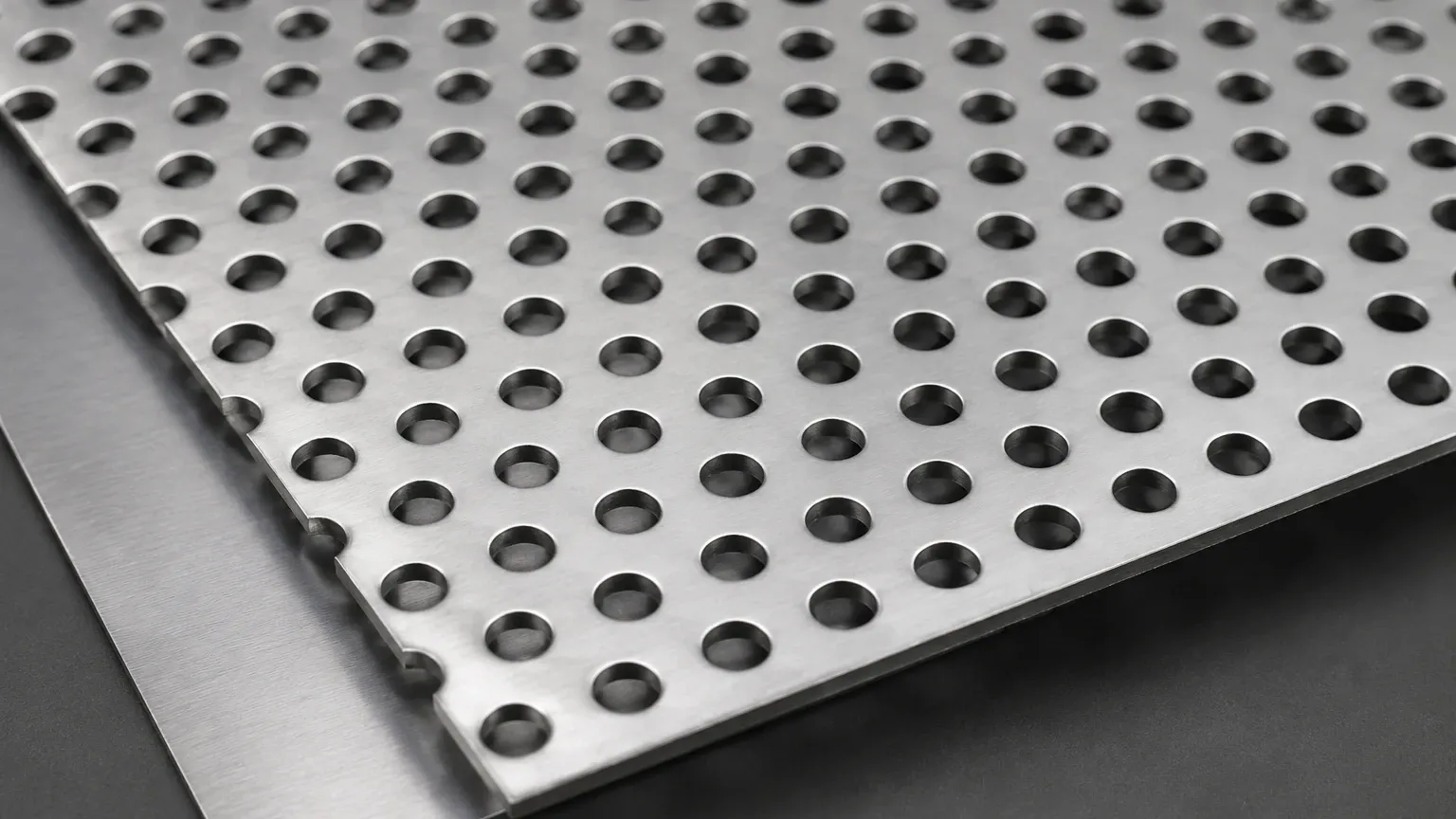
In industrial filtration and structural engineering, the selection of media is dictated by the precise balance between mechanical strength and throughput efficiency. Among the various specifications available, 3/8 perforated sheet metal remains a versatile standard for medium-to-heavy-duty applications. Whether utilized as a primary screen, a support core for finer mesh, or a protective guard, understanding the technical nuances of this material is essential for optimizing system performance and longevity.
At Kaifil, we specialize in manufacturing high-precision Perforated & Expanded Metal components tailored to demanding industrial environments. This guide examines the engineering considerations, material properties, and application-specific factors that technical professionals must evaluate when specifying 3/8-inch perforated media.
Engineering Specifications and Geometry
The term "3/8 perforated sheet metal" primarily refers to the hole diameter. However, the performance of the sheet is defined by several other geometric variables that influence both the structural integrity and the filtration characteristics of the component.
Hole Patterns and Centers
The arrangement of the 3/8-inch holes is a critical design factor. The two most common configurations are:
1. 60-Degree Staggered Pattern: This is the industrial standard. It provides the highest open area and uniform strength across the sheet. By staggering the holes, the material maintains better structural rigidity under pressure compared to straight-row patterns.
2. Straight Row Pattern: In this configuration, holes are aligned both horizontally and vertically. While easier to align for certain aesthetic or specific directional flow applications, it generally offers lower open area and reduced structural stability.
Calculating Open Area
The "Open Area Percentage" determines the flow rate and pressure drop across the screen. For a standard 60-degree staggered pattern with 3/8" holes, the open area is calculated based on the center-to-center (C-C) spacing. For example, a 3/8" hole on 1/2" centers results in approximately 51% open area. Engineers must balance a high open area for flow efficiency against the remaining "bridge" of metal required to support the mechanical load.
Material Selection for Industrial Filtration
The environment in which the 3/8 perforated sheet metal operates dictates the choice of alloy. While carbon steel and aluminum are available, stainless steel remains the preferred choice for industrial filtration due to its superior resistance to corrosion, temperature, and mechanical wear.
Stainless Steel 304 and 304L
Grade 304 is the most common stainless steel used in perforated components. It offers excellent corrosion resistance in most atmospheric and freshwater environments. For applications involving welding—such as forming perforated tubes or filter cartridges—Grade 304L (low carbon) is often specified to prevent carbide precipitation and ensure weld-zone integrity.
Stainless Steel 316 and 316L
In chemical processing, pharmaceutical manufacturing, or marine environments, Grade 316 is required. The addition of molybdenum provides enhanced resistance to pitting and crevice corrosion, particularly in chloride-rich environments. Like 304L, 316L is used when the component requires extensive welding to maintain its corrosion-resistant properties at the joints.
Specialty Alloys
For extreme conditions involving highly acidic or high-temperature processes, specialty alloys such as Duplex stainless steel or Monel may be required. These materials offer higher tensile strength and specialized chemical resistance that exceeds the capabilities of the 300-series stainless steels.
Filtration and Flow Dynamics
When specifying 3/8 perforated sheet metal for filtration, engineers must consider the fluid dynamics of the system. The 3/8-inch (approx. 9.5mm) aperture is typically used for coarse filtration or as a support structure (backing) for finer wire mesh layers.
Particle Retention and Sizing
A 3/8-inch hole will effectively retain large debris, such as stones, wood chips, or large industrial byproducts. If the application requires finer filtration, the perforated sheet acts as the "skeleton" of the filter element, providing the necessary burst pressure resistance while a fine wire mesh or sintered metal layer performs the actual particle separation.
Pressure Drop (Delta P)
The pressure drop across a 3/8 perforated sheet metal screen is a function of the open area and the fluid velocity. A lower open area increases the velocity of the fluid as it passes through the apertures, leading to higher turbulence and a significant pressure drop. To minimize energy consumption in pumping systems, engineers should aim for the maximum open area that still satisfies the mechanical load requirements of the application.
Manufacturing Considerations: Perforated vs. Expanded Metal
While perforated sheet is created by punching holes out of a solid plate, expanded metal is produced by slitting and stretching the material simultaneously. Both are viable options for industrial screens, but they offer different advantages.
* Perforated Metal: Offers precise hole sizing and spacing. It is easier to clean and provides a flat, smooth surface that is ideal for applications where hygiene or precise flow control is paramount. It also allows for "safe margins" (unperforated edges), which simplify welding and installation.
* Expanded Metal: Generally more cost-effective as there is no material waste (no "slugs" are punched out). It provides a higher strength-to-weight ratio and a three-dimensional surface that can be useful for certain types of fluid dispersion, though it is more difficult to clean in food-grade applications.
For most high-precision filtration tasks, Perforated & Expanded Metal products are selected based on the specific mechanical stresses the component will face during backwashing or high-pressure cycles.
Customization and Finishing Options
Standard 3/8 perforated sheet metal often requires secondary processing to meet industrial specifications. Customization ensures that the component integrates seamlessly into the larger system.
Margins and Blank Areas
Unlike standard stock sheets, custom-manufactured perforated metal can include specific margins. A "margin" is an unperforated area around the edges of the sheet. This is critical for welding the sheet into a frame or a cylindrical filter housing. Engineers should specify the width of the margins on all four sides to ensure proper fitment.
Leveling and Flatness
The perforating process can introduce internal stresses into the metal, causing it to curl or bow. Precision leveling is a secondary process that flattens the sheet to within specific tolerances. This is essential for sheets that will be used in automated machinery or large-scale architectural panels where flatness is a functional requirement.
Surface Treatments
Depending on the industry, additional surface treatments may be necessary:
* Degreasing: Removing lubricants used during the punching process, essential for oxygen service or food-grade applications.
* Pickling and Passivation: Removing surface contaminants and restoring the chromium oxide layer on stainless steel to maximize corrosion resistance.
* Electropolishing: Providing a mirror-like, ultra-smooth finish that reduces particle adhesion and improves cleanability in pharmaceutical and biotech applications.
Application-Specific Considerations
Food and Beverage Industry
In food processing, 3/8 perforated sheet metal is often used in scalping screens or as support for finer mesh in juice and dairy filtration. The primary concern here is "sanitary design." The holes must be cleanly punched without burrs or sharp edges where bacteria could proliferate. Stainless steel 316L is the standard to withstand aggressive CIP (Clean-in-Place) chemicals.
Chemical and Petrochemical Processing
In these sectors, the perforated sheet often serves as a catalyst support or a strainer in high-flow pipelines. The focus is on chemical compatibility and the ability to withstand high temperatures. The thickness of the sheet (gauge) is often increased to provide a higher safety factor against erosion caused by high-velocity fluid flow containing abrasive particles.
Hydraulic and Water Treatment
For water intake screens or hydraulic reservoir breathers, 3/8-inch perforations prevent large contaminants from entering sensitive pumps. In water treatment, these sheets are frequently used as underdrains in gravity filters, where they must support several tons of sand or anthracite media while maintaining uniform water distribution during backwash cycles.
Evaluating Total Cost of Ownership (TCO)
When purchasing 3/8 perforated sheet metal, focusing solely on the initial material cost can be misleading. Engineers and purchasing teams should consider the following factors to determine the total cost of ownership:
1. Durability: A thinner gauge may be cheaper upfront but may fail prematurely under pressure surges, leading to costly downtime.
2. Maintenance: Is the material easy to clean? Does the hole pattern allow for efficient backwashing? Poorly designed screens can lead to permanent fouling.
3. Replacement Cycles: High-quality stainless steel with proper passivation will significantly outlast lower-grade alternatives, reducing the frequency of replacement and the labor costs associated with filter changes.
4. Customization Accuracy: Precision-manufactured sheets with exact margins and flatness reduce the labor time required during the final assembly of the filtration equipment.
Conclusion
Specifying 3/8 perforated sheet metal involves more than simply selecting a hole size. It requires a comprehensive understanding of material science, fluid dynamics, and manufacturing tolerances. By evaluating the hole pattern, open area, alloy grade, and necessary secondary finishes, engineers can ensure their filtration systems operate at peak efficiency with minimal maintenance requirements.
Kaifil provides a wide range of custom Perforated & Expanded Metal solutions designed to meet the rigorous demands of industrial applications. Our engineering team works closely with clients to define the optimal specifications for their unique filtration challenges, ensuring reliable performance in even the most demanding environments.
