


Perforated 8 Pvc Pipe
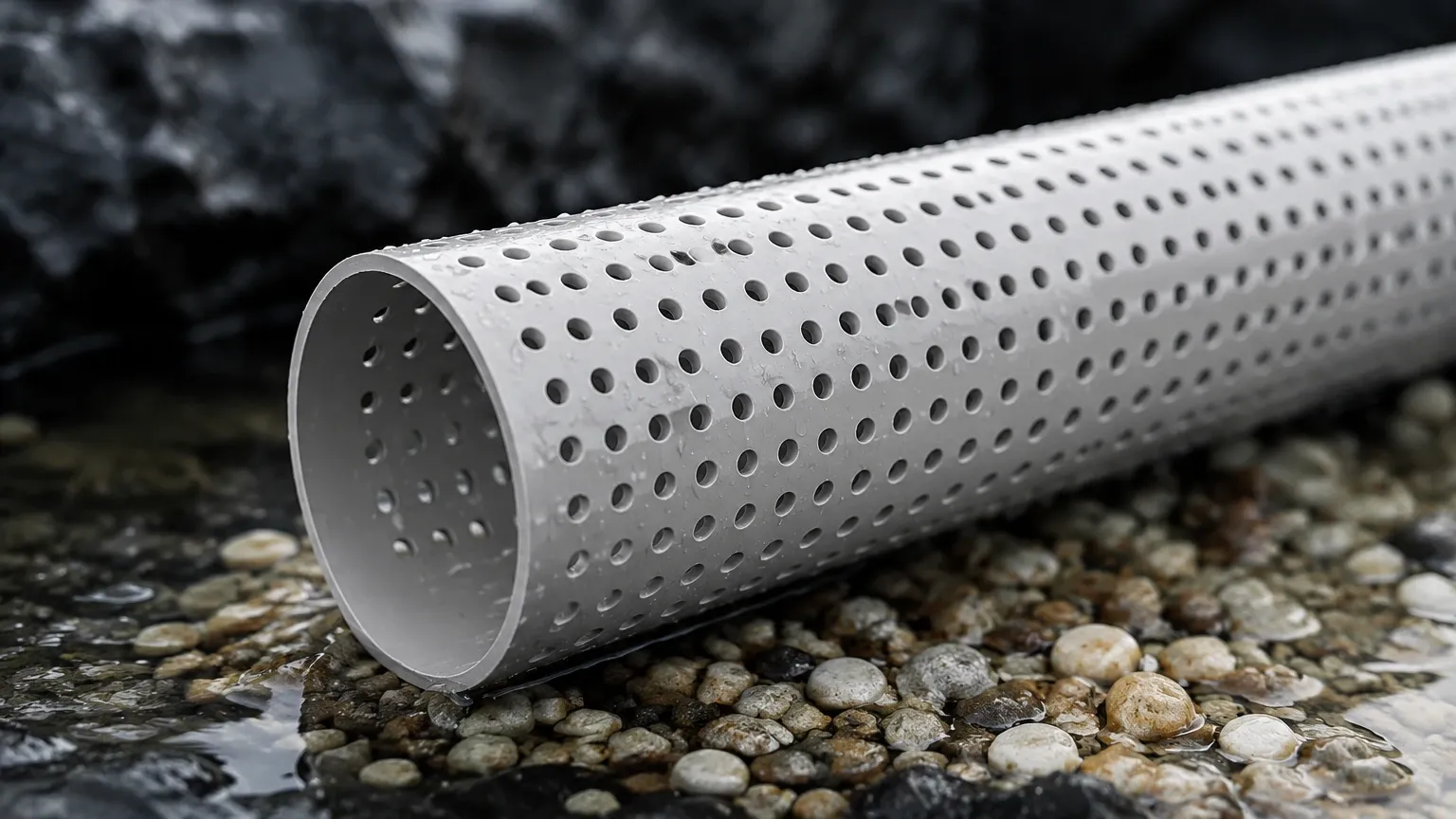
In industrial drainage, fluid management, and subsurface filtration, the selection of piping materials and their physical configurations is a critical engineering decision. The perforated 8 pvc pipe—referring to a pipe with a nominal diameter of 8 inches—is a standard component used to facilitate the controlled entry or exit of fluids within a system. While PVC (polyvinyl chloride) offers specific advantages in terms of weight and corrosion resistance against certain chemicals, engineers must evaluate its mechanical limitations, hydraulic efficiency, and long-term durability against alternative materials like Perforated & Expanded Metal.
Understanding the technical specifications of 8-inch perforated PVC is essential for ensuring that the filtration or drainage system meets the required flow rates while maintaining structural integrity under soil or fluid pressure.
Technical Specifications of 8-Inch Perforated PVC
An 8-inch perforated PVC pipe is defined by several key parameters: the pipe wall thickness (Schedule or SDR), the hole size, the hole pattern, and the total open area. Each of these factors influences the pipe's performance in industrial environments.
Pipe Wall Thickness and SDR
For an 8-inch nominal pipe size (NPS), the wall thickness is typically categorized by Schedule (Sch 40 or Sch 80) or Standard Dimension Ratio (SDR).
* Schedule 40: This is the most common grade for general drainage. It provides a balance between structural strength and cost. For an 8-inch pipe, the outer diameter (OD) is approximately 8.625 inches, with a wall thickness of 0.322 inches.
* Schedule 80: Used in higher-pressure applications or where greater mechanical protection is required. The wall thickness for an 8-inch Sch 80 pipe is approximately 0.500 inches. This thicker wall reduces the internal diameter (ID) and increases the weight, but it offers superior resistance to crushing.
* SDR 35: Often used in gravity-fed sewer and drainage systems, SDR 35 has a thinner wall than Schedule 40 but is engineered for flexibility and resistance to earth loads in trench installations.
Perforation Patterns and Hole Geometry
The perforations in an 8-inch pipe are usually drilled or punched in specific patterns. The most common configurations include:
1. Parallel Rows: Holes are aligned in straight lines along the length of the pipe. For an 8-inch pipe, this might involve two, four, or six rows of holes.
2. Staggered Patterns: Holes in adjacent rows are offset. This pattern is often preferred in filtration applications because it provides a more uniform distribution of fluid intake and reduces the risk of structural weak points along a single longitudinal axis.
3. Hole Size: Standard industrial perforations for 8-inch pipes range from 1/4 inch to 5/8 inch. Smaller holes are used for fine-grain soil filtration, while larger holes are used in high-volume drainage or as a primary intake screen for sumps.
Hydraulic Performance and Open Area Calculations
The primary function of a perforated pipe is to allow fluid to pass through the pipe wall. The efficiency of this process is determined by the "Open Area Percentage." Engineers must calculate the total area of the perforations relative to the total surface area of the pipe section.
The Open Area Formula
To determine the open area of a perforated 8 pvc pipe, the following formula is applied:
Total Open Area = (Area of one hole) × (Number of holes per linear foot)
For example, if an 8-inch pipe has 40 holes per foot, each with a diameter of 0.5 inches, the open area per foot would be approximately 7.85 square inches.
Flow Rate Considerations
A higher open area allows for greater flow rates and lower entrance velocity. Low entrance velocity is critical in filtration because it prevents the transport of fine particles (silting) into the pipe, which can lead to clogging. However, increasing the number of holes or their size reduces the structural stiffness of the pipe. Engineers must find the "sweet spot" where the pipe provides sufficient drainage without risking collapse under the weight of the overburden or the vacuum pressure of a pump.
Engineering Considerations: PVC vs. Metal Perforated Solutions
While perforated PVC is widely used due to its low cost and ease of installation, it is not suitable for every industrial application. In many high-performance scenarios, Perforated & Expanded Metal components are required to meet technical demands that polymers cannot satisfy.
Temperature and Pressure Limits
PVC is a thermoplastic, meaning its physical properties change significantly with temperature. Standard PVC begins to lose structural integrity at temperatures above 140°F (60°C). In chemical processing or high-temperature filtration, stainless steel perforated components are necessary. Metal filters can withstand extreme temperatures and much higher internal and external pressures without deforming.
Chemical Compatibility
PVC offers excellent resistance to many acids, bases, and salts. However, it is susceptible to damage from certain solvents, hydrocarbons, and UV radiation. In contrast, stainless steel perforated metal provides a broader range of chemical resistance, particularly in the presence of aggressive organic solvents or in outdoor applications where UV degradation is a concern for plastics.
Precision and Customization
Perforated metal allows for much finer filtration than PVC. While PVC perforations are typically limited to drilled holes of a certain size, metal can be perforated with precision laser cutting or expanded into complex meshes. This allows for micron-level filtration accuracy that is impossible to achieve with standard plastic pipe drilling.
Common Applications for Perforated 8 PVC Pipe
The 8-inch diameter is a versatile size for medium-to-high volume fluid management. Common applications include:
* Leachate Collection in Landfills: Used at the base of landfill cells to collect and transport fluid that has percolated through waste.
* Subsurface Drainage (French Drains): Large-scale drainage for building foundations, sports fields, or agricultural land where high volumes of groundwater must be diverted.
* Industrial Sump Liners: Serving as the primary intake screen for sumps in manufacturing plants, where the pipe protects the pump from large debris while allowing water to enter the pit.
* Septic System Distribution: In large-scale commercial septic drain fields, 8-inch pipes distribute effluent over a wide area to ensure proper soil absorption.
Installation and Structural Integrity Risks
When specifying a perforated 8 pvc pipe, engineers must account for the installation environment. Unlike solid-wall pipes, perforated pipes have a reduced "Pipe Stiffness" (PS) value.
Bedding and Backfill
To prevent the pipe from flattening or cracking, it must be surrounded by appropriate bedding material, usually clean gravel or crushed stone. This material serves two purposes: it provides structural support to the pipe walls and acts as a primary filter to prevent soil from reaching the perforations.
The Risk of Pipe Flattening
In deep-burial applications, the weight of the soil can exceed the pipe's crush rating. If a perforated PVC pipe deforms by more than 5% of its diameter, its hydraulic capacity is significantly reduced, and the risk of structural failure increases. In these instances, engineers often switch to heavier-walled Schedule 80 PVC or transition to stainless steel perforated cylinders, which offer significantly higher modulus of elasticity and tensile strength.
Maintenance and Clogging Prevention
One of the most significant challenges with perforated pipes is "bioclogging" or "silting." Over time, fine particles or biological growth (such as iron bacteria) can block the perforations, rendering the system ineffective.
Prevention Strategies
1. Geotextile Wraps: Many 8-inch perforated pipes are wrapped in a geotextile fabric (often called a "sock"). This fabric allows water to pass through while blocking fine sand and silt.
2. Cleanouts: Industrial drainage systems should include vertical cleanout ports. These allow maintenance teams to flush the 8-inch main line with high-pressure water to clear obstructions.
3. Secondary Filtration: In industrial sumps, the perforated PVC pipe often acts as a coarse pre-filter. For finer filtration, a secondary stainless steel wire mesh filter is often placed inside or outside the PVC housing to capture smaller contaminants.
Selection Criteria for Purchasing Teams
Before procuring perforated 8 pvc pipe for an industrial project, purchasing teams and engineers should confirm the following data points with their supplier:
* Hole Diameter and Spacing: Ensure the hole size is compatible with the surrounding aggregate to prevent migration of fines.
* Total Open Area: Verify that the open area meets the calculated inflow requirements of the hydraulic model.
* Material Grade: Confirm if the application requires Schedule 40, Schedule 80, or a specific SDR rating based on the depth of burial.
* Length and Joining Method: 8-inch pipes are typically sold in 10-foot or 20-foot lengths. Determine if the application requires bell-and-spigot ends, solvent-weld joints, or mechanical couplings.
For applications where PVC's mechanical or thermal limits are exceeded, exploring Perforated & Expanded Metal options is the recommended next step. Metal solutions provide the durability and precision required for the most demanding industrial filtration environments, ensuring a longer service life and lower total cost of ownership in harsh conditions.
