


6×6 Expanded Metal
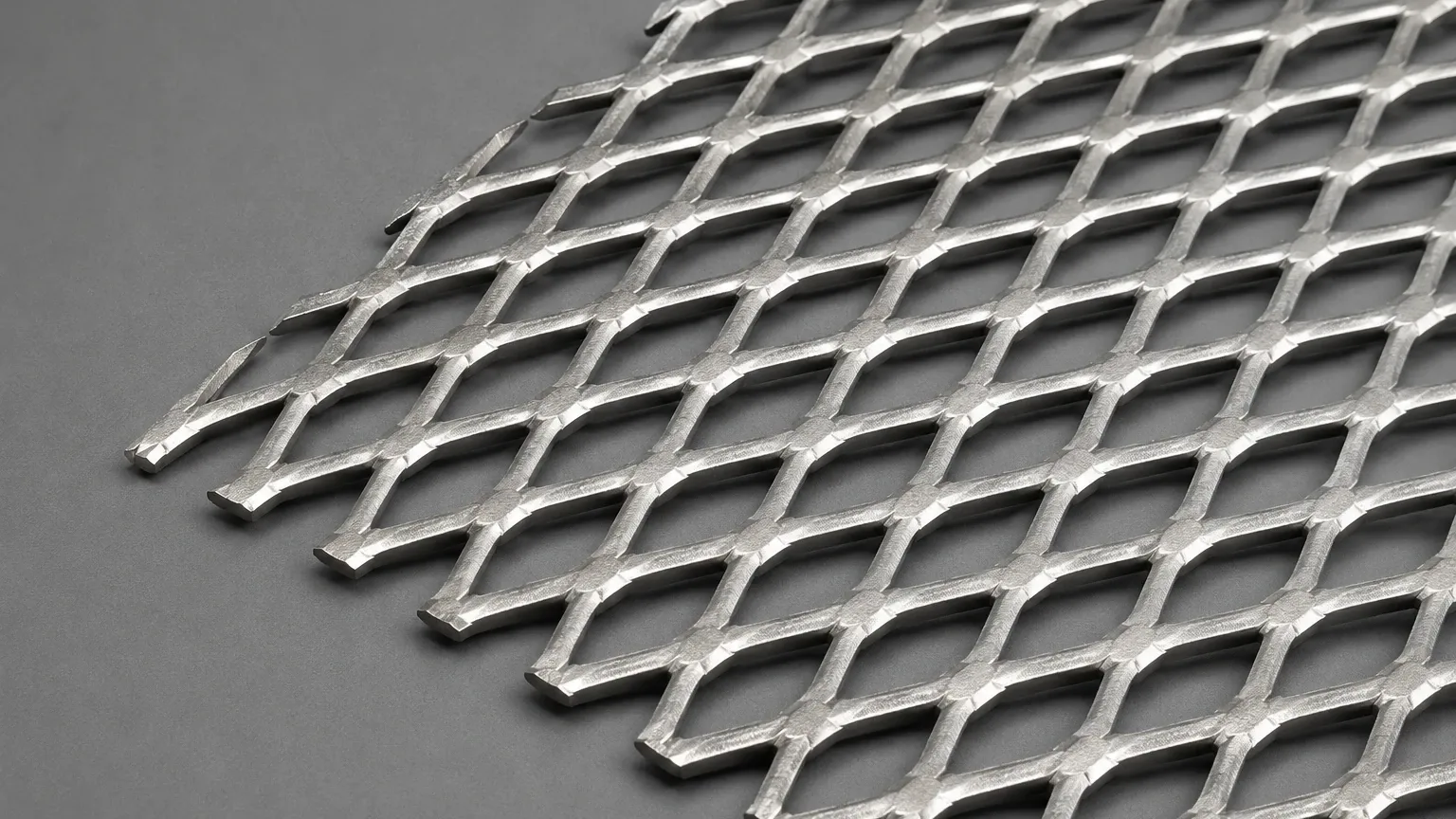
In the landscape of industrial filtration and structural reinforcement, expanded metal serves as a versatile and cost-effective alternative to traditional perforated sheets or woven wire mesh. Specifically, the 6×6 expanded metal configuration—referring to the nominal dimensions of the diamond-shaped openings—is a critical component for engineers designing high-performance filtration systems, safety guards, and architectural supports. Unlike perforated metal, which is produced by punching holes and discarding the scrap, expanded metal is manufactured by simultaneously slitting and stretching a solid metal sheet, resulting in a continuous, jointless structure with no material waste.
For technical professionals in sectors such as chemical processing, food and beverage, and hydraulic systems, selecting the correct Perforated & Expanded Metal requires a deep understanding of geometric specifications, material properties, and mechanical performance. This guide examines the technical nuances of 6×6 expanded metal, its role in industrial filtration, and the engineering considerations necessary for successful implementation.
Technical Specifications and Geometry of 6×6 Expanded Metal
The performance of expanded metal is dictated by its geometry. When specifying 6×6 expanded metal, engineers typically focus on the diamond opening size, which is defined by the Short Way of Design (SWD) and the Long Way of Design (LWD). In a 6×6 configuration, these dimensions are optimized to balance open area with structural rigidity.
Understanding the Dimensions
* SWD (Short Way of Design): The distance from the center of one bond to the center of the next bond across the short axis of the diamond. In a 6mm x 6mm or similar 6×6 specification, this ensures a compact pattern suitable for supporting finer filter media.
* LWD (Long Way of Design): The distance across the long axis of the diamond. The ratio between SWD and LWD determines the elongation of the diamond and the resulting mechanical strength along specific axes.
* Strand Width and Thickness: These parameters are crucial for calculating the total weight and the pressure-bearing capacity of the mesh. A thicker strand increases the mesh's resistance to deformation but reduces the percentage of open area.
By manipulating these variables, manufacturers can produce 6×6 expanded metal that is either "raised" (standard) or "flattened." Raised expanded metal features strands that are turned at an angle to the plane of the sheet, providing a high-friction surface and excellent structural depth. Flattened expanded metal is cold-rolled after the expansion process to create a smooth, 2D surface, which is often preferred in filtration applications where the mesh serves as a support layer for delicate membranes or fine wire cloth.
Material Selection for Industrial Filtration
The utility of 6×6 expanded metal in industrial environments is largely dependent on the base material. While expanded metal can be produced from carbon steel or aluminum, stainless steel is the standard for demanding B2B applications due to its corrosion resistance and thermal stability.
Stainless Steel 304 vs. 316L
For most general industrial applications, Grade 304 stainless steel provides sufficient resistance to oxidation and many organic chemicals. However, in the pharmaceutical and food and beverage industries, Grade 316L is the preferred choice. The addition of molybdenum in 316L enhances resistance to pitting and crevice corrosion, particularly in environments containing chlorides or high-salinity solutions.
In high-temperature chemical processing, selecting the right alloy ensures that the 6×6 expanded metal maintains its structural integrity and does not leach contaminants into the process stream. Engineers must also consider the "cleanability" of the material; stainless steel’s non-porous surface allows for effective Clean-in-Place (CIP) procedures, which are vital for maintaining hygiene standards in sterile environments.
Applications in Filtration and Industrial Processing
6×6 expanded metal is rarely used as a primary filter for fine particles; instead, it serves as a critical structural component in multi-stage filtration systems. Its high strength-to-weight ratio makes it an ideal candidate for several specific roles:
1. Support Cores for Filter Cartridges
In high-pressure hydraulic or liquid filtration, fine wire mesh or pleated paper media can collapse under the force of the fluid flow. A cylindrical core made of 6×6 expanded metal provides the necessary internal support to maintain the shape of the filter element, ensuring consistent flow distribution and preventing media bypass.
2. Outer Guard and Protection
Filter elements are often susceptible to mechanical damage during installation or operation. An outer wrap of expanded metal protects the internal media from large debris and physical impact without significantly obstructing the flow of the process fluid.
3. Coarse Pre-filtration and Strainers
In water treatment and chemical intake systems, 6×6 expanded metal acts as a coarse strainer to remove large particulates, such as scale or debris, before the fluid reaches more sensitive downstream components. The diamond pattern is particularly effective at capturing irregular shapes that might pass through a simple round-hole perforated plate.
Engineering Advantages: Expanded vs. Perforated Metal
When deciding between expanded metal and perforated metal for a project, engineers must evaluate the trade-offs in cost, weight, and performance.
* Material Efficiency: Expanded metal is produced without generating scrap. This makes it significantly more cost-effective than perforated metal, especially when using expensive alloys like 316L or Hastelloy.
* Strength-to-Weight Ratio: Because the strands of expanded metal are interconnected and angled (in the raised version), the material often exhibits higher rigidity than a solid sheet of the same weight. This allows engineers to reduce the overall weight of a filtration unit without sacrificing pressure resistance.
* Flow Dynamics: The angled strands of raised 6×6 expanded metal can be used to influence fluid dynamics. In some applications, this geometry helps to break up laminar flow and induce turbulence, which can be beneficial in heat exchange or certain mixing processes.
However, perforated metal offers more precise control over hole size and spacing, which is necessary for absolute filtration ratings. For support and reinforcement, the 6×6 expanded metal configuration usually provides the best balance of economy and utility.
Selection Criteria and Customization Options
To ensure the optimal performance of 6×6 expanded metal in an industrial system, purchasing teams and engineers should confirm several factors with their manufacturer during the design phase.
Open Area Calculations
The percentage of open area is a primary factor in determining the pressure drop across the filter. A higher open area reduces resistance to flow but may decrease the structural support provided to the primary filter media. For a 6×6 pattern, the open area typically ranges from 40% to 70%, depending on the strand width.
Surface Treatment and Finishing
In many B2B applications, the finish of the metal is as important as its dimensions.
* Electropolishing: Removes surface impurities and creates a mirror-like finish, which is essential for pharmaceutical applications to prevent bacterial growth.
* Degreasing: Ensures the mesh is free from manufacturing oils, which is critical for oxygen service or high-purity chemical filtration.
* Annealing: Relieves internal stresses caused by the expansion process, making the mesh easier to form into cylinders or complex shapes without cracking.
Custom Fabrication
Manufacturers like Kaifil provide OEM services that allow for the customization of 6×6 expanded metal to meet specific housing dimensions. This includes custom shearing to exact widths, rolling into tubes, or welding into specialized frames. Providing detailed CAD drawings or specifying tolerances is essential for ensuring the component fits perfectly within the final assembly.
Maintenance and Total Cost of Ownership
While the initial cost of 6×6 expanded metal is lower than many alternatives, the total cost of ownership (TCO) is influenced by the component's lifespan and maintenance requirements. In corrosive environments, selecting a lower-grade material to save on upfront costs often leads to premature failure and expensive downtime.
Stainless steel expanded metal is highly durable, but it should be inspected regularly for signs of stress corrosion cracking or mechanical wear at the bond points. Because expanded metal is a single piece of material, it does not suffer from the wire-shifting issues sometimes seen in woven mesh, making it a more stable long-term solution for high-vibration environments.
Conclusion: Specifying 6×6 Expanded Metal for Your Project
Selecting the right 6×6 expanded metal involves more than just picking a mesh size. It requires a comprehensive evaluation of the application's mechanical loads, chemical environment, and flow requirements. By focusing on high-quality stainless steel options and considering the benefits of flattened versus raised configurations, engineers can optimize their filtration systems for both performance and longevity.
For those looking to integrate these components into industrial designs, it is advisable to work with a manufacturer that understands the rigors of B2B industrial applications. Detailed communication regarding the intended use case, pressure requirements, and chemical exposure will ensure that the final product meets the necessary engineering standards. To explore specific material grades and geometric configurations, engineers should Review product options and application support to find the most suitable solution for their unique filtration challenges.
