


Expanded Metal 3 8
In industrial filtration and structural engineering, the selection of mesh materials requires a precise balance between mechanical strength, open area, and chemical compatibility. Among the various specifications available, expanded metal 3 8 (typically referring to a 3/8-inch nominal opening) serves as a critical component in the fabrication of robust filtration systems, safety guards, and support structures. Unlike woven wire mesh, expanded metal is produced from a single solid sheet of material that is simultaneously slit and stretched, resulting in a continuous, jointless structure that offers unique advantages in demanding industrial environments.
For engineers and procurement professionals, understanding the nuances of the expanded metal 3 8 specification is essential for ensuring the longevity and efficiency of filtration equipment. This guide examines the technical characteristics, material options, and application-specific considerations for this versatile material.
Defining the 3/8-Inch Expanded Metal Specification
When specifying expanded metal 3 8, it is important to distinguish between the nominal size and the actual geometric dimensions. In the industry, "3/8" usually refers to the Short Way of the Design (SWD) or the Short Way of the Opening (SWO). Because the expansion process creates diamond-shaped apertures, the dimensions are characterized by two primary axes:
1. Short Way of the Design (SWD): The distance from a point on a diamond to the corresponding point on the next diamond, measured across the short axis.
2. Long Way of the Design (LWD): The distance across the long axis of the diamond.
3. Short Way of Opening (SWO): The actual clear opening distance between the inside edges of the strands across the short axis.
4. Long Way of Opening (LWO): The clear opening distance across the long axis.
For a standard expanded metal 3 8 product, the SWD is approximately 0.375 inches. However, the strand width and the thickness of the original base metal significantly influence the final weight per square foot and the percentage of open area. In B2B procurement, clarifying these specific measurements is vital to ensure the material fits within the housing of a filter cartridge or meets the airflow requirements of an industrial vent.
Material Considerations for Industrial Filtration
While expanded metal can be produced from various alloys, stainless steel remains the preferred choice for industrial filtration due to its inherent resistance to corrosion and high temperatures. At Kaifil, the focus is on providing durable solutions that withstand the rigors of chemical processing, food production, and pharmaceutical manufacturing.
* Stainless Steel 304: This is the most common grade used for general-purpose filtration. It provides excellent resistance to atmospheric corrosion and many organic and inorganic chemicals. It is widely used in food and beverage applications where sanitation is a priority.
* Stainless Steel 316/316L: For more aggressive environments, such as those involving chlorides, marine conditions, or high-acidity chemical processing, 316 stainless steel is recommended. The addition of molybdenum enhances its pitting resistance, making it ideal for long-term use in harsh industrial settings.
* Specialty Alloys: In specific high-temperature or high-pressure hydraulic applications, other alloys may be utilized to prevent material fatigue or chemical degradation.
Selecting the correct material for expanded metal 3 8 ensures that the filtration component does not become a point of failure due to oxidation or chemical breakdown, which could lead to downstream contamination.
Standard vs. Flattened: Selecting the Right Profile
Expanded metal is available in two primary forms: standard (raised) and flattened. The choice between these two profiles depends heavily on the intended application and the mechanical requirements of the system.
Standard Expanded Metal
Standard expanded metal comes off the machine with the strands and bonds set at a uniform angle to the plane of the sheet. This creates a three-dimensional texture that provides several benefits:
* Rigidity: The angled strands act as structural trusses, giving the sheet a high strength-to-weight ratio.
* Grip and Turbulence: In some filtration applications, the raised profile can help create beneficial turbulence in fluid flow or provide a better mechanical grip for secondary filter media.
* Deflection: The angled openings can help deflect larger debris or provide directional flow control.
Flattened Expanded Metal
Flattened expanded metal is produced by passing the standard expanded sheet through a cold-rolling reducing mill. This process flattens the strands and bonds into a single plane, resulting in a smooth, level surface. Key advantages include:
* Uniform Thickness: This is critical when the expanded metal 3 8 is used as a support layer within a multi-layered filter element where a consistent thickness is required for assembly.
* Ease of Cleaning: The smooth surface prevents particles from becoming trapped in the crevices of the raised strands, making it easier to backwash or mechanically clean.
* Safety: Flattened metal eliminates the sharp edges associated with raised strands, which is beneficial for components that require frequent manual handling.
Technical Performance: Open Area and Flow Dynamics
One of the most critical factors in filter design is the percentage of open area. This metric determines the flow rate, pressure drop (delta P), and the overall efficiency of the filtration system. For expanded metal 3 8, the open area is determined by the relationship between the strand width and the diamond dimensions.
A larger open area allows for higher flow rates and lower initial pressure drops, which can extend the life of the pump and reduce energy consumption. However, a larger open area often means thinner strands, which may compromise the structural integrity of the filter under high-pressure conditions. Engineers must calculate the required open area to ensure that the Perforated & Expanded Metal components provide sufficient support without causing excessive resistance to the fluid or gas being filtered.
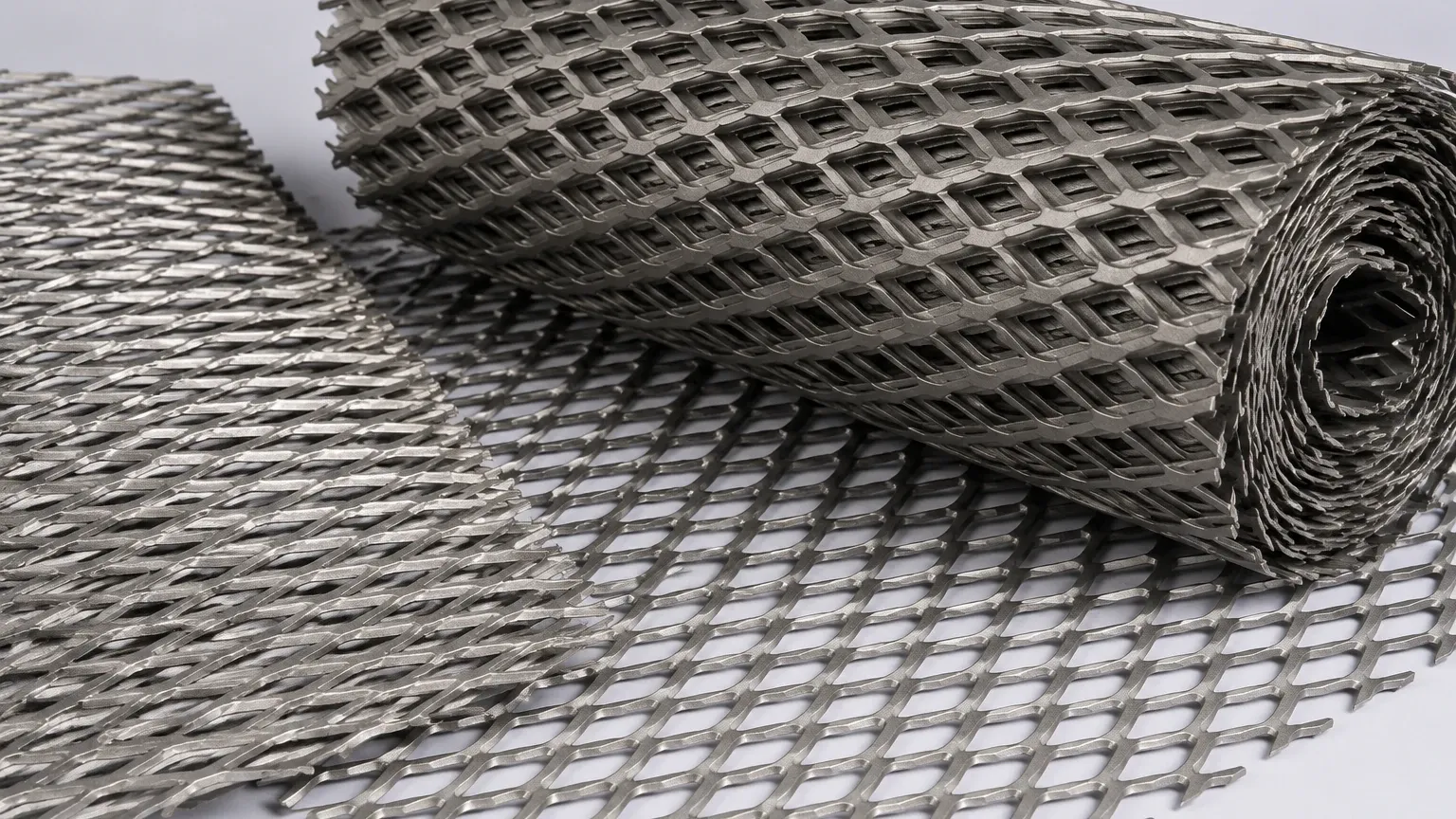
The Role of Perforated & Expanded Metal in Filter Support
In many industrial filtration systems, expanded metal does not act as the primary filtration medium but rather as a support structure. Fine wire mesh or non-woven filter media often lack the mechanical strength to withstand high differential pressures. In these cases, expanded metal 3 8 is used as an outer cage or an inner core.
* Pleat Support: In pleated filter cartridges, expanded metal can be used to maintain the spacing between pleats, ensuring that the entire surface area of the filter media is utilized and preventing pleat collapse under pressure.
* Protective Cages: For heavy-duty applications, an outer layer of expanded metal protects the delicate internal filter media from mechanical damage during installation, operation, or cleaning.
* Drainage Layers: Expanded metal provides a clear path for the filtrate to flow toward the outlet after passing through the primary media, reducing the risk of stagnation or localized pressure buildup.
By integrating high-quality metal components, manufacturers can produce filters that are not only effective at removing contaminants but also durable enough for long-term industrial service.
Engineering Evaluation and Procurement Risks
When sourcing expanded metal 3 8 for B2B applications, several risks must be mitigated to ensure product quality and system performance. Engineers should evaluate potential suppliers based on their ability to meet tight tolerances and provide material certifications.
Common Risks in Procurement:
* Dimensional Inconsistency: Variations in the expansion process can lead to inconsistent diamond sizes, which may affect the fitment of the component or the calculated flow rates.
* Burrs and Sharp Edges: Poorly maintained tooling can result in excessive burrs. In filtration, these burrs can shed metal particles into the process stream or damage the primary filter media.
* Material Substitution: Using lower-grade alloys than specified can lead to premature corrosion and catastrophic failure of the filtration system.
* Camber and Flatness Issues: If the sheet is not properly leveled after expansion, it may exhibit "camber" (a bow in the sheet), making it difficult to roll into cylinders or weld into frames.
To avoid these risks, it is essential to work with a manufacturer like Kaifil that understands the technical requirements of industrial filtration and maintains strict quality control throughout the production process.
Customization Options for OEM Applications
Every industrial process has unique requirements, and off-the-shelf expanded metal may not always be the optimal solution. Customization is often necessary to achieve the desired performance characteristics. When ordering expanded metal 3 8, several parameters can be tailored:
* Custom Strand Widths: Adjusting the width of the strands allows for fine-tuning the balance between strength and open area.
* Specialized Shearing: Expanded metal can be sheared to exact dimensions, including "bond shearing" (cutting through the intersections) or "random shearing" (cutting through the diamonds), depending on the assembly requirements.
* Forming and Welding: For OEM applications, expanded metal can be pre-formed into cylinders, cones, or custom shapes and welded to end caps or flanges to create ready-to-install filter components.
* Surface Treatments: Options such as electropolishing or passivation can be applied to stainless steel components to further enhance corrosion resistance and improve the cleanliness of the surface.
Conclusion: Making Informed Selection Decisions
Selecting expanded metal 3 8 for industrial filtration or structural support is a decision that impacts the reliability and efficiency of an entire system. By focusing on technical specifications—such as SWD/LWD dimensions, material grade, and the choice between standard and flattened profiles—engineers can ensure they are using the most appropriate material for their specific application.
For purchasing teams, the total cost of ownership should be considered rather than just the initial price. A high-quality, precision-manufactured expanded metal component from a reliable source reduces the risk of downtime, extends the replacement cycle of filter elements, and protects expensive downstream equipment. Whether used as a primary screen or a structural support core, expanded metal remains a cornerstone of modern industrial filtration technology.
