


Aluminium Expanded Metal
In the landscape of industrial materials, aluminium expanded metal stands as a versatile and efficient solution for filtration, structural support, and architectural design. Unlike traditional woven wire or perforated sheets, expanded metal is produced through a unique process of simultaneous slitting and stretching. This results in a continuous, one-piece structure that maintains its integrity even when cut into complex shapes. For engineers and procurement specialists, understanding the technical nuances of aluminium expanded metal is essential for optimizing performance in demanding industrial environments.
As a core component of the broader Perforated & Expanded Metal category, aluminium variants offer a specific set of benefits, primarily revolving around high strength-to-weight ratios and inherent corrosion resistance. This guide examines the manufacturing standards, material properties, and engineering considerations necessary for selecting the right expanded metal for industrial applications.
Understanding the Manufacturing Process of Aluminium Expanded Metal
The production of aluminium expanded metal is a precision engineering process that distinguishes it from other metal mesh products. It begins with a solid sheet or coil of aluminium, which is fed through an expanding machine. This machine utilizes a specialized die to slit the metal while simultaneously stretching it.
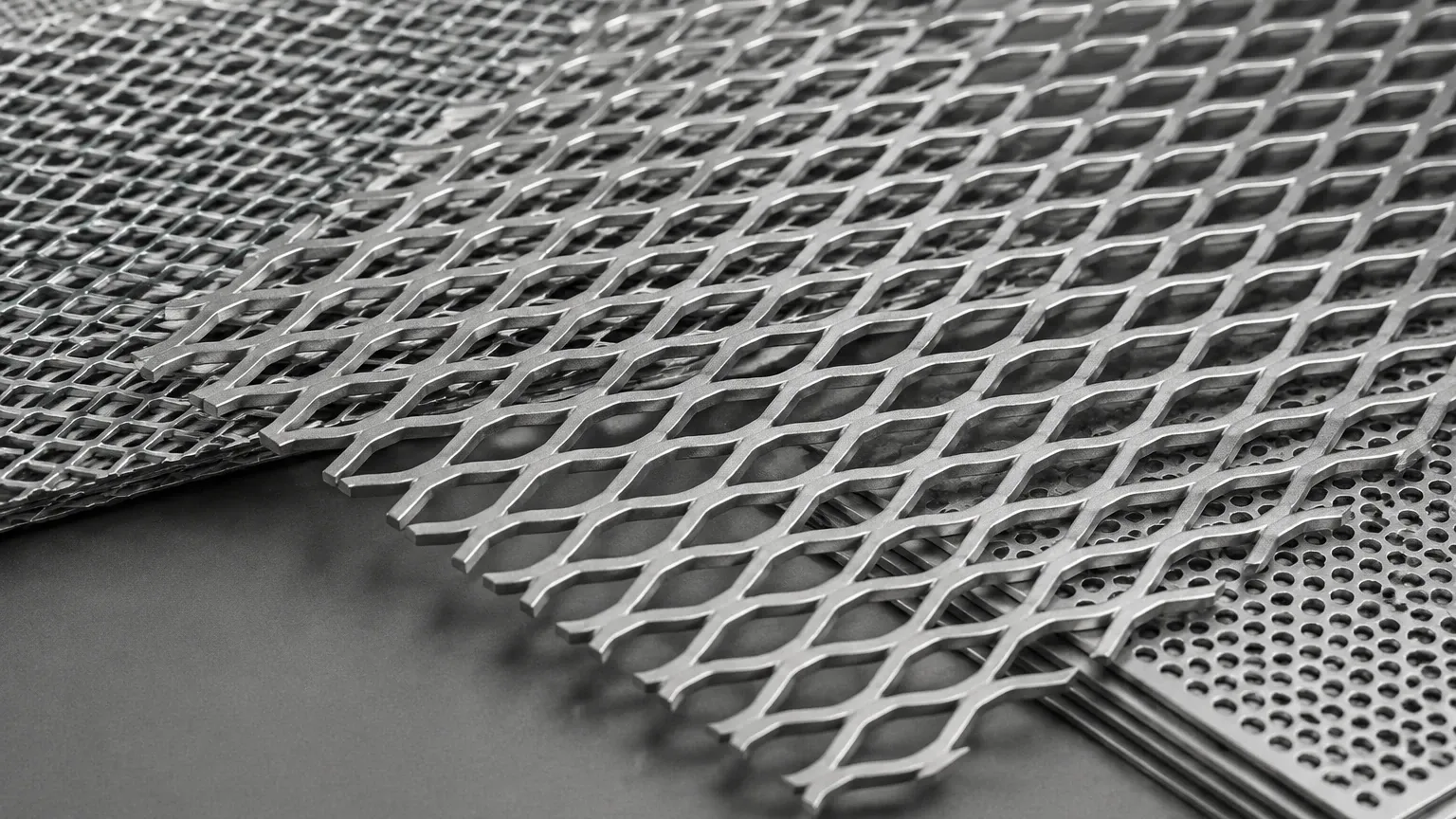
Because the metal is stretched rather than punched, there is virtually no material waste. This "no-waste" characteristic makes it a cost-effective alternative to perforated metal in many scenarios. The stretching process creates diamond-shaped openings, although hexagonal and square patterns are also possible depending on the tooling used.
Raised vs. Flattened Expanded Metal
There are two primary forms of expanded metal available for industrial use:
1. Standard (Raised) Expanded Metal: This is the product as it comes directly off the expanding machine. The strands and bonds are set at a uniform angle to the plane of the sheet. This creates a three-dimensional surface that provides excellent grip and can deflect light or air, which is often beneficial in filtration pre-screening or architectural shading.
2. Flattened Expanded Metal: To produce this, the standard expanded metal is passed through a cold-rolling reducing mill. This process flattens the strands and bonds into a single plane, resulting in a smooth, flat surface. Flattened aluminium expanded metal is typically used when a flush surface is required, such as for internal filter supports or decorative panels where safety and handling are priorities.
Material Selection: Grades and Alloys for Industrial Use
The performance of aluminium expanded metal is heavily dependent on the specific alloy selected. Aluminium is naturally resistant to atmospheric corrosion due to the formation of a protective oxide layer, but different industrial environments require specific chemical compositions.
* Alloy 1060: Known for its high purity (99.6% aluminium), this grade offers excellent corrosion resistance and workability. It is frequently used in chemical processing environments where high ductility is required.
* Alloy 3003: This is the most common alloy for general industrial applications. By adding manganese, 3003 is significantly stronger than 1000-series aluminium while maintaining good formability and corrosion resistance. It is often the standard choice for HVAC filters and protective guards.
* Alloy 5052: Containing magnesium, this alloy offers much higher strength and superior resistance to saltwater and marine environments. It is the preferred choice for offshore filtration systems and heavy-duty industrial components.
When specifying aluminium expanded metal, engineers must confirm the temper of the material (e.g., H14 or H32), as this affects the stiffness and the material's ability to withstand vibration without fatigue failure.
Technical Parameters and Geometric Specifications
To ensure precise fit and function, several geometric parameters must be defined during the procurement process. These terms are standardized across the industry to facilitate clear communication between engineers and manufacturers.
* SWD (Short Way of Diamond): The distance from the center of one bond to the center of the next bond measured across the short diamond diagonal.
* LWD (Long Way of Diamond): The distance from the center of one bond to the center of the next bond measured across the long diamond diagonal.
* SWO (Short Way of Opening): The actual width of the opening, measured from the inside of the bonds.
* LWO (Long Way of Opening): The actual length of the opening, measured from the inside of the bonds.
* Strand Width: The amount of metal fed into the machine between the slits.
* Strand Thickness: The thickness of the original base metal sheet.
These dimensions determine the Open Area Percentage, a critical metric for filtration applications. The open area dictates the flow rate and pressure drop across the mesh. For example, a larger LWD and narrower strand width will result in a higher open area, facilitating higher flow but offering less structural rigidity.
Aluminium Expanded Metal vs. Perforated Metal: Engineering Trade-offs
While both fall under the umbrella of Perforated & Expanded Metal, they serve different engineering needs. Choosing between them requires an analysis of the specific application requirements.
Structural Integrity
Expanded metal is inherently stronger than perforated metal of the same weight. Because the strands are interconnected without welds or joins, the material distributes loads more effectively. In filtration, this means expanded metal can often serve as a self-supporting structure for finer filter media, reducing the need for additional reinforcement frames.
Material Efficiency
As previously noted, expanded metal production generates no scrap. In contrast, perforated metal production can result in up to 40% material waste depending on the hole pattern. For high-grade aluminium alloys, this difference in material utilization can lead to significant cost savings in large-scale industrial projects.
Fluid Dynamics
The three-dimensional nature of raised aluminium expanded metal can create turbulence, which may be desirable in certain mixing or heat-exchange applications. However, if a laminar flow is required, flattened expanded metal or perforated metal with precise hole alignments may be more appropriate.
Applications in Industrial Filtration and Support Systems
Aluminium expanded metal is a staple in the filtration industry, particularly where weight reduction and corrosion resistance are paramount.
Filter Media Support
In high-pressure hydraulic or air filtration systems, fine wire mesh or synthetic fiber media often lack the structural strength to withstand the differential pressure. Aluminium expanded metal is used as a "support pleat" or a rigid outer cage. Its high open area ensures that it does not significantly impede the flow of the fluid while providing the necessary mechanical backing to prevent the primary filter media from collapsing.
Coarse Pre-filtration
In HVAC and industrial air intake systems, expanded metal serves as a primary stage filter. It is effective at capturing larger particulates, such as insects, leaves, and large dust debris, protecting the more expensive secondary and HEPA filters downstream. Because aluminium is easy to clean and resistant to moisture, these pre-filters offer a long service life and can be reused after washing.
EMI/RFI Shielding
Due to its excellent electrical conductivity, aluminium expanded metal is frequently used in electronic enclosures to provide Electromagnetic Interference (EMI) and Radio Frequency Interference (RFI) shielding. It allows for necessary ventilation and cooling while maintaining a conductive barrier that protects sensitive electronics from external interference.
Structural and Architectural Considerations
Beyond filtration, the unique aesthetic and mechanical properties of aluminium expanded metal make it a popular choice in industrial architecture and safety equipment.
* Walkways and Catwalks: Heavy-gauge expanded metal provides a slip-resistant surface that allows liquid and debris to fall through, making it ideal for industrial flooring in wet environments.
* Machine Guarding: It provides a transparent yet robust barrier that allows operators to monitor machinery while remaining protected from moving parts. The lightweight nature of aluminium makes these guards easier to remove for maintenance compared to steel alternatives.
* Acoustic Dampening: When used in conjunction with sound-absorbing materials, expanded metal panels can help manage noise levels in industrial facilities, acting as a protective and decorative facing for acoustic insulation.
Customization and OEM Manufacturing Capabilities
Industrial applications rarely follow a one-size-fits-all approach. Customization is often required to meet specific filtration accuracies or structural dimensions. Manufacturers like Kaifil specialize in providing tailored solutions that go beyond standard stock sizes.
Surface Treatments
While aluminium has natural corrosion resistance, certain environments require additional protection or aesthetic finishes:
* Anodizing: This electrochemical process thickens the natural oxide layer, increasing surface hardness and providing even greater protection against wear and corrosion. It also allows for the addition of color.
* Powder Coating: A dry finishing process that provides a thick, protective layer available in various colors and textures. It is highly resistant to chemicals and UV radiation.
* PVDF Coating: Used primarily in architectural applications, this high-performance resin coating offers exceptional durability against weathering and environmental pollutants.
Precision Cutting and Forming
Custom OEM services include shearing to exact tolerances, circle cutting, and forming the expanded metal into cylinders or cones for specialized filter cartridges. Advanced manufacturing ensures that the edges of the mesh are handled according to the application—either left raw or finished with a U-edging or frame to ensure safety and ease of installation.
Procurement and Quality Verification: A Guide for Engineers
When sourcing aluminium expanded metal for a project, engineers should confirm several factors to ensure the material meets the intended performance standards.
1. Material Certification: Always request Mill Test Reports (MTRs) to verify the chemical composition and physical properties of the aluminium alloy. This is especially critical for 5000-series alloys used in marine or high-stress environments.
2. Tolerance Standards: Standard manufacturing tolerances for expanded metal can vary. Specify whether your application requires tighter-than-standard tolerances for SWD, LWD, or overall sheet dimensions.
3. Edge Conditions: Specify if the mesh should have "closed diamonds" (where the edges are sheared through the bonds) or "open diamonds" (where the edges are sheared through the strands). This affects both the safety of handling and the ease of welding the mesh into a frame.
4. Flatness Requirements: For flattened expanded metal, specify the maximum allowable bow or camber. In precision filtration assembly, even a slight curvature can cause issues during the welding or sealing process.
By focusing on these technical details, procurement teams can avoid common pitfalls such as premature material failure, poor fitment, or insufficient flow capacity. Aluminium expanded metal remains a premier choice for those seeking a balance of lightweight performance, structural rigidity, and long-term durability in industrial filtration and beyond.
