


Backlit Perforated Metal Panel
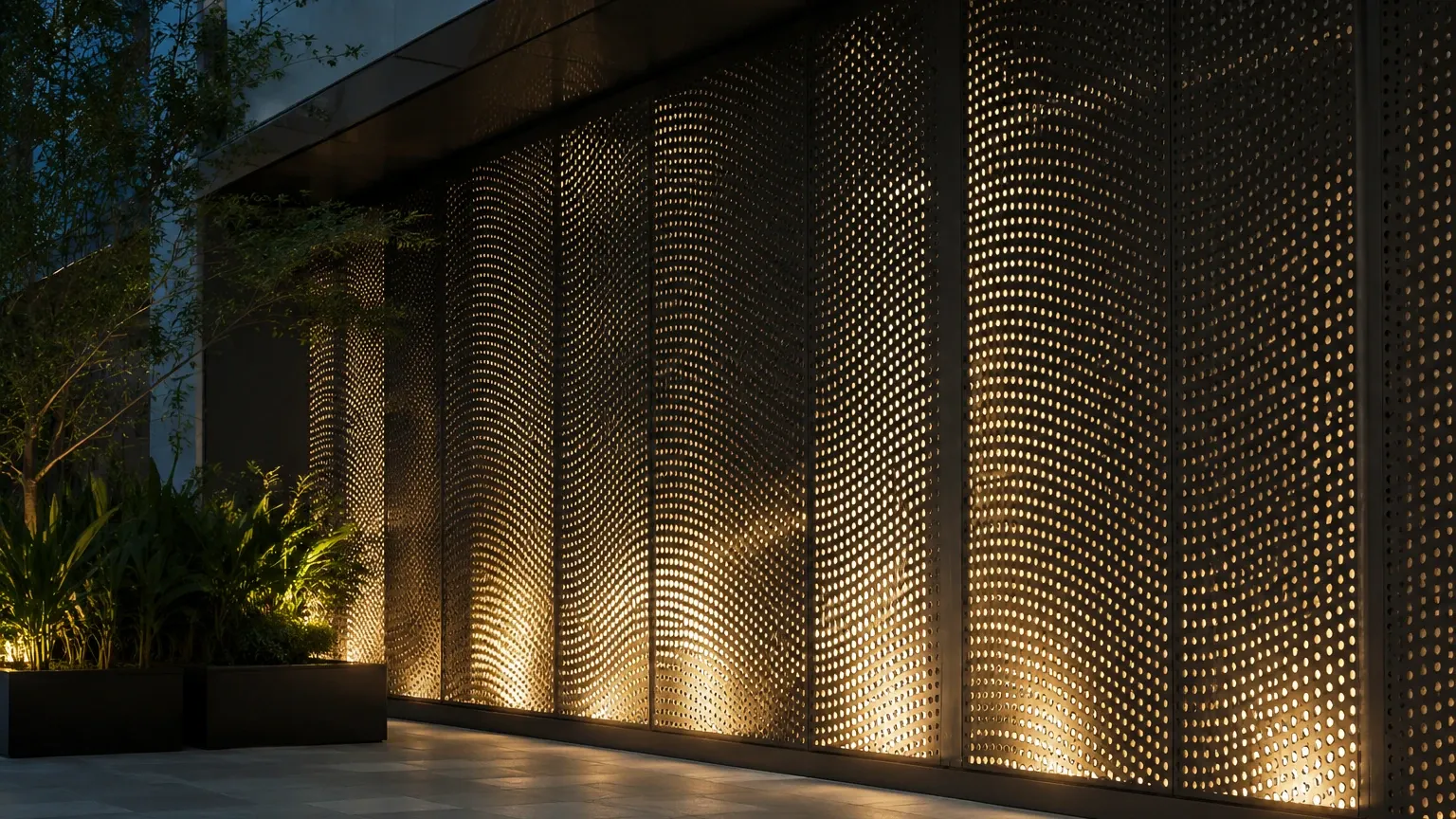
In modern industrial and architectural engineering, the integration of light and metal has evolved beyond simple aesthetics into a functional requirement for visibility, safety, and branding. A backlit perforated metal panel serves as a sophisticated solution that combines the structural durability of precision-engineered metal with the controlled diffusion of light. For engineers and procurement specialists, selecting the right panel involves understanding the interplay between material properties, perforation geometry, and light transmission physics.
As a specialized manufacturer of Perforated & Expanded Metal, Kaifil provides technical insights into how these components are designed to meet the rigorous demands of industrial environments while maintaining visual clarity. This guide explores the engineering considerations, material selections, and performance expectations essential for implementing backlit metal systems.
Understanding the Mechanics of Backlit Perforated Metal Panels
The primary function of a backlit perforated metal panel is to act as a light-diffusing screen. Unlike solid surfaces, perforated metal allows a specific percentage of light to pass through the "open area," creating a patterned illumination effect. The visual result is determined by the "transparency" of the panel, which is a direct product of the hole size, shape, and spacing (pitch).
From an engineering perspective, backlighting requires a light source—typically high-efficiency LED arrays—positioned behind the metal sheet. The distance between the light source and the panel (the cavity depth) is critical. If the LEDs are too close, "hot spots" or uneven light dots appear. If they are too far, the intensity may diminish. To achieve a uniform glow, engineers often use a secondary diffusion layer, such as an acrylic or polycarbonate sheet, between the light source and the perforated metal.
Material Specifications and Engineering Integrity
Material selection is the foundation of any industrial filtration or architectural component. For backlit applications, the choice of metal impacts not only the appearance but also the structural integrity and lifespan of the installation.
Stainless Steel (304 and 316 Grades)
Stainless steel is the preferred choice for most industrial backlit perforated metal panels due to its exceptional corrosion resistance and mechanical strength. In environments where moisture, chemicals, or salt spray are present—such as chemical processing plants or coastal architectural facades—Grade 316 stainless steel provides the necessary durability. The reflective properties of stainless steel also help in bouncing light within the internal cavity, enhancing the overall brightness of the backlit effect.
Aluminum and Specialized Alloys
Aluminum is often selected for projects where weight reduction is a priority. It offers good natural corrosion resistance and can be anodized or powder-coated to achieve specific light-reflective qualities. However, in heavy-duty industrial filtration or high-pressure environments, the higher tensile strength of stainless steel is usually required to prevent warping or deformation over time.
The Impact of Perforation Patterns on Light Diffusion
The perforation pattern is more than a design choice; it is a technical specification that dictates the panel's open area percentage. This percentage determines how much light is transmitted and how much is blocked.
1. Round Hole Perforations: These are the most common and versatile. They provide excellent structural stability and uniform light distribution. By varying the staggered or straight-row alignment, engineers can control the "moiré effect"—an optical interference pattern that can occur when light passes through multiple layers of mesh or perforated sheets.
2. Square and Slotted Holes: These patterns offer a higher open area percentage, allowing more light to pass through. They are often used in ventilation covers where high airflow and high visibility are simultaneously required.
3. Custom Precision Patterns: For specific OEM applications, custom patterns can be engineered to create logos, gradients, or functional light paths. This requires advanced CNC punching or laser cutting to ensure edge precision and dimensional accuracy.
When evaluating a backlit perforated metal panel, it is essential to calculate the open area using the formula:
*Open Area % = (Area of Holes / Total Area of Sheet) x 100.*
Installation and Integration with Lighting Systems
Successful implementation of backlit panels requires a holistic approach to the mounting system and the electrical integration.
Framing and Support
Perforated panels must be securely framed to prevent sagging, especially when using thinner gauges. Typical mounting methods include "Z-clips," standoffs, or integrated flange frames. Standoffs are particularly effective for backlit panels as they create a consistent gap between the wall and the panel, providing space for the lighting hardware.
Thermal Management
While LEDs generate significantly less heat than traditional lighting, industrial-scale backlighting can still produce thermal buildup within an enclosed panel cavity. The perforations themselves assist in passive cooling by allowing heat to dissipate through the holes. Engineers must ensure that the airflow is sufficient to maintain the operating temperature of the LED drivers and modules to prevent premature failure.
Industrial Applications: Beyond Aesthetics
While backlit perforated metal panels are popular in architectural signage and interior design, they serve critical roles in industrial sectors:
* Equipment Enclosures: Backlighting allows operators to monitor internal components or fluid levels through the perforations without opening the protective housing.
* Safety and Warning Systems: Perforated panels can be backlit with red or amber LEDs to serve as large-scale visual indicators for machine status or emergency warnings in noisy factory environments where audible alarms might be missed.
* HVAC and Air Filtration: In cleanroom environments or high-end laboratory settings, backlit panels provide a clean, integrated look for air returns while allowing technicians to visually inspect the cleanliness of the secondary filters behind the metal screen.
* Marine and Offshore: On vessels and oil rigs, backlit stainless steel panels provide durable, corrosion-resistant wayfinding and safety lighting that can withstand extreme weather conditions.
Key Evaluation Criteria for Procurement
When sourcing a backlit perforated metal panel, purchasing teams and engineers should confirm the following technical specifications to ensure the product meets the application's requirements:
* Gauge Thickness: The thickness of the metal (typically ranging from 0.5mm to 5mm) must be balanced between the desired weight and the required structural rigidity.
* Hole Diameter and Pitch: These dimensions dictate the resolution of the light pattern. Smaller, more frequent holes create a smoother light diffusion, while larger holes create a more industrial, high-contrast look.
* Edge Margins: Specify the "unperforated" borders required for welding or mechanical fastening. Standard margins help maintain the flat profile of the sheet during the manufacturing process.
* Flatness Tolerances: Perforating metal can introduce internal stresses that cause the sheet to curl. For backlighting, where uniformity is key, panels must be leveled to meet strict flatness tolerances.
* Surface Finish: Options such as brushed, 2B mill finish, or electropolished stainless steel affect how light interacts with the surface of the metal. An electropolished finish, for instance, increases reflectivity and enhances corrosion resistance.
Maintenance and Longevity in Demanding Environments
The long-term performance of a backlit system depends on the ease of maintenance. Dust and debris accumulation in the perforations can significantly reduce light output and airflow.
Cleaning Protocols
Stainless steel panels should be cleaned with non-abrasive solutions to maintain their reflective properties. In industrial settings, pressurized air can often be used to clear the perforations. If the panel is part of a filtration system, the design should allow for easy removal to access the internal lighting and secondary filter media.
Replacement Cycles
While the metal panel itself may have a lifespan of decades, the lighting components may need replacement sooner. Designing the system with accessible panels ensures that maintenance teams can swap out LED modules without dismantling the entire structural assembly. Using high-quality Perforated & Expanded Metal ensures that the exterior housing remains intact through multiple lighting maintenance cycles.
Conclusion: Selecting a Technical Partner
Implementing a backlit perforated metal panel system requires a manufacturer who understands the nuances of metal fabrication and the functional requirements of industrial applications. From material selection to the precision of the perforation pattern, every detail impacts the final performance.
Kaifil specializes in providing customized filtration and metal solutions that meet these exacting standards. By focusing on durability, filtration accuracy, and structural integrity, we help engineers develop high-performance components for chemical, pharmaceutical, and industrial sectors. When planning your next project involving perforated metal, confirming the technical specifications early in the design phase will lead to a more reliable, cost-effective, and visually effective solution.
