


Cost of Expanded Metal
In industrial filtration and structural support applications, expanded metal is a critical component valued for its strength-to-weight ratio and open area efficiency. For engineers and procurement specialists, understanding the cost of expanded metal involves more than a simple price-per-unit calculation. It requires a technical evaluation of material grades, geometric configurations, and secondary processing requirements. Because expanded metal is produced by simultaneously slitting and stretching a solid sheet, it creates a mesh without the material waste associated with perforated metal, yet its pricing remains sensitive to specific engineering tolerances and mechanical properties.
At Kaifil, we specialize in providing Perforated & Expanded Metal solutions tailored for demanding environments. This guide explores the primary drivers of cost and the technical variables that influence the total investment in high-performance expanded metal components.
1. Material Selection and Grade Impact
The most significant factor in the cost of expanded metal is the raw material. In the context of industrial filtration—particularly in the chemical, pharmaceutical, and food processing sectors—stainless steel is the industry standard due to its corrosion resistance and durability.
Stainless Steel Grades
* Grade 304: The most common stainless steel used. It offers excellent corrosion resistance for general industrial applications and is generally the most cost-effective stainless option.
* Grade 316L: Contains molybdenum, which provides superior resistance to chlorides and pitting. While the material cost is higher than 304, it is often required for marine environments, pharmaceutical processing, and aggressive chemical filtration to prevent premature failure.
* Specialty Alloys: For high-temperature or extreme chemical exposure, alloys like Monel, Inconel, or Hastelloy may be used. These materials significantly increase the cost due to both raw material prices and the specialized tooling required to process harder alloys.
Material Thickness (Gauge)
The thickness of the original base sheet determines the strength and weight of the final product. Heavier gauges require more force to expand and increase the overall weight of the shipment, impacting both the production cost and logistics expenses.
2. Geometric Specifications: SWD and LWD
The geometry of the diamond-shaped openings is defined by two primary measurements: the Short Way of Design (SWD) and the Long Way of Design (LWD). These dimensions, along with the strand width, dictate the open area and the mechanical rigidity of the mesh.
The Impact of Opening Size
Smaller openings (fine mesh) require more shearing and stretching cycles per square foot of material. This increases the machine time and labor required for production. Conversely, larger openings use less energy and time to produce but may offer less structural support. Engineers must balance the filtration requirements (if used as a primary medium) or the support requirements (if used as a cage for wire mesh) against these production costs.
Strand Width and Thickness
The strand width is the amount of metal between the openings. Increasing the strand width increases the strength and the weight of the mesh. Because expanded metal is sold by weight or by the sheet (which is priced based on material volume), a wider strand directly correlates to a higher cost of expanded metal.
3. Raised vs. Flattened Expanded Metal
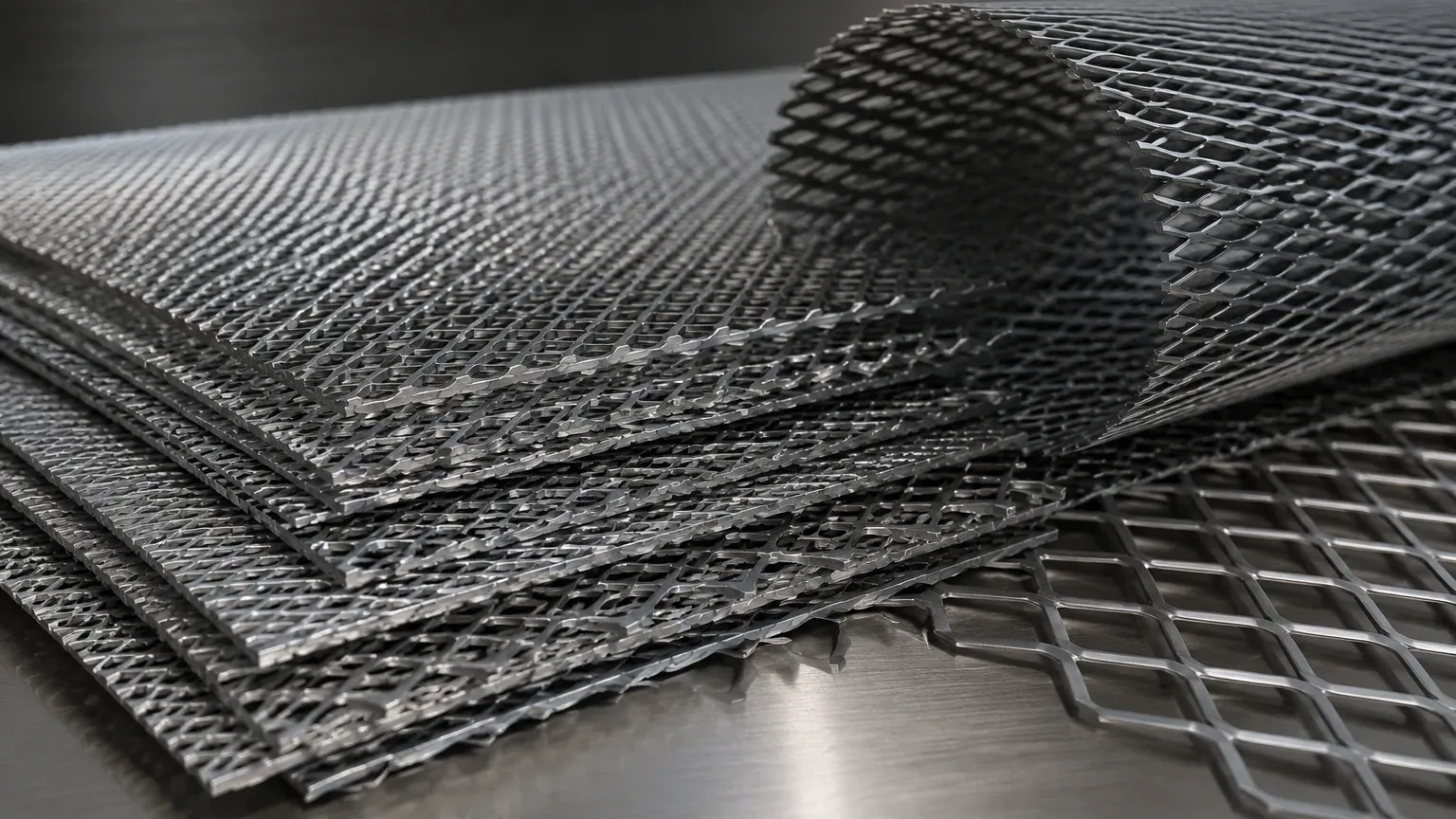
When expanded metal comes off the machine, it is in a "raised" or "standard" state. The strands are set at an angle to the plane of the sheet, creating a three-dimensional surface that provides excellent grip and high rigidity.
The Cost of Flattening
Flattened expanded metal undergoes an additional secondary process where the raised mesh is passed through a cold-rolling reducing mill. This process flattens the strands and bonds into the same plane as the sheet.
* Technical Advantage: Flattened mesh is often preferred in filtration assemblies to prevent the sharp edges of raised strands from puncturing or abrading delicate wire mesh layers.
* Cost Implication: The additional rolling step adds to the labor and equipment overhead. Furthermore, flattening can slightly increase the overall dimensions of the sheet, requiring precise trimming to meet final specifications, which may increase scrap rates.
4. Customization and OEM Requirements
For many industrial applications, off-the-shelf expanded metal sheets do not meet the precise requirements of a filtration system or a hydraulic housing. Customization is a core service at Kaifil, and it influences the pricing structure in several ways:
Custom Sheet Sizes and Tolerances
Standard sheets are typically produced in 4'x8' or 4'x10' dimensions. If an application requires specific circular discs, cylinders, or non-standard rectangular dimensions, the cost will reflect the precision cutting (laser, waterjet, or mechanical shearing) and the resulting material yield. High-yield layouts reduce waste and lower the per-part cost.
Tooling and Setup
For unique diamond patterns or specific open area percentages that fall outside of standard industrial dies, custom tooling may be required. While this involves an initial investment, it allows for optimized performance in specialized filtration cartridges where flow rate and pressure drop are critical.
5. Surface Treatments and Finishing
In sectors like food processing and pharmaceuticals, the surface finish of the expanded metal is as important as its structural integrity. Secondary operations ensure the component meets hygiene and safety standards.
* Pickling and Passivation: This chemical process removes surface contaminants and restores the protective oxide layer on stainless steel. It is a standard requirement for ensuring long-term corrosion resistance in acidic or alkaline environments.
* Electropolishing: This process removes a fine layer of surface material, resulting in a mirror-like finish that is extremely smooth. It reduces the risk of bacterial growth and makes the filter components easier to clean during CIP (Clean-in-Place) cycles. Due to the chemical and electrical energy required, electropolishing adds a premium to the cost.
* Degreasing: Essential for oxygen service or high-purity hydraulic applications to ensure no residual manufacturing oils remain on the mesh.
6. Total Cost of Ownership (TCO) in Filtration
When evaluating the cost of expanded metal, engineers should consider the Total Cost of Ownership rather than just the initial purchase price. In a B2B industrial context, the durability of the component directly impacts the maintenance budget and operational uptime.
Durability and Replacement Cycles
A cheaper, lower-grade expanded metal might save costs upfront but may succumb to stress corrosion cracking or mechanical deformation under high pressure. Choosing a robust 316L stainless steel expanded metal support for a filter cartridge ensures that the internal mesh remains protected, extending the service life of the entire assembly and reducing the frequency of replacements.
Cleaning and Reusability
High-quality stainless steel expanded metal can withstand aggressive cleaning protocols, including ultrasonic cleaning and high-pressure backwashing. The ability to reuse the component multiple times significantly lowers the long-term cost compared to disposable or lower-quality alternatives.
7. Procurement Checklist for Engineers
To receive an accurate quote and optimize the cost of expanded metal for your project, confirm the following technical details before contacting a manufacturer:
1. Material Grade: Does the environment require 304, 316L, or a specialty alloy?
2. State: Is raised (standard) mesh acceptable, or is flattened mesh required to protect adjacent layers?
3. Dimensions: What are the SWD, LWD, and strand thickness requirements? (Note: Specify if these are internal or external diamond measurements).
4. Open Area: What is the required percentage of open area to maintain the target flow rate?
5. Finishing: Are there specific requirements for passivation, electropolishing, or burr removal?
6. Quantity: Are you looking for a prototype run or high-volume OEM production? Larger batches typically benefit from economies of scale in setup and material procurement.
By focusing on these technical parameters, purchasing teams can ensure they are not over-specifying (which inflates cost) or under-specifying (which leads to premature failure). Kaifil provides professional engineering support to help navigate these choices, ensuring that the Perforated & Expanded Metal components delivered are perfectly suited for the intended industrial application.
Conclusion
The cost of expanded metal is a function of material science, mechanical engineering, and manufacturing precision. While raw material prices set the baseline, the complexity of the diamond pattern, the necessity of flattening, and the rigor of surface finishing determine the final value. For critical industrial filtration and support roles, investing in high-quality, customized expanded metal is a strategic decision that enhances system reliability and optimizes the total cost of operation over the lifecycle of the equipment.
