


Diamond Expanded Metal Mesh Sizes
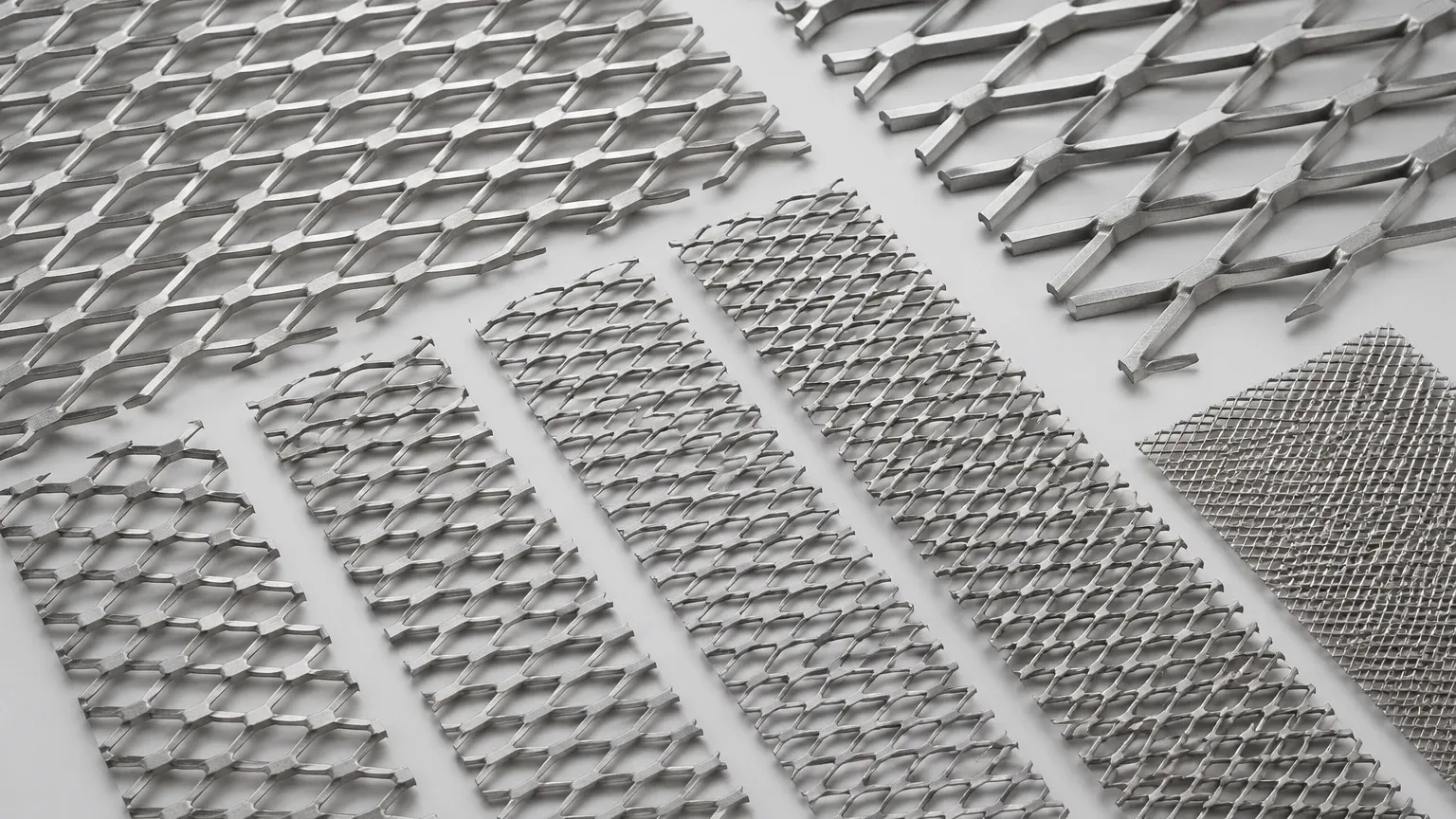
In industrial filtration and structural engineering, selecting the correct diamond expanded metal mesh sizes is a critical step that dictates flow rates, structural integrity, and filtration efficiency. Expanded metal is produced by simultaneously slitting and stretching a solid metal sheet, resulting in a diamond-shaped pattern that is both lightweight and exceptionally strong. Unlike woven wire mesh, expanded metal is a single piece of material without joins or welds, which prevents unraveling and provides superior mechanical stability in high-pressure environments.
For engineers and procurement professionals, understanding the nuances of mesh dimensions—including the Long Way of Diamond (LWD), Short Way of Diamond (SWD), and strand thickness—is essential for optimizing performance in chemical processing, pharmaceutical manufacturing, and hydraulic systems.
Understanding the Geometry of Diamond Expanded Metal
The specification of expanded metal differs significantly from perforated sheets or woven wire. To accurately specify diamond expanded metal mesh sizes, four primary measurements must be defined:
1. Short Way of Diamond (SWD): This is the distance from the center of a bond on one side to the center of the bond on the opposite side, measured across the short axis of the diamond.
2. Long Way of Diamond (LWD): This is the distance from the center of a bond to the center of the bond across the long axis of the diamond.
3. Short Way of Opening (SWO): The actual clear opening distance between the inside edges of the strands across the short axis.
4. Long Way of Opening (LWO): The clear opening distance between the inside edges across the long axis.
In addition to these diamond dimensions, the Strand Width (the amount of metal fed into the expanding machine) and Strand Thickness (the original thickness of the base metal) determine the overall weight and strength of the mesh. For industrial filtration, the SWO is often the most critical metric, as it determines the size of the particles that can pass through the medium.
Standard vs. Flattened Expanded Metal Mesh
When evaluating diamond expanded metal mesh sizes, it is important to distinguish between "Standard" (raised) and "Flattened" varieties.
Standard Expanded Metal
Standard expanded metal is the direct product of the expanding machine. The strands and bonds are set at a uniform angle to the plane of the sheet. This provides extra strength and rigidity, as well as a directional surface that can be used to control the flow of fluids or gases. However, the raised profile increases the overall thickness of the sheet significantly beyond the original gauge of the metal.
Flattened Expanded Metal
Flattened expanded metal is produced by passing the standard expanded sheet through a cold-roll reducing mill. This process flattens the strands and bonds into a single plane, resulting in a smooth, level surface. While flattening makes the mesh easier to clean and safer to handle, it slightly increases the LWD and SWD dimensions while reducing the overall thickness. For precision filtration components, flattened mesh is often preferred because it provides a consistent thickness that is easier to integrate into filter cartridges or housing assemblies.
Material Considerations for Industrial Durability
The choice of material is as important as the mesh size itself. In demanding B2B environments, stainless steel is the industry standard due to its corrosion resistance and thermal stability.
* 304 Stainless Steel: Suitable for general industrial applications, providing excellent strength and basic corrosion resistance for water treatment and food processing.
* 316/316L Stainless Steel: Essential for chemical processing and pharmaceutical applications where exposure to corrosive agents or chlorides is common. The addition of molybdenum enhances resistance to pitting and crevice corrosion.
* Specialty Alloys: For extreme environments involving high temperatures or highly acidic fluids, alloys like Monel or Inconel may be specified.
When selecting Perforated & Expanded Metal for filtration, engineers must ensure the material grade is compatible with the chemical composition of the filtrate to prevent premature failure due to oxidation or chemical degradation.
Evaluating Performance for Industrial Filtration
Diamond expanded metal mesh sizes directly influence the technical performance of a filtration system. Engineers must balance three competing factors: filtration accuracy, pressure drop, and mechanical strength.
Filtration Accuracy and Open Area
The "Open Area" percentage is the ratio of the area of the openings to the total area of the sheet. A higher open area allows for higher flow rates and lower pressure drops but may compromise the structural integrity of the mesh. In pre-filtration or coarse filtration, expanded metal is often used to capture large debris before the fluid reaches finer secondary filters.
Mechanical Support for Fine Media
One of the most common applications for expanded metal in the B2B sector is as a support structure for finer wire mesh or non-woven filter media. In high-pressure hydraulic or liquid filtration, fine mesh can collapse or deform under the force of the flow. A layer of expanded metal with a large SWD/LWD provides the necessary rigid skeleton to maintain the shape of the filter element without significantly impeding the flow.
Pressure Drop Considerations
The geometry of the diamond opening creates a tortuous path for the fluid. While this can sometimes aid in catching irregular particles, it also contributes to the pressure drop across the filter. Precise calculation of the effective open area is required to ensure the system pump can maintain the necessary flow rate as the filter begins to load with contaminants.
Customization and Engineering Specifications
Off-the-shelf mesh sizes rarely meet the exact requirements of specialized industrial equipment. Customization is often necessary to achieve the optimal balance of weight, thickness, and opening size.
When working with a manufacturer like Kaifil, engineers can specify custom diamond expanded metal mesh sizes to fit unique housing dimensions or specific particulate removal targets. Key customization variables include:
* Variable Pitch: Adjusting the expansion ratio to create larger or smaller diamond openings from the same base material.
* Edge Treatments: Providing mesh with solid borders (random or matched) to facilitate easier welding or mechanical fastening into filter frames.
* Precision Tolerances: Maintaining tight control over strand width and thickness to ensure consistent performance across large production runs.
These customized Perforated & Expanded Metal solutions are vital for OEM manufacturers who require integrated filtration components that meet strict internal quality standards.
Practical Procurement: Risks and Evaluation Criteria
For purchasing teams, selecting a supplier for diamond expanded metal involves more than just comparing price per square foot. The total cost of ownership is influenced by the durability and quality of the mesh.
Common Risks to Avoid
* Burrs and Sharp Edges: Poorly manufactured expanded metal can have significant burrs. In food processing or pharmaceutical applications, these burrs can break off and contaminate the product or damage sensitive downstream equipment.
* Inconsistent Expansion: If the expansion process is not tightly controlled, the diamond sizes may vary across the sheet, leading to uneven flow and localized high-pressure zones that can cause filter failure.
* Material Certification: Ensure the supplier provides mill test reports (MTRs) to verify the chemical composition of the stainless steel, particularly for 316L requirements.
Maintenance and Replacement Cycles
While expanded metal is highly durable, it is not immune to wear. In abrasive environments, the strands can thin over time, leading to a change in the effective mesh size. Regular inspection for "blinding" (where particles become permanently lodged in the diamond corners) and strand fatigue is recommended. Because expanded metal is often more cost-effective than complex multi-layered sintered media, it is frequently used in applications where regular replacement is a planned part of the maintenance cycle.
Conclusion
Selecting the right diamond expanded metal mesh sizes requires a technical understanding of how geometry, material properties, and manufacturing processes intersect. Whether used as a primary filter medium or a structural support layer, the precision of the LWD, SWD, and strand dimensions determines the efficiency and longevity of the industrial filtration system. By focusing on high-quality stainless steel options and seeking customized engineering support, B2B professionals can ensure their filtration solutions meet the rigorous demands of modern industrial processing.
