


Expanded Metal 2mm
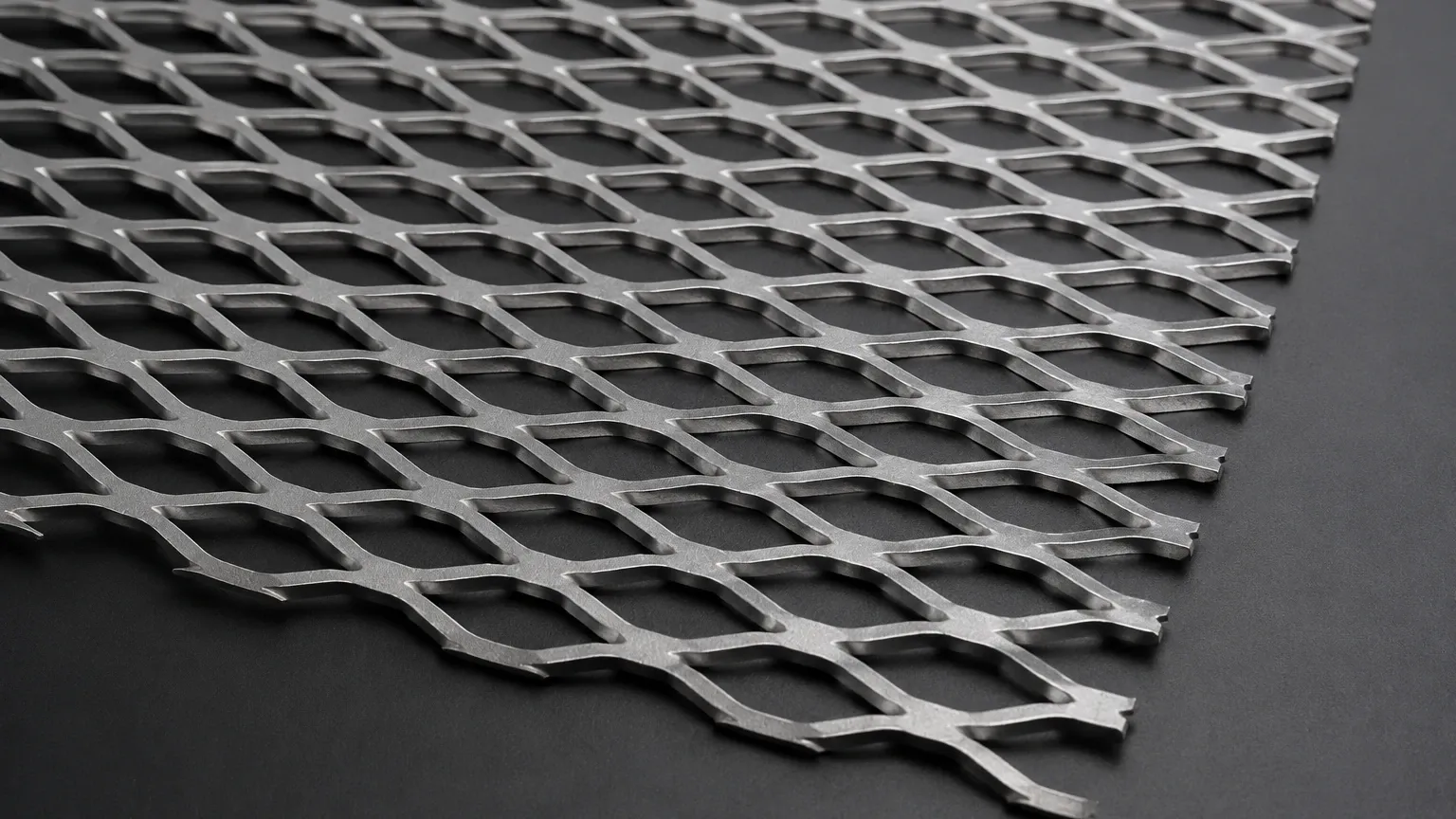
In industrial filtration and structural engineering, the selection of support media is as critical as the selection of the primary filtration layer. Expanded metal 2mm components represent a versatile and robust solution for engineers requiring a balance between mechanical strength, open area, and material efficiency. Unlike perforated sheets, expanded metal is produced through a process of slitting and stretching, which ensures no material waste and creates a unique three-dimensional structure that enhances structural rigidity.
For technical professionals managing chemical processing, hydraulic systems, or pharmaceutical manufacturing, understanding the nuances of expanded metal 2mm—whether referring to the sheet thickness or the strand width—is essential for optimizing system performance and longevity. This guide examines the technical specifications, application logic, and engineering considerations for integrating these components into industrial environments.
Technical Overview of Expanded Metal 2mm
The manufacturing of expanded metal involves a shearing and stretching process where a solid metal sheet is slit and expanded into a diamond-shaped pattern. The term "expanded metal 2mm" typically refers to one of two critical dimensions: the nominal thickness of the base material or the width of the individual strands. In high-pressure filtration applications, a 2mm thickness is often specified to provide the necessary resistance against deformation under fluid load.
Raised vs. Flattened Profiles
Engineers must distinguish between raised (standard) and flattened expanded metal.
1. Raised Expanded Metal: This is the immediate product of the expansion process. The strands are set at a sharp angle to the plane of the sheet. This provides maximum rigidity and a high grip surface, which is often used in industrial walkways or as a high-turbulence media in specialized fluid processing.
2. Flattened Expanded Metal: The raised sheet is passed through a cold-rolling reducing mill. This flattens the strands and bonds into a single plane. Flattened 2mm expanded metal is preferred in filtration assemblies because it provides a smooth surface that prevents damage to delicate wire mesh layers and ensures uniform contact in multi-layer filter cartridges.
Geometry and Dimensions
When specifying expanded metal 2mm, engineers must define the diamond geometry using four primary metrics:
* Long Way of Diamond (LWD): The distance from the center of one joint to the center of the next joint across the long axis.
* Short Way of Diamond (SWD): The distance across the short axis.
* Strand Width: The amount of metal between the openings.
* Sheet Thickness: The gauge of the original material.
In a 2mm specification, the thickness provides the structural backbone, while the strand width determines the total open area and the weight of the final component.
Material Grades and Corrosion Resistance
Given Kaifil’s focus on stainless steel filtration solutions, the material grade is a primary determinant of the component's service life. Expanded metal 2mm is most commonly fabricated from austenitic stainless steels due to their superior forming characteristics and resistance to environmental degradation.
Stainless Steel 304/304L
Grade 304 is the standard for general industrial applications. It offers excellent corrosion resistance in atmospheric conditions and many organic and inorganic chemicals. In filtration, 304-grade expanded metal is widely used for water treatment and food processing where sanitation is required but extreme chemical aggression is absent.
Stainless Steel 316/316L
For more demanding environments, such as marine applications, pharmaceutical production, or chemical processing involving chlorides, Grade 316 is the preferred choice. The addition of molybdenum enhances resistance to pitting and crevice corrosion. When expanded metal 2mm is used as a support core in a filter cartridge, 316L (low carbon) is often specified to prevent carbide precipitation during welding processes, ensuring the integrity of the filter assembly.
Structural Role in Industrial Filtration Systems
In many high-performance filtration systems, the primary filter media—such as fine wire mesh or fiber felt—lacks the inherent strength to withstand high differential pressures. This is where Perforated & Expanded Metal components become indispensable.
Support for Pleated Filter Elements
In pleated filter cartridges, expanded metal 2mm serves as an inner or outer support cage. The diamond pattern provides a high percentage of open area, which minimizes pressure drop across the filter while providing a rigid framework that prevents the pleats from collapsing or bunching under flow. The 2mm thickness is particularly effective in hydraulic systems where sudden pressure spikes are common.
Flow Dynamics and Turbulence
The three-dimensional geometry of raised expanded metal can be used strategically to induce controlled turbulence. In certain chemical reactors or heat exchangers, this turbulence helps in breaking up boundary layers, thereby improving mixing efficiency or heat transfer rates. Engineers must calculate the Reynolds number in the context of the expanded metal’s geometry to ensure that the induced turbulence does not lead to excessive energy loss or cavitation.
Key Engineering Selection Criteria
Selecting the correct expanded metal 2mm specification requires a detailed analysis of the application’s mechanical and hydraulic requirements. Engineers should focus on the following three criteria:
1. Open Area Calculation
The open area percentage determines the flow capacity of the filter. A higher open area reduces the initial pressure drop but may compromise the structural integrity of the sheet. For expanded metal 2mm, the open area is typically calculated based on the relationship between the strand width and the SWD. In filtration, an open area of 40% to 60% is often the "sweet spot" for balancing flow and strength.
2. Load-Bearing Capacity
Unlike solid plates, the load-bearing capacity of expanded metal is directional. It is significantly stronger when the load is applied across the Short Way of the Diamond (SWD) rather than the Long Way (LWD). When designing cylindrical filter supports, the orientation of the diamonds relative to the axis of the cylinder can drastically affect the burst pressure of the cartridge.
3. Tolerance and Precision
In precision metal filtration, tolerances are measured in tenths of a millimeter. For expanded metal 2mm, thickness tolerances must be strictly controlled to ensure that the component fits perfectly within the filter housing or end caps. Variations in thickness can lead to bypass—where unfiltered fluid escapes through gaps—rendering the entire filtration system ineffective.
Comparison: Perforated vs. Expanded Metal
Engineers often debate between using perforated metal or expanded metal for support structures. While both fall under the category of Perforated & Expanded Metal, they offer different performance profiles.
* Material Efficiency: Expanded metal is more cost-effective because it is produced by stretching rather than punching holes. There is zero scrap metal produced during the expansion of a 2mm sheet, whereas perforated metal can result in up to 70% material waste.
* Weight-to-Strength Ratio: Expanded metal generally offers a higher strength-to-weight ratio. The interconnected strands distribute loads more effectively than the "bridges" between holes in a perforated sheet.
* Surface Texture: Perforated metal is naturally flat, making it easier to clean. Expanded metal, even when flattened, retains a slight texture that can provide better mechanical interlocking if the component is being over-molded or bonded to other materials.
Customization and Manufacturing Precision
Standard off-the-shelf expanded metal rarely meets the exacting requirements of specialized industrial filtration. Customization is often necessary to ensure the component integrates seamlessly into the larger system.
OEM Capabilities
Kaifil provides extensive OEM services for expanded metal 2mm, allowing for custom diamond sizes, strand widths, and sheet dimensions. This is particularly important for manufacturers of proprietary filtration equipment who require unique flow characteristics or specific mechanical footprints.
Fabrication and Finishing
Beyond the expansion process, several secondary operations are critical for industrial use:
* Precision Cutting: Using laser or waterjet cutting to ensure burr-free edges, which is vital for preventing damage to filter mesh and ensuring safety during handling.
* Annealing: Stress-relieving the metal after the expansion process to improve ductility and prevent cracking during subsequent forming or welding.
* Surface Treatment: Electropolishing or passivating stainless steel expanded metal to enhance its corrosion resistance and ensure it meets the strict hygiene standards of the food and pharmaceutical industries.
Maintenance and Total Cost of Ownership
When evaluating expanded metal 2mm for a project, engineers must look beyond the initial purchase price and consider the Total Cost of Ownership (TCO). The durability of stainless steel expanded metal significantly reduces the frequency of replacement.
Cleaning and Reuse
In many industrial applications, expanded metal components are designed to be cleaned and reused. In heavy-duty oil or water filtration, the 2mm support structure can be backwashed or ultrasonically cleaned. The robust nature of the 2mm thickness ensures that the structure can withstand the mechanical stresses of high-pressure cleaning cycles without losing its shape.
Replacement Indicators
While expanded metal is durable, it is not indestructible. Indicators for replacement include:
* Permanent Deformation: If the diamond pattern shows signs of bowing or stretching beyond its original specs, the structural integrity is compromised.
* Corrosion Pitting: Even in stainless steel, localized pitting can lead to stress risers and eventual failure.
* Erosion: In high-velocity abrasive flows, the strands may thin over time, reducing the burst pressure of the filter assembly.
Conclusion
Expanded metal 2mm is a foundational component in modern industrial filtration, providing the necessary structural support for high-precision media. By selecting the appropriate material grade, diamond geometry, and finishing process, engineers can ensure their systems operate with maximum efficiency and minimal downtime. Whether used as a support cage in a hydraulic filter or a protective screen in a chemical reactor, the technical advantages of expanded metal—efficiency, strength, and versatility—make it a preferred choice for demanding B2B applications.
For those in the procurement or engineering phase, confirming the exact dimensional requirements and material compatibility is the first step toward a successful filtration solution. Utilizing high-quality Perforated & Expanded Metal ensures that the final product meets both the performance expectations and the safety standards required in today’s industrial landscape.
