


Expanded Metal 3 4
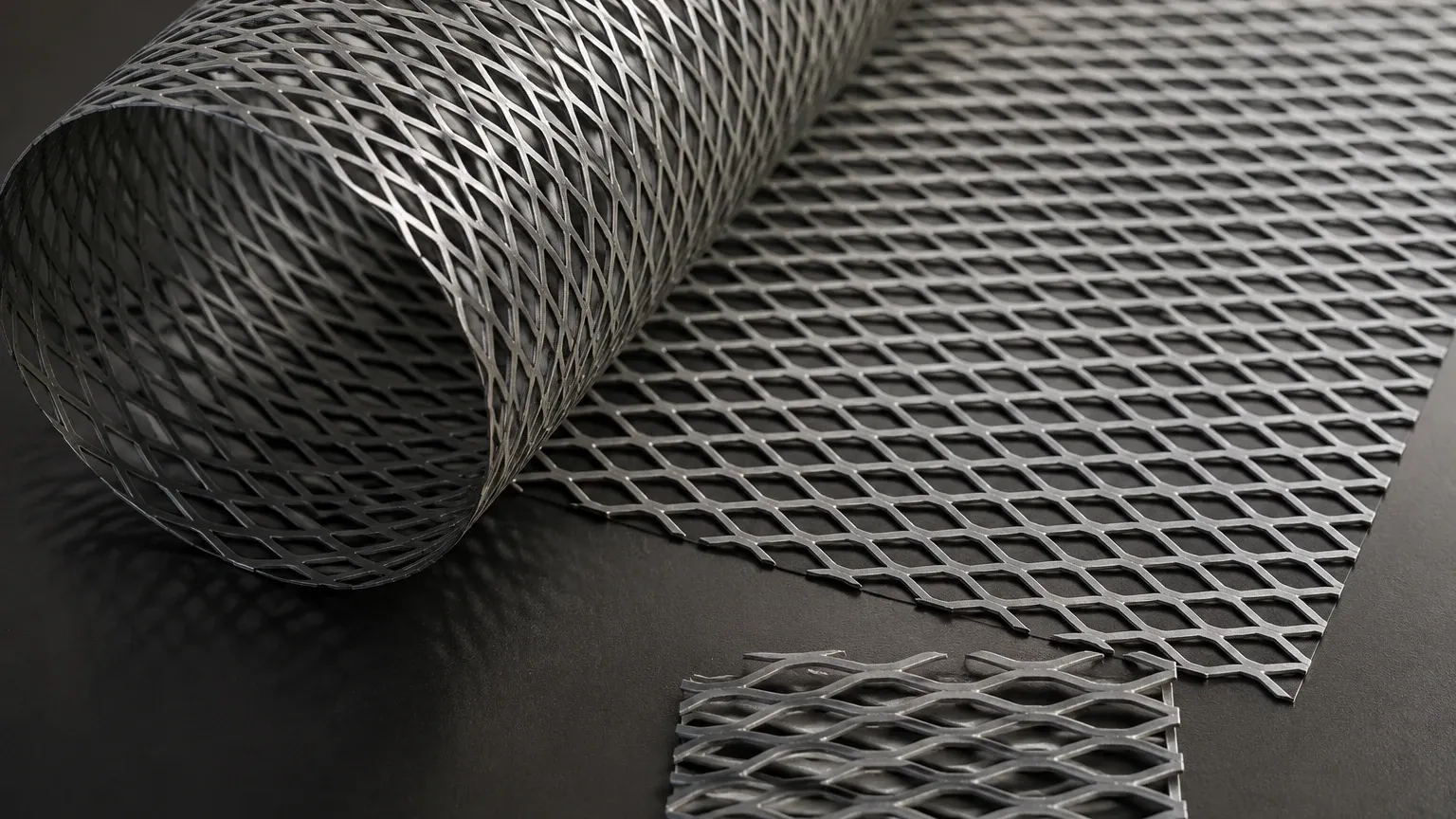
In the landscape of industrial filtration and structural support, expanded metal serves as a versatile and robust medium. Among the various specifications available, expanded metal 3 4 stands out as one of the most widely utilized sizes for heavy-duty industrial applications. Characterized by its diamond-shaped openings, this material is produced through a process of simultaneously slitting and stretching a solid metal sheet, resulting in a continuous mesh that offers exceptional strength-to-weight ratios.
For engineers and procurement specialists, understanding the technical nuances of Perforated & Expanded Metal is essential for ensuring system longevity and filtration efficiency. Whether used as a protective outer cage for filter cartridges or as a primary support structure in high-pressure hydraulic systems, the 3/4-inch designation involves specific mechanical properties that dictate its performance in demanding environments.
Technical Specifications of Expanded Metal 3/4
The term "3/4" in expanded metal nomenclature typically refers to the nominal width of the diamond opening. However, in technical engineering terms, this size is further defined by the Short Way of Opening (SWO) and the Long Way of Opening (LWO).
Opening Dimensions and Geometry
For a standard 3/4-inch expanded metal sheet, the SWO is generally approximately 0.923 inches, while the LWO is approximately 2.10 inches. These dimensions are critical when calculating the passage of solids or the structural spacing required for secondary filtration layers. The geometry of the diamond opening provides inherent rigidity, as the strands and bonds (the intersections of the strands) are set at a sharp angle to the plane of the sheet.
Weight and Thickness Designations
Expanded metal 3 4 is commonly categorized by its weight per square foot, often denoted by gauges such as #9 or #13.
- 3/4" #9: This is a heavier version, typically featuring a strand thickness of approximately 0.120 inches. It is preferred for applications requiring high mechanical impact resistance.
- 3/4" #13: A lighter alternative with a strand thickness of roughly 0.070 inches, suitable for applications where weight reduction is a priority without sacrificing the structural integrity of the filter housing.
Standard vs. Flattened Expanded Metal
When selecting expanded metal 3 4 for industrial filtration, engineers must choose between standard (raised) and flattened configurations. This decision significantly impacts the flow dynamics and the physical footprint of the filtration component.
Standard (Raised) Expanded Metal
In its standard form, the strands and bonds are turned at a uniform angle to the plane of the sheet. This creates a three-dimensional surface that provides:
- Enhanced Turbulence: In certain chemical processing applications, the raised surface can promote localized turbulence, which may be beneficial for specific mixing or heat exchange processes.
- Superior Grip and Rigidity: The architectural depth of raised metal makes it exceptionally resistant to bending under pressure.
Flattened Expanded Metal
Flattened expanded metal is produced by passing the standard expanded sheet through a cold-roll reducing mill. This process flattens the strands and bonds into a single plane, resulting in a smooth, level surface. For filtration applications, flattened expanded metal 3 4 is often preferred because:
- Ease of Cleaning: The smooth surface prevents particulate matter from becoming trapped in the crevices of the bonds.
- Compatibility with Fine Mesh: When used as a support for fine wire mesh, a flattened surface prevents the sharp edges of the expanded metal from piercing or abrading the delicate filtration media.
Material Selection for Corrosive Environments
As a specialist in stainless steel filtration solutions, Kaifil emphasizes the importance of material selection in the longevity of expanded metal components. While carbon steel is available, industrial filtration often demands the high-performance characteristics of stainless steel alloys.
Stainless Steel 304
SS304 is the standard grade for many food and beverage and general industrial applications. It offers excellent corrosion resistance to most oxidizing acids and is highly durable. In the context of expanded metal 3 4, SS304 provides a cost-effective balance between mechanical strength and chemical stability.
Stainless Steel 316 and 316L
For pharmaceutical and marine applications, or environments involving high chloride concentrations, SS316 is the preferred choice. The addition of molybdenum enhances its resistance to pitting and crevice corrosion. SS316L (low carbon) is utilized when welding is required during the fabrication of filter cartridges, as it minimizes carbide precipitation that can lead to intergranular corrosion.
Applications in Industrial Filtration Systems
The structural properties of expanded metal 3 4 make it an ideal component in multi-stage filtration assemblies. Its primary roles include support, protection, and coarse filtration.
Support for Pleated Filter Media
In high-flow hydraulic and air filtration systems, pleated media can collapse under the force of the fluid stream. Expanded metal 3 4 is frequently used as an internal support core or an external wrap. Its high open-area percentage ensures that it does not significantly contribute to pressure drop while providing a rigid skeleton that maintains the pleat geometry.
Pre-Filtration and Debris Shielding
In water treatment and chemical processing, expanded metal serves as a primary barrier against large debris. The 3/4-inch opening is effective at capturing oversized contaminants that could damage sensitive downstream equipment, such as high-pressure pumps or fine membrane filters.
Centrifuge and Vibratory Screen Support
Industrial centrifuges often utilize expanded metal as a backing for finer filter cloths. The material’s ability to withstand high centrifugal forces without deforming ensures that the filter cloth remains in the correct position during high-speed rotation.
Engineering Considerations: Flow Rate and Pressure Drop
One of the most critical factors in filter design is the "Percentage of Open Area." For expanded metal 3 4, this value typically ranges from 60% to 80%, depending on the strand width.
Calculating Flow Resistance
Engineers must account for the obstruction caused by the strands. While expanded metal provides a large open area, the angular orientation of the strands in the "raised" version can create a more complex flow path than perforated metal. If the application requires a laminar flow, flattened expanded metal or specific Perforated & Expanded Metal patterns may be necessary to minimize turbulence and associated pressure loss.
Structural Integrity Under Differential Pressure
As a filter accumulates contaminants, the differential pressure (ΔP) across the media increases. The support structure must be capable of withstanding the maximum expected ΔP without collapsing. The bond strength of expanded metal—where the metal remains a single, un-jointed piece—provides a distinct advantage over woven wire mesh, which can shift or fray under extreme pressure.
Customization and Manufacturing Precision
At Kaifil, we recognize that standard off-the-shelf specifications do not always meet the rigorous demands of specialized industrial processes. Customization of expanded metal 3 4 involves several engineering variables:
1. Strand Width Adjustment: By modifying the feed rate during the expansion process, the strand width can be increased for greater strength or decreased to maximize open area.
2. Edge Configurations: For OEM integration, expanded metal can be supplied with "random sheared" edges or "bond sheared" edges. Bond shearing provides a closed-loop edge that is safer to handle and easier to weld into circular filter housings.
3. Forming and Welding: Expanded metal can be rolled into cylinders or formed into conical shapes. Precision welding techniques, such as TIG or spot welding, are used to ensure the seams of the filter components are as strong as the base material.
Procurement Checklist: What to Confirm Before Ordering
To ensure the successful integration of expanded metal 3 4 into your filtration system, the following technical details should be confirmed with the manufacturer:
- Material Grade: Specify SS304, SS316L, or other specialty alloys based on chemical compatibility.
- Style: Indicate whether "Standard" or "Flattened" is required for the application.
- Dimensional Tolerances: Define the allowable variance in LWO, SWO, and overall sheet dimensions.
- Surface Finish: Determine if the material requires ultrasonic cleaning (common in pharmaceutical use), electropolishing, or pickling to remove scale and improve corrosion resistance.
- Quantity and Form: Specify whether the material should be delivered in flat sheets, coils, or pre-fabricated cylindrical components.
Total Cost of Ownership and Durability
While the initial cost of stainless steel expanded metal 3 4 may be higher than carbon steel or plastic alternatives, the total cost of ownership is often lower. The durability of stainless steel reduces the frequency of replacement cycles, especially in corrosive or high-temperature environments. Furthermore, the inherent strength of the expanded metal design minimizes the risk of catastrophic filter failure, which can lead to expensive downstream equipment damage and unscheduled production downtime.
By focusing on precise manufacturing and material integrity, Kaifil provides filtration components that meet the exact requirements of modern engineering. For more information on selecting the right mesh patterns and materials for your specific industrial needs, explore our range of Perforated & Expanded Metal solutions designed for high-performance filtration.
