


Expanded Metal 30080
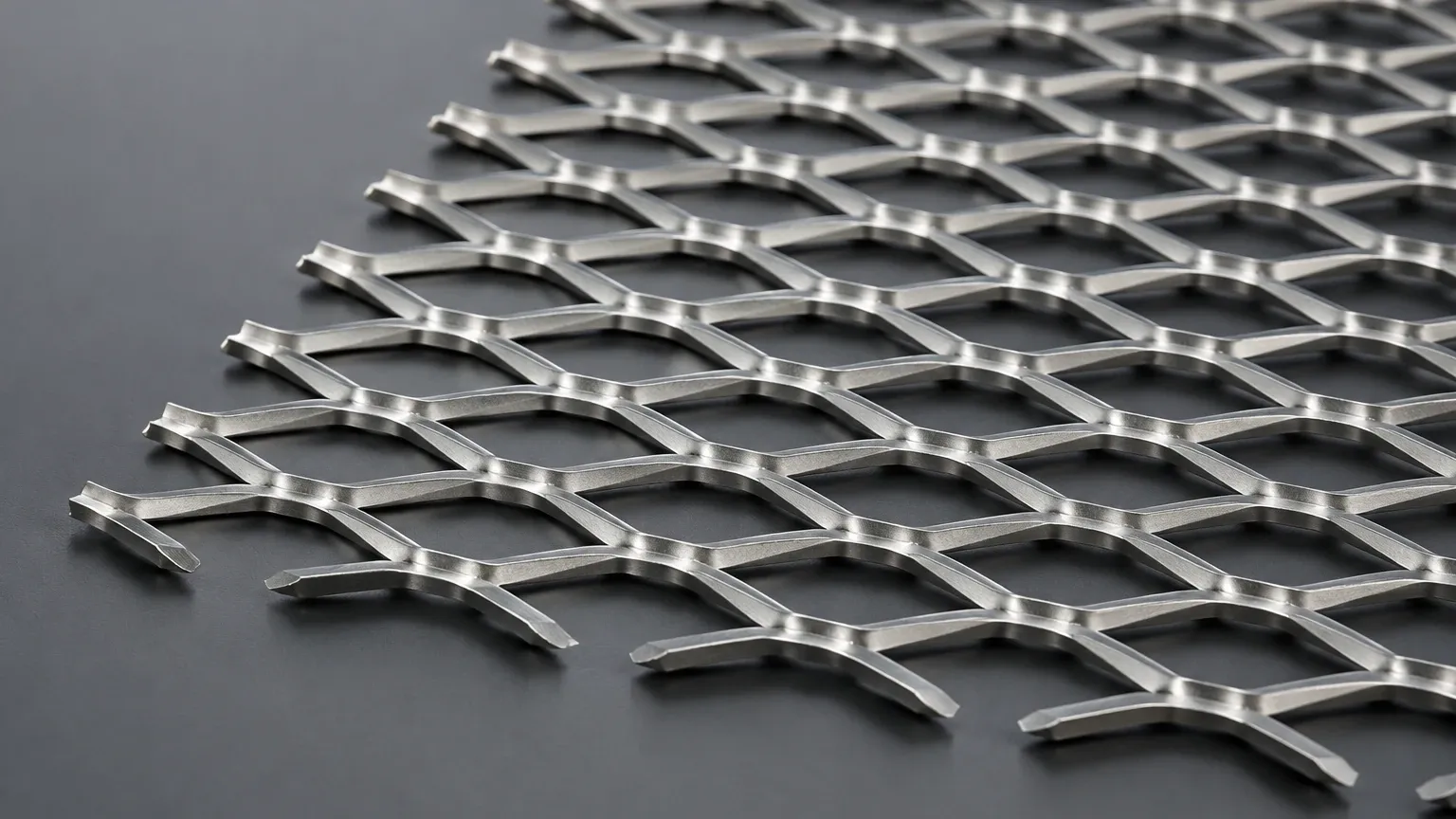
In the landscape of industrial filtration and structural reinforcement, the selection of the correct mesh pattern is critical to ensuring both mechanical integrity and operational efficiency. Expanded metal 30080 represents a specific technical specification frequently utilized in heavy-duty industrial applications. Unlike traditional woven wire cloth, expanded metal is produced through a process of simultaneous slitting and stretching, resulting in a jointless, one-piece structure that offers a unique strength-to-weight ratio.
For engineers and procurement specialists, understanding the nuances of the expanded metal 30080 specification is essential for integrating it into filtration systems, safety guards, or structural components. This guide examines the technical properties, material considerations, and application-specific benefits of this particular mesh grade within the broader category of Perforated & Expanded Metal.
Understanding the Technical Specifications of 30080
The designation "30080" typically refers to a metric-standardized expanded metal pattern characterized by its diamond-shaped openings. In the context of industrial manufacturing, these numbers often correlate to the Long Way of the Diamond (LWD) and the Short Way of the Diamond (SWD), or specific strand dimensions depending on the regional standard applied (such as ISO or specific manufacturer catalogs).
Geometric Parameters
When evaluating expanded metal 30080, engineers must confirm the following geometric variables:
1. LWD (Long Way of Diamond): The distance from a point on a diamond to the corresponding point on the next diamond measured across the long axis.
2. SWD (Short Way of Diamond): The distance across the short axis of the diamond.
3. Strand Width: The amount of metal between the openings.
4. Strand Thickness: The gauge of the original base material.
5. Overall Thickness: In "raised" or "standard" expanded metal, the total thickness is greater than the base material due to the angle of the strands. In "flattened" expanded metal, this is processed through a cold-rolling mill to match the original gauge.
For the 30080 specification, the structural rigidity is derived from the fact that the metal is not punched out (as in perforated metal) but stretched. This ensures that there is no scrap loss during production, making it a cost-effective solution for large-scale industrial projects.
Material Selection: The Role of Stainless Steel
While expanded metal can be produced from various alloys, stainless steel remains the gold standard for industrial filtration and harsh environments. Kaifil specializes in the fabrication of stainless steel filtration components, where the choice between Grade 304 and Grade 316 stainless steel is pivotal.
Grade 304 Stainless Steel
Grade 304 is the most common choice for expanded metal 30080 in general industrial environments. It provides excellent corrosion resistance and formability. It is suitable for applications in food processing, architectural screening, and standard hydraulic filtration support where extreme chemical exposure is not a primary concern.
Grade 316/316L Stainless Steel
For pharmaceutical, marine, or high-acid chemical processing, Grade 316 is required. The addition of molybdenum enhances resistance to chloride-induced pitting. When specifying expanded metal 30080 for these sectors, using 316L (low carbon) is often preferred if welding is required during the assembly of filter cartridges or support cages, as it prevents carbide precipitation.
The Role of Expanded Metal in Industrial Filtration
In the filtration industry, expanded metal 30080 is rarely used as the primary filtration medium for fine particulates. Instead, it serves as a critical structural backbone. Its primary functions include:
Support for Fine Mesh Media
Fine wire mesh or non-woven filter media lack the inherent rigidity to withstand high differential pressures. Expanded metal 30080 is often formed into cylinders to act as an inner support core or an outer protective cage. The diamond pattern provides a high percentage of open area, ensuring that the support structure does not significantly contribute to pressure drop across the filter element.
Pre-Filtration and Debris Removal
In water treatment or intake systems, the 30080 pattern acts as a robust pre-filter. It is capable of capturing larger debris—such as stones, wood chips, or large organic matter—before the fluid reaches more sensitive downstream filtration stages. Its rigid, one-piece construction ensures it does not fray or unravel under the mechanical stress of high-flow velocities.
Flow Distribution
The angled strands of raised expanded metal can be used to influence fluid dynamics. In certain reactor internals, the 30080 pattern helps in breaking up laminar flow and promoting turbulence, which can be beneficial for heat exchange or chemical reaction efficiency.
Key Performance Indicators for Engineers
When transitioning from a design phase to procurement, engineers should evaluate expanded metal 30080 based on several key performance indicators (KPIs):
Open Area Percentage
The open area determines the flow capacity and the rate of pressure drop. For the 30080 specification, the open area is a calculation of the relationship between the SWD, LWD, and strand width. A higher open area reduces energy consumption in pumping systems but may reduce the structural load-bearing capacity.
Mechanical Strength and Rigidity
Expanded metal is naturally stiff because the strands are oriented at an angle to the plane of the sheet. This "truss-like" characteristic allows expanded metal 30080 to support significant weight with less material compared to solid plate or even some perforated designs. This is particularly important in large-scale filtration housings where the weight of the filter assembly impacts the overall system design.
Surface Finish and Cleanability
In food and beverage or pharmaceutical applications, the surface finish of the expanded metal is vital. Burrs or sharp edges left from the expanding process can trap contaminants or damage delicate filter membranes. High-quality manufacturing involves deburring and, in many cases, electropolishing to ensure a smooth, passive surface that meets sanitary standards.
Comparison: Expanded Metal vs. Perforated Metal
While both fall under the category of Perforated & Expanded Metal, they serve different engineering needs.
* Material Efficiency: Expanded metal 30080 is more sustainable and cost-effective for large areas because it involves no waste. Perforated metal involves punching holes, which can result in 10% to 60% material loss.
* Strength: For the same weight per square meter, expanded metal generally offers higher rigidity due to the three-dimensional orientation of its strands.
* Aesthetics and Precision: Perforated metal offers more precise control over hole size and spacing, which is critical for exact particle size exclusion. Expanded metal is better suited for structural support and high-flow applications.
Customization and OEM Capabilities
Standard off-the-shelf expanded metal often fails to meet the exacting requirements of specialized industrial equipment. Customization is where manufacturers like Kaifil provide significant value. When ordering expanded metal 30080, several secondary processes can be applied to tailor the product to the application:
1. Flattening: If the application requires a smooth, two-dimensional surface (such as for a sliding screen or a base for a thin membrane), the expanded metal is flattened. This reduces the overall thickness and creates a surface that is easier to clean.
2. Annealing: To improve the ductility of the stainless steel for complex forming or deep drawing, the material can be heat-treated. This is often necessary when the expanded metal must be wrapped into small-diameter filter tubes.
3. Custom Bordering: In many filtration applications, it is necessary to have a "blank" or solid border around the expanded area to facilitate welding into a flange or housing. This requires precise control over the slitting process.
4. Coating and Plating: For specific chemical environments, additional coatings (such as PTFE or specialized plating) can be applied to the stainless steel base to further enhance its lifespan.
Procurement Checklist for Purchasing Teams
To ensure the successful integration of expanded metal 30080 into a project, the following information should be confirmed with the manufacturer:
* Exact Dimensions: Specify SWD and LWD requirements clearly, noting whether these are measured from the center of the joints or the inside of the openings.
* Material Grade: Confirm if SS304, SS316, or a more specialized alloy is required.
* Style: Clarify whether "Standard" (raised) or "Flattened" is needed.
* Tolerances: Define the allowable variance in sheet size and flatness, especially if the mesh is to be used in automated assembly lines.
* Quantity and Lead Time: For OEM applications, consistent supply chains are critical. Inquire about the manufacturer’s capacity for high-volume production and their quality control protocols (e.g., ISO certification).
Conclusion
Expanded metal 30080 is a versatile and high-performance material that provides essential structural support and pre-filtration capabilities across various industrial sectors. By leveraging the inherent strength of the expanded diamond pattern and the corrosion resistance of stainless steel, engineers can design filtration systems that are both durable and efficient.
Whether used as a protective guard in a hydraulic system or a support core in a chemical processing filter, the 30080 specification offers a balance of open area and mechanical integrity that is difficult to match with other materials. For those seeking specialized configurations or high-volume OEM supply, working with an experienced manufacturer ensures that the final product meets the rigorous demands of modern industrial environments.
