


Expanded Metal 3035
In the field of industrial filtration and structural support, selecting the appropriate mesh geometry is critical for ensuring both mechanical integrity and operational efficiency. Expanded metal 3035 represents a specific technical configuration within the broader category of expanded metal products. Unlike perforated materials that are created by punching holes and generating scrap, expanded metal is produced through a simultaneous slitting and stretching process. This manufacturing method results in a continuous, jointless mesh that offers a high strength-to-weight ratio, making it an essential component in the fabrication of high-performance filter cartridges and industrial screens.
For engineers and procurement professionals, understanding the nuances of the 3035 specification is vital for applications requiring precise open areas and structural rigidity. This guide explores the technical characteristics, material considerations, and engineering advantages of utilizing expanded metal 3035 in demanding industrial environments.
The Role of Expanded Metal 3035 in Industrial Filtration
Expanded metal 3035 is frequently employed as a support medium or a protective outer layer in multi-stage filtration systems. Its primary function is to provide a stable framework for finer filter media, such as woven wire mesh or non-woven membranes, which may lack the structural strength to withstand high differential pressures on their own.
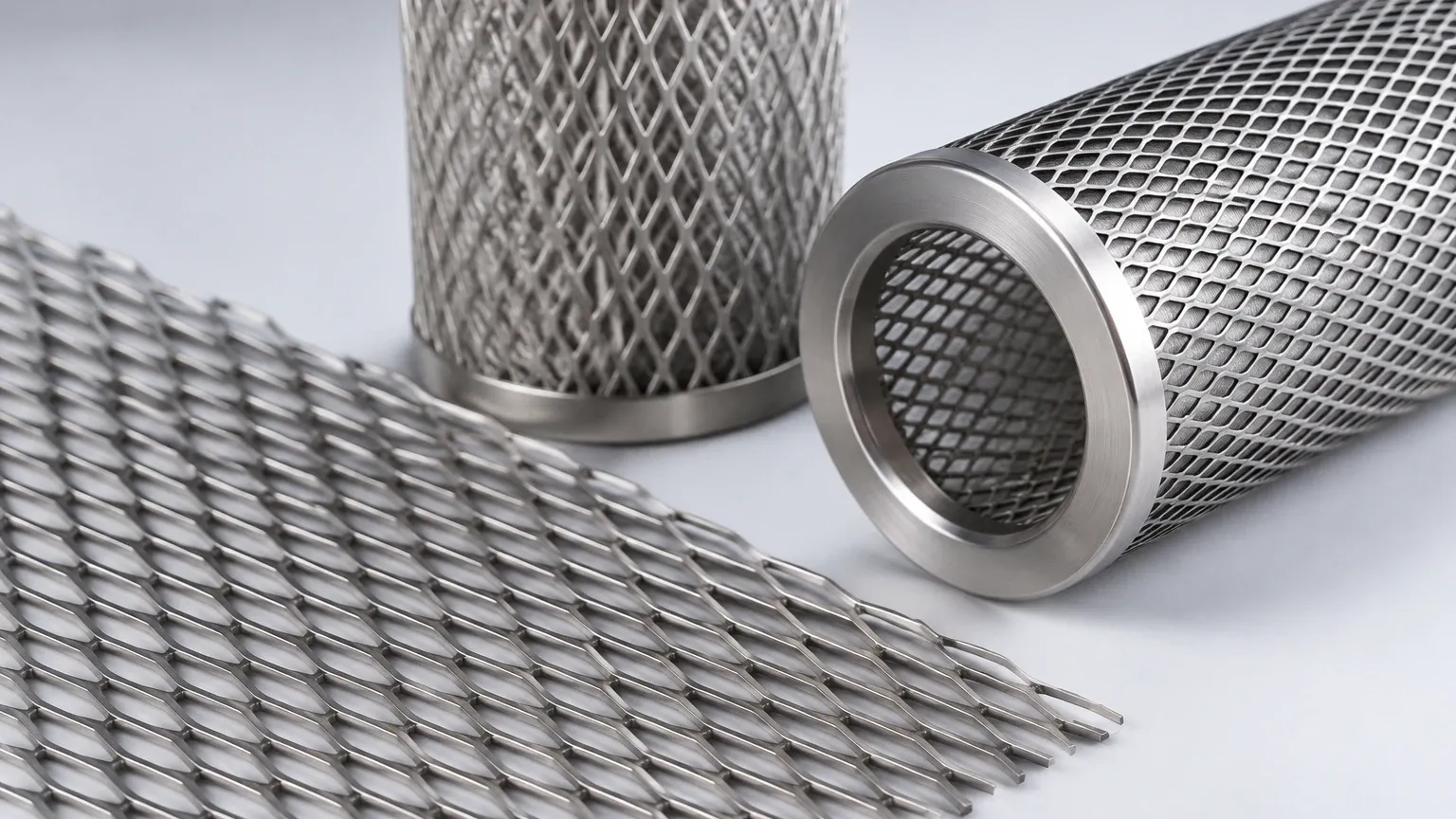
In the context of Perforated & Expanded Metal solutions, the 3035 pattern is characterized by its diamond-shaped openings. These openings are not merely aesthetic; they are engineered to optimize the balance between fluid flow and mechanical support. In filtration, the "bond"—the point where the strands intersect—acts as a solid anchor, while the strands themselves are angled to provide a three-dimensional depth that can help in pre-filtering larger particulates before they reach the primary filtration layer.
Technical Geometry and Dimensional Specifications
To specify expanded metal 3035 accurately, engineers must look beyond the part number and evaluate the specific dimensions that define its performance. The geometry of expanded metal is typically defined by four key measurements:
1. SWD (Short Way of Diamond): The distance from the center of one bond to the center of the next bond across the short axis of the diamond.
2. LWD (Long Way of Diamond): The distance from the center of one bond to the center of the next bond across the long axis of the diamond.
3. Strand Width: The amount of metal fed into the precision dies to create the expansion.
4. Strand Thickness: The gauge of the original base metal sheet.
The 3035 designation often refers to a specific combination of these factors, resulting in a mesh that provides a predictable percentage of open area. For instance, a 3035 pattern might be optimized for a 40% to 60% open area, which is ideal for maintaining high flow rates in hydraulic systems or chemical processing lines while ensuring the filter basket does not collapse under vacuum or pressure surges.
Material Compatibility: Selecting the Right Alloy
While expanded metal can be produced from various materials, industrial filtration applications typically demand the use of stainless steel due to its corrosion resistance and thermal stability. Kaifil specializes in manufacturing these components from high-grade alloys to meet specific environmental challenges.
* Stainless Steel 304: This is the standard grade for general industrial use. It offers excellent forming and welding characteristics and is resistant to atmospheric corrosion and many organic and inorganic chemicals. It is widely used in food and beverage processing where hygiene is paramount but highly acidic environments are not present.
* Stainless Steel 316L: For more aggressive environments, such as pharmaceutical manufacturing or marine applications, 316L is the preferred choice. The addition of molybdenum enhances resistance to chloride-induced pitting and crevice corrosion. The "L" (low carbon) designation ensures that the material remains resistant to sensitization during welding, which is crucial for maintaining the integrity of the filter's structural welds.
* Specialty Alloys: In high-temperature or highly corrosive chemical vapor environments, alloys such as Monel or Inconel may be used in an expanded format to ensure a long service life and prevent media migration or structural failure.
Manufacturing Excellence: Raised vs. Flattened 3035
One of the most critical decisions an engineer must make when specifying expanded metal 3035 is whether to use the "Raised" (Standard) or "Flattened" version.
Raised Expanded Metal
In its as-expanded state, the strands and bonds are set at a uniform angle to the plane of the sheet. This creates a textured surface that adds significant structural rigidity and increases the overall thickness of the material. In filtration, raised expanded metal is often used as a pre-filter or a protective guard because the angled strands can deflect larger debris and create localized turbulence, which can sometimes prevent the premature blinding of the inner filter layers.
Flattened Expanded Metal
Flattened expanded metal is produced by passing the standard expanded sheet through a cold-rolling reducing mill. This process flattens the strands and bonds into a single plane, resulting in a smooth, level surface. For precision filtration, flattened 3035 is often superior because it provides a uniform support surface for delicate wire mesh. The absence of sharp, angled edges prevents the mechanical abrasion of the finer mesh during pressure fluctuations or cleaning cycles, thereby extending the total lifecycle of the filter cartridge.
Engineering Benefits: Strength, Flow, and Efficiency
Using expanded metal 3035 offers several engineering advantages over other types of metal supports:
* Structural Integrity: Because the mesh is expanded from a single piece of metal, there are no welds or joins within the mesh itself to fail. This makes it exceptionally strong under tension and compression.
* Weight Reduction: The expansion process creates a large open area while using a relatively small amount of raw material. This reduces the overall weight of the filtration unit, which is a key consideration in mobile hydraulic systems or large-scale industrial installations where handling and installation costs are factors.
* Optimized Flow Dynamics: The diamond pattern of the 3035 specification is designed to minimize pressure drop. By carefully selecting the strand angle and width, manufacturers can ensure that the fluid path is obstructed as little as possible while still providing the necessary mechanical support.
* Cost-Effectiveness: Since the expansion process involves no material waste (unlike perforation), the raw material utilization is nearly 100%. This often makes expanded metal a more economical choice for large-volume OEM projects without sacrificing performance.
Application in Custom Filter Cartridge Construction
In the construction of custom stainless steel filter cartridges, expanded metal 3035 is often utilized in the following ways:
1. Inner Core Support: The expanded metal is rolled into a cylinder and longitudinal-welded to form a rigid core. This core must resist the inward pressure of the fluid as it moves from the outside of the filter to the center.
2. Outer Protective Shroud: An outer layer of expanded metal protects the internal fine mesh from damage during handling, installation, or backwashing. It also acts as a primary barrier for large contaminants.
3. Pleat Support: In pleated filter designs, expanded metal can be used as a spacer between pleats to prevent "pleat bunching" under high flow conditions, ensuring that the entire surface area of the filter media remains active.
Kaifil’s expertise in custom filtration allows for the integration of 3035 expanded metal into complex designs, ensuring that the filtration accuracy and mechanical strength are perfectly matched to the application’s requirements.
Procurement and Quality Assurance Criteria
When sourcing expanded metal 3035, it is essential to verify that the manufacturer adheres to strict quality control standards. For engineers, the following checkpoints should be confirmed before finalizing a purchase order:
* Dimensional Tolerance: Ensure that the SWD and LWD measurements are within the required tolerances for your housing or assembly. Variations in expansion can lead to fitment issues.
* Edge Configuration: Specify whether the edges should be "random sheared" or "bond sheared." Bond shearing provides a cleaner edge with fewer sharp protrusions, which is safer for manual handling and prevents damage to surrounding components.
* Surface Finish: For food and pharmaceutical applications, the metal must be free of lubricants and oils used during the expansion process. Ultrasonic cleaning or passivation may be required to ensure the material meets sanitary standards.
* Material Certification: Always request Mill Test Reports (MTRs) to confirm the chemical composition of the stainless steel, particularly the chromium, nickel, and molybdenum content, to ensure it matches the specified grade.
Maintenance and Lifecycle Considerations
Industrial filters utilizing expanded metal 3035 are generally designed for durability, but their lifecycle depends on the operating environment. Because expanded metal is a permanent structural component, it can often be cleaned and reused multiple times.
In systems where the filter is subjected to heavy particulate loading, the expanded metal support should be inspected during routine maintenance for signs of deformation or stress cracking, particularly at the weld points. If the filter media itself is being replaced, the expanded metal support should be thoroughly cleaned using chemical or thermal methods to remove any trapped contaminants within the interstitial spaces of the diamond pattern.
By selecting a high-quality expanded metal 3035 configuration, industrial operators can achieve a lower total cost of ownership through reduced downtime and extended equipment life. Whether used in chemical processing, water treatment, or hydraulic systems, the 3035 pattern remains a benchmark for reliable, high-performance metal filtration support.
