


Expanded Metal 3d
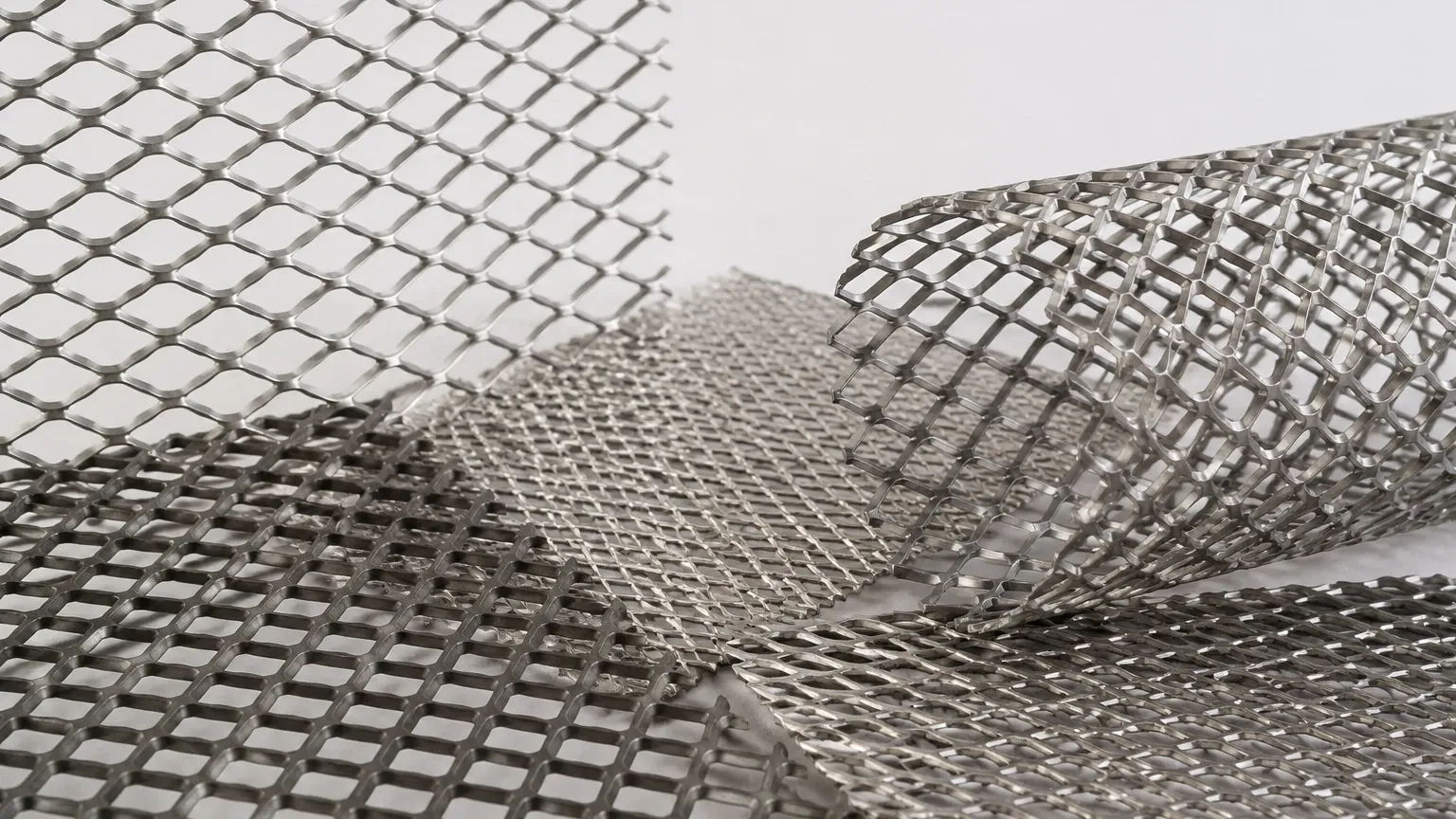
In industrial filtration and structural engineering, the term "expanded metal 3d" refers to the standard, raised form of expanded metal. Unlike flattened expanded metal, which undergoes a secondary cold-rolling process to level the surface, the 3D variant retains the original angular profile created during the slitting and stretching process. This three-dimensional geometry is not merely an aesthetic choice; it is a critical engineering feature that dictates fluid dynamics, mechanical strength, and filtration efficiency in demanding industrial environments.
For engineers and procurement professionals, understanding the technical nuances of expanded metal 3D is essential for selecting the right media for chemical processing, hydraulic systems, and high-pressure filtration applications. This guide explores the structural characteristics, performance advantages, and engineering considerations of Perforated & Expanded Metal in its three-dimensional form.
The Anatomy and Manufacturing of Expanded Metal 3D
The production of expanded metal 3D is a precision process that involves simultaneously slitting and stretching a solid metal sheet—typically stainless steel—to create a uniform pattern of diamond-shaped openings. Because the metal is expanded rather than punched, there is zero material waste, making it a highly cost-effective solution compared to perforated alternatives.
Strands and Bonds
In the 3D configuration, the "strands" (the sides of the diamond openings) and "bonds" (the intersections of the strands) are set at a sharp angle to the plane of the original sheet. This creates a textured, protruding surface. The thickness of the strand and the width of the bond are critical variables that determine the overall open area and the mechanical rigidity of the mesh.
Dimensional Terminology
When specifying expanded metal 3D, engineers must define several key dimensions:
* SWD (Short Way of Design): The distance from the center of one bond to the center of the next bond across the short axis of the diamond.
* LWD (Long Way of Design): The distance across the long axis of the diamond.
* Strand Thickness: The thickness of the original base metal.
* Strand Width: The amount of metal fed into the machine for each expansion stroke.
The resulting 3D profile increases the overall thickness of the finished product, often making it several times thicker than the original base material. This added depth is the primary driver behind the unique performance characteristics of expanded metal 3D.
Performance Benefits in Industrial Filtration
The three-dimensional nature of this mesh provides several functional advantages that are particularly valuable in filtration and separation processes.
Enhanced Surface Area and Depth
One of the primary reasons for selecting expanded metal 3D is the increased surface area provided by the angled strands. In filtration, this geometry can act as a pre-filter or a support structure for finer mesh layers. The 3D profile creates a "depth" effect that can trap larger particulates before they reach the primary filtration membrane, effectively extending the service life of the entire filter cartridge.
Fluid Turbulence and Flow Control
When a fluid (liquid or gas) passes through a 3D expanded metal screen, the angled strands disrupt the laminar flow, creating controlled turbulence. This can be advantageous in heat exchange applications or chemical reactors where mixing is required. Conversely, in specific orientations, the 3D profile can be used to deflect flow or reduce the velocity of a stream, protecting sensitive downstream components from erosion.
Mechanical Rigidity and Support
The raised bonds of expanded metal 3D provide exceptional structural integrity. When used as a support core for stainless steel filter cartridges, the 3D mesh resists collapsing under high differential pressures. The interlocking nature of the strands ensures that the mesh maintains its shape even when subjected to mechanical vibration or thermal cycling.
Material Specifications for High-Performance Applications
Selection of the base material is paramount when integrating expanded metal 3D into industrial systems. Since many of these components operate in corrosive or high-temperature environments, stainless steel is the industry standard.
Stainless Steel 304 vs. 316L
* Grade 304: Offers excellent strength and basic corrosion resistance, suitable for food and beverage applications and general industrial filtration.
* Grade 316L: Contains molybdenum, providing superior resistance to chlorides and pitting. This is the preferred choice for pharmaceutical processing, marine environments, and aggressive chemical filtration.
Specialized Alloys
For extreme conditions, such as those found in petrochemical refining or aerospace, expanded metal 3D can be manufactured from nickel alloys or titanium. These materials ensure that the 3D structure remains stable and chemically inert under conditions that would degrade standard carbon steel or aluminum.
Engineering Considerations: Flow Dynamics and Structural Integrity
Integrating expanded metal 3D into a filtration system requires a detailed analysis of how the 3D profile interacts with the process media. Engineers must balance the need for mechanical strength with the requirement for low pressure drop.
Calculating Open Area
The "open area" percentage of expanded metal 3D is a function of the strand width and the SWD. However, because the strands are angled, the *effective* open area may change depending on the angle of approach of the fluid. In a 3D configuration, the mesh offers more resistance to flow than a flattened mesh of the same specifications, but it also provides higher mechanical strength. Engineers must confirm that the selected mesh does not create an unacceptable pressure drop across the filter housing.
Orientation Matters
The orientation of the LWD and SWD relative to the flow direction can significantly impact performance. In many cylindrical filter applications, the LWD is oriented circumferentially to maximize the hoop strength of the cartridge. If the 3D mesh is being used for its deflecting properties, the angle of the strands relative to the incoming flow must be precisely calculated to achieve the desired effect.
Comparing 3D Expanded Metal with Perforated Options
While Perforated & Expanded Metal are often discussed together, they serve different engineering needs. Perforated metal is a 2D product where holes are punched out of a sheet. It offers precise hole diameters and a smooth surface.
In contrast, expanded metal 3D offers:
1. Lower Cost: No material is lost during production, and the expansion process is generally faster for large-scale requirements.
2. Higher Strength-to-Weight Ratio: The 3D geometry provides inherent stiffness that flat perforated sheets lack at similar weights.
3. Grip and Friction: In non-filtration applications, such as industrial walkways or machine guards, the 3D profile provides a non-slip surface and better impact resistance.
For filtration, the choice often comes down to the required micron rating and the nature of the contaminants. Perforated metal is excellent for precise straining, while expanded metal 3D excels as a high-strength support or a robust coarse filter.
Customization and OEM Solutions for Specialized Filtration
Industrial filtration is rarely a one-size-fits-all field. Customization is often necessary to meet specific flow rates, housing dimensions, and chemical compatibility requirements. When sourcing expanded metal 3D, working with a manufacturer that offers OEM capabilities is vital.
Custom Mesh Configurations
Manufacturers can adjust the expansion ratio to create specific diamond sizes tailored to a particular particulate size. Furthermore, the thickness of the base metal can be varied to meet the pressure requirements of the system. Customizing the "raised" height of the 3D profile allows engineers to fine-tune the turbulence and depth characteristics of the mesh.
Secondary Processing
While the 3D profile is often the desired end-state, secondary processes such as annealing, degreasing, and ultrasonic cleaning are often required for pharmaceutical or food-grade applications. Ensuring that the mesh is free of manufacturing oils and burrs is a critical quality control step that prevents downstream contamination.
Maintenance, Durability, and Total Cost of Ownership
The durability of expanded metal 3D makes it a cost-effective long-term solution. However, its complex geometry requires specific maintenance considerations.
Cleaning Protocols
In filtration applications, the 3D structure can trap debris more effectively than a flat surface. While this is an advantage for filtration efficiency, it can make cleaning more complex. Backwashing or ultrasonic cleaning are the most effective methods for removing particulates lodged within the angled strands of a 3D mesh. Stainless steel constructions are particularly resilient to these aggressive cleaning methods.
Replacement Cycles
Because expanded metal 3D is mechanically robust, it typically has a longer replacement cycle than woven wire cloth or synthetic media. It is less prone to fraying or tearing. Engineers should monitor the pressure differential across the mesh; a consistent increase that cannot be resolved through cleaning usually indicates that the mesh has reached the end of its functional life or has suffered mechanical blinding.
Total Cost Considerations
When evaluating the cost of expanded metal 3D, procurement teams should look beyond the initial purchase price. The longevity of the material, the reduced frequency of maintenance shutdowns, and the protection it offers to more expensive secondary filter layers contribute to a lower total cost of ownership over the life of the equipment.
Conclusion
Expanded metal 3D represents a sophisticated intersection of material science and geometric engineering. Its unique raised profile offers structural and functional benefits that flattened or perforated materials cannot match. By providing increased surface area, controlled turbulence, and superior mechanical strength, it remains a cornerstone material for high-performance industrial filtration systems.
For engineers designing the next generation of chemical reactors, hydraulic power units, or water treatment facilities, the careful selection of Perforated & Expanded Metal specifications is a key step in ensuring system reliability and efficiency. Understanding the impact of strand width, bond angle, and material grade allows for the development of filtration solutions that are as durable as they are effective.
