


Expanded Metal 4 X 8
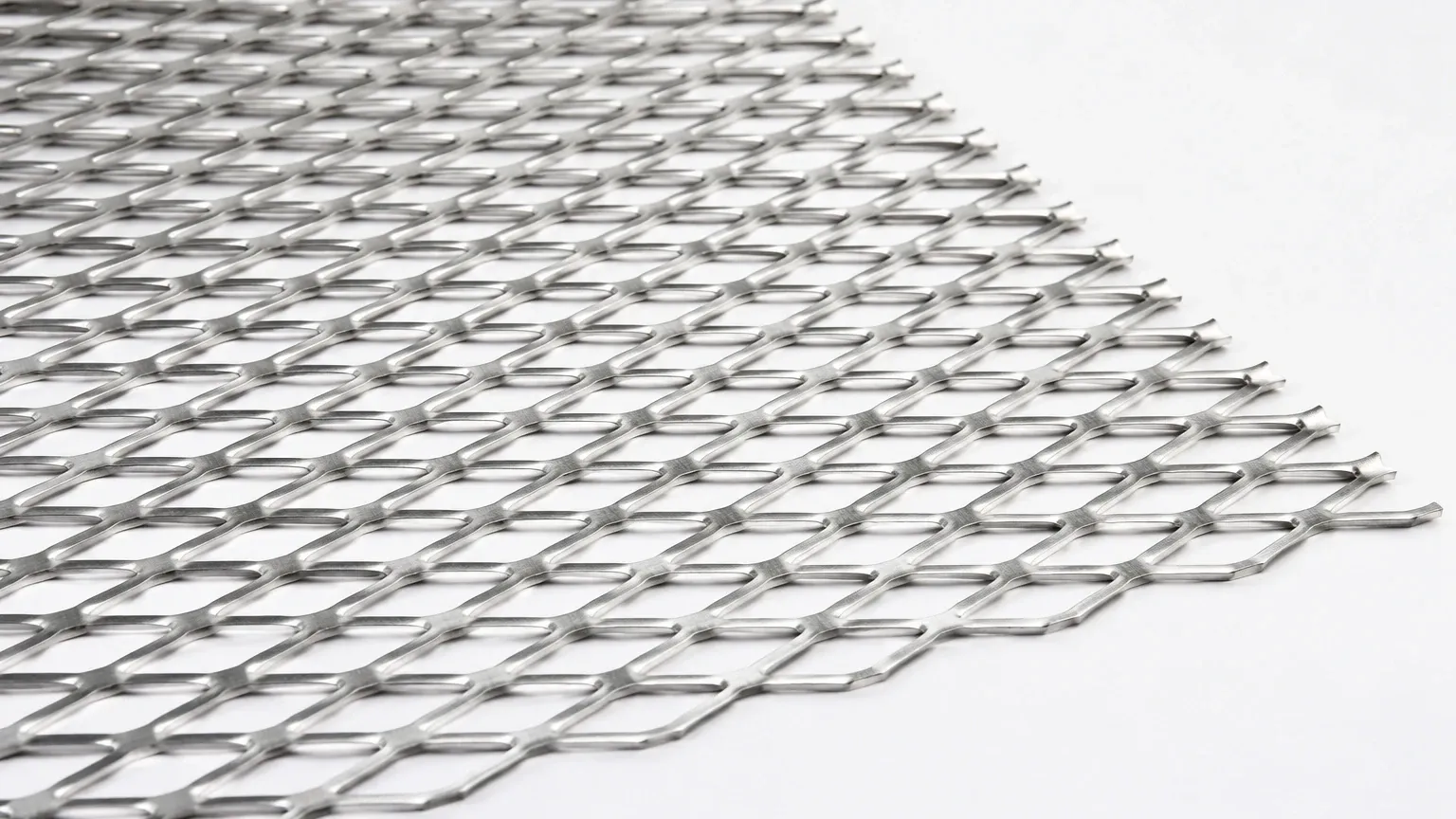
In industrial manufacturing and structural engineering, the 4-foot by 8-foot (4 x 8) sheet is the standard dimensional unit for metal substrates. When discussing expanded metal 4 x 8, we are referring to a versatile material produced by simultaneously slitting and stretching a solid metal sheet to create a diamond-shaped pattern. Unlike perforated metal, which involves punching out material, the expansion process creates no waste, maintaining the structural integrity of the original sheet while increasing its surface area and providing a unique strength-to-weight ratio.
For engineers and procurement specialists, selecting the correct expanded metal 4 x 8 sheet involves understanding the mechanical properties, material grades, and the specific geometric configurations required for industrial applications. Whether used as a support structure for fine wire mesh in filtration or as a protective barrier in heavy machinery, the technical specifications of the mesh determine its performance in demanding environments.
Technical Fundamentals of Expanded Metal Production
The production of expanded metal is a precision engineering process. A solid metal plate or sheet is fed through an expanding machine where a series of knives slit and stretch the metal in a single motion. This creates a continuous piece of mesh without joins or welds, which is a critical factor for structural reliability.
Raised vs. Flattened Expanded Metal
There are two primary forms of expanded metal available in the 4 x 8 format:
1. Standard (Raised) Expanded Metal: This is the product as it comes off the machine. The strands and bonds are set at a uniform angle to the plane of the sheet. This provides maximum rigidity, a high strength-to-weight ratio, and a slip-resistant surface. In filtration, raised expanded metal is often used as a pre-filter or a high-strength outer cage for cylindrical filter elements.
2. Flattened Expanded Metal: This is produced by passing the standard expanded sheet through a cold-roll reducing mill. The process flattens the strands and bonds into the same plane, resulting in a smooth, level surface. Flattened expanded metal 4 x 8 sheets are slightly thinner and longer than the original raised sheet. They are ideal when a smooth surface is required to prevent abrasion or when the mesh needs to be bonded to other flat materials.
Terminology and Measurements
To accurately specify an expanded metal 4 x 8 sheet, engineers must use standardized terminology:
* SWD (Short Way of Design): The distance from the center of one bond to the center of the next bond measured across the short diamond diagonal.
* LWD (Long Way of Design): The distance from the center of one bond to the center of the next bond measured across the long diamond diagonal.
* Strand Thickness: The thickness of the base metal used.
* Strand Width: The amount of metal fed into the machine for each stroke of the knives.
Material Selection for Industrial Filtration and Support
While expanded metal can be manufactured from various materials, industrial applications—particularly those involving chemical processing, food and beverage, or water treatment—require specific alloys to ensure longevity and performance. As a specialist in Perforated & Expanded Metal, Kaifil emphasizes the importance of material compatibility in harsh environments.
Stainless Steel (304 and 316 Grades)
Stainless steel is the preferred material for high-performance filtration components.
* Grade 304: Offers excellent corrosion resistance and is suitable for most industrial applications. It is widely used in food processing and general industrial filtration where extreme chemical exposure is not a primary concern.
* Grade 316: Contains molybdenum, which provides superior resistance to chlorides and pitting. This is the standard for marine environments, pharmaceutical manufacturing, and aggressive chemical processing.
Carbon Steel and Galvanized Options
For structural applications where corrosion is less of a concern or where the environment is controlled, carbon steel expanded metal 4 x 8 sheets offer a cost-effective solution. Galvanizing provides a protective zinc coating that extends the life of carbon steel in outdoor or humid conditions, though it is generally not used in high-purity filtration due to the risk of zinc leaching.
The Role of Expanded Metal 4 x 8 in Filtration Systems
In the context of industrial filtration, expanded metal is rarely the primary filtering medium for fine particles. Instead, it serves as a critical structural component that enables finer media to function under pressure.
Support for Fine Wire Mesh
Fine stainless steel wire mesh, while excellent for precision filtration, lacks the structural rigidity to withstand high differential pressures. An expanded metal 4 x 8 sheet can be fabricated into a support tube or flat backing plate. The diamond pattern provides a high percentage of open area, ensuring that the flow of gas or liquid is not significantly restricted, while the solid bonds of the expanded metal prevent the fine mesh from collapsing or deforming.
Pre-Filtration and Coarse Screening
In water treatment or heavy industrial fluid processing, expanded metal acts as a primary screen to remove large debris before the fluid reaches more sensitive filtration stages. The 4 x 8 sheet size allows for the fabrication of large-scale intake screens or basket filters that can handle high flow rates.
Mechanical Protection
Filter elements are often exposed to physical handling during installation and maintenance. An outer layer of expanded metal protects the delicate pleated or wrapped filter media from mechanical damage without compromising the effective filtration area.
Engineering Considerations: Open Area and Flow Dynamics
One of the most critical factors in selecting expanded metal 4 x 8 for industrial use is the percentage of open area. This calculation directly impacts the pressure drop across the system and the overall flow efficiency.
Calculating Open Area
The open area is determined by the relationship between the strand width and the diamond opening (SWD and LWD). A larger opening with narrower strands results in a higher open area but lower structural strength. Conversely, smaller openings with wider strands provide maximum support but increase resistance to flow.
Engineers must balance these factors based on:
* Fluid Viscosity: Thicker fluids require a higher open area to maintain flow rates.
* Pressure Requirements: High-pressure systems may require thicker strands and smaller openings to prevent fatigue and failure.
* Particulate Load: If the expanded metal is acting as a screen, the opening size must be calibrated to the size of the particles intended to be captured or excluded.
Advantages of the 4 x 8 Sheet Format
The 4 x 8 dimension is ubiquitous in the metal industry for several practical reasons that benefit both the manufacturer and the end-user.
Standardization and Cost-Efficiency
Most raw material plates are produced in 4-foot widths. By maintaining this standard, manufacturers minimize setup time and material waste. For the purchaser, buying expanded metal 4 x 8 sheets often results in a lower cost per square foot compared to custom-cut sizes, as it aligns with standard shipping and storage configurations.
Ease of Fabrication
Standard sheets are compatible with most industrial CNC laser, waterjet, and plasma cutting tables. This allows for efficient nesting of parts when fabricating circular filter caps, rectangular support panels, or cylindrical cages. The 4 x 8 size is also manageable for manual handling in smaller workshops while being large enough to cover significant surface areas in architectural or large-scale industrial projects.
Quality Evaluation and Common Risks
When procuring expanded metal 4 x 8 sheets, technical professionals should be aware of potential quality issues that can impact the final assembly.
1. Camber: This refers to the bow in a sheet. In high-precision filtration assemblies, excessive camber can make it difficult to roll the sheet into a perfect cylinder or weld it to end caps.
2. Edge Conditions: Expanded metal can be supplied with "random sheared" edges or "bond sheared" (closed diamond) edges. For filtration components, closed diamond edges are often preferred to prevent sharp points from piercing the fine mesh or injuring personnel during maintenance.
3. Surface Contamination: In pharmaceutical or food-grade applications, the expanded metal must be free of lubricants and oils used during the expansion process. Specifying ultrasonic cleaning or chemical passivation is often necessary for these sectors.
Customization Beyond the Standard Sheet
While the expanded metal 4 x 8 sheet is the starting point, many industrial applications require further customization. Manufacturers like Kaifil provide OEM services to transform these sheets into specialized components. This includes:
* Precision Slitting: Cutting the 4 x 8 sheet into narrow strips for spiral-wound filter cores.
* Annealing: Heat treating the metal to make it more ductile for complex forming operations.
* Custom Tooling: Creating non-standard diamond patterns for specific filtration requirements that cannot be met by standard commercial sizes.
Conclusion: Making an Informed Procurement Decision
Selecting the right expanded metal 4 x 8 sheet requires a deep understanding of the mechanical and chemical demands of the application. It is not merely about the dimensions of the sheet, but the interplay between material grade, diamond geometry, and the manufacturing process (raised vs. flattened).
For engineers designing filtration systems or industrial equipment, confirming the required open area, load-bearing capacity, and corrosion resistance is the first step toward a reliable solution. By focusing on technical accuracy and material integrity, purchasing teams can ensure that their filtration components provide long-term durability and optimal performance in the field.
To explore specific configurations and technical data for your next project, Review product options and application support to find the ideal match for your industrial filtration needs.
