


Expanded Metal X349
In the realm of industrial filtration and structural support, the selection of the correct mesh pattern is critical to the performance and longevity of the equipment. Expanded metal X349 represents a specific heavy-duty industrial specification often utilized in environments requiring a high strength-to-weight ratio and significant open area. Unlike standard woven wire mesh, expanded metal is produced from a single solid sheet of material, providing unique mechanical properties that are essential for demanding B2B applications, ranging from chemical processing to heavy-duty hydraulic filtration.
As a specialized manufacturer, Kaifil provides precision-engineered Perforated & Expanded Metal solutions tailored to the rigorous standards of global industrial sectors. Understanding the technical nuances of the X349 pattern is the first step for engineers and procurement teams in optimizing their filtration systems or structural components.
Understanding the X349 Designation in Industrial Filtration
The "X349" designation typically refers to a specific geometry within the expanded metal hierarchy. In industrial terminology, expanded metal is categorized by the size of the diamond opening and the gauge of the metal used. While nomenclature can vary slightly between regional standards, X349 is generally recognized as a heavy-gauge pattern characterized by its durability and resistance to deformation under pressure.
In filtration applications, expanded metal serves two primary roles: as a coarse primary filter for large particulate matter or as a structural support (a "cage" or "core") for finer filtration media. The X349 pattern, with its robust strand thickness, is particularly effective in high-pressure environments where a standard wire mesh might collapse. By utilizing a single piece of metal that has been slit and stretched, the material retains its structural integrity without the weak points associated with welds or weaves.
The Manufacturing Process: Slitting and Stretching Mechanics
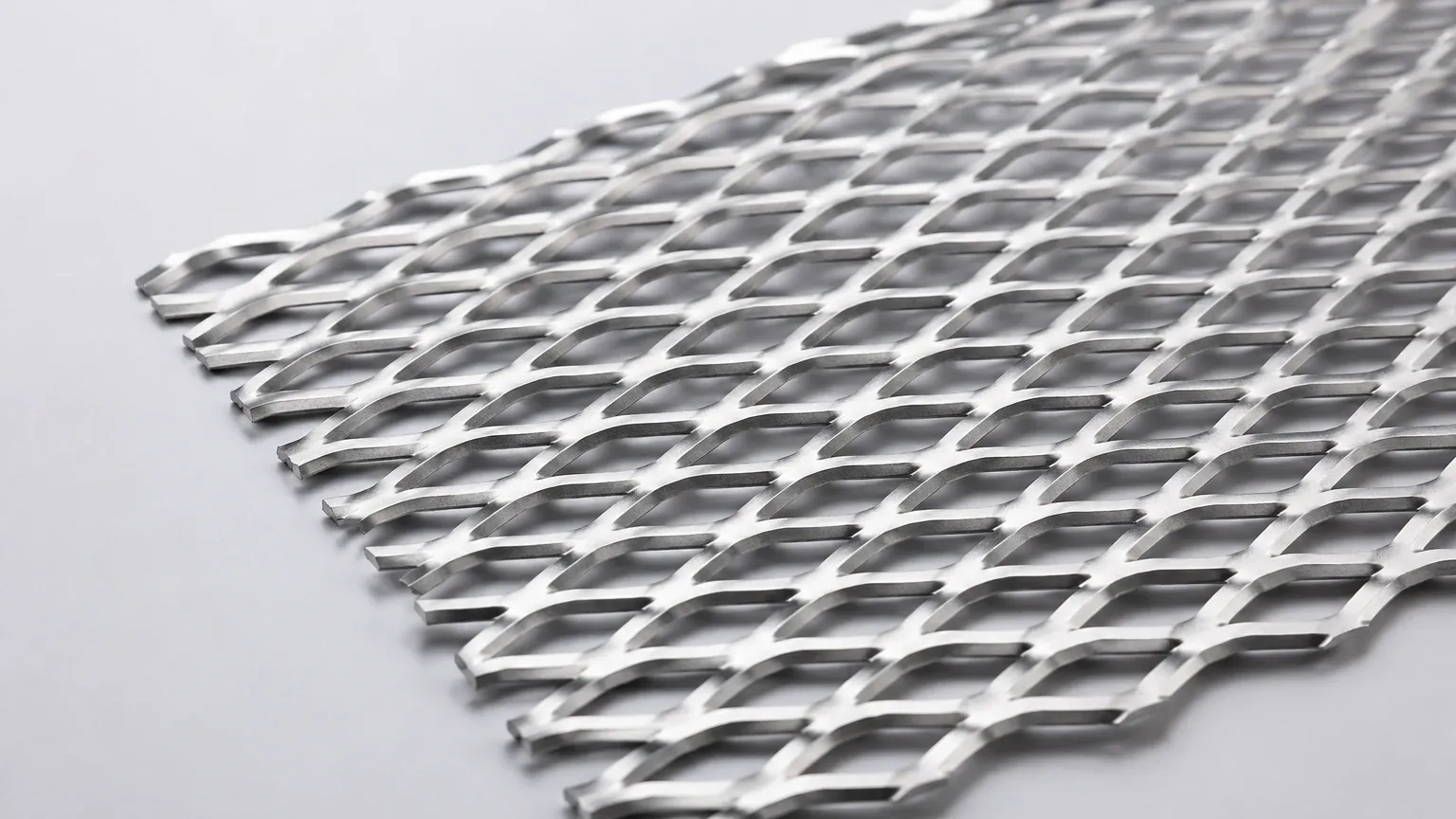
The production of expanded metal X349 involves a precise mechanical process known as slitting and stretching. This process is distinct from the punching process used to create perforated metal. A solid metal plate or coil is fed through a machine equipped with reciprocating knives. These knives slit the metal while simultaneously stretching it into a diamond-shaped pattern.
One of the primary advantages of this process is that it produces no scrap material. Unlike perforated metal, where the "slugs" are punched out and removed, expanding the metal increases the overall surface area of the original sheet. For B2B buyers, this translates to a more cost-effective use of raw materials, particularly when dealing with expensive alloys like 316L stainless steel. Furthermore, the "bonds"—the points where the strands intersect—remain un-slit, providing a continuous path for mechanical stress and electrical conductivity throughout the sheet.
Technical Specifications and Geometric Properties
When evaluating expanded metal X349 for an engineering project, several geometric factors must be confirmed. These specifications dictate how the material will behave in a fluid stream or under a physical load.
SWD and LWD (Short Way and Long Way of Diamond)
These measurements define the size of the diamond opening. SWD is the distance from the center of one bond to the center of the next bond across the short axis, while LWD follows the long axis. For X349, these dimensions are optimized to provide a balance between flow capacity and structural rigidity.
Strand Width and Thickness
The strand width refers to the amount of metal fed into the knives for each stroke, while the thickness refers to the original gauge of the base material. In the X349 pattern, the strands are typically thicker than standard decorative meshes, allowing the material to withstand significant impact and abrasive forces.
Open Area Percentage
The open area is a critical calculation for filtration engineers. It determines the pressure drop (delta P) across the filter. A higher open area allows for higher flow rates but may offer less structural support for the inner filter media. Expanded metal X349 is designed to provide a high percentage of open area while maintaining the stiffness required for industrial housings.
Material Selection: Stainless Steel vs. Alternative Alloys
While expanded metal can be produced from carbon steel or aluminum, Kaifil emphasizes the use of stainless steel for industrial filtration components. The choice of material is often dictated by the chemical compatibility of the fluid being processed and the operating temperature of the system.
1. 304 Stainless Steel: The standard choice for general industrial applications. It offers excellent strength and basic corrosion resistance, making it suitable for food and beverage or water treatment applications.
2. 316L Stainless Steel: For more aggressive environments, such as chemical processing or marine applications, 316L is preferred due to its molybdenum content, which provides superior resistance to pitting and chloride corrosion.
3. Specialty Alloys: In high-temperature or highly acidic environments, alloys like Monel or Inconel may be used. Because X349 is a heavy-duty pattern, the material's yield strength must be carefully matched to the expansion process to prevent micro-cracking during manufacture.
Structural Role in Multi-Layer Filter Cartridges
In many advanced filtration systems, expanded metal X349 is not the only layer. It often functions as the outermost or innermost layer of a multi-stage filter cartridge. Engineers specify X349 for these roles because of its ability to protect delicate pleated wire mesh or fiberglass media from mechanical damage.
As an outer guard, the expanded metal deflects large debris and protects the filter during installation and handling. As an inner core, it provides the necessary collapse strength to withstand the pressure differential that builds up as the filter media becomes loaded with contaminants. The diamond orientation of X349 can also help in distributing flow evenly across the surface of the filter, preventing "hot spots" where the media might fail prematurely due to high localized velocity.
Engineering Considerations: Flow Rates and Mechanical Stress
Selecting expanded metal X349 requires a deep dive into the physics of the application. Engineers must consider the following:
* Pressure Drop: Every layer in a filter assembly contributes to the total pressure drop. The angular nature of expanded metal strands can create turbulence, which may be beneficial for mixing but must be accounted for in pump sizing.
* Directional Strength: Expanded metal has different mechanical properties depending on the orientation of the diamonds. It is significantly stiffer along the LWD than the SWD. When designing cylindrical filter cartridges, the orientation of the sheet relative to the axis of the cylinder is a vital engineering decision.
* Vibration Resistance: In hydraulic or high-velocity gas applications, vibration can lead to fatigue failure. The monolithic structure of expanded metal X349 is inherently better at dampening vibrations than woven meshes, where individual wires can rub against each other and eventually break.
Comparison with Perforated Metal for Support Structures
Engineers often debate between using perforated metal and expanded metal for support cores. While perforated metal offers precise hole sizes and a smooth surface, expanded metal X349 offers several distinct advantages in specific scenarios:
* Weight Efficiency: Expanded metal is generally lighter than a perforated sheet of the same thickness and open area, which is critical in aerospace or mobile hydraulic applications.
* Grip and Surface Area: The raised nature of standard (unflattened) expanded metal provides a textured surface that can help hold filter socks or non-woven media in place, preventing slippage during high-flow surges.
* Cost: As previously mentioned, the lack of waste in the expansion process often makes expanded metal a more economical choice for large-scale industrial projects.
However, if a perfectly flush surface is required to prevent abrasion of a delicate membrane, "flattened" expanded metal or perforated metal may be the better choice. Kaifil assists clients in navigating these trade-offs based on the specific requirements of their filtration housing.
Procurement Checklist for Custom OEM Projects
Before moving forward with a purchase of expanded metal X349, technical teams should confirm a set of authoritative boundaries to ensure the product meets the application's needs. At Kaifil, we recommend verifying the following parameters:
1. Flattened vs. Raised: Specify whether the material should remain in its natural raised state for maximum rigidity or be cold-rolled flat for a smooth finish.
2. Dimensional Tolerances: Industrial filters often require tight tolerances to fit into precision-machined housings. Confirm the allowable variance in sheet size and diamond consistency.
3. Edge Treatment: Expanded metal naturally has sharp edges where the diamonds are cut. Determine if the edges need to be "random sheared" or "bond sheared" (leaving a solid edge), or if a U-edging frame is required for safety and assembly.
4. Cleaning and Passivation: For pharmaceutical or food-grade applications, the expanded metal must be free of manufacturing oils and properly passivated to ensure the protective oxide layer of the stainless steel is intact.
By focusing on these technical details, procurement professionals can avoid common risks such as premature corrosion, structural collapse, or bypass issues in their filtration systems. Expanded metal X349 remains a cornerstone of industrial design due to its versatility and rugged performance.
For organizations seeking to integrate high-performance metal components into their systems, reviewing technical specifications and manufacturing capabilities is essential. You can Review product options and application support to determine how custom expanded metal patterns can be optimized for your specific industrial filtration or structural requirements.
