


Expanded Metal #4
In the landscape of industrial filtration and structural support, expanded metal serves as a versatile and high-performance material. Among the various specifications available to engineers and procurement specialists, expanded metal #4 stands out as a critical component in heavy-duty filtration, safety guarding, and reinforcement applications. Understanding the technical nuances of this material—from its manufacturing process to its mechanical properties—is essential for optimizing filtration efficiency and ensuring the longevity of industrial equipment.
As a specialized manufacturer of stainless steel filtration solutions, Kaifil provides precision-engineered components that integrate expanded metal to meet the rigorous demands of the chemical, pharmaceutical, and hydraulic industries. This guide explores the engineering considerations, material benefits, and selection criteria for expanded metal #4 within professional B2B environments.
Understanding the Manufacturing and Geometry of Expanded Metal
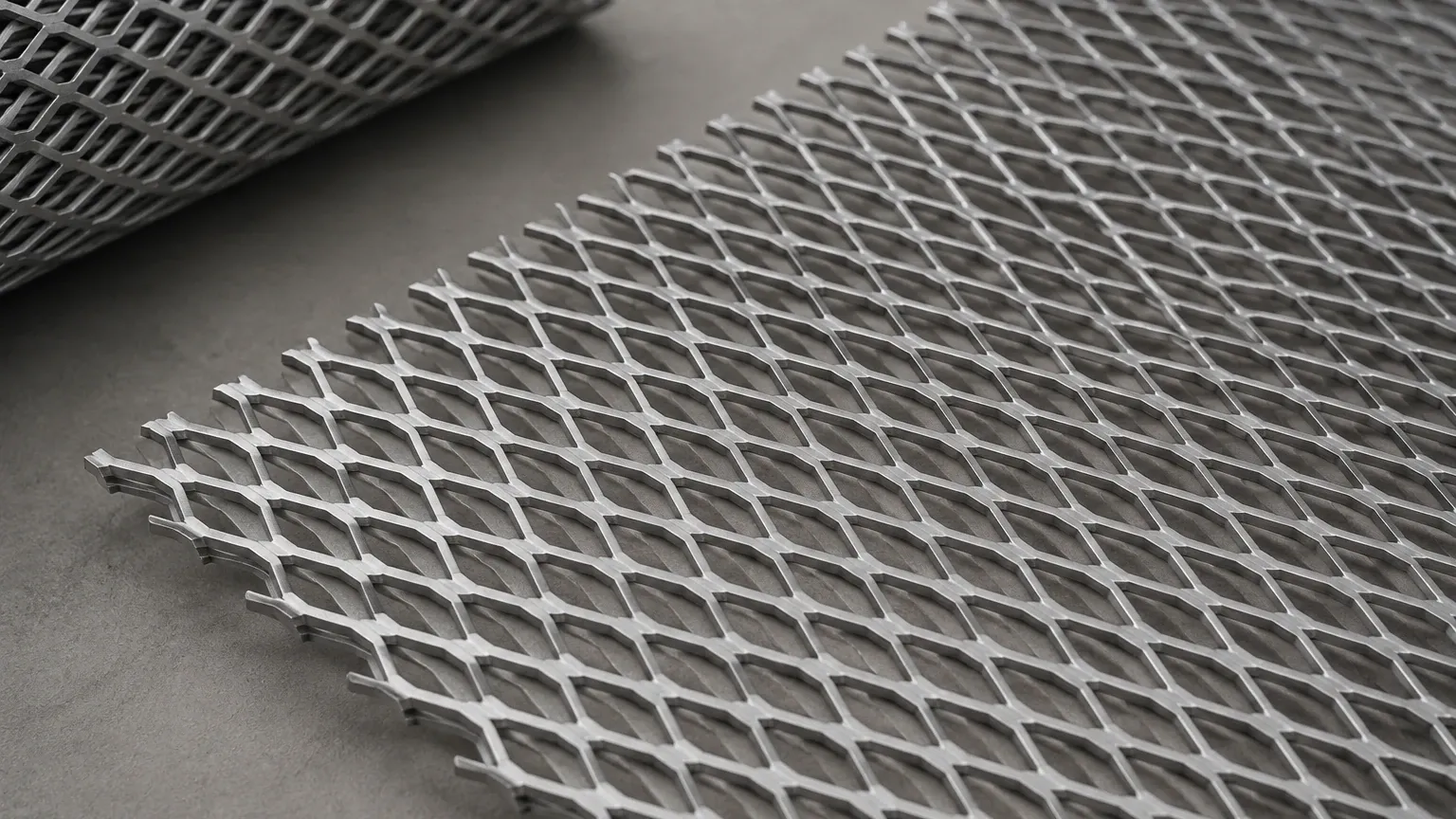
Expanded metal is produced through a unique process of simultaneous slitting and stretching. Unlike perforated metal, which involves punching holes and generating scrap material, expanded metal is created from a single solid sheet of metal without any waste. This process results in a mesh-like structure characterized by diamond-shaped openings.
The Expansion Process
The manufacturing starts with a metal plate or coil, typically stainless steel for industrial filtration. A machine equipped with specialized knives slits the metal at regular intervals while stretching it. This mechanical expansion creates the "strands" and "bonds" that form the diamond pattern. Because the material is stretched rather than cut out, the resulting mesh is significantly larger than the original sheet, offering a high strength-to-weight ratio.
Key Terminology for Engineers
To specify expanded metal #4 accurately, engineers must be familiar with the standard terminology used in the industry:
* SWD (Short Way of Diamond): The distance from the middle of one bond to the middle of the next bond measured across the short diamond diagonal.
* LWD (Long Way of Diamond): The distance from the middle of one bond to the middle of the next bond measured across the long diamond diagonal.
* Strand Width: The amount of metal fed into the machine between the slits.
* Strand Thickness: The original thickness of the base metal sheet.
* Bonds: The intersection points where the strands meet, providing the structural integrity of the mesh.
In the context of expanded metal #4, the "#4" often refers to the weight per square foot (4 lbs) or a specific gauge designation within a manufacturer’s catalog. For industrial filtration, this typically translates to a robust, heavy-gauge material capable of withstanding significant pressure differentials.
The Role of Expanded Metal #4 in Industrial Filtration
While fine wire mesh provides the actual filtration accuracy (micron rating), expanded metal often serves as the "skeleton" or support structure for the filter element. In high-pressure environments, such as hydraulic systems or large-scale chemical reactors, the delicate wire mesh would collapse without a rigid backing.
Structural Support for Filter Cartridges
Expanded metal #4 is frequently used as the outer cage or inner core of stainless steel filter cartridges. Its rigidity ensures that the filter medium maintains its shape even under fluctuating flow rates. By using a heavy-duty expanded metal, manufacturers can design filters that resist pleat bunching and mechanical deformation.
Coarse Pre-Filtration
In applications where large debris or particulates are present, expanded metal #4 can function as a primary or coarse filter. It protects downstream sensitive components—such as high-precision pumps or fine membrane filters—by capturing large contaminants like metal chips, scale, or plastic fragments. This is particularly common in water treatment and industrial cooling systems.
Flow Dynamics and Open Area
One of the primary advantages of using Perforated & Expanded Metal is the ability to customize the open area. Expanded metal #4 provides a balanced ratio of structural strength to open area, ensuring that the pressure drop across the filter remains within acceptable limits. Engineers must calculate the "percentage of open area" to ensure that the flow velocity does not cause excessive turbulence or energy loss within the system.
Material Selection: Why Stainless Steel is Essential
For most B2B applications in the chemical, food and beverage, and pharmaceutical sectors, the material of choice for expanded metal #4 is stainless steel. While carbon steel or aluminum may be used in architectural or lightweight applications, industrial filtration demands the superior properties of stainless alloys.
Corrosion Resistance in Harsh Environments
Chemical processing often involves exposure to acidic or alkaline solutions. Stainless steel 304 and 316L are the industry standards for expanded metal filters. 316L, in particular, contains molybdenum, which provides enhanced resistance to pitting and crevice corrosion in chloride-rich environments. This ensures that the expanded metal support does not degrade and contaminate the process fluid.
Temperature Stability
Industrial filters often operate at elevated temperatures, whether in steam filtration or high-temperature chemical synthesis. Stainless steel expanded metal maintains its mechanical properties and structural integrity at temperatures where polymers or lower-grade alloys would soften or fail. This thermal stability is crucial for maintaining the precise tolerances required in precision metal filter components.
Hygiene and Cleanability
In the food and pharmaceutical industries, the ability to sanitize equipment is paramount. Stainless steel expanded metal is non-porous and resistant to the harsh cleaning agents used in CIP (Clean-In-Place) cycles. The smooth surface of flattened expanded metal—where the mesh is cold-rolled to create a level surface—minimizes areas where bacteria or product residue can accumulate.
Comparing Perforated and Expanded Metal for Engineering Projects
When designing a filtration system, technical teams often choose between perforated metal and expanded metal. Both have distinct advantages depending on the application requirements.
Structural Integrity and Weight
Expanded metal is generally stronger than perforated metal of the same weight. This is because the bonds in expanded metal act as structural trusses, distributing loads more efficiently across the sheet. For projects where weight reduction is a priority but high strength is required, expanded metal #4 is often the superior choice.
Manufacturing Efficiency and Cost
Because the expansion process involves no material waste, expanded metal is often more cost-effective than perforated metal, especially when using expensive alloys like 316L stainless steel. In perforated metal, the "slugs" punched out of the holes are scrap, which increases the base material cost. For large-scale industrial projects, this cost difference can be significant.
Surface Characteristics
Perforated metal offers a perfectly flat surface and highly precise hole geometries. Expanded metal, in its "standard" or "raised" form, has a textured, angular surface. For filtration applications where the expanded metal is in direct contact with a fine mesh, "flattened" expanded metal is usually specified. Flattening ensures there are no sharp edges that could abrade or puncture the delicate wire mesh layers.
Evaluation Criteria for Purchasing and Engineering Teams
Selecting the right expanded metal #4 involves more than just picking a part number. Procurement and engineering teams should collaborate to confirm several technical factors before finalizing a purchase order.
1. Load-Bearing Requirements
What is the maximum pressure differential the filter will encounter? Expanded metal #4 must be thick enough to resist buckling under the force of the fluid flow, especially if the filter becomes partially clogged. Engineers should request data on the collapse pressure of the finished filter component.
2. Dimensional Tolerances
In precision manufacturing, even minor deviations in the SWD or LWD can affect the fit of the filter within its housing. It is critical to work with a manufacturer like Kaifil that can maintain tight tolerances during the expansion and subsequent forming processes (such as rolling into a cylinder or welding).
3. Edge Conditions and Safety
Expanded metal naturally has "random" or "open" edges where the diamonds are cut. For many industrial applications, these edges must be finished or framed to prevent injury to maintenance personnel and to ensure a proper seal within the filter housing. Specifying "closed bond" edges or adding a U-edging profile is a common requirement for safety and performance.
4. Compatibility with Secondary Processes
Will the expanded metal be welded, pleated, or coated? Stainless steel expanded metal #4 is highly weldable using TIG (Tungsten Inert Gas) or resistance welding techniques. However, the presence of oils or lubricants from the expansion process must be removed through professional degreasing or ultrasonic cleaning to ensure high-quality welds and to prevent contamination of the final filtration system.
Customization and OEM Capabilities
Every industrial application has unique challenges, which is why off-the-shelf solutions are often insufficient. Customization is at the heart of effective industrial filtration. Manufacturers specializing in stainless steel filtration can tailor expanded metal #4 to meet specific needs.
Tailored Open Areas
By adjusting the strand width and the degree of expansion, manufacturers can create expanded metal with specific open area percentages. This allows engineers to optimize the balance between filtration surface area and structural rigidity, directly impacting the energy efficiency of the pump systems.
Integrated Filter Components
Rather than sourcing expanded metal sheets and attempting to fabricate them in-house, many B2B buyers find value in sourcing completed components. This includes expanded metal cylinders, cones, or flat panels that have been precision-cut, rolled, and welded to exact specifications. Sourcing these from a specialized manufacturer ensures that the structural support is perfectly matched to the filtration media.
Material Certification and Traceability
In regulated industries like pharmaceuticals and aerospace, material traceability is non-negotiable. Quality manufacturers provide Mill Test Reports (MTRs) for the stainless steel used in expanded metal #4, confirming the chemical composition and mechanical properties. This level of documentation is essential for quality assurance and regulatory compliance.
Conclusion: Making Informed Decisions for Filtration Success
Expanded metal #4 is a foundational component in the world of industrial filtration, providing the necessary strength and durability to support high-performance filter media. By understanding the mechanical properties of the diamond-mesh structure and the benefits of stainless steel, engineering and purchasing teams can select components that enhance the reliability of their systems.
Whether used as a protective guard, a support core for a hydraulic filter, or a coarse pre-filter in a chemical plant, the quality of the expanded metal directly influences the total cost of ownership of the filtration system. Choosing a partner with deep expertise in Perforated & Expanded Metal and custom stainless steel solutions ensures that your filtration components will perform predictably in the most demanding industrial environments.
When evaluating your next project, consider the long-term benefits of precision-engineered expanded metal. From material selection to custom fabrication, every detail contributes to a more efficient, durable, and cost-effective industrial process.
