


Expanded Metal #9
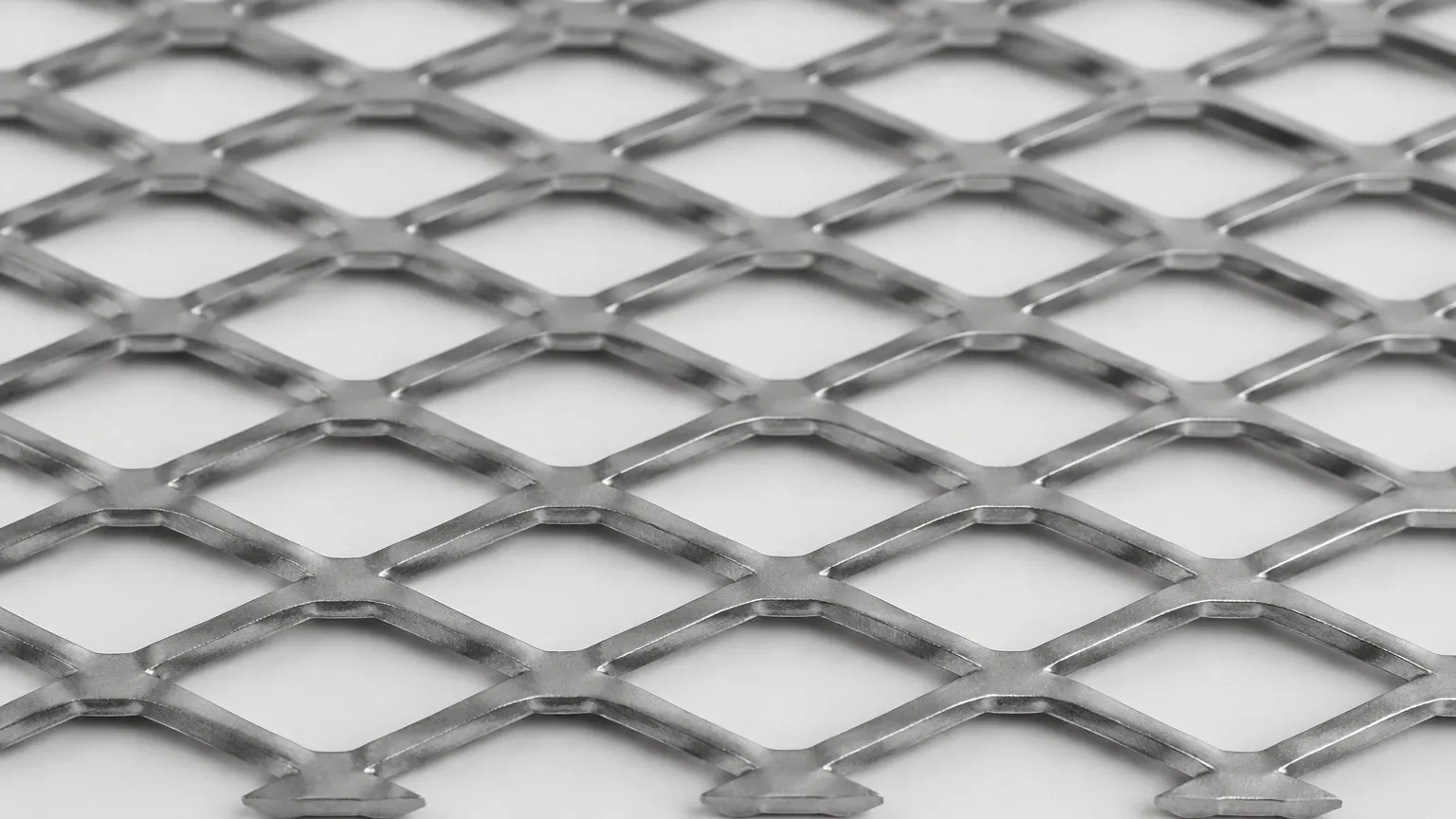
In industrial filtration and structural engineering, material selection is dictated by the balance between mechanical strength and open area. Expanded metal #9 represents a specific heavy-duty classification of expanded metal that is widely utilized across the chemical processing, hydraulic, and water treatment sectors. Unlike perforated metal, which is produced by punching holes and creating scrap, expanded metal is manufactured by simultaneously slitting and stretching a solid sheet of metal. This process creates a diamond-shaped pattern that is integral to the sheet, providing superior structural integrity while maintaining a high strength-to-weight ratio.
When engineers specify expanded metal #9, they are typically referring to the gauge of the base material. In the United States standard for expanded metal, #9 gauge corresponds to a nominal thickness of approximately 0.142 inches (before expansion). This thickness makes it an ideal candidate for demanding applications where thinner meshes would fail under high pressure or mechanical impact. Understanding the technical nuances of this material is essential for technical professionals tasked with designing filtration systems or protective guards.
Technical Specifications and Geometry of Expanded Metal #9
To accurately specify expanded metal for an industrial project, one must look beyond the gauge alone. The geometry of the diamond opening determines both the filtration efficiency and the flow rate through the media. The primary dimensions used to define expanded metal #9 include:
* SWD (Short Way of Design): The distance from the center of a bond to the center of the next bond across the short axis of the diamond.
* LWD (Long Way of Design): The distance from the center of a bond to the center of the next bond across the long axis of the diamond.
* Strand Thickness: The thickness of the base metal (for #9, this is nominally 0.142").
* Strand Width: The amount of metal fed into the expanding machine for each stroke, which determines the "width" of the individual strands forming the diamond.
In the context of Perforated & Expanded Metal, the #9 designation is frequently paired with a specific opening size, such as 3/4" #9 or 1-1/2" #9. The 3/4" #9 specification is particularly common in industrial filtration as a support structure. It offers a robust framework for finer wire mesh layers, preventing the mesh from deforming under the force of fluid flow or differential pressure.
Material Selection: Stainless Steel vs. Carbon Steel
While expanded metal #9 can be produced from various alloys, the choice of material is critical for the longevity of the filtration component. At Kaifil, we specialize in stainless steel solutions because of the material's inherent resistance to corrosion and high temperatures.
Stainless Steel (304 and 316)
For chemical processing and pharmaceutical applications, 304 or 316L stainless steel is the industry standard. Stainless steel expanded metal #9 provides excellent resistance to oxidation and can withstand aggressive cleaning cycles, including CIP (Clean-in-Place) procedures. 316L is specifically preferred in marine environments or applications involving chlorides due to its superior pitting resistance.
Carbon Steel and Galvanized Options
In less corrosive environments, such as basic hydraulic oil filtration or general industrial guards, carbon steel may be used. However, to prevent premature failure due to rust, these materials are often hot-dip galvanized or powder-coated. For long-term cost efficiency in filtration, stainless steel remains the preferred choice as it eliminates the risk of coating delamination, which could contaminate the downstream filtrate.
Regular vs. Flattened Expanded Metal #9
One of the most important decisions an engineer must make is whether to use "Regular" (Raised) or "Flattened" expanded metal.
Regular Expanded Metal
Regular expanded metal comes off the expanding machine with the strands and bonds set at a sharp angle to the plane of the sheet. This creates a three-dimensional surface that provides excellent grip and high rigidity. In filtration, the raised profile can be advantageous for creating turbulence in the fluid flow, which can sometimes prevent the rapid buildup of a filter cake. However, the raised edges can be sharp and may damage delicate secondary filter media if not handled correctly.
Flattened Expanded Metal
Flattened expanded metal is produced by passing the regular expanded sheet through a cold-roll reducing mill. This process flattens the strands and bonds into the same plane, resulting in a smooth, level surface. For engineers designing multi-layer filter cartridges, flattened expanded metal #9 is often the superior choice. The smooth surface provides a uniform support base for fine wire mesh or non-woven media, ensuring that the pressure is distributed evenly across the entire surface area and reducing the risk of mechanical abrasion between layers.
Engineering Considerations for Filtration Support
When incorporating expanded metal #9 into a filtration system, several engineering factors must be evaluated to ensure performance expectations are met.
Pressure Drop and Open Area
The percentage of open area in expanded metal dictates the initial pressure drop across the system. A 3/4" #9 expanded metal sheet typically offers an open area ranging from 60% to 75%, depending on the strand width. Engineers must calculate the total effective filtration area (EFA) to ensure that the support structure does not unnecessarily restrict flow or cause cavitation in pump-driven systems.
Structural Integrity and Hoop Strength
In cylindrical filter cartridges, the expanded metal serves as the inner or outer core. The #9 gauge thickness provides significant hoop strength, allowing the cartridge to resist collapsing under high differential pressures (often exceeding 100 PSI in hydraulic applications). When used as an outer guard, it protects the inner pleated media from mechanical damage during installation or backwashing cycles.
Compatibility with Secondary Media
Expanded metal is rarely the primary filtration stage for fine particles. Instead, it acts as the "skeleton." It is crucial to ensure that the diamond pattern size is compatible with the wire mesh or synthetic media it supports. If the openings are too large, the fine mesh may "quilt" or sag into the openings under pressure, leading to localized stress concentrations and eventual fatigue failure.
Customization and OEM Integration
Standard off-the-shelf expanded metal sheets often do not meet the precise tolerances required for high-performance industrial filters. Customization is a key part of the procurement process. For OEM applications, expanded metal #9 can be customized in several ways:
* Custom Sheet Sizes: Reducing waste by ordering sheets cut to the exact dimensions of the filter housing or support frame.
* Cylindrical Forming: Precision rolling and welding of expanded metal into tubes or cones for use as filter cores.
* Edge Treatments: Providing finished edges or U-edging to improve safety and ease of assembly into larger assemblies.
* Specialty Alloys: For extreme environments, alloys like Monel, Inconel, or Duplex stainless steel can be expanded to #9 gauge specifications.
When selecting a manufacturer, engineers should confirm the provider's ability to maintain tight tolerances on the SWD and LWD, as variations in the expansion process can lead to inconsistencies in the final product's dimensions and performance.
Maintenance, Replacement Cycles, and Total Cost of Ownership
While the initial cost of stainless steel expanded metal #9 is higher than carbon steel or plastic alternatives, the total cost of ownership (TCO) is often lower. Its durability means that the support structure of a filter can often be cleaned and reused multiple times, even if the primary filter media needs replacement.
In heavy-duty water treatment or mining applications, expanded metal components should be inspected periodically for:
1. Erosion: High-velocity fluids containing abrasive particles can wear down the strands over time.
2. Stress Corrosion Cracking (SCC): Particularly in stainless steel components exposed to high temperatures and chloride-rich environments.
3. Mechanical Deformation: Checking for any bowing or sagging that indicates the system has exceeded its design pressure limits.
Because expanded metal #9 is a rigid, one-piece structure, it does not suffer from the "unraveling" issues that can plague woven wire mesh if a single wire is broken. This makes it a highly reliable safety barrier in critical industrial processes.
Conclusion: Selecting the Right Expanded Metal for Your Project
Choosing the correct specification of expanded metal #9 requires a thorough understanding of the operational environment, including fluid chemistry, flow rates, and mechanical stresses. By focusing on the material grade, the choice between regular or flattened profiles, and the precise diamond geometry, engineers can ensure their filtration systems operate at peak efficiency with minimal downtime.
For those looking to integrate these components into specialized industrial equipment, reviewing the available Perforated & Expanded Metal options is the first step in identifying the most suitable configuration. Whether the goal is to provide a robust support core for a hydraulic filter or a durable screen for a chemical reactor, expanded metal #9 offers the versatility and strength required for the most demanding B2B industrial applications.
