


Expanded Metal 4×8 Sheet
In industrial manufacturing and structural engineering, the expanded metal 4×8 sheet remains one of the most versatile and widely utilized formats for filtration, reinforcement, and safety applications. This standardized dimension—four feet by eight feet—aligns with global logistics standards and common fabrication equipment, making it a primary choice for engineers and procurement teams.
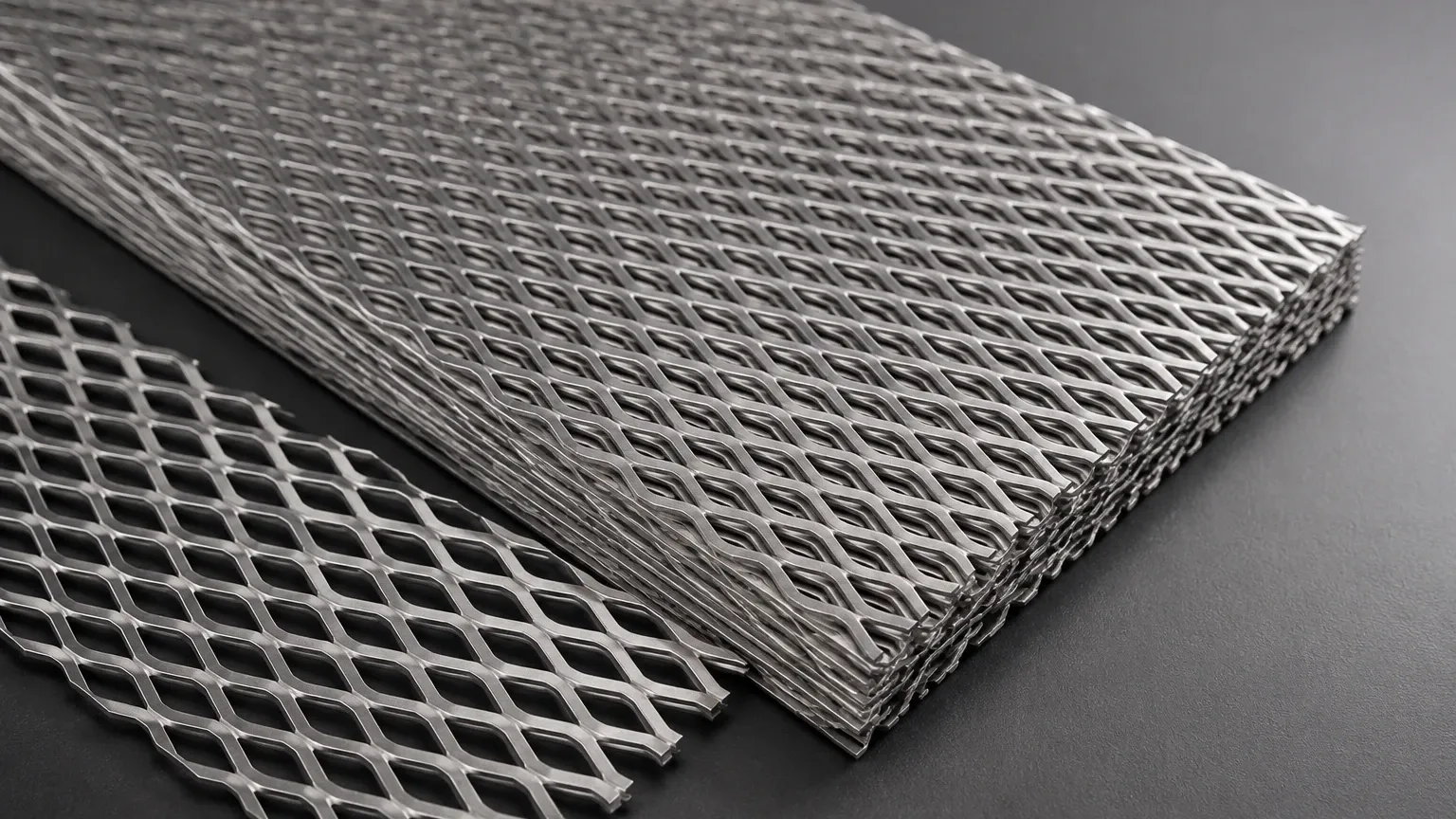
Expanded metal is produced through a process of simultaneously slitting and stretching a solid metal sheet. Unlike perforated metal, which involves punching holes and creating scrap material, the expansion process creates a diamond-shaped pattern without any material waste. This results in a product that is lighter than the original sheet yet possesses a high strength-to-weight ratio, making it an essential component in high-performance industrial environments.
Understanding the Manufacturing and Structure of Expanded Metal
The manufacturing of an expanded metal 4×8 sheet involves a reciprocating knife that shears and expands the base metal in a single motion. The resulting mesh is characterized by "strands" (the metal strips) and "bonds" (the points where the strands intersect).
Raised vs. Flattened Expanded Metal
There are two primary finishes available for these sheets, each serving distinct engineering purposes:
1. Raised (Standard) Expanded Metal: In this form, the strands and bonds are set at a sharp angle to the plane of the sheet. This creates a three-dimensional surface that provides excellent grip and structural rigidity. In filtration applications, raised expanded metal is often used as a primary support layer where maximum airflow or fluid turbulence is required.
2. Flattened Expanded Metal: This is produced by passing the standard raised sheet through a cold-roll reducing mill. The process flattens the strands and bonds into a single plane, resulting in a smooth, level surface. Flattened sheets are typically preferred when the metal serves as a support for finer wire mesh or when a smooth contact surface is necessary to prevent abrasion of other filter media.
Material Selection for 4×8 Expanded Metal Sheets
Material compatibility is a critical factor for engineers, especially in the chemical processing, pharmaceutical, and food and beverage sectors. While carbon steel and aluminum are common, stainless steel is the preferred choice for demanding industrial filtration and corrosive environments.
Stainless Steel (304 and 316)
Stainless steel expanded metal offers superior resistance to oxidation and chemical corrosion. Grade 304 is suitable for most general industrial applications, while Grade 316 is recommended for marine environments or processes involving high acidity or chloride exposure. Because Kaifil specializes in custom stainless steel filtration solutions, understanding the nuances of these alloys is vital for ensuring the longevity of the filter cartridge or support structure.
Aluminum and Specialized Alloys
Aluminum expanded metal is valued for its lightweight properties and natural resistance to atmospheric corrosion. In specific high-temperature or highly specialized chemical environments, alloys like Monel or Inconel may be used, though these are typically reserved for custom-engineered solutions rather than standard off-the-shelf 4×8 sheets.
Key Engineering Specifications and Measurement Standards
When specifying an expanded metal 4×8 sheet, engineers must use precise terminology to ensure the product meets the structural and filtration requirements of the project. The dimensions of the diamond opening are the most critical metrics.
* SWD (Short Way of Design): The distance from the center of one bond to the center of the next bond measured across the short diamond diagonal.
* LWD (Long Way of Design): The distance from the center of one bond to the center of the next bond measured across the long diamond diagonal.
* SWO (Short Way of Opening): The actual width of the opening measured from the inside of the bonds.
* LWO (Long Way of Opening): The actual length of the opening measured from the inside of the bonds.
* Strand Thickness and Width: The thickness of the base metal and the width of the metal strip created during the expansion process.
For B2B procurement, it is also important to specify the direction of the diamond. In a standard 4×8 sheet, the LWD usually runs parallel to the 8-foot dimension, but this can be customized based on the orientation of the load or the flow direction in a filtration system.
Industrial Applications: From Filtration Support to Safety Guarding
The utility of Perforated & Expanded Metal extends across various industrial sectors. Because the material is rigid and allows for high open-area percentages, it is a staple in the design of filtration components.
Filtration Support and Cages
In industrial filter cartridges, expanded metal often serves as the inner core or outer protective cage. It provides the necessary structural integrity to prevent the pleats of a fine wire mesh filter from collapsing under high differential pressure. The diamond pattern ensures that the fluid or gas flow remains unobstructed while maintaining a consistent support surface.
Machine Guarding and Safety
Beyond filtration, the 4×8 sheet is frequently used for machine guards and safety partitions. It allows for visibility and ventilation while protecting personnel from moving parts. The strength of the expanded metal ensures that it can withstand impacts that might deform lighter materials.
Architectural and Acoustic Panels
In industrial architecture, expanded metal is used for sunscreens, ceiling panels, and acoustic dampening. The geometric pattern can be engineered to control light diffusion or sound reflection, making it a dual-purpose functional and aesthetic material.
Evaluating Quality and Performance for Industrial Procurement
When selecting a supplier for an expanded metal 4×8 sheet, technical professionals should evaluate several performance criteria to ensure the total cost of ownership is optimized.
1. Open Area Percentage: This calculation is vital for filtration and ventilation. It determines the flow rate and pressure drop across the sheet. A higher open area reduces resistance but may compromise structural strength.
2. Flatness Tolerances: For sheets intended for further fabrication or as support for fine mesh, flatness is essential. Bowing or camber in a 4×8 sheet can lead to assembly difficulties and uneven stress distribution in the final product.
3. Edge Conditions: Sheets can be supplied with "random sheared" edges (where the diamonds are cut through) or "bond sheared" edges (where the cut follows the bond line). For safety and ease of welding, bond shearing is often preferred, though it may result in slightly different overall dimensions.
4. Load-Bearing Capacity: Engineers must consult load tables to determine how much weight the sheet can support over a specific span. This is particularly important for walkways or heavy-duty industrial shelving.
Customization and OEM Solutions in Perforated & Expanded Metal
While the standard expanded metal 4×8 sheet is a versatile starting point, many industrial applications require specialized configurations. Customization options include non-standard sheet sizes, varied diamond patterns, and specialized surface treatments such as passivating, galvanizing, or powder coating.
As a professional manufacturer, Kaifil provides tailored solutions that integrate expanded metal into complex filtration systems. This includes the development of custom-sized cylinders, cones, and pleated supports that utilize the unique properties of expanded metal to enhance filtration efficiency. When purchasing for OEM applications, it is beneficial to confirm the manufacturer’s ability to provide precision shearing and forming to ensure the components fit perfectly into the final assembly.
Conclusion: Selecting the Right Solution
The expanded metal 4×8 sheet is more than just a commodity; it is a precision-engineered material that provides the backbone for many industrial filtration and structural systems. By understanding the differences between raised and flattened finishes, selecting the appropriate stainless steel grade, and accurately specifying SWD/LWD dimensions, engineers can ensure they receive a product that meets their performance expectations.
For those managing large-scale projects or developing new filtration equipment, partnering with a manufacturer that understands the technical requirements of high-performance metal mesh is essential. Whether the goal is to provide structural support for a filter cartridge or to create a durable safety barrier, the correct application of perforated and expanded metal technology is key to achieving reliable, long-term results in demanding industrial environments.
