


Expanded Metal Ace Hardware
Expanded metal is a versatile material used across countless industries, from architectural design to high-precision industrial filtration. For many small-scale maintenance tasks or DIY repairs, searching for "expanded metal ace hardware" is a common starting point. Retail hardware stores provide immediate access to standard sizes and common materials like carbon steel or aluminum. However, when engineering requirements demand specific corrosion resistance, precise open area percentages, or integration into complex filtration systems, the transition from retail-grade products to industrial-grade manufacturing becomes essential.
For engineers and procurement professionals, understanding the distinction between off-the-shelf solutions and custom-engineered Perforated & Expanded Metal is critical for ensuring long-term performance and system reliability. This guide explores the technical characteristics of expanded metal, the limitations of retail sourcing for industrial applications, and the engineering considerations necessary for selecting the right filtration components.
Understanding Expanded Metal: The Manufacturing Process
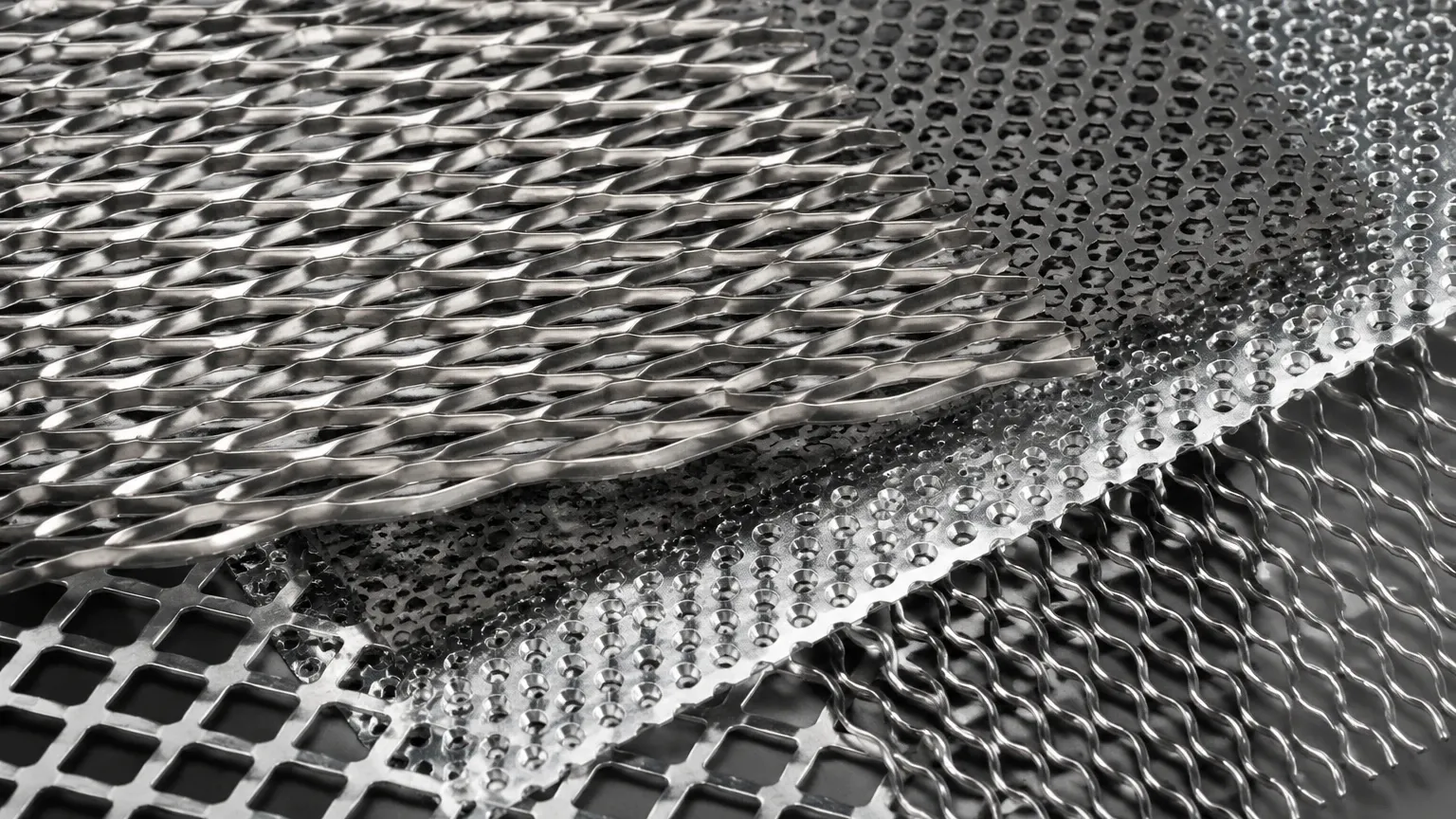
Expanded metal is produced through a unique process of slitting and stretching a single sheet of metal. Unlike perforated metal, which involves punching holes and generating scrap material, the expansion process is highly efficient as it produces virtually no waste.
How It Is Made
As the metal sheet is fed through a machine, it is simultaneously slit and pulled. This creates a diamond-shaped pattern of openings. The resulting material is structurally sound because it remains a single piece of metal without joins or welds. This integrity makes it an excellent choice for support structures in industrial filters and protective guards.
Key Technical Terminology
To accurately specify expanded metal, engineers must be familiar with several key metrics:
* SWD (Short Way of Design): The distance from the center of one bond to the center of the next bond across the short diamond diagonal.
* LWD (Long Way of Design): The distance from the center of one bond to the center of the next bond across the long diamond diagonal.
* Strand Width: The amount of metal fed into the machine between slits.
* Strand Thickness: The thickness of the original base metal sheet.
* Open Area: The percentage of the sheet that is comprised of openings, which directly impacts flow rates and filtration efficiency.
Expanded Metal Ace Hardware vs. Industrial Manufacturing
When searching for expanded metal at a local retailer like Ace Hardware, the available inventory is typically geared toward general-purpose applications. While these products are excellent for home repairs, garden fencing, or basic machinery guards, they often lack the technical documentation and material certifications required for heavy industrial use.
Material Limitations
Retail-grade expanded metal is frequently offered in plain carbon steel or standard aluminum. In industrial environments—particularly in chemical processing, food and beverage, or pharmaceutical sectors—these materials may fail due to oxidation or chemical reactions. Industrial manufacturers like Kaifil specialize in stainless steel (304, 316, and 316L), which offers superior resistance to corrosion, high temperatures, and high-pressure differentials.
Precision and Customization
Standard retail sheets come in fixed dimensions (e.g., 24" x 24" or 36" x 36"). Industrial applications often require custom-cut shapes, specific tolerances, and varying mesh densities that are not stocked in hardware stores. For filtration applications, the precision of the diamond opening is paramount to ensuring the correct flow characteristics and supporting the primary filter media without causing mechanical stress.
Engineering Considerations for Industrial Filtration
In the context of industrial filtration, expanded metal often serves as the outer or inner support core for filter cartridges. It provides the necessary rigidity to prevent the collapse of fine wire mesh or synthetic media under high pressure.
1. Structural Integrity and Pressure Drop
Engineers must calculate the expected pressure drop across the filter. While a higher open area reduces resistance to flow, it may compromise the structural strength of the expanded metal. Finding the balance between a high open area for efficiency and a robust strand width for durability is a core engineering challenge.
2. Compatibility with Media
Expanded metal can be produced in a "raised" or "flattened" state. Raised expanded metal has a textured surface where the strands are tilted. While this provides extra grip and strength, it may damage delicate filter membranes. Flattened expanded metal is passed through a cold-rolling mill to create a smooth, level surface, which is generally preferred when it is in direct contact with fine wire mesh or fabric filters.
3. Chemical and Thermal Resistance
In applications like hydraulic oil filtration or chemical processing, the expanded metal must withstand aggressive fluids and temperature fluctuations. Stainless steel 316L is often the industry standard for these environments due to its molybdenum content, which enhances resistance to pitting and crevice corrosion.
Applications of Expanded Metal in Industrial Sectors
Beyond simple guards and grates, expanded metal plays a functional role in several critical industrial processes:
* Chemical Processing: Used as support cages for chemical-resistant filter bags and cartridges, ensuring that the media remains positioned correctly during high-velocity fluid transfers.
* Food and Beverage: Stainless steel expanded metal is used in sieving and sorting equipment where hygiene and ease of cleaning are mandatory. The absence of welds prevents the accumulation of bacteria in crevices.
* Water Treatment: Large-scale expanded metal screens are utilized for primary filtration to remove large debris from intake water before it reaches finer treatment stages.
* Aerospace and Automotive: Used for EMI/RFI shielding and as lightweight structural components in air intake systems.
Why Custom Solutions Outperform Retail Standards
While "expanded metal ace hardware" searches solve immediate, low-stakes problems, industrial procurement requires a focus on the Total Cost of Ownership (TCO). A standard carbon steel sheet from a hardware store might be cheaper upfront, but the cost of frequent replacement due to rust, or the risk of system failure due to inadequate pressure ratings, far outweighs the initial savings.
Quality Assurance and Certification
Industrial manufacturers provide material test reports (MTRs) and certificates of compliance. This documentation is often required by regulatory bodies in the pharmaceutical and food industries to prove that the materials used do not leach contaminants into the product stream.
OEM and Tailored Design
For manufacturers of filtration equipment, partnering with an OEM-capable supplier allows for the integration of expanded metal into proprietary designs. This includes custom cylinder forming, welding, and surface finishing (such as electropolishing) that ensure the component is ready for immediate assembly into a larger filtration system.
Selection Guide: Questions for Engineers and Buyers
Before moving from a retail search to an industrial order, consider the following questions to ensure the selected expanded metal meets your application's demands:
1. What is the primary function? Is it for filtration support, a protective barrier, or aesthetic cladding? This determines whether you need flattened or raised metal.
2. What is the environment? Will the metal be exposed to salt water, acidic chemicals, or extreme heat? This dictates the grade of stainless steel or specialty alloy required.
3. What are the flow requirements? What is the minimum required open area to maintain system efficiency without causing an excessive pressure drop?
4. Are there specific dimensional tolerances? Industrial systems often require tolerances much tighter than the standard 1/8-inch or 1/4-inch variances found in retail products.
5. What is the expected lifespan? Does the material need to last for 10+ years in a submerged environment, or is it a sacrificial component replaced during routine maintenance?
Conclusion
Expanded metal is a fundamental component in modern industrial engineering. While the convenience of "expanded metal ace hardware" is suitable for general utility, it cannot replace the technical precision and material integrity of custom-manufactured solutions. For industries where filtration performance and structural reliability are non-negotiable, investing in high-quality stainless steel Perforated & Expanded Metal is the most cost-effective strategy.
By focusing on material selection, precise geometry, and application-specific designs, engineers can optimize their filtration systems for maximum durability and efficiency. Whether you are designing a new hydraulic filter or upgrading a chemical processing line, choosing the right grade and specification of expanded metal is a critical step in achieving operational excellence.
